Cottonwood Firewood: A Beginner’s Burning Guide
Cottonwood firewood is light, soft, and easy to split, which makes it a friendly choice for new fireplace owners. It lights fast and gives a cheerful flame, but it burns fast too, so it works best for short fires, mild days, and getting a fire going. This guide explains how to season it, stack it, burn it well, and avoid the most common errors.
If you already have a pile of cottonwood, you do not need to throw it away. You can burn it with good results when it is dry, when you build the fire the right way, and when you pair it with denser wood for longer heat. Read the safety notes first, then follow the steps in order for a cleaner, safer fire.
Safety First — Please Read Before You Burn
Burn only seasoned wood, and never burn treated or painted wood, plywood, trash, or glossy paper. Have your chimney inspected and swept each year, keep working smoke and carbon monoxide detectors in place, and never burn wood in an unvented indoor space. Check local burn bans before you light a fire, and follow local rules on moving firewood, since moving wood can spread pests to new areas.
TIME
30–45 minutes to build and tend a first fire
SKILL LEVEL
Beginner friendly
BEST USE
Short fires, mild weather, and kindling fires
SEASONING
Season well before burning; wet cottonwood smokes and gives little heat
What Cottonwood Firewood Is Like
Cottonwood is a light hardwood that grows fast and splits with little effort. Fresh-cut cottonwood holds a lot of water, so it feels heavy when green and light once it has dried well. The bark is thick and rough, and the wood inside is pale and soft to the touch.
When dry, cottonwood catches fire fast and burns with a lively flame. It gives less heat per log than dense hardwoods such as oak or maple, and a fire made only from cottonwood will need fresh logs sooner. That fast, light burn is a strength for a quick evening fire and a weak point for an all-night fire.
Cottonwood also makes a fair amount of ash for its weight. Plan to clean out ash more often, and keep the ash in a metal container with a lid until it is fully cold. Never put warm ash in a paper bag, a plastic bin, or near dry leaves.
What You Need
What You Need
- Seasoned cottonwood logs, split to a size that fits your firebox with room to spare
- Dry kindling and a few sheets of plain newspaper or a fire starter made for fireplaces
- A lighter or long matches, plus fireplace gloves for handling logs
- A poker, a small shovel, and a metal ash bucket with a tight lid
- Working smoke and carbon monoxide detectors, checked before fire season
- One or two denser hardwood logs, if you want the fire to last longer
Gather all of this before you strike a match. A fire is much easier to tend when you are not hunting for kindling with a fire already lit. Keep extra logs close to the fireplace, but not so close that heat or sparks can reach them.
Check That the Wood Is Seasoned
Seasoned cottonwood should feel light for its size, show cracks at the cut ends, and sound hollow when two pieces are knocked together. The bark should be loose or falling off, and the cut ends should look dull and gray rather than fresh and damp. If the wood feels heavy, smells damp, or hisses in the fire, it needs more drying time.
Stack cottonwood off the ground, in a sunny spot with wind blowing through the pile, and leave the top covered while the sides stay open. Cottonwood dries slower than many people expect, so give it a full drying season and check it again before burning. Learning whether firewood can be too dry helps you spot the other end of the scale, when wood is so dry it burns too fast.
Split Cottonwood Small
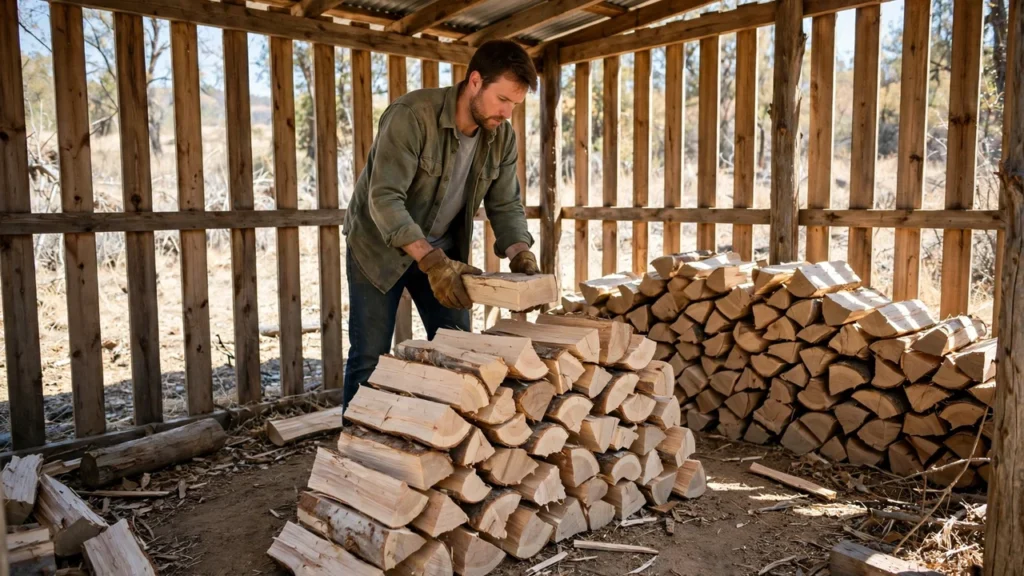
Split cottonwood into pieces smaller than you would split oak or maple. Smaller splits catch fire faster, dry faster in the stack, and are easier to feed into a small fire. Aim for splits you can hold with one hand, with flat sides that sit steady in the firebox.
Use a sharp axe or a maul, and split on a steady chopping block away from people and pets. Cottonwood splits with little force, so take care not to swing past the log. Wear closed shoes and eye protection, and stop if a log is knotty or twisted.
Build a Small, Hot Fire
Start with crumpled newspaper or a fire starter, then add a loose crisscross of kindling on top. Leave gaps for air, since a fire packed too tight will smoke and struggle to catch. Light the starter from more than one spot, then watch for a steady flame before you add larger wood.
Once the kindling burns well, add two small cottonwood splits at a time. Place them so air can flow between them, and leave the damper and air vents open while the fire builds. A small, hot fire burns cleaner than a large, smoky one, and it warms the chimney faster.
Add Logs in Small Batches
Feed cottonwood in small batches rather than loading the firebox full at once. Two or three splits at a time keep the flame lively without choking the fire. Wait until the last batch is burning well before you add more, and keep the fire at a size your room can handle.
For a longer fire, add a denser hardwood log once the cottonwood fire is hot. The cottonwood gives a fast start, and the denser log gives steady heat after it catches. This mix is a good plan for a cold evening, and it is far better than trying to keep a cottonwood-only fire going all night. If you are planning a big weekend gathering, read how much firewood you need for Thanksgiving weekend so you do not run short.
Watch the Fire and the Chimney
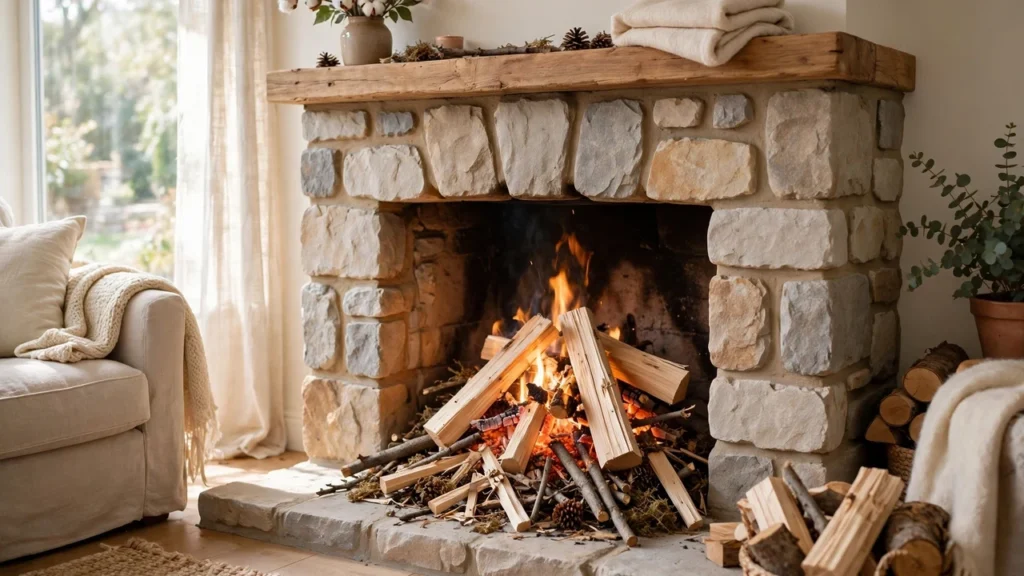
Stay in the room while a cottonwood fire burns, and keep the screen or glass doors in place. Cottonwood can throw sparks, and a screen keeps them inside the firebox. Keep rugs, blankets, and paper well back from the hearth, and keep children and pets at a safe distance.
Watch for thick smoke, a sour smell, or soot building up fast, since these signs point to wet wood or poor airflow. Open the air vents a little, use drier wood, and check that the chimney draft is strong. Book a chimney sweep each year, since creosote can build up from smoky fires and raise the risk of a chimney fire.
Common Mistakes With Cottonwood
Most cottonwood problems come from wet wood, fires that are too large, or hopes that are too high for one light wood. The list below covers the errors that show up most often, so you can skip them on your first try.
- Burning green wood: Green cottonwood smokes, hisses, and gives little heat. If you are unsure, read whether you can burn green firewood before you light it.
- Loading the firebox full: A packed firebox starves the flame of air and makes more smoke. Small batches burn hotter and cleaner.
- Expecting all-night heat: Cottonwood burns fast, so it is a poor choice on its own for overnight heat. Pair it with denser wood, or plan to tend the fire.
- Skipping the chimney check: Smoky fires leave more creosote behind. An annual inspection and sweep keep that risk in check.
- Comparing it to the wrong woods: Cottonwood is not pine and it is not oak. See the pine firewood burning guide and the elm firewood burning guide to see how burn speed and heat differ by species.
When Cottonwood Works Best — and When It Does Not
Cottonwood shines for a quick fire on a mild evening, for warming a room for an hour or two, and for starting a fire that denser wood will then carry. It is also a good choice when you have a lot of it on hand and you want to use it up in short fires. Its low cost and easy splitting make it a practical wood for these jobs.
Cottonwood is a weak choice for the coldest nights, for heating a large room on its own, and for any fire you plan to leave untended. In those cases, use denser hardwoods, or use cottonwood only as a starter. Matching the wood to the job saves wood, cuts smoke, and keeps the fire pleasant.
Frequently Asked Questions
Is cottonwood good firewood?
Cottonwood is fair firewood when it is well seasoned. It lights fast and burns with a lively flame, but it gives less heat per log than dense hardwoods and burns out sooner.
How long should cottonwood season before burning?
Cottonwood should season for a full drying season in a sunny, breezy stack off the ground, and you should check it before burning. Wet cottonwood smokes, hisses, and gives little heat, so do not rush it into the fireplace.
Does cottonwood create a lot of creosote?
Any smoky fire can add to creosote buildup, and wet cottonwood is more likely to smoke than dry wood. Burn only seasoned wood, keep the fire hot with good airflow, and have the chimney inspected and swept each year.
Can I mix cottonwood with other firewood?
Yes, mixing works well. Use cottonwood to start the fire fast, then add denser hardwood logs for steadier, longer heat once the fire is hot.
Is cottonwood safe to burn indoors?
Seasoned cottonwood is safe to burn in a proper fireplace or wood stove with a working chimney and detectors in place. Never burn it in an unvented indoor space, and never burn treated or painted wood.
Why does my cottonwood fire burn out so fast?
Cottonwood is a light, low-density wood, so it burns faster than dense hardwoods by nature. Smaller splits burn out faster still, so use larger splits and mix in denser wood when you want a longer fire.
Quick Reference Card
Cottonwood at a Glance
- Weight: Light and easy to carry once seasoned
- Split ease: Easy, with little force needed
- Flame: Fast and lively
- Heat: Lower than dense hardwoods, per log
- Burn time: Shorter than dense hardwoods — plan small batches
- Best use: Short fires, mild days, and fire starting
- Pair with: Denser hardwood for longer heat
- Never burn: Treated, painted, or wet wood; trash; or wood in an unvented space
Conclusion
Cottonwood firewood earns its place when you use it for the jobs it does well. Season it well, split it small, build a small hot fire, and feed it in small batches. Pair it with denser wood when you need longer heat, and keep up with chimney care and detectors.
Start with one short, well-tended fire and see how cottonwood behaves in your fireplace. Once you know its pace, you can plan your wood pile with more care and enjoy a cleaner fire all season.