Pecan Wood for Smoking Meat: Best Cuts, Flavor, and Pro Tips
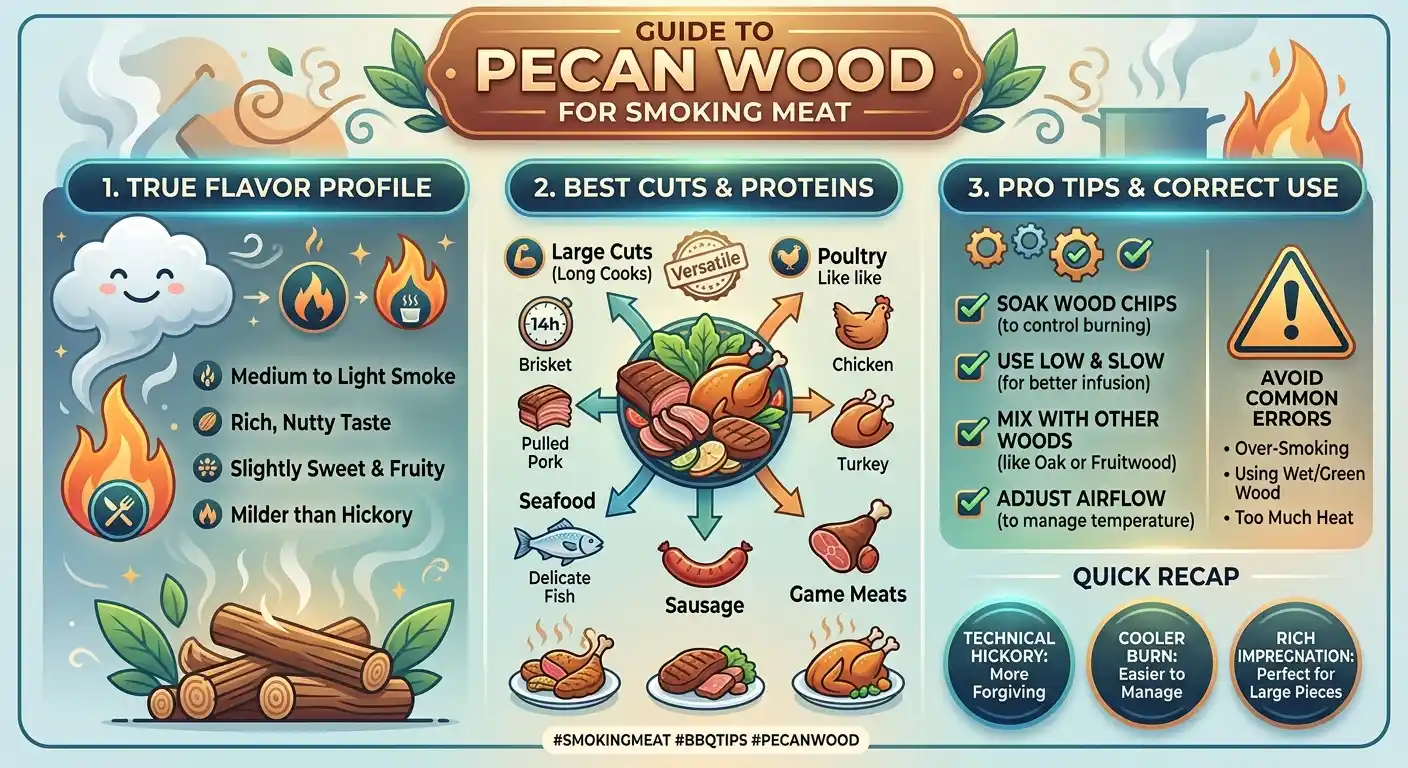
Pecan wood is in a strange place in the smoking world. It is a technical hickory, though not the hickory that most people smoke when they buy it at the grocery store. It is sweeter and softer on the edges, and much more forgiving on long cooks. It is that mixture that makes so many pitmasters have a pile of pecan available all year round.
This guide includes the true flavor of pecan wood, the types of cuts that it is most effective with, the correct way to use it, and the errors that cause a good pecan smoke to become a bad one.
Quick answer: wood of pecan is a medium to light, nutty, slightly sweet smoke that can be used on any protein, including fish that is delicate, or a 14-hour brisket. It smoulders less fiercely and cooler than hickory, so it is easier to use by the amateur, and offers to the expert the richness with which it impregnates large pieces.
What Is Pecan Wood, Exactly?
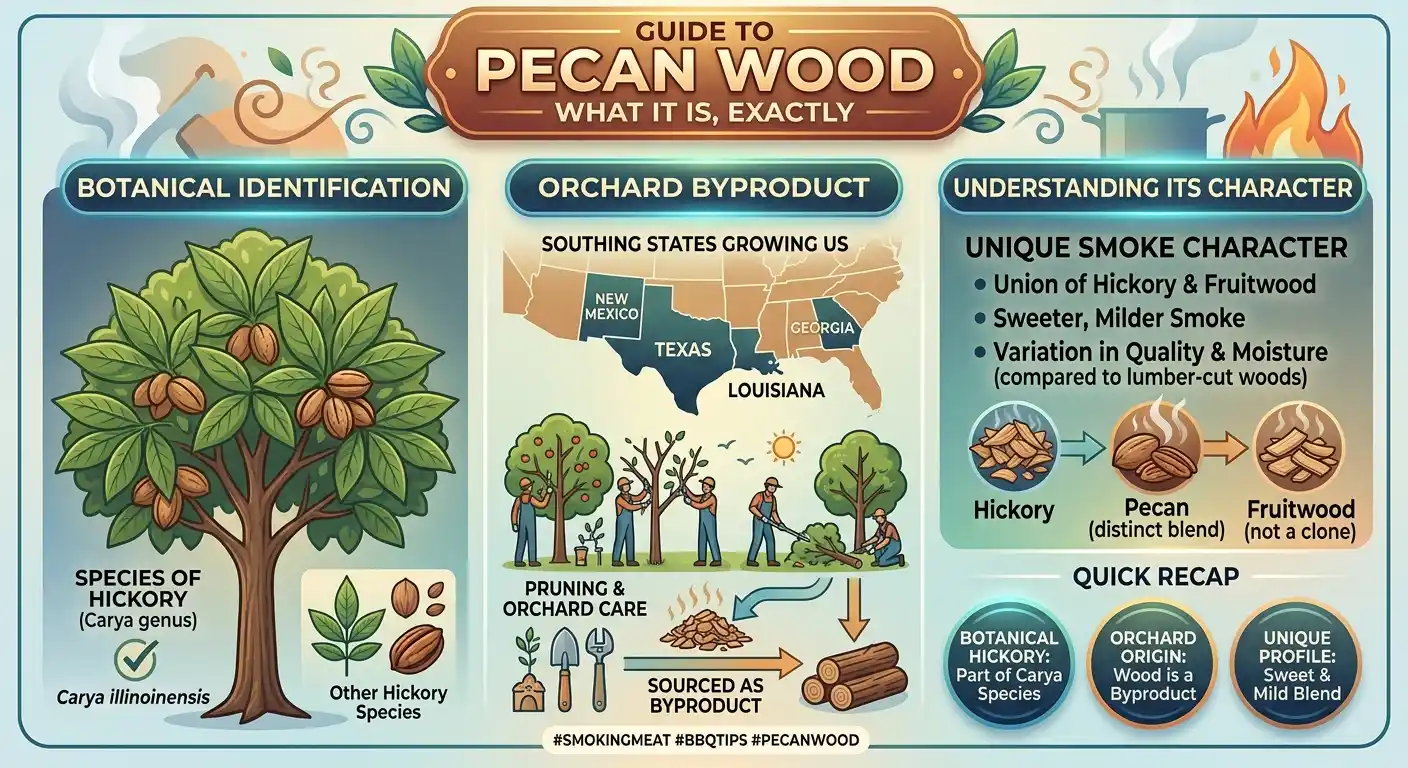
The pecan tree, Carya illinoinensis, is a species of hickory and is the source of pecan wood. It is something to know since it clarifies much of the confusion on the internet regarding whether pecan is a variety of hickory or something different. It is botanically a hickory. In the smoker, however, it is more of a union between hickory and fruitwood.
This is a native of the southern United States and some areas of Mexico and has been commercially grown in Texas, Georgia, Louisiana and New Mexico to harvest its nuts. The wood smoked is usually a byproduct of pecan orchard care (pruned branches and pruned trees) as opposed to wood cut to be used as lumber, which further contributes to variation in quality and moisture content among suppliers compared to other woods such as oak.
Lesson learned: Pecan is a species of hickory, but its smoke is a sweeter, milder version of the traditional hickory, not a clone.
What Does Pecan Wood Smoke Taste Like?
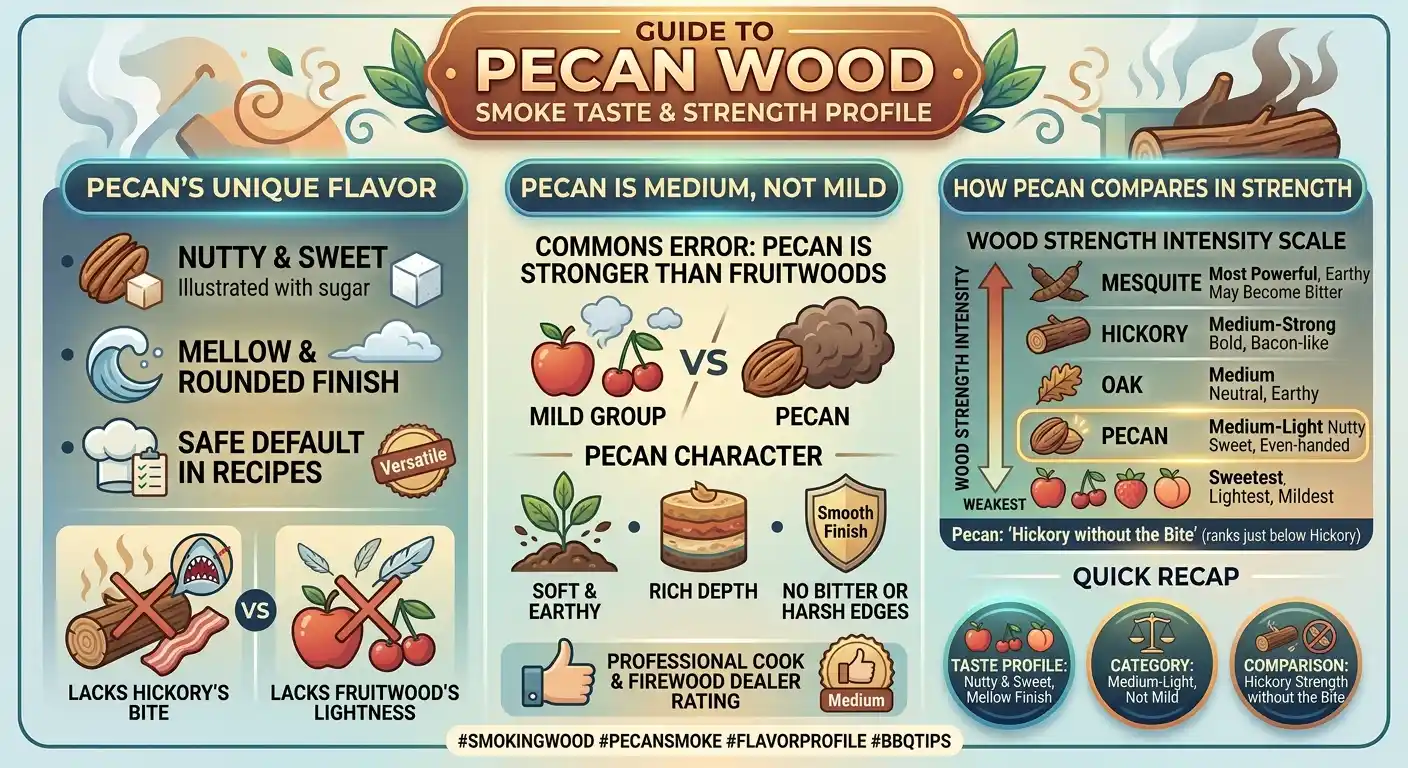
Pecan smoke is nutty and a bit sweet, and has a mellow, rounded finish. It lacks the piquancy, almost bacon-like bite of hickory, and lacks the lightness of fruit of apple or cherry, too. It falls in the middle and that is why it is included in the list of safe defaults in so many recipes.
Mild-to-Medium, Not Mild
One of the most frequent errors is to put pecan in the category of mild wood together with apple and cherry. It’s stronger than that. The smoke is sweet, soft and earthy, but with a richness of depth without any bitter or harsh edge. The majority of professional cooks and firewood dealers put it in the medium category with oak and maple since it has sufficient presence to compete with beef and pork, not just poultry and fish.
How Pecan Compares in Strength
On a crude intensity scale of weakest to strongest:
- Fruitwoods (apple, cherry, peach): sweetest, lightest, mildest.
- Pecan: medium-light nutty, sweet, even-handed.
- Oak: medium, neutral, earthy.
- Hickory: medium-strong, bold, bacon-like to some extent.
- Mesquite: most powerful, very earthy, may become bitter quickly.
This is why pecan is also referred to as hickory without the bite because it ranks just below hickory.
Pecan Wood vs Other Smoking Woods
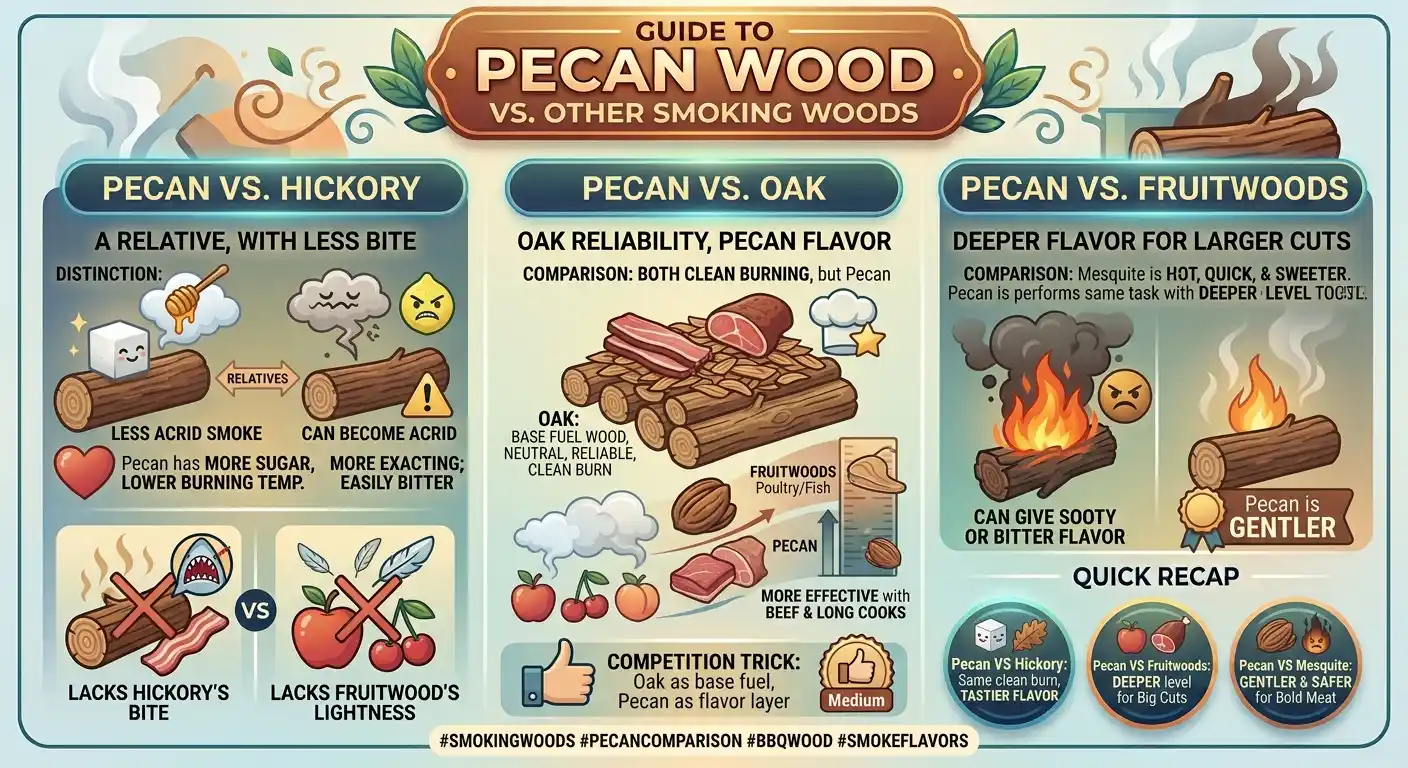
Pecan vs Hickory
This is the comparison that people seek the most and it is reasonable, as pecan is a relative of hickory. The distinction is reduced to the amount of sugar and burning temperature. Pecan wood will burn slightly lower and the smoke is much sweeter and less acrid than pure hickory.
Hickory will become bitter more easily when it is overcooked, or when a lot of it is cooked at once, whereas pecan is less exacting when it is long cooked. In case you like the punch of hickory, and have been bitten (literally) by bitterness in the past, the next wood to consider is pecan.
Pecan vs Oak
Oak is a workhorse wood: it is neutral, reliable, and burns clean, but it does not provide much flavor to the meat. Pecan is the same and tastes better. Competition cooks are fond of combining the two, with oak as a base fuel wood, and pecan as a flavor layer.
Pecan vs Fruitwoods (Apple, Cherry, Peach)
Fruitwoods are lighter and sweeter, and hardly have an earthy undertone. They light poultry, pork and fish where you desire smoke in the background. Pecan can perform the same task, but with a deeper level and that is why it is more effective than fruitwoods with beef and larger cuts that require to stand on their own after hours of exposure to smoke.
Pecan vs Mesquite
Mesquite is hot and quick burning, and the smoke is so thick that you had better take care not to cut yourself, particularly on long cooks. Pecan is quite the reverse: slower, gentler, and far more difficult to do. When mesquite ever has given your food a sooty or bitter flavor, pecan is a safer bet in the same bold-meat, long-cook scenarios.
Comparison Table: Pecan Wood vs Common Smoking Woods
| Wood | Flavor Strength | Flavor Notes | Best For | Burn Behavior |
| Pecan | Mild-medium | Nutty, sweet, mellow | Nearly everything, especially pork and poultry | Slow, steady, forgiving |
| Hickory | Medium-strong | Bold, savory, slightly bacon-like | Pork shoulder, ribs, brisket | Hot, can turn bitter if oversmoked |
| Oak | Medium | Earthy, neutral | Brisket, long cooks, base fuel | Steady, reliable, long-burning |
| Apple | Mild | Sweet, fruity, delicate | Poultry, pork, fish | Cool, gentle |
| Cherry | Mild | Sweet, slightly tart, adds color | Poultry, pork, beef (for color) | Cool, gentle |
| Mesquite | Strong | Earthy, intense, fast to bitter | Quick, hot cooks on beef | Very hot, fast-burning |
Best Cuts of Meat to Smoke With Pecan Wood
Pecan is among the few smoking woods that really work throughout the entire menu. This is its performance according to protein.
Beef (Brisket, Ribs, Steak)
Brisket and beef ribs go well with pecan. Its slow, even burn causes the meat to absorb smoke, rather than immediately, which is appropriate to large cuts that require many hours to have the fat and connective tissue break down in a proper manner. In a 10-14 hour brisket cook, that slow smoke uptake is much more important than on a quick sear.
In steaks or reverse-seared cuts, pecan will add a discernible flavor without covering up the beef itself, which is more difficult to scrape away with hickory or mesquite when cooking shorter.
Pork (Shoulder, Ribs, Loin)
Pork and pecan are a traditional couple, and the first meat pitmasters turn to when they have pecan wood. Pecan does not replace the natural sweetness of pork, it goes hand in hand with it, and it is particularly nice with pork shoulder and ribs, where the lengthy cooking time allows the nutty smoke to develop slowly into the bark.
Poultry (Chicken, Turkey, Duck)
This is, perhaps, the best category of pecan. Poultry is the area that pecan is best suited, as its light sweet smoke does not overwhelm the chicken, turkey, and duck but makes them tender and juicy. An entire smoked turkey on top of pecan is a popular holiday upgrade since the sweetness is not overpowering to the bird, as it complements the traditional herb rubs and gravies.
Fish and Seafood
Pecan is mild enough to suit salmon, trout and other fish, but it is stronger than alder or apple which are the customary safe options with delicate fish. Be less vigorous (fewer pieces, less exposure) than with pork or beef.
Vegetables, Cheese, and Nuts
Pecan smoke is also effective on vegetables, smoked cheese and even smoked nuts, as its sweetness is naturally compatible with the lighter and often already sweet foods. It is a nice application of leftover chips or small pieces following a larger cook.
Quick reference: best pecan wood pairings
- Best in general: pork shoulder, ribs, chicken, turkey.
- Excellent with beef: brisket, beef ribs.
- Good with a light touch: fish, vegetables, cheese
- Traditional holiday preparation: smoked turkey, whole.
Pecan Wood Chips vs Chunks vs Splits vs Pellets
The shape of the wood is as important as the species. This is the way to select.
| Form | Best Smoker Type | Burn Time | Typical Use |
| Chips | Gas grills, electric smokers, quick add-ins | 20 to 45 minutes per handful | Adding smoke flavor to shorter cooks or as a flavor boost |
| Chunks | Charcoal smokers, kamados, offset smokers (mixed with charcoal) | 45 minutes to a few hours per chunk | Medium to long cooks needing sustained, layered smoke |
| Splits (logs) | Offset stick-burner smokers | Fuel and flavor combined | All-wood cooks like traditional Texas-style brisket |
| Pellets | Pellet smokers/grills | Continuous, feeds automatically | Set-and-forget cooks where consistent temperature matters |
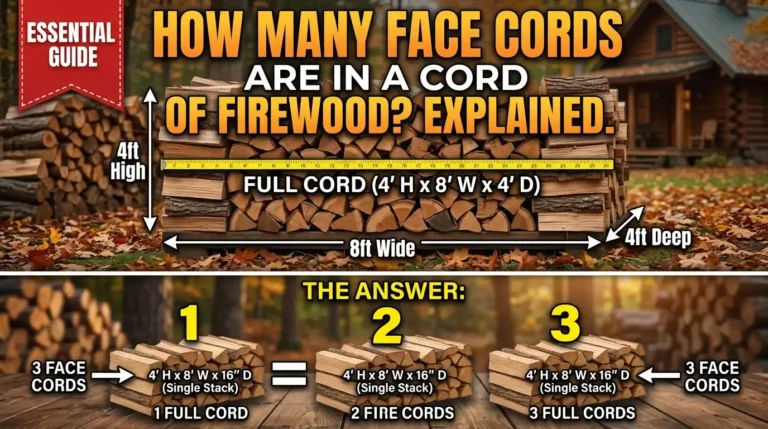
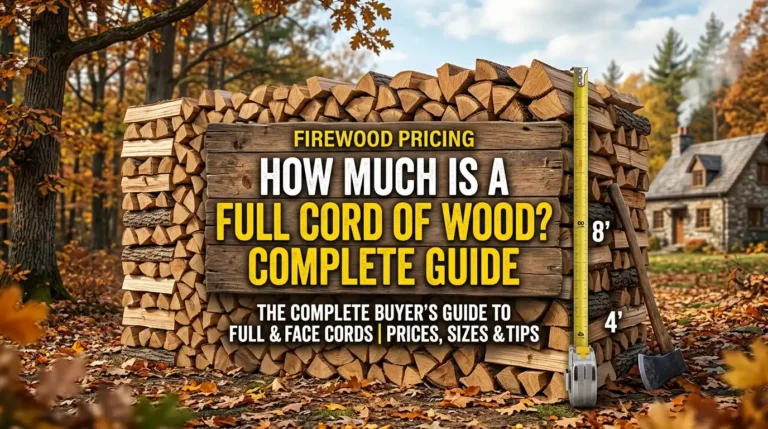
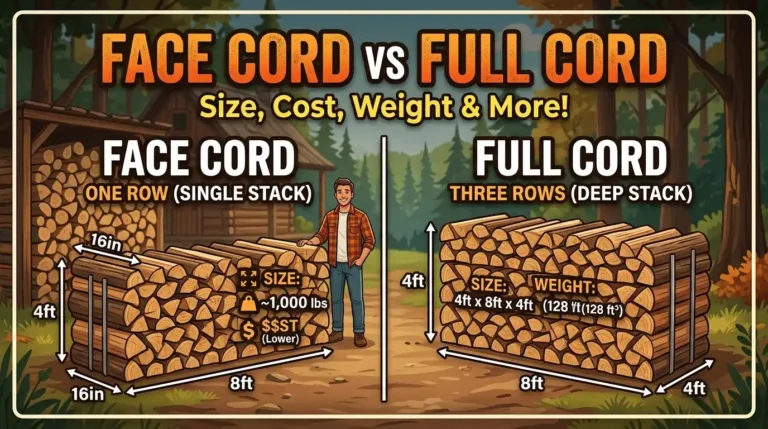
If you run an offset stick-burner and go through splits regularly, you’ll likely end up buying in bulk rather than by the bag. Wood at that scale is usually sold by the cord, so it helps to know how much wood actually fits into that measurement before you order.
Do you have to soak pecan wood chips? No. Soaking is among the most recurrent barbecue myths. Wet wood will steam before it smokes, and may in fact give you more of the acrid, white smoke you are endeavouring to prevent, than the thin, clean blue smoke you desire. Properly seasoned wood is drier and burns more predictably and gives cleaner flavor.
How to Smoke With Pecan Wood for Smoking Meat (Step-by-Step)
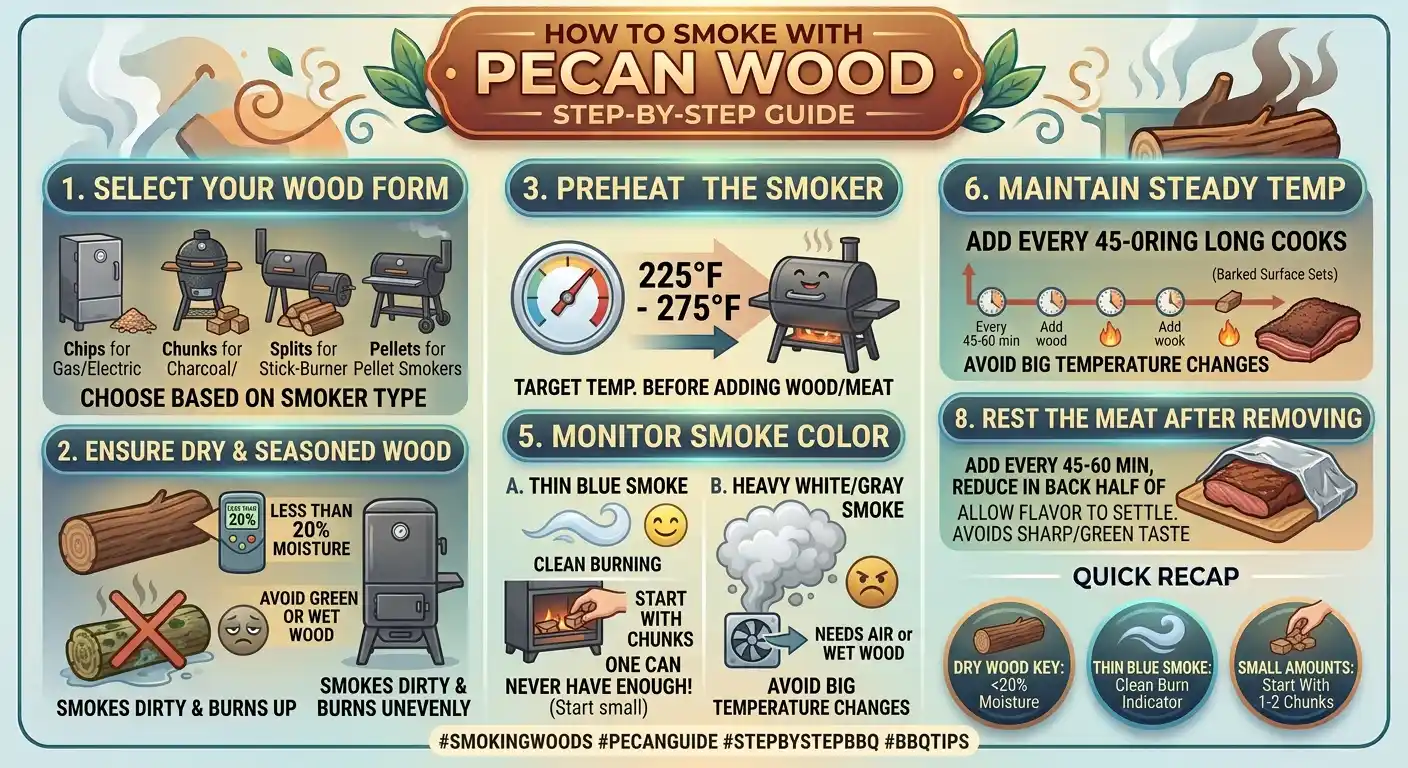
- Select your wood type depending on your type of smoker: chips to use in gas or electric, chunks to use in charcoal or kamado, splits to use in offset stick-burner, pellets to use in pellet smokers.
- Check wood is dry and seasoned. Pecan wood that is well seasoned ought to have a moisture content of less than 20 percent. Wet or “green” wood smokes dirty and burns unevenly.
- Before adding meat or wood, preheat your smoker to your desired temperature (usually 225 to 275 o F).
- Add pecan wood in small amounts. Begin with 1-2 chunks (or small handful of chips) instead of filling up the smoker in front. One can never have enough.
- Look at the smoke, it should not be thick white or gray smoke but thin and with a blue tint. A thin blue smoke is an indication of clean burning; heavy white smoke is an indication that the fire is in need of more air or the wood is wet.
- Do not have big temperature changes, but steady, as pecan cooks best with slow, even temperature throughout the cooking time.
- Add wood every 45 minutes to an hour to longer cooks, reducing in the back half of the cook as the meat has taken on enough smoke (most meat will not absorb much smoke after the surface bark sets).
- Take a rest of the meat after removing it out of the smoker. This allows the smoke flavor to settle instead of having a sharp or green taste.
How Much Pecan Wood Do You Need?
No universal number exists as the type of smoker, airflow and cook length all count, but these are good places to start:
- Chicken or short cooks (1-3 hours): 2-3 wood chunks or a handful or two of chips.
- Pork ribs (4-6 hours): 3-5 chunks, which are added slowly.
- Pork shoulder or brisket (8 to 14 hours): 6 to 10 pieces throughout the entire cook, and decreasing during the final hours.
- Offset stick-burner (all-wood fuel): Splits are continuously added along with fuel, hence the flavor is derived not by a separate addition of chips or chunks.
In case you are not sure, begin lighter. You can always put in more pecan wood part way through a cook than you can repair an over-smoked piece of meat.
Common Pecan Wood Smoking Mistakes
Wasting wood by using excessive amounts at a time. The most frequent cause of bitter, over-smoked meat, with whatever wood you happen to be using, is to dump a full load of chunks in, at the beginning.
Using unseasoned or wet wood. Green wood smokes gritty and does not even and wetting dry wood in water does not rectify this. It only postpones burning and gives more steam than smoke.
Mistaking pecan and hickory and using them interchangeably. Since pecan is technically a hickory, some cooks think that it will act just like hickory chunks in the grocery store. It is less hot and sweeter, thus a hickory recipe at full strength with pecan may actually under smoke the meat.
Allowing the fire to burn rather than clean. Even good wood gives a starved fire (lack of oxygen) a lot of thick acrid smoke. It is a fire management problem and not a wood problem and it is one of the least considered reasons of bad-tasting barbecue.
Using wood of unknown or untreated origin. Do not burn wood that is not known, or construction scraps, wood that has been treated with chemicals, paint or pressure treatment. Wood should be clearly labeled and sold as food-grade smoking wood.
Buying and Storing Pecan Smoking Wood
What to look for when buying:
- Wood marked to be used as cooking or smoking wood, not decorative firewood.
- Dry, cracked ends (indicated right dry seasoning)
- No mould, insect infestation or wet or sappy bark.
- A supplier that indicates moisture content or seasoning time, where feasible.
If you’re buying splits by the truckload rather than chunks by the bag, it’s worth understanding the standard measurements a cord is built around so you’re not overpaying for less wood than you think you’re getting. It also helps to know roughly what that stack should weigh, since weight varies quite a bit depending on the species and how dry the wood is.
How to store it:
- Store pecan wood dry and out of the ground, preferably with some kind of cover or in a shed.
- Use air to circulate around stacked wood to prevent mould.
- When opened, store chips and chunks in a sealed container or bag to exclude moisture.
- Buy with old wood first in case you are purchasing in batches.
One more thing worth checking before you buy: some sellers advertise a “face cord” rather than a full cord, which is a smaller stack for a lower price. If you’re comparing prices between suppliers, it’s a good idea to first understand how a face cord differs from a full cord so you can compare offers accurately.
Pecan Wood Smoking: Myth vs Fact
| Myth | Fact |
| Pecan wood is always mild, like fruitwood | Pecan is mild-to-medium, closer to oak and hickory in strength than to apple or cherry |
| You should soak wood chips before smoking | Soaking mostly creates steam, not better smoke; dry, seasoned wood burns cleaner |
| More smoke always means more flavor | Oversmoking causes bitterness; controlled, moderate exposure produces the best flavor |
| Pecan and hickory taste the same since both are hickory species | They’re botanically related, but pecan burns cooler and tastes noticeably sweeter and milder |
| Any dry wood from a pecan tree is safe to use | Only use wood free of chemical treatment, paint, mold, or disease, ideally sold specifically as cooking wood |
FAQs
What is pecan wood good for smoking?
Pecan wood is suitable for smoking just about any protein such as pork, poultry, beef, and fish. It particularly goes well with pork shoulder, ribs, chicken, and turkey since its sweet, nutty smoke does not overpower the natural flavor of the meat.
Is pecan wood good for smoking brisket?
Yes. The slow, gradual burn that pecan has is well suited to the long cook time of brisket since the smoke can be built up slowly in the bark rather than rushing into the meat at the beginning of the cook.
Is it possible to smoke chicken using pecan wood?
Yes, and one of the best combinations for pecan. Whole smoked chicken and turkey are favorite uses of pecan because the sweet, mild-to-medium smoke does not conceal the chicken but adds more flavor.
Should pecan wood be moistened before smoking?
No. It is a myth that wood chips should be soaked. Well-dried wood produces cleaner and thinner smoke compared to soaked wood that steams before it smokes.
What’s the difference between pecan and hickory smoke?
Pecan is a hickory species, but it burns less intensely and is sweeter and milder than typical hickory, which is more intense with a bacon-like taste. A large number of cooks refer to pecan as hickory without the bite.
Should it be pecan wood chips or chunks?
Chips are suitable for shorter cooks and gas or electric smokers because they burn quickly. Chunks are more suitable for longer cooks on charcoal or kamado smokers because they burn at a slower rate and provide smoke for longer.
Is it possible to smoke pecan wood in a pellet smoker?
Yes. Pecan pellets are very common and offer a hands-off method of achieving the flavor profile of pecan on a pellet smoker.
Does pecan wood produce a lot of smoke?
When pecan wood is well burned, it produces moderate amounts of thin blue smoke rather than heavy, thick smoke. Heavy white or gray smoke tends to indicate a problem with fire management rather than the wood itself.
Final Thoughts
Pecan for wood is a name that is rightfully deserved. It is tender enough to heal even the most delicate of lacerations, tough enough to support a 12-hour brisket, and forgiving enough that an overly heavy hand will not spoil dinner as it might with hickory or mesquite. It is one of the safest woods to start with, should you be a novice in smoking. When you know how, it is a sure method of attaining actual smoke depth without struggling to overcome bitterness on long cooks.
Most of the work is done by the wood. All you have to do is to buy it dry and well seasoned, add it bit by bit, keep an eye on it to make sure you see clean blue smoke rather than heavy white smoke, and allow the meat to rest after it comes off the smoker. Get those fundamentals straight, and pecan wood will perform all the functions to which pitmasters have depended upon it.