Fire Pit vs Patio Heater: Which Heats Better? A Clear Side-by-Side Guide
If you want to sit outside on cool nights, you have probably asked this question: Fire Pit vs Patio Heater: Which Heats Better? Both can warm a patio, but they warm it in very different ways. A fire pit throws out big, open heat that a group can gather around. A patio heater sends steady, aimed heat down over one seating area.
This guide compares the two side by side so you can pick with confidence. You will see how each one handles heat output, wind, fuel, cost, safety, and daily use. By the end, you will know which one fits your patio size, your budget, and the way you like to spend time outside.
There is no single winner for every home. The right pick depends on how much space you have, how many people you host, and how much work you want to do each time you light up. Read the safety notes first, then compare the details.
⚠️ Safety First — Read Before You Buy
Never use a wood, propane, or natural gas fire pit or patio heater indoors, in a garage, or in any enclosed space. Fuel-burning heaters can release carbon monoxide, a gas you cannot see or smell. Use them outside only, in open air, and keep working carbon monoxide alarms in your home. Never leave a lit fire pit or heater unattended, and keep children and pets at a safe distance. Check local burn bans and fire rules before you light a wood fire. This article is general guidance only — always follow the manual that comes with your unit.
At a Glance: Fire Pit vs Patio Heater
Best for groups
Fire pit
Best for small patios
Patio heater
Best in wind
Patio heater
Least daily work
Patio heater
Comparison Snapshot
| Heat style | Fire pit: open flame, heat in all directions | Patio heater: aimed radiant heat, mostly downward |
| Best space | Open yards and large patios | Small to mid-size patios and dining sets |
| Fuel | Wood, propane, or natural gas | Propane, natural gas, or electric |
| Wind | Heat blows away fast | Holds up better, but still loses heat in strong wind |
| Upkeep | Ash, soot, and wood storage (wood models) | Wipe down and check gas lines or cords |
Heat Output and Coverage: Who Warms More Space?
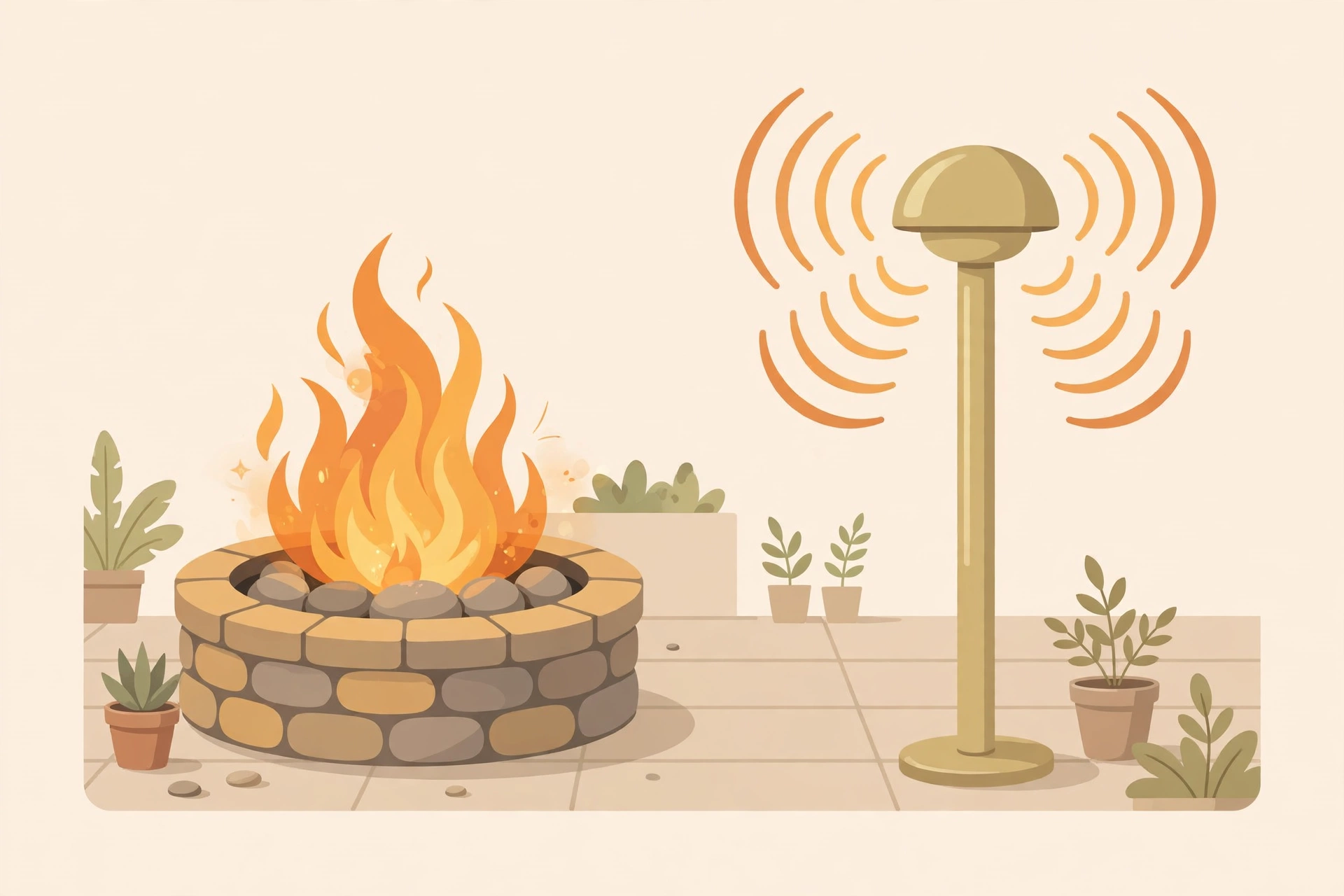
A fire pit usually wins on raw heat. Its open flame sends warmth out in all directions, so a circle of chairs around it can all feel heat at once. Shopping guides from heater retailers commonly list wood and gas fire pits in a wide range, from around 30,000 to 150,000 BTU, while most freestanding patio heaters top out near 50,000 BTU. Exact ratings vary a lot by model, so check the label on the unit you plan to buy.
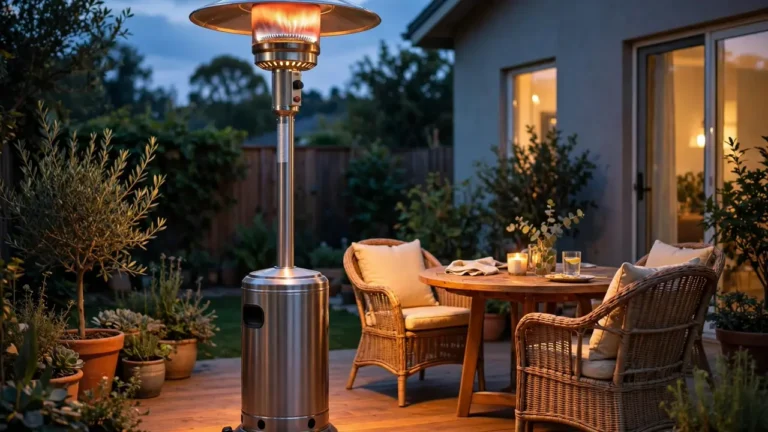
A patio heater wins on aimed heat. Its burner or heating element sits up high and pushes warmth down over one spot, such as a dining table. That makes it a strong pick when you want to warm two to six seats rather than a whole yard. If you need to heat a wide area, you may need two heaters, while one large fire pit may cover the same group.
Think about where people sit, not the size of the yard. A fire pit heats the ring of chairs around it and leaves the corners cold. A patio heater heats the seats under it and leaves the rest of the patio cold. Match the heat pattern to your seating plan, and you will feel warmer with less fuel burned.
How the Warmth Feels on Your Skin
Fire pit heat feels strong up close and fades fast as you move back. The side of your body facing the flame feels hot while your back stays cool, so people tend to shift seats or scoot closer. Wood smoke adds to the campfire feel, but it can also sting eyes and cling to clothes and hair.
Patio heater warmth feels more even across the seats under it. Propane and electric models give off radiant heat, which warms people and objects rather than the air itself. That is why a patio heater can feel warm even on a cool night, as long as you sit in its heat zone. Step outside that zone, and the warmth drops off fast.
If you love the glow and crackle of a real fire, a heater will never match that feel. If you want steady warmth while you eat dinner, a heater feels more comfortable. For more on how these units send out heat, see our guide on how a patio heater works.
Wind Performance: Which One Holds Up?
Wind is the biggest enemy of outdoor heat. A fire pit flame bends and flickers in wind, and much of its heat blows sideways instead of toward the people sitting around it. On a breezy night, a wood fire pit can feel far weaker than it does on a calm night, even with the same fire going.
Patio heaters handle wind better, but they are not windproof. Their heat still drifts in a strong breeze, and tall mushroom-style heaters can sway or tip if they are not weighted and set on level ground. Wall-mounted or ceiling-mounted electric heaters hold up best in wind because they stay fixed and aim heat straight down.
⚠️ Heads Up: Wind and Tipping
Never run a tall patio heater on a slope or in gusty wind without checking that its base is weighted and stable. A tipping heater can spill hot parts or, on gas models, leak fuel. If wind keeps blowing the flame out or rocking the unit, shut it off and move seating to a more sheltered spot.
For the calmest results, place seating near a windbreak such as a fence, hedge, or wall, while still keeping the clearances your manual calls for. A sheltered corner can make either option feel much warmer. If your patio faces open wind most nights, a patio heater is the safer bet for steady warmth.
Fuel Choices and Running Costs
Fire pits burn wood, propane, or natural gas, depending on the model. Wood is often the lowest-cost fuel if you have a local supply, but you must store it dry and haul it to the pit. Gas fire pits light fast and need no ash cleanup, yet they may need a gas line or regular tank swaps.
Patio heaters run on propane, natural gas, or electricity. Propane models are the most common and move anywhere, but tank refills add up over a season. Electric models cost only the power they draw and need no tank, yet they must sit near an outlet or a rated outdoor circuit. Natural gas models cost less per hour to run in many areas, but they need a fixed gas line and a pro install.
Running costs vary too much by local fuel and power prices to give one honest number here. As a rule, wood and natural gas tend to cost less per hour than propane, while electric costs depend on your power rate and the wattage of the unit. When you compare models, check the fuel type, the tank size or wattage, and your local prices before you decide. For help matching a heater to your space, read our guide on what size patio heater you need.
Safety and Clearance Rules
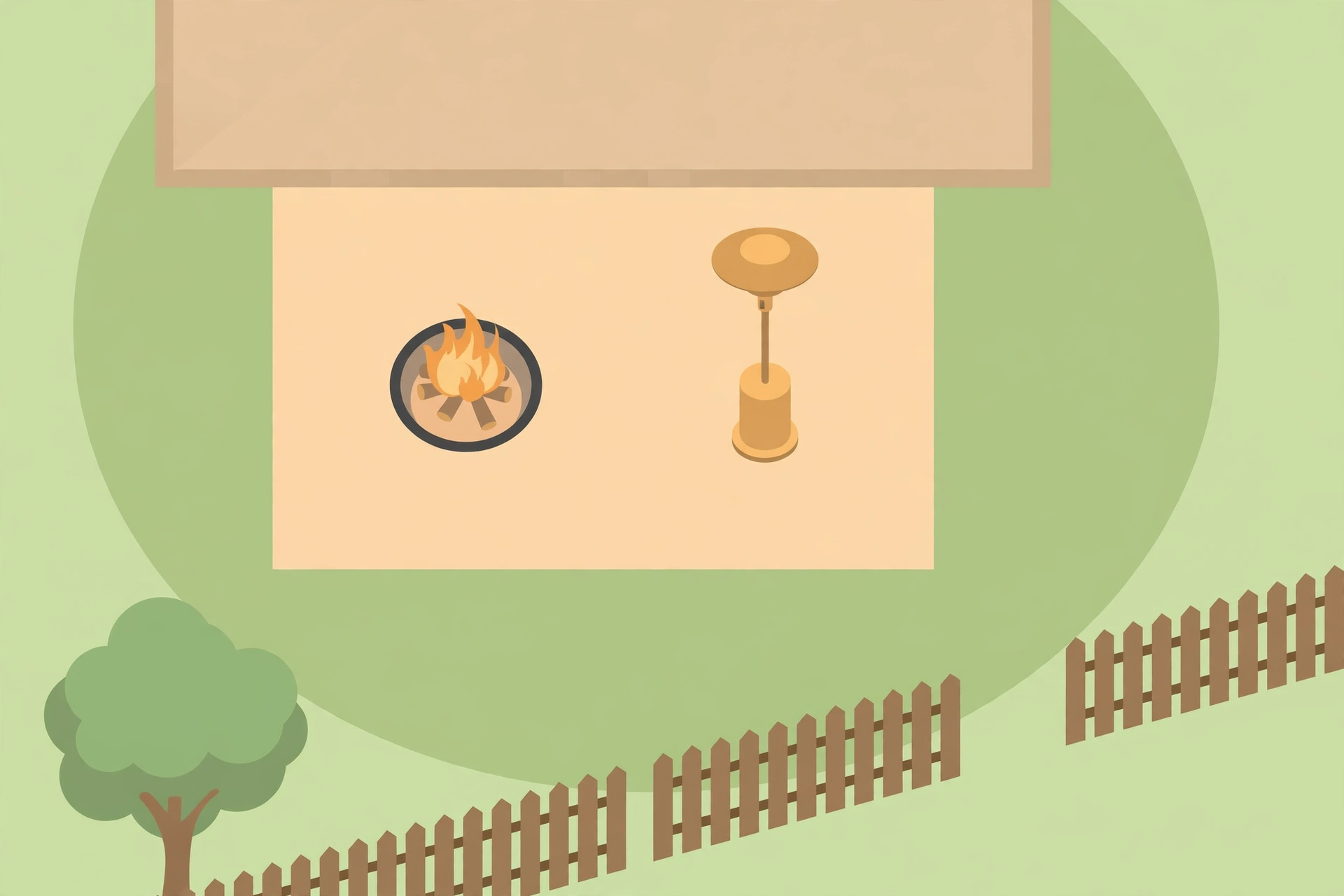
Safety is where the two options differ most. A fire pit has an open flame, flying sparks, and hot embers. It needs a wide clear zone away from your house, trees, fences, and low branches, and it must sit on a fire-safe surface. Wood models also need a spark screen and a way to put the fire fully out.
A patio heater has a contained heat source and often includes a tip-over shutoff and a flame-failure shutoff on gas models. That makes it a lower-risk pick around children and pets, though its top and reflector still get very hot. It still needs clear space above and around it, since heat rises and can damage a roof, awning, or umbrella.
Always read the manual for your exact model, because clearance numbers differ by brand and fuel type. As a starting point, keep far more open space around a wood fire pit than around a patio heater, and never place either one under a low roof or near hanging fabric. Our guide to patio heater clearance walks through the spacing rules in more detail.
⚠️ Heads Up: Propane and Carbon Monoxide
Store propane tanks outdoors, upright, and away from heat and open flame — never in a garage, shed, or basement. Check hoses and connections for wear before each season, and if you ever smell gas, turn the unit off if you can do so safely, leave the area, and call your gas supplier or emergency services from a safe distance. Never try to find or fix a gas leak yourself, and never bypass a safety shutoff. If anyone feels dizzy, nauseous, or headachy near a fuel-burning heater, move to fresh air at once and call emergency services.
One more rule applies to both options: check local burn bans and fire codes before you light up. Some towns ban wood fires on dry or windy days, and some housing rules ban open flames on balconies or small patios. If you want a fire pit on a deck, read our guide on whether you can put a fire pit on a wood deck first.
Setup, Use, and Upkeep
A patio heater is ready faster on most nights. Propane models light with a push-button igniter, and electric models start with a switch. Cleanup is light: wipe the reflector, check the base, and cover the unit when it rains. The main chores are swapping tanks or checking cords and keeping the unit covered in bad weather.
A fire pit asks for more work each time. Wood models need dry wood, kindling, and time to build and tend the fire, plus ash cleanup once it cools. Gas fire pits skip the ash, but you still need to check burners and covers.
If you enjoy tending a fire, that work feels like part of the fun. If you want heat with one button press, a heater fits your nights better.
Storage matters too. A patio heater can roll into a garage or shed for winter, while a heavy stone or metal fire pit often stays outside all year. Covers help both last longer. For day-to-day tips, see our guide on how to use a patio heater.
Pick the Right One for Your Space
Use this quick decision guide to match the heater to your home:
- Pick a fire pit if you have an open yard, host groups of six or more, and love a real flame as the center of the night.
- Pick a patio heater if your patio is small, you eat outside often, or you want heat at the push of a button.
- Pick a patio heater if wind hits your patio often, or if children and pets share the space.
- Pick a fire pit if you want the lowest fuel cost and you have dry wood close by.
- Consider one of each if you have a large patio with a dining area and a separate lounge area.
Still torn between heater types? Our guide on how to choose a patio heater covers size, fuel, and style in more depth. If you are weighing other open-flame options, our fire pit vs chiminea comparison may help too. And if fuel type is the sticking point, see electric vs propane patio heaters for a closer look at that choice.
Common Mistakes to Avoid
1. Buying for the yard, not the seats. A huge fire pit will not help if everyone sits ten feet away. Place heat where people actually sit.
2. Skipping the clearance check. Heat damage to roofs, umbrellas, and fences is a common and costly error. Measure before you buy.
3. Ignoring wind. An open, windy patio can cut felt heat in half. Add a windbreak or pick a mounted heater.
4. Leaving it lit and walking away. Both options need an adult watching at all times. A gust, a pet, or a child can change the scene in seconds.
5. Using fuel heaters in enclosed spaces. Covered patios with poor airflow still count as risky. If air cannot move freely, do not burn fuel there.
Frequently Asked Questions
Which heats better, a fire pit or a patio heater?
A fire pit gives off more raw heat and warms a wider ring of seats, while a patio heater gives steadier, aimed heat over one seating area. For a group gathered in a circle, the fire pit heats better. For a dining table on a small patio, the patio heater heats better.
Can a patio heater heat a large patio?
One freestanding patio heater warms the seats near it, not a whole large patio. For a big space, you may need two heaters or a fire pit in the lounge area plus a heater over the dining set.
Is a fire pit safe on a small patio?
A fire pit can be risky on a small patio because it needs a wide clear zone from walls, fences, and branches. In tight spaces, a patio heater is usually the safer pick. Always check your manual and local rules first.
Which one costs less to run?
It depends on your local fuel and power prices. Wood and natural gas often cost less per hour than propane, while electric costs depend on your power rate. Check the fuel type and your local prices before you buy.
Can I use a fire pit or patio heater under a covered patio?
Only if your manual clearly allows it and the cover is high enough with open airflow. Many covers are too low or trap heat and fumes. When in doubt, use an electric heater rated for covered use, or move the unit into open air.
Quick Reference Card: Fire Pit vs Patio Heater
Fire pit: most raw heat, open flame, best for groups and open yards, more work and more clearance.
Patio heater: steady aimed heat, best for small patios and dining sets, less daily work, better in wind.
Safety always: outdoors only, never unattended, keep clear space, watch wind, follow your manual.
Decide by: seat layout first, then space size, wind, fuel cost, and how much work you want each night.
Final Verdict
If you want the most heat for a crowd and you have open space, a fire pit is hard to beat. Its glow pulls people together in a way no heater can match. If you want steady warmth for dinner on a small or breezy patio, a patio heater is the smarter pick.
Measure your seating area, check your clearances, and look at your local fuel prices before you buy. Then pick the heat pattern that fits the way you spend your nights outside. Either way, you will get more evenings outdoors — and that is the real win.