Sassafras Firewood: Burning Guide for Quick, Fragrant Fires
Sassafras firewood smells like root beer, splits with little effort, and catches light fast. That combination makes it one of the most pleasant woods to burn for a short evening fire. It also burns through quickly, pops and throws sparks, and leaves almost no coals behind. This Sassafras Firewood: Burning Guide shows you how to get the fragrance and the quick heat without the mess, the smoke, or the risk.
By the end of this guide, you will know how to spot a sassafras tree, cut and season the wood, test it for dryness, and burn it in a way that keeps your room warm and your chimney safe. You will also know when to reach for a denser hardwood instead. The whole process takes one afternoon of work plus about six months of drying time, and the splitting is some of the most forgiving you will ever do.
Safety first: read this before you light a fire
Burn sassafras only in a fireplace or stove with a working chimney or flue, and keep the screen or glass doors closed while it pops. Never burn treated, painted, or stained wood, plywood, or household trash. Have your chimney inspected and swept once a year by a certified chimney sweep, and keep working smoke and carbon monoxide detectors in your home. Burning wet or unseasoned wood raises creosote buildup and chimney fire risk, so test every load with a moisture meter first. If you smell gas, see smoke leaking into the room, or feel dizzy or nauseous near a fire, get outside and call emergency services.
Sassafras Firewood: Burning Guide in Short
Sassafras is a light, fast burning hardwood with a spicy, root beer like scent. Published firewood charts list it at about 19.5 million BTU per cord, which is moderate heat, and it seasons in about 6 months once split and stacked. It splits with little effort, lights fast, and works well as kindling or as a shoulder season firewood.
The trade off is burn time. Sassafras leaves poor coals, so a fire built from sassafras alone fades fast and needs frequent reloading. Its natural oils also make it pop and throw sparks, so always burn it behind a screen or closed glass doors. Mix it with denser hardwoods such as oak or maple when you want steady heat that lasts into the night.
Total Time
1 afternoon + about 6 months drying
Active Time
2 to 3 hours per cord
Difficulty
Beginner friendly
What You Need
- Splitting axe or maul
- Chainsaw (optional, for cutting rounds to length)
- Moisture meter
- Measuring tape
- Firewood rack, pallets, or scrap lumber to lift wood off the ground
- Tarp or firewood cover for the top of the stack only
- Work gloves, eye protection, and ear protection
- Fireplace screen or glass doors that close
- Fire starters or dry kindling
- Denser hardwood such as oak or maple, for mixing
At a Glance: The 7 Steps
- Spot sassafras by its leaves, bark, and scent.
- Cut sassafras into short, small splits.
- Stack sassafras where sun and wind can reach it.
- Check moisture with a meter before you burn.
- Light a small, hot fire with sassafras at the base.
- Mix sassafras with denser hardwood for longer heat.
- Manage sparks, smoke, and ash after the fire.
Spot Sassafras by Its Leaves, Bark, and Scent
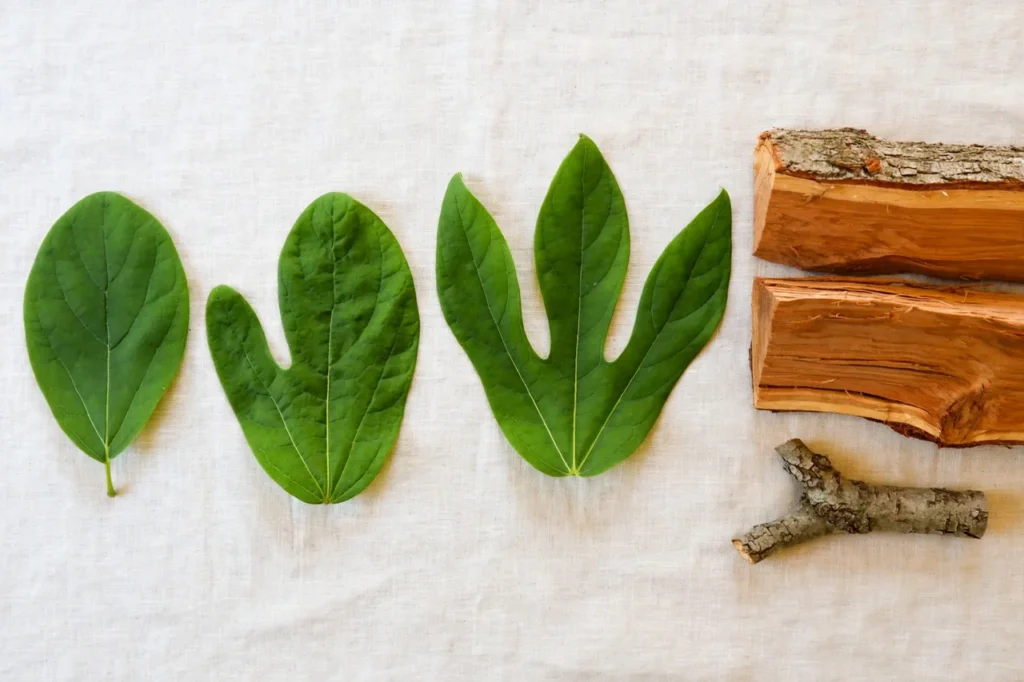
Sassafras (Sassafras albidum) is a native tree of eastern North America, found from Maine down to Texas. The surest way to name it is the leaves: one tree grows three leaf shapes at once, a plain oval, an oval with a lobe on one side like a mitten, and a three lobed leaf. No other common firewood tree does that, so the leaves settle the question fast.
Check the bark and the twigs next. Young sassafras bark is smooth and greenish, while older trunks turn rough and reddish brown with deep furrows. Scratch a twig or crush a leaf and you will smell a spicy, root beer like scent right away. That scent comes from aromatic oils in the wood and bark, and it is the same scent your fire will carry into the room.
Do not cut a tree you cannot name with confidence. Sassafras grows in woods, along fence lines, and at the edges of fields, and it often sprouts in small clusters from one root system. If you are buying firewood instead of cutting it, ask the seller to show you a split piece: sassafras heartwood is orange brown, the grain runs straight, and a fresh split smells spicy. That quick check protects you from paying hardwood prices for a load of mixed softwood.
Cut Sassafras Into Short, Small Splits
Measure your firebox first, then cut rounds 2 to 3 inches shorter than the firebox depth. Most indoor fireplaces take 16 inch pieces, while many wood stoves take 18 inch pieces. Cutting to fit matters more with sassafras than with denser wood, because small pieces burn cleaner and pop less.
Split each round into pieces about 3 to 4 inches across at the widest point. Sassafras has a straight grain and soft texture, so a splitting axe usually opens a round in one or two swings. Split while the wood is green if you can. Several firewood guides note that sassafras splits with little effort fresh cut, and it only gets slightly tougher as it dries.
Pro tip
Split sassafras small on purpose. Thin splits dry in weeks instead of months, light fast, and give you a hot fire with less popping than big, chunky rounds. Save the large rounds for dense hardwoods that need the mass to burn slowly.
Wear gloves, eye protection, and ear protection for every cutting session, and keep children and pets well clear of the splitting area. A splitting axe that glances off a round can travel farther than you expect. Work on level ground, set each round flat on a chopping block, and stop when you feel tired. Most splitting injuries happen late in a session, when focus slips.
Stack Sassafras Where Sun and Wind Can Reach It
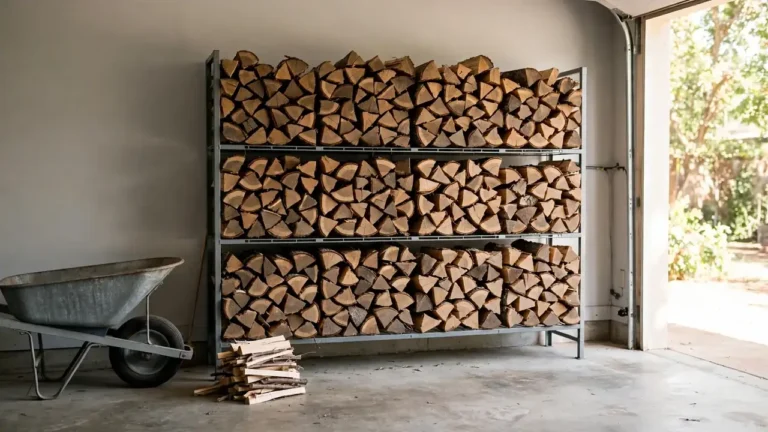
Pick a spot that gets direct sun for most of the day and catches the wind. Sassafras seasons fast for a hardwood, but only when air can move through the stack. Set pallets or scrap lumber on the ground first so the bottom row never sits in mud or standing water.
Stack the splits in a single row, bark side up on the top row, with a 2 to 3 inch gap between rows if you have room for more than one. Leave the sides open. Cover only the top of the stack with a tarp or a sheet of metal roofing, and let the cover hang a few inches past the edges so rain runs off instead of pooling. A tarp draped down the sides traps moisture and invites mold, which is the opposite of what you want.
Mark the date on the end of the stack with a lumber crayon or a tag. Published firewood charts list sassafras seasoning time at about 6 months, and several guides report that split pieces in a sunny, breezy stack can be ready in about 3 months during a dry summer. Your climate and your stack decide the real number, so the date tag keeps you honest and the moisture meter makes the final call. For stacking methods that work for any species, see our guide on how to stack firewood for a steady, dry pile.
Check Moisture With a Meter Before You Burn
Press the pins of a moisture meter into the freshly split face of a piece, not the bark and not the old end grain. The reading you want is under 20 percent. That number is the standard line for seasoned firewood of any species, and sassafras is no exception. Test three or four pieces from different parts of the stack, because the sunny top row can read dry while the shaded bottom row is still wet inside.
Wet sassafras hisses, smokes, and coats your chimney with creosote. Dry sassafras lights with a match and a twist of newspaper, burns with a lively flame, and smells like root beer within minutes. If your meter reads over 20 percent, give the stack more time. There is no shortcut here, and burning wet wood to save a week costs you far more in chimney cleaning and lost heat.
No meter in the toolbox? Clap two pieces together and listen for a sharp crack instead of a dull thud, and look for cracks in the end grain and bark that is pulling loose. These checks help, but they are rough.
A moisture meter costs less than one chimney sweep, so it pays for itself in a single season. Our guide on how to tell if firewood is seasoned walks through the full set of checks.
Heads up
Never burn sassafras that is still green or wet. The oils that make it smell good also make it pop, and wet wood makes the popping worse while adding smoke and creosote. If a piece hisses or bubbles at the ends, put it back on the stack.
Light a Small, Hot Fire With Sassafras at the Base
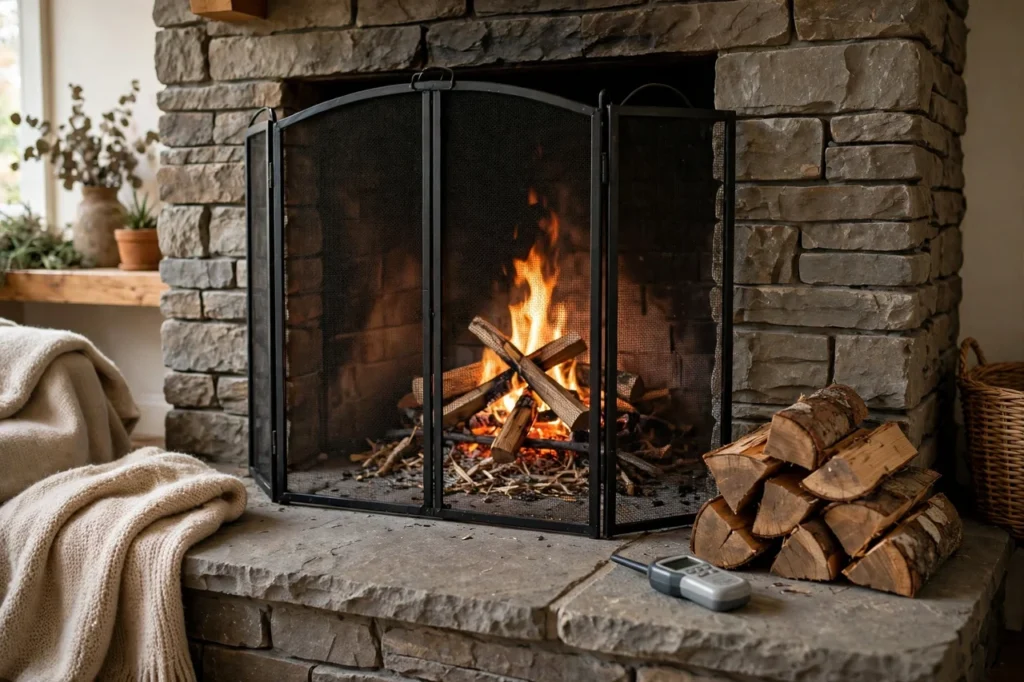
Start with a clean firebox and an open damper. Lay two small sassafras splits parallel on the grate, about 3 inches apart, then cross two more splits over them in a loose crisscross. Tuck a fire starter or a twist of dry newspaper into the gap in the middle. Sassafras lights fast because of its natural oils, so you need less kindling than you would for oak or maple.
Light the starter and leave the air controls wide open for the first 10 to 15 minutes. A hot, fast start is the whole point of sassafras: it drives moisture out of the wood, warms the flue so the chimney draws well, and sets up the coal bed for the denser wood you add next. Close the screen or glass doors before the fire gets going, because the first pops often come early.
Add wood in small amounts, one or two splits at a time. A firebox stuffed full of sassafras burns hot and fast, then collapses into ash with little warning. Small, frequent loads keep the flame steady, keep the room comfortable, and keep the popping under control. If you want a fire that lasts the whole evening without constant tending, the next step is the one that matters most.
Mix Sassafras With Denser Hardwood for Longer Heat
Think of sassafras as the starter and the scent, not the main fuel. Build your fire with sassafras on the bottom and one or two dense hardwood splits on top. Oak, maple, hickory, or locust all work. The sassafras lights fast and warms the flue, then the denser wood catches and carries the fire for hours on a real coal bed.
A practical mix for an evening fire is about one part sassafras to two parts dense hardwood by volume. Use more sassafras in mild weather, when you only want a quick fire to take the chill off a room. Use less sassafras in deep winter, when you need steady heat and a coal bed that survives until morning. There is no rule here that fits every house, so adjust the mix over a few fires and note what your stove or fireplace likes.
This mixing habit also solves the two biggest complaints about sassafras. Denser wood on top holds the popping splits in place, and a real coal bed from the hardwood keeps the room warm long after the sassafras has burned away. If you only have sassafras on hand, plan on reloading every 45 to 60 minutes and accept a shorter, brighter fire. For a full rundown of a comparable light hardwood, read our Hackberry firewood burning guide, which covers a similar fast burning profile.
Manage Sparks, Smoke, and Ash After the Fire
Keep the screen or glass doors closed for the whole burn, and keep a rug or hearth mat clear of the opening. Sassafras pops because pockets of oil in the wood heat up and burst, and a single ember can smolder in carpet or a curtain for a long time before you notice it. In a wood stove, wait for a quiet moment before you open the door to reload, and open it slowly so the rush of air does not fan embers out onto the hearth.
Watch the smoke for the first few minutes. Thin, pale smoke that clears fast means dry wood and a good draft. Thick, dark smoke that hangs in the room means wet wood, a cold flue, or a blocked chimney, and that is your signal to let the fire die down and check the basics before you light another one. Burning wet firewood is the most common cause of a smoky room, and it is the easiest one to fix.
Let the ash cool for at least 24 hours before you scoop it out, and store it in a metal container with a tight lid, away from the house. Sassafras leaves more ash than coal, so you will empty the firebox more often than you would with oak. Never dump ash in a paper bag or a plastic bin, and never assume a pile of gray ash holds no live embers. Coals can stay hot under ash for a full day.
Sassafras Firewood at a Glance
Figures below come from published firewood charts, which list sassafras in a narrow range (about 18.9 to 19.5 million BTU per cord). Treat them as a guide, not a lab result, since heat varies with moisture, piece size, and your stove.
| Property | Sassafras |
|---|---|
| Heat per cord | About 19.5 million BTU (moderate) |
| Seasoning time | About 6 months split and stacked. As little as 3 months in dry, sunny weather |
| Dry weight per cord | About 2,829 lb |
| Green weight per cord | About 3,740 lb |
| Splitting | Very easy, straight grain, splits well green or dry |
| Smoke | Low to moderate when seasoned |
| Aroma | Spicy, root beer like |
| Coal production | Poor, burns down to ash fast |
| Sparks and popping | High, always use a screen or closed doors |
| Creosote buildup | Low when seasoned |
| Best use | Kindling, shoulder season fires, and mixing with dense hardwoods |
How Sassafras Compares to Oak and Pine
Firewood guides put sassafras in the middle of the pack for heat and at the fast end for burn speed. The table below compares it with two familiar woods so you can see where it fits in your woodpile. Ratings are general characterizations from published firewood guides, not lab measurements, and they assume seasoned wood burned in a normal fireplace or stove.
Sassafras vs. Oak vs. Pine
| Trait | Sassafras | Oak | Pine |
|---|---|---|---|
| Heat output | Moderate | High | Moderate |
| Burn time | Short | Long | Short |
| Coal bed | Poor | Excellent | Poor |
| Splitting | Very easy | Moderate | Easy |
| Seasoning time | About 6 months | 12 to 24 months | 6 to 12 months |
| Aroma | Spicy, root beer like | Mild, woody | Resinous, piney |
| Sparks and popping | High | Low | Moderate to high |
| Creosote risk | Low when seasoned | Low when seasoned | Higher, resinous wood |
The takeaway is plain. Sassafras beats oak on splitting speed, seasoning time, and scent, and it beats pine on creosote risk when seasoned. Oak beats sassafras on heat, burn time, and coals by a wide margin. That is why the two woods work so well together: sassafras starts the fire and scents the room, and oak keeps it going.
What Sassafras Does Well
- Splits with little effort, even when green
- Seasons in about 6 months, faster than oak
- Lights fast and makes excellent kindling
- Smells spicy and root beer like while burning
- Low creosote buildup when seasoned
- Burns hot and fast for quick heat
Where Sassafras Falls Short
- Burns fast and needs frequent reloading
- Leaves poor coals, so heat fades quickly
- Pops and throws sparks, so a screen is a must
- Moderate heat only, not a main winter fuel
- Produces moderate smoke if burned damp
- Can cost more where other uses compete for the wood
When Sassafras Shines and When to Skip It
Sassafras is at its best in the shoulder seasons, those cool spring and fall evenings when you want a fire for an hour or two and not a furnace running all night. It is also a strong pick for starting fires, for open fireplaces where you can enjoy the scent, and for outdoor fire pits where the popping is part of the show and the sparks land on stone or dirt instead of carpet.
Skip sassafras as your only fuel in deep winter, in a stove you want to bank overnight, or in any open fireplace without a screen. A fire that collapses into ash at midnight leaves a cold house at dawn, and that is a poor trade for a pleasant smell. If your only stack is sassafras, pair it with whatever dense hardwood you can buy or trade for, even a small amount, and your evenings will run longer and warmer.
Do not use sassafras for cooking or smoking food. Several firewood guides warn that the smoke can trigger allergic reactions in some people, and the safrole oil that gives sassafras its scent is a compound regulators have flagged over safety concerns in food and drink.
The smell is lovely in a living room fire. It does not belong over a grill. Use apple or cherry wood for cooking fires instead.
What to Expect: Before and After
Before: your first sassafras fire
You may expect a long, slow burn like oak, then feel let down when the fire fades in under an hour. The popping can surprise you, and a firebox full of sassafras alone leaves a bed of gray ash instead of glowing coals.
After: burning it the right way
Small splits light fast, the room fills with a spicy root beer scent, and dense hardwood on top carries the heat for hours. The screen stays closed, the chimney stays cleaner, and you reload on your schedule instead of the fire’s.
Troubleshooting Sassafras Fires
| If This Happens | Try This |
|---|---|
| The fire burns out in under an hour | Mix in dense hardwood on top, and load smaller amounts more often instead of one big load. |
| Loud popping throws embers past the screen | Split the wood smaller, check that it is fully seasoned, and keep glass doors closed. |
| Thick smoke fills the room | Test moisture and burn only pieces under 20 percent. Warm the flue with a small hot fire first. |
| The wood hisses and will not catch | The wood is still wet inside. Return it to the stack and test again in a few weeks. |
| No coals left for the next load | Add a dense hardwood split early in the fire so a coal bed forms before the sassafras burns away. |
| Soot builds up on the glass fast | Burn hotter with the air controls open, use drier wood, and have the chimney checked. |
Frequently Asked Questions About Sassafras Firewood
Is sassafras good firewood?
Sassafras is good firewood for quick fires, kindling, and shoulder season heat. It lights fast, splits with little effort, and smells like root beer while it burns. It is a poor choice as your only winter fuel because it burns fast and leaves almost no coals.
How long does sassafras firewood take to season?
Published firewood charts list about 6 months for split and stacked sassafras. In a sunny, breezy stack during a dry summer, split pieces can be ready in about 3 months. Always confirm with a moisture meter and burn only wood that reads under 20 percent.
Does sassafras firewood pop and spark?
Yes, sassafras pops and throws sparks more than most firewood because of the natural oils in the wood and bark. Always burn it behind a fireplace screen or closed glass doors, and keep the hearth clear of rugs and curtains.
Can you burn sassafras in a wood stove?
Yes, sassafras burns well in a wood stove, where the closed firebox contains the sparks. Split it small, mix it with denser hardwood for longer heat, and open the stove door slowly when the wood is popping so embers do not escape.
Is sassafras safe to burn indoors?
Seasoned sassafras is safe to burn in a fireplace or stove with a working chimney, a closed screen or doors, and working smoke and carbon monoxide detectors. Have the chimney inspected and swept once a year, and never burn sassafras that is wet, treated, or painted.
Can you cook over a sassafras fire?
No, do not cook or smoke food over sassafras. Firewood guides warn that the smoke can trigger allergic reactions in some people, and the safrole oil in sassafras raises safety concerns for food use. Use apple or cherry wood for cooking fires instead.
Quick Reference Card: Sassafras Firewood
What you need
Splitting axe, moisture meter, firewood rack or pallets, top cover, gloves and eye protection, fireplace screen, dense hardwood for mixing.
The steps
- Spot sassafras by its three leaf shapes and spicy scent.
- Cut rounds 2 to 3 inches shorter than the firebox and split small.
- Stack in sun and wind, off the ground, top covered only.
- Test moisture and burn only pieces under 20 percent.
- Light a small hot fire with sassafras at the base.
- Mix one part sassafras with two parts dense hardwood.
- Keep the screen closed and let ash cool 24 hours.
Heat: about 19.5 million BTU per cord. Seasoning: about 6 months. Coals: poor. Sparks: high. Best for: kindling and quick, fragrant fires.
Sassafras will never be the hardest working wood in your pile, and that is fine. It does three things better than most woods: it splits with little effort, it seasons fast, and it fills a room with a warm, spicy scent that no other common firewood matches. Burn it dry, burn it small, keep the screen closed, and pair it with a dense hardwood when you need heat that lasts. This Sassafras Firewood: Burning Guide has given you the full routine, and your next fire is ready when your woodpile is.
A good next step is to check the rest of your woodpile the same way. Test a few splits from each stack with your moisture meter, and note which stacks are ready and which need another month. If you are still building up your supply, our guide on how much firewood you need for winter helps you plan the season, and our notes on whether firewood can be too dry settle a question that comes up with fast seasoning woods like this one.
Sources: firewood characteristics, heat, and seasoning figures in this guide follow published firewood charts and guides, including Planters Digest and PlantNative. Figures vary a little between sources, and this guide notes the range where sources differ. This article is general guidance, not professional advice. For chimney problems, damaged flues, or any doubt about your fireplace or stove, call a certified chimney sweep or a licensed professional.