Hackberry Firewood: Burning Guide for Steady Heat, Good Coals, and Fewer Sparks
Hackberry firewood shows up in a lot of wood piles, and most people who burn it have the same first question. Is it worth the work, or should it go to the brush pile? The short answer is that hackberry is solid middle of the road firewood. It burns with steady heat, leaves good coals, and throws few sparks when it is dry.
This guide walks you through the whole job, from spotting real hackberry to building a fire that holds heat. You will learn how to cut it, split it, stack it, test it, and burn it without filling the house with smoke. You will also learn the one weak spot hackberry has, and how to work around it.
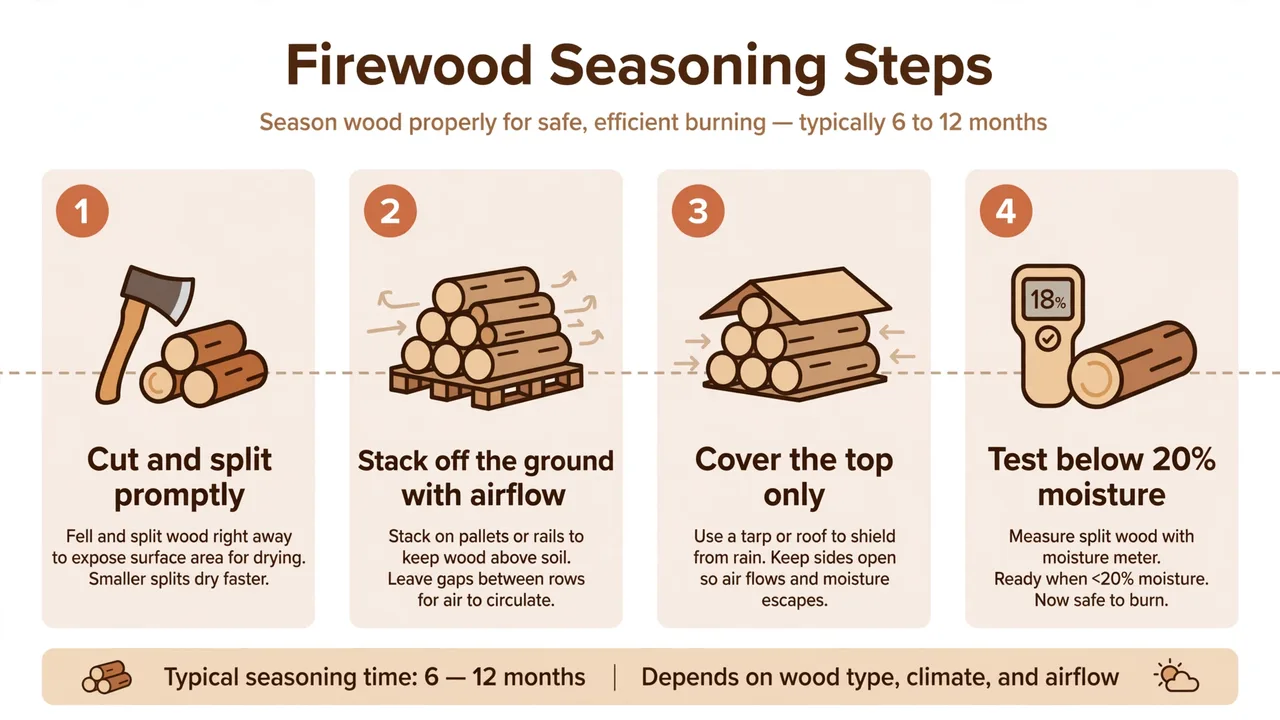
Plan on 6 to 12 months of drying time if you start with fresh cut wood. That sounds like a long wait, and it is. The good news is that hackberry dries faster than oak, and the steps below keep the wood sound while it dries.
Safety note: Burn wood only in a fireplace or stove made for it, with the flue open and working smoke and carbon monoxide alarms in the home. Have the chimney checked and swept each year by a certified sweep. Never burn treated, painted, or stained wood, plywood, or trash. Check local burn rules and burn bans before you light a fire.
What you need
- Chainsaw with a sharp chain
- Safety glasses and ear protection
- Work gloves and steel toe boots
- Splitting maul or axe
- Moisture meter
- Tape measure
- Pallets or rails for stacking
- Tarp or metal roofing for the top cover
- Dry kindling and fire starters
- Fireplace poker and ash bucket
No log splitter? A maul handles most straight hackberry rounds. Borrow or rent a splitter for large or knotty rounds.
At a glance: the 7 steps
- Spot real hackberry before you cut or buy
- Cut rounds to length and split them soon
- Stack the splits off the ground in sun and wind
- Cover the top and leave the sides open
- Test the moisture and read the signs
- Build a small, hot fire with dry kindling
- Feed the fire and tend the coals
Know what hackberry brings to the fire
Common hackberry (Celtis occidentalis) is a hardwood that grows across much of North America. In parts of the south, sugarberry (Celtis laevigata) also goes by the name hackberry. Both burn in much the same way, and both share the same weak spot, which is fast decay when the wood stays wet.
Utah State University Extension lists hackberry at about 21.2 million BTU per dry cord. That puts it in the middle of the firewood range. It gives more heat than elm, poplar, or pine, and less heat than oak, ash, or hickory. A dry cord weighs about 3,048 pounds, and a green cord weighs about 3,984 pounds, so a good share of the fresh weight is water that has to dry out first.
The same Utah State table rates hackberry smoke as low, sparks as few, and coals as good. Those three ratings are the reason many wood burners like it for indoor fires. Low smoke means less smell and less creosote when the wood is dry.
Few sparks means less risk of embers popping out of an open fireplace. Good coals mean the fire holds heat after the flames die down.
Oklahoma State University Extension gives a range of 19.5 to 21.7 million BTU per cord for hackberry, with dry weight from 2,640 to 3,247 pounds per cord. The range is normal. Heat per cord shifts with the tree, the soil, and how the cord was measured. Use 21.2 million BTU as a fair working figure, and treat any single number as an estimate, not a promise.
Hackberry firewood at a glance
| Heat per dry cord | About 21.2 million BTU (Utah State University Extension) |
| Heat range in other sources | 19.5 to 21.7 million BTU per cord (Oklahoma State University Extension) |
| Dry weight per cord | About 3,048 pounds |
| Green weight per cord | About 3,984 pounds |
| Smoke when dry | Low |
| Sparks | Few |
| Coals | Good |
| Splitting | Splits with little force on straight rounds, harder on knotty rounds |
| Seasoning time | 6 to 12 months |
| Target moisture | Below 20 percent |
Source: Utah State University Extension, Wood Heating, Table 1, with the range from Oklahoma State University Extension fact sheet NREM-5154. Values are for air dried wood. Wet wood gives less heat and more smoke.
See how hackberry heat stacks up
Heat per cord is the fairest way to compare species, because you buy and stack wood by volume. Hackberry sits below the top tier, and that is fine. It still beats a lot of common woods, and it burns cleaner than most softwoods. The chart below shows where it lands next to four familiar species from the same Utah State table.
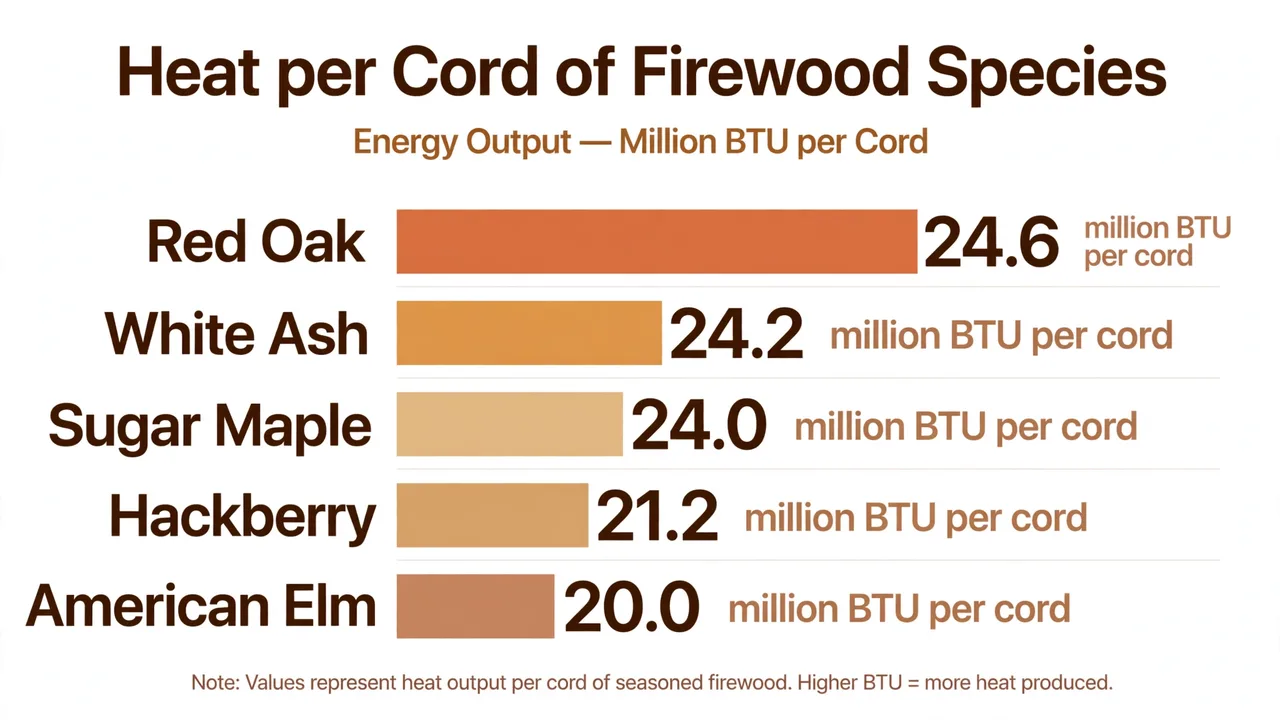
Read the chart as a buying guide, not a scorecard. If you heat with wood all winter, mix hackberry with oak or hickory for the coldest nights. If you burn for evening fires and weekend heat, hackberry on its own does the job well. Pairing it with denser wood stretches the dense wood and keeps the fire lively.
Spot real hackberry before you cut or buy
Look at the bark first. Mature common hackberry has gray bark with raised corky warts, knobs, and ridges that feel rough under your hand. The bumpy pattern is hard to mix up with the smooth bark of beech or the deep furrows of oak. Small dark berries, about the size of a pea, often hang on the tree into winter.
Check the cut face next. Fresh hackberry wood is pale, almost white to light tan, with a coarse grain. Ask the seller to name the species in a mixed load, and pay a premium price only for wood you can name.
Cut rounds to length and split them soon
Measure your firebox before you cut. Most stoves and fireplaces take 16 inch pieces, and some take 18 inch pieces. Cut rounds to fit with at least 2 inches to spare. Our guide to firewood sizes and what length to buy walks through how to match length to your stove.
Split each round while it is still fresh. Hackberry splits with little force when the grain runs straight, and a maul will open most rounds in one or two hits. Splitting exposes fresh faces to the air, and whole rounds dry far too slowly for this species.
Heads up: hackberry rots fast when wet
Purdue University notes that hackberry has no resistance to decay. Rounds left on damp ground can turn soft and punky in weeks, not months. Cut, split, and stack hackberry within days of felling it.
Toss any piece that feels spongy, smells sour, or crumbles in your hand. Rotten wood gives little heat and a lot of smoke.
Stack the splits off the ground in sun and wind
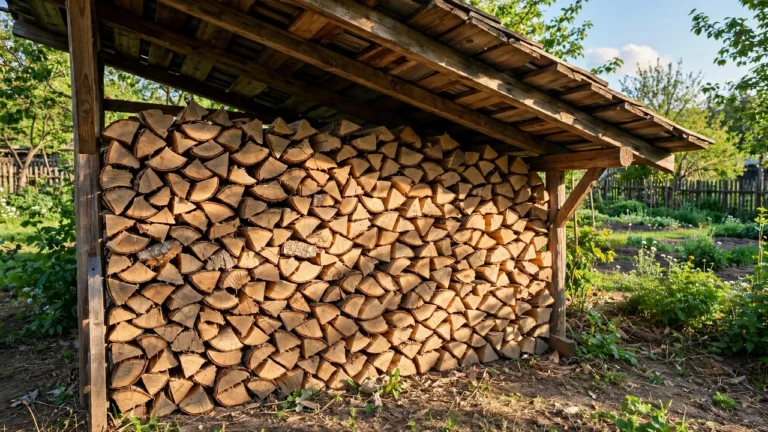
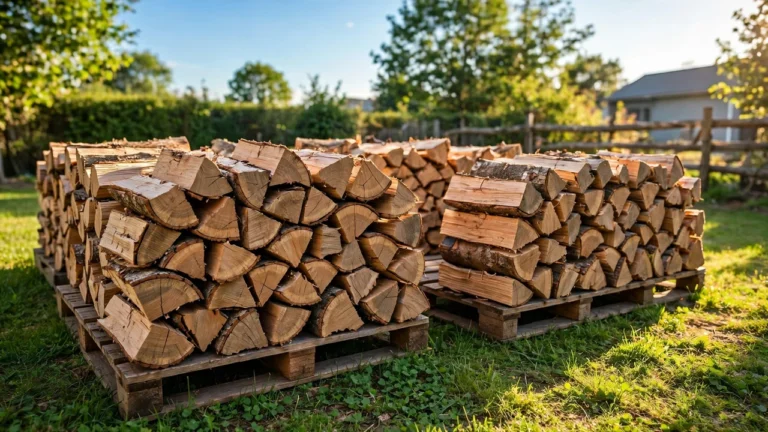
Set pallets, rails, or cinder blocks down first, then build the stack on top of them. Ground contact is the fastest way to ruin hackberry, because damp soil feeds the decay this species cannot fight. A lift of 4 to 6 inches keeps the bottom row dry and lets air move under the pile.
Pick the sunniest, breeziest spot you have, and face the cut ends toward the wind. Leave a gap of 2 to 4 inches between rows, and keep the stack a few inches off the house wall. Our guide on how to stack firewood shows layouts that keep air moving.
Pro tip: bark side up on the top row
Set the top row with the bark facing up, like shingles on a roof. The bark sheds rain off the stack, while the rows below stay open to the air. This small habit keeps the top pieces drier through a wet fall.
Cover the top and leave the sides open
Lay a tarp, a sheet of metal roofing, or scrap plywood over the top of the stack, and let it hang a few inches past the edges. The cover stops rain and snow from soaking the top row. Weight it down with a log or a brick so wind does not peel it off in the first storm.
Leave the sides wide open. A tarp draped down the sides traps damp air inside the stack, and trapped damp air is worse than rain. For more on keeping a pile dry through wet weather, see our guide to how to store firewood outside.
Test the moisture and read the signs
Give hackberry at least 6 months to dry, and plan on closer to 12 months in a damp climate or a shady yard. The calendar is a guide, and the meter is the judge.
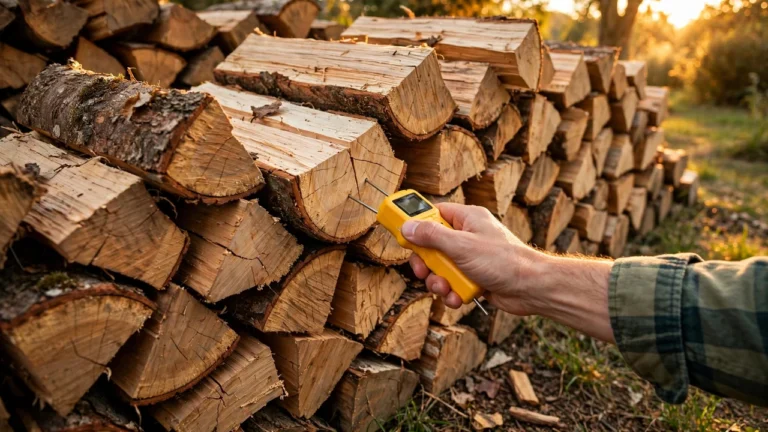
Split a piece open first, then press a moisture meter into the middle of the fresh face. Burn only wood that reads below 20 percent. The US Environmental Protection Agency gives the same 20 percent mark for wood that is ready to burn. Dry hackberry also feels light, shows cracks in the end grain, and sounds hollow when two pieces knock together. Wet wood feels heavy and makes a dull thud.
Build a small, hot fire with dry kindling
Open the flue and the air controls all the way before you light anything. Lay two dry splits in a V shape, add a loose pile of kindling in the middle, and tuck one fire starter under the kindling. Light the starter.
Resist the urge to load the firebox full at the start. A full box of cold wood smothers the flame and spends its heat boiling water out of the wood. Start small, add one split at a time once the flames are steady, and keep the air open until the fire is hot and bright.
Feed the fire and tend the coals
Add one or two splits at a time, and lay them across the coals so air can reach the fresh wood. Hackberry lights with little fuss when it is dry, and it settles into a steady flame. Rake the coals into a flat bed, and they will keep giving off heat long after the flames drop.
Mix in oak or hickory when you want the fire to last through the night. Put the dense wood down first, let it catch, then add hackberry on top. Clear ash past 1 inch deep into a metal bucket with a lid set outside on concrete.
Before and after: what changes when hackberry is dry
Before: wet hackberry
- Hard to light, hisses in the fire
- Weak flames and little useful heat
- Heavy smoke and more creosote
- Rots fast if it sits on damp ground
After: dry hackberry
- Lights with little fuss and burns steady
- About 21.2 million BTU per dry cord
- Low smoke, few sparks, good coals
- Clean fire that holds heat after the flames drop
Fix the fire when it burns badly
Most hackberry fires go wrong for one of three reasons. The wood is wet, the air is choked, or the chimney is dirty. Work through the table below before you blame the species. Nine times out of ten, dry wood and open air fix the problem.
Troubleshooting: if this happens, try this
| Wood hisses and will not catch | Test the split face with a meter. If it reads 20 percent or more, set it aside to dry and burn a drier piece. |
| Heavy smoke in the room | Open the flue and air controls fully, air the room out, and book a chimney check before the next fire. |
| Fire burns down fast | Add larger splits, mix in oak or hickory, and rake the coals into a flat bed to hold heat. |
| Splits feel soft or punky | The wood has started to rot. Do not burn it indoors. Compost it or use it outdoors only if it is fully dry and local rules allow it. |
| Creosote builds up fast | Burn only wood below 20 percent moisture, keep fires hot, and have the chimney swept by a certified sweep. |
| Wood smells sour in the stack | Improve airflow, lift the stack higher, and check that the cover keeps rain off the top without sealing the sides. |
Answer the questions every beginner asks
Hackberry firewood FAQ
Is hackberry good firewood?
Yes, hackberry is good middle of the road firewood. Utah State University Extension lists it at about 21.2 million BTU per dry cord, with low smoke, few sparks, and good coals when it is dry. Its main weak spot is fast decay, so split and stack it promptly.
How long does hackberry take to season?
Plan on 6 to 12 months. Small splits in sun and wind can test dry in 6 months, while large splits in shade may need a full year. Burn it only when a moisture meter reads below 20 percent on a fresh split face.
Does hackberry burn well in a wood stove?
Yes, it burns well in a wood stove when it is dry. It lights with little fuss, burns with steady heat, and leaves good coals. Mix it with oak or hickory when you want the fire to last longer overnight.
Does hackberry make a lot of smoke or sparks?
No, dry hackberry makes little smoke and few sparks, based on the Utah State University Extension ratings. Wet hackberry is a different story. It smokes more, gives less heat, and adds more creosote to the chimney.
Can you burn hackberry in a fireplace?
Yes, you can burn dry hackberry in an open fireplace. Its low spark rating makes it a fair pick for open fires, and a screen still adds a useful layer of safety. Keep the flue open, burn only dry wood, and have the chimney swept each year.
Quick reference card: hackberry firewood
What you need: chainsaw, safety gear, maul, moisture meter, tape measure, pallets, top cover, dry kindling, poker, ash bucket.
Key numbers: about 21.2 million BTU per dry cord, 6 to 12 months to season, burn below 20 percent moisture, cut to 16 inch pieces, stack 4 to 6 inches off the ground.
- Spot real hackberry by its warty gray bark.
- Cut to length and split soon after felling.
- Stack off the ground in sun and wind.
- Cover the top only and leave the sides open.
- Test the split face and burn below 20 percent.
- Build a small, hot fire with dry kindling.
- Feed one or two splits at a time and tend the coals.
Hackberry will not top the heat charts, and it does not need to. Split it soon, keep it off the ground, give it time to dry, and test it before you burn it. Do those four things, and you get a clean, steady fire with good coals and few sparks.
Your next step is a small one. Go out to the pile, split one piece open, and test the fresh face with a meter. If it reads below 20 percent, you have a fire waiting.
If it reads above that mark, give it more sun and wind, and test it again in a few weeks. For a closer look at drying and testing, read our guides on how to season firewood and whether firewood can be too dry.
Check the sources
Heat, weight, smoke, spark, coal, and splitting ratings come from Utah State University Extension, Wood Heating, Table 1: Firewood Facts (extension.usu.edu). The heat and weight range comes from Oklahoma State University Extension fact sheet NREM-5154, Firewood: Recommendations for Using Firewood as an Indoor Heating Source in Oklahoma (pods.okstate.edu). The 20 percent moisture mark matches guidance from the US Environmental Protection Agency Burn Wise program.