Mulberry Firewood: Burning Guide – Heat, Seasoning, Sparks, and Safe Use
A mulberry tree comes down in a yard, and the pile of logs left behind looks too good to waste. Mulberry firewood earns that second look. It burns hot, holds a coal bed through the night, and smells sweet while it burns. The catch is that it throws sparks, and green mulberry holds a lot of water, so it needs a full year to dry before it burns the way it should.
This guide walks you through the whole path, from a fresh-cut log to a steady fire. You will learn how to spot mulberry, cut and split it, stack it for a year of drying, test it with a moisture meter, and burn it without filling the room with sparks. By the last step, you will know exactly when mulberry fits your stove or fireplace and when a different wood serves you better.
Safety note: Mulberry sparks more than most hardwoods, so always burn it behind a closed screen or inside an enclosed stove. Keep working carbon monoxide detectors in your home, have your chimney inspected and swept once a year by a certified sweep, and never burn treated, painted, or stained wood. Check local burn bans and firewood transport rules before you move wood. If anything about your chimney or stove feels off, call a licensed professional.
What You Need
- Chainsaw or handsaw, with bar oil and a sharp chain
- Splitting maul or axe, plus a splitting wedge for knotty rounds
- Tape measure or a marked stick for 16-inch lengths
- Moisture meter
- Firewood rack, pallets, or scrap lumber to lift wood off the ground
- Tarp or metal roofing panel for a top cover
- Fireplace screen or spark guard
- Dry kindling and fire starters
- Work gloves, eye protection, and ear protection
- Metal ash bucket with a tight lid
At a Glance: The Steps
- Check local rules before you cut or move mulberry
- Cut the logs to stove length
- Split the rounds while the wood is fresh
- Stack the split wood for a year of drying
- Test the moisture with a meter
- Build the fire on a bed of kindling
- Burn mulberry firewood in small batches
- Tend the screen and the coal bed
Mulberry Firewood at a Glance
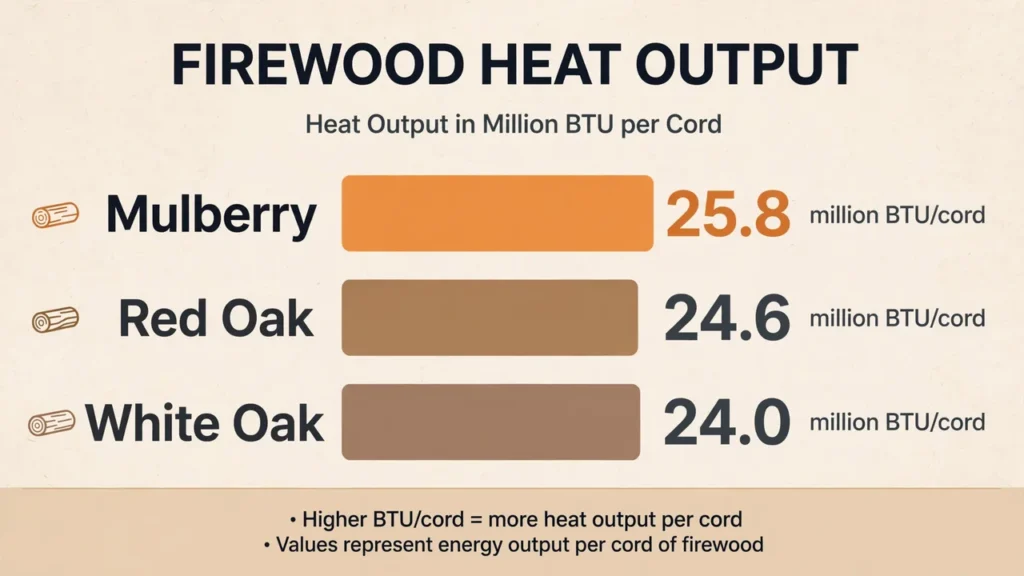
Mulberry sits in the top tier of firewood for heat. A seasoned cord gives off about 25.8 million BTU, a figure cited from Utah State University Forestry Extension. That puts it ahead of red oak at about 24.6 million BTU per cord and white oak at about 24.0 million. The same source puts a green cord near 4,712 pounds and a dry cord near 3,712 pounds, which tells you how much water leaves the wood while it seasons.
The numbers below come from firewood guides that agree on the broad picture, though exact figures vary a little from source to source. Seasoning time is the one figure with the widest range. Most sources land on about 12 months, while some cite 6 to 24 months depending on climate, piece size, and how the wood is stacked. Plan on a full year and test before you burn.
| Measure | Mulberry | What It Means for You |
|---|---|---|
| Heat per cord | About 25.8 million BTU | Top-tier heat, ahead of red oak and white oak |
| Green cord weight | About 4,712 lb | Very wet when fresh, so it needs real drying time |
| Dry cord weight | About 3,712 lb | Roughly 1,000 lb of water leaves each cord |
| Seasoning time | About 12 months (range 6-24) | Cut this year, burn next winter |
| Smoke | Moderate | Low when fully dry, heavy when green |
| Sparks | High | Use a screen, favor enclosed stoves |
| Creosote | Low when seasoned | Low resin and sap keep flues cleaner |
| Splitting | Splits readily | Straight grain, friendly to a maul |
| Smell | Sweet, mild | Pleasant in the room and in the smoke |
| Coals | Long-lasting | Strong overnight bed in a stove |
BTU and cord weights as cited from Utah State University Forestry Extension. Seasoning range reflects the spread across published firewood guides.
How Mulberry Compares with Oak and Other Hardwoods
Heat is where mulberry earns its keep. At about 25.8 million BTU per cord, it out-heats red oak firewood, which lands near 24.6 million, and white oak near 24.0 million. In plain terms, a cord of dry mulberry warms a home about as well as a cord of oak, and a little better. That matters when you heat with wood all winter and every cord has to pull its weight.
Coals are the other half of the story. Mulberry forms a dense, slow coal bed that keeps giving off heat long after the flames settle. That makes it a strong pick for overnight burns in an enclosed wood stove, where a good coal bed can carry the fire to morning and make relighting quick. Open fireplaces gain less from this trait, since much of the heat leaves up the chimney and the sparks need watching.
Against softer hardwoods the gap is wide. Basswood burns cooler and faster, so it suits mild shoulder-season fires rather than deep-winter heat. Mulberry sits at the other end of that scale. Hackberry is a closer cousin in spirit, another overlooked hardwood that rewards the burner who takes time to season it well. Both woods repay patience with steady heat.
What Mulberry Wood Looks Like
Mulberry comes from trees in the Morus genus, most often red, white, or black mulberry in the United States. The surest clue is the heartwood. Fresh-cut mulberry heartwood is bright yellow to golden orange, a color few other firewoods share. The sapwood stays pale cream to light tan, so a split face shows a clear two-tone pattern.
As the wood seasons, that bright yellow fades toward a warm golden brown. Bark is gray-brown and rough, often with long flat ridges on older trunks. Mulberry trees rarely grow as large as oaks, so the rounds tend to run smaller, which helps them dry faster and split with less effort. If the log you are looking at shows yellow heartwood and a sweet smell when cut, you are very likely holding mulberry.
Check Local Rules Before You Cut or Move Mulberry
Rules come first, before the saw does. Some areas list white mulberry as an invasive species and limit planting, though cutting a tree already on your land is a separate matter from planting one. Your town or county may also run burn bans on poor air-quality days, and many states restrict moving firewood across county or state lines to slow the spread of pests.
Call your local extension office or check your state forestry site when you are unsure. The check takes five minutes and saves a fine or a pile of wood you cannot legally move. When the wood came from your own yard and stays on your own land, the rules are usually the lightest. Wood that crosses a boundary needs a second look.
Cut the Logs to Stove Length
Measure your firebox before you cut a single log. Most stoves and fireplaces take 16-inch lengths, while some larger stoves accept 18 or 20 inches. Cut one test piece, slide it into the firebox with room to spare at each end, and use that piece as your guide for the rest of the pile.
Mark your measuring stick with tape at the right length so every cut matches without remeasuring. Wear eye and ear protection, keep both hands on the saw, and work with the log held steady on a sawhorse or on the ground where it cannot roll. Never cut alone with a chainsaw if you can avoid it, and keep children and pets well clear of the work area.
Split the Rounds While the Wood Is Fresh
Green mulberry splits more readily than dry mulberry, so do this work soon after cutting. Stand each round on a flat chopping block, bark side down, and aim the maul at the center of the face. Straight-grained rounds often open with one clean strike. Knotty pieces may need a wedge driven in with a sledgehammer.
Split pieces down to 3 to 6 inches across the face. Smaller splits dry faster, light faster, and give you more control over the fire. Large unsplit rounds can sit wet in the middle for a second year, which wastes the whole seasoning season. Bark that hangs loose can be pulled off by hand, and removing it helps air reach the wood.
Pro tip: Split a few extra pieces down to kindling size while the maul is already in your hand. Thin mulberry splits catch fast and make lighting the stove far less fiddly on cold mornings.
Stack the Split Wood for a Year of Drying
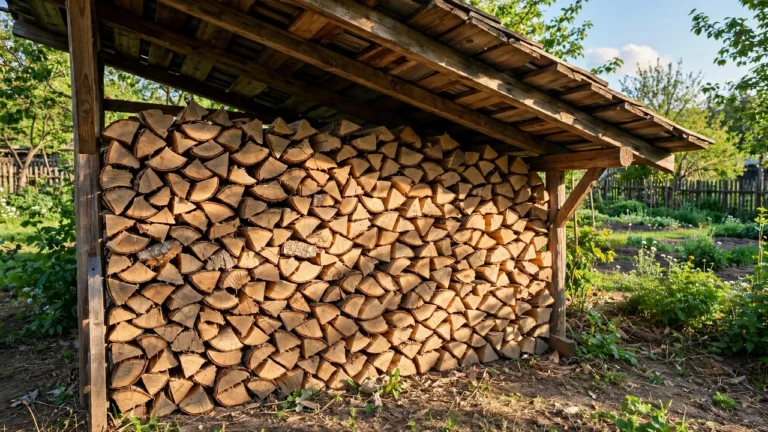
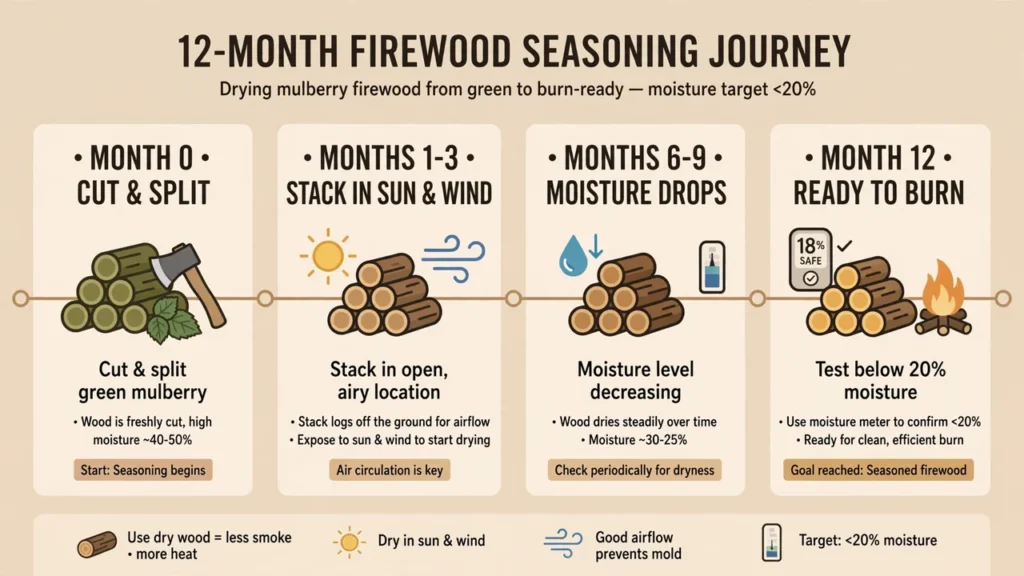
Stacking decides whether your mulberry is ready in 12 months or still wet in 18. Lift the first row at least 4 to 6 inches off the ground on pallets, rails, or scrap lumber, and pick a spot that catches sun and wind. Lay the splits bark side up on the top row so rain runs off, and leave gaps between rows so air moves through the pile.
Cover only the top of the stack with a tarp or a sheet of metal roofing, and leave the sides open. A tarp draped down the sides traps moisture and grows mold, which is the opposite of what you want. A single row against a sunny wall dries faster than a wide block of rows pressed together. For a full walkthrough of the method, see our guide on how to season firewood.
Storage after seasoning matters too. A dry woodshed or a garage bay keeps seasoned mulberry ready to burn, though a garage needs good airflow and a clear path away from the furnace or water heater. Our guide to storing firewood in the garage covers the spacing and safety details, and our notes on how long firewood lasts in storage will help you plan how much to cut each year.
Test the Moisture with a Meter
Calendar time alone cannot tell you the wood is ready. A moisture meter gives you the answer in seconds. Split a piece open and press the pins into the freshly exposed face, not the old end grain, which dries first and reads lower than the middle of the piece. Test three or four pieces from different parts of the stack.
Burn mulberry only when it reads 20 percent or lower. Wood above that line hisses, smokes, and leaves more creosote in the flue while giving back less heat. If the reading is still high, restack the wood with more airflow and test again in a month. Our guide on how to tell if firewood is seasoned lists the sound, weight, and crack checks that back up the meter reading. For a clear picture of what goes wrong with damp fuel, read why you should not burn wet firewood.
Heads up: Wet mulberry is the version that smokes, sparks hardest, and coats a flue with creosote. A lazy, hissing fire is the wood telling you it is not ready. Put it back in the stack and wait.
Build the Fire on a Bed of Kindling
Dry mulberry is dense, so it takes a strong flame to catch. Lay two or three dry kindling splits across the firebox floor with small gaps between them, then add a loose crisscross of thinner sticks on top. Place one or two small mulberry splits on the kindling, leaving air space around every piece.
Light the kindling in two or three spots and leave the stove door cracked or the damper open until the flame is steady. A top-down fire also works well with mulberry: largest splits on the bottom, kindling on top, lit from above so the fire burns down into the fuel. Either way, give the fire plenty of air for the first 10 to 15 minutes until the splits are fully involved.
Burn Mulberry Firewood in Small Batches
Load two or three splits at a time rather than filling the firebox. Mulberry burns hot, and a full load can push a small stove past its comfort zone while throwing more sparks against the screen. Small loads keep the fire hot, clean, and under your control, and they let you judge how the wood behaves in your setup before you commit to a bigger fire.
Watch the flame color as a guide. A bright, lively flame with little visible smoke means the wood is dry and the air supply is right. A dull, orange flame with smoke curling at the edges means the air is choked or the wood still holds moisture. Open the air control a little and give it a few minutes. When the splits have burned down to glowing coals, add the next small batch on top of the coal bed.
Tend the Screen and the Coal Bed
Keep the fireplace screen closed the whole time mulberry is burning. Sparks can pop out without warning, even from well-seasoned wood, and a screen is the only thing standing between a stray ember and your rug. In an enclosed stove, keep the door latched and check the door gasket once a season so the seal stays tight.
For an overnight burn in a stove, load the firebox with mulberry splits an hour before bed and let the fire settle to coals. Damp the air down, but never close it fully. In the morning, rake the coal bed forward, add kindling and a fresh split, and the fire should catch quickly. Move cold ash into a metal bucket with a tight lid, store the bucket outside on concrete or bare dirt, and wait at least three days before putting ash in the trash, since coals can stay hot far longer than they look.
Cooking and Smoking with Mulberry
Mulberry earns a second life at the grill. Its smoke is mild, sweet, and fruity, with a flavor that sits between apple and hickory. It suits pork, poultry, fish, and vegetables, and the long coal bed holds a steady temperature for cooking. Use only well-seasoned, clean wood with the bark off, and never cook over wood that is painted, stained, treated, or taken from a yard sprayed with pesticides.
For pizza ovens, mulberry coals give a hot, even bed that holds temperature between pies. Our guide to the best firewood for pizza ovens compares it with other top choices. For smoking, add a few small seasoned chunks to the coals rather than building the whole fire from mulberry, and taste the result on a small batch first so the sweetness suits your food.
Mulberry Firewood Troubleshooting
Most mulberry problems trace back to moisture or airflow. Work through the table below before you blame the wood itself, and check the simple fixes first.
| If This Happens | Try This |
|---|---|
| Fire smokes heavily and hisses | Test the moisture. Above 20 percent, return the wood to the stack for another month or two. |
| Splits will not catch | Use drier kindling, split pieces smaller, and open the air supply for the first 10 to 15 minutes. |
| Sparks pop onto the hearth | Close the screen, burn smaller loads, and favor the enclosed stove over an open fireplace. |
| Fire burns too hot and fast | Load fewer splits, mix in a cooler-burning wood, and trim the air once the fire is established. |
| Coals die out overnight | Load larger splits before bed, keep the air open a crack, and rake the bed forward in the morning. |
| Flue smells of creosote | Burn only wood below 20 percent moisture and book a chimney sweep. Never ignore a creosote smell. |
Mulberry Firewood Questions
Is mulberry good firewood?
Yes. Seasoned mulberry burns hot at about 25.8 million BTU per cord, makes long-lasting coals, and smells sweet. Its main drawback is heavy sparking, so it suits enclosed stoves and screened fireplaces best.
How long does mulberry firewood take to season?
Plan on about 12 months. Sources cite a range of 6 to 24 months depending on climate and piece size. Split it small, stack it in sun and wind, and burn it only when a moisture meter reads 20 percent or lower.
Does mulberry firewood spark a lot?
Yes, mulberry sparks and pops more than most hardwoods, even when seasoned. Always burn it behind a closed screen or inside an enclosed stove, and keep the hearth clear of rugs and paper.
Can you burn mulberry wood in an open fireplace?
You can, but only fully seasoned wood behind a sturdy closed screen, with someone watching the fire. An enclosed wood stove is the safer and warmer home for mulberry.
How many BTUs does mulberry firewood produce?
A seasoned cord of mulberry produces about 25.8 million BTU, according to figures cited from Utah State University Forestry Extension. That beats red oak at about 24.6 million and white oak at about 24.0 million per cord.
Can you cook or smoke food with mulberry wood?
Yes. Seasoned mulberry gives a mild, sweet smoke that suits pork, poultry, fish, and vegetables. Use clean, seasoned wood with the bark off, and never cook over wood that is painted, treated, or sprayed with pesticides.
Quick Reference Card: Mulberry Firewood
What you need: Saw, maul or axe, tape measure, moisture meter, rack or pallets, top cover, fireplace screen, kindling, gloves, eye and ear protection, metal ash bucket.
Key numbers: About 25.8 million BTU per cord. Season about 12 months. Burn below 20 percent moisture. Cut to 16 inches. Split to 3 to 6 inches. Keep ash three days before disposal.
- Check local rules before you cut or move mulberry.
- Cut the logs to stove length.
- Split the rounds while the wood is fresh.
- Stack the split wood for a year of drying.
- Test the moisture with a meter.
- Build the fire on a bed of kindling.
- Burn mulberry firewood in small batches.
- Tend the screen and the coal bed.
That is the full path from a fallen mulberry to a warm room. Cut it to length, split it small, give it a year in the sun and wind, and test it before it goes near the fire. Do those four things and mulberry firewood will pay you back with strong heat, a coal bed that lasts the night, and a sweet smell in the room.
When your stack is seasoned and ready, try a small screened fire first and see how it behaves in your stove. Once you trust it, mulberry can take a regular place in your winter woodpile next to oak and ash. For more on drying and keeping your fuel, read our guides on how to season firewood and how long firewood lasts in storage.
Sources: BTU and cord-weight figures as cited from Utah State University Forestry Extension via PlantNative. Burning traits, seasoning time, and spark behavior were cross-checked against Backyard Boss and Woodworking Advisor.