Locust Firewood Burning Guide: How to Burn Black and Honey Locust
Locust firewood has a loyal following among people who heat with wood, and the reason is plain. A dry cord of black locust can give off more heat than a cord of red oak, and the coals it leaves behind stay hot for hours. The catch is that locust asks for patience and care. It is dense, slow to dry, and thorny to handle, and it burns so hot that a careless load can overheat a small stove.
This guide walks you through the whole process, from telling black locust apart from honey locust to building your first fire with it. By the end you will know how to cut it, split it, dry it to below 20 percent moisture, and burn it for steady heat with little smoke. The steps fit a fireplace, a wood stove, or an outdoor fire pit.
Safety note: burn wood only in a vented fireplace or wood stove with a working flue. Fit carbon monoxide detectors on every floor of your home and test them each month. Have the chimney inspected and swept every year by a certified chimney sweep.
Never burn treated, painted, or stained wood, plywood, or household trash. Check local burn rules and burn bans before you light a fire.
What You Need
Black Locust or Honey Locust? Tell Them Apart First
The word locust covers two different trees, and they burn a little differently. Black locust is Robinia pseudoacacia. Honey locust is Gleditsia triacanthos. Both are dense hardwoods with high heat, but black locust runs a touch hotter and is harder to split, while honey locust splits with less force and carries far bigger thorns on wild trees.
Identification matters before you cut, because the thorns change how you handle the tree. Wild honey locust can grow stiff, branched thorns on its trunk and limbs that reach 3 to 8 inches long. Those thorns can puncture gloves, boots, and tires.
Black locust carries short paired spines on young twigs, often around half an inch long. Thornless honey locust varieties planted in yards have no thorns at all, so check the leaves and pods too.
Black Locust vs Honey Locust at a Glance
| Feature | Black Locust | Honey Locust |
|---|---|---|
| Scientific name | Robinia pseudoacacia | Gleditsia triacanthos |
| Heat per dry cord | About 27.9 million BTU | About 26.7 million BTU |
| Splitting | Difficult, worse when knotty | Splits with less force |
| Seasoning time | 12 to 18 months, up to 2 years for thick pieces | About 12 months, 12 to 18 for best results |
| Thorns | Short paired spines on young twigs | Large branched thorns on wild trees |
| Leaves and pods | Broad oval leaflets, white flowers, short pods 2 to 4 inches | Tiny leaflets, long pods 7 to 18 inches |
| Smoke and sparks | Low smoke, few sparks when dry | Low smoke, few sparks when dry |
Heat figures are Utah State University Extension values for dry wood. Published figures vary a little by source, so treat them as a ranking, not a promise.
How Much Heat Does Locust Firewood Give?
Locust sits near the top of every firewood heat chart. Utah State University Extension lists black locust at about 27.9 million BTU per dry cord and honey locust at about 26.7 million BTU per dry cord. Oklahoma State University Extension gives black locust a range of 23.2 to 28.3 million BTU per cord, which shows how much the number moves with growing conditions and measuring methods.
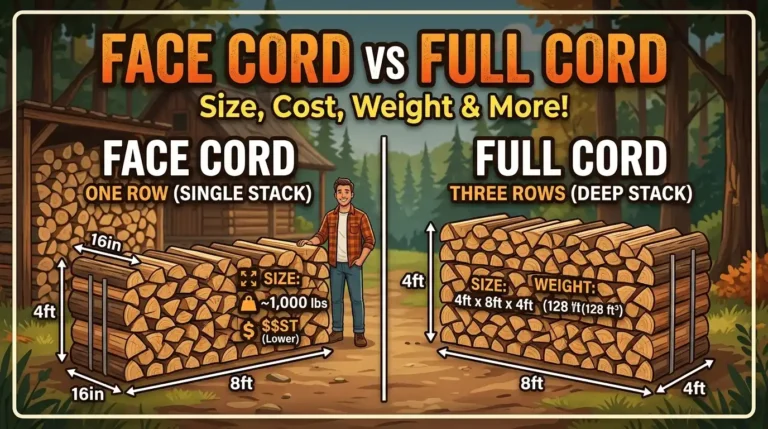
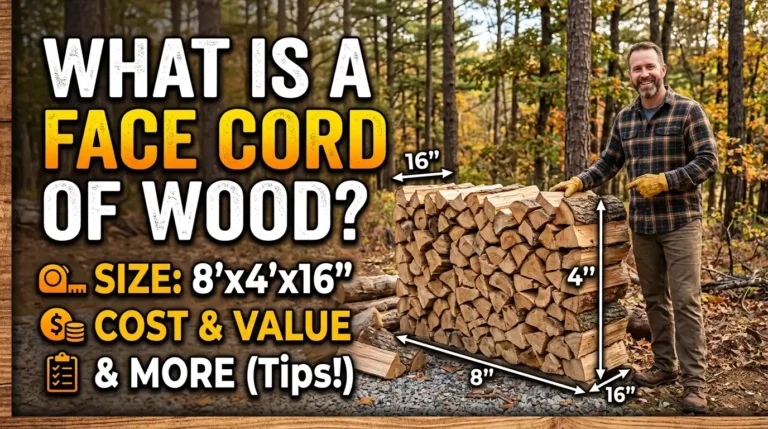
For comparison, the same Utah State figures put white oak at 29.1 million BTU, red oak at 24.6 million, and cherry at 20.4 million per cord. A cord is a stacked pile 4 feet high, 4 feet deep, and 8 feet long, or 128 cubic feet. Heat per cord follows density, and a dry cord of black locust weighs about 4,000 pounds, so each split carries more stored energy than the same sized piece of a lighter wood.
Those numbers only hold for dry wood. Wet locust gives up much of its heat boiling off water, burns cool, and smokes. A damp cord of black locust can heat a room worse than a dry cord of honey locust, even though black locust wins on paper. Seasoning is where the heat is made, not in the species name.
Heat Output Compared: Million BTU per Dry Cord
| Wood | Million BTU per Cord | Burn Character |
|---|---|---|
| White oak | 29.1 | Hot, slow, strong coals |
| Black locust | 27.9 | Very hot, slow, firm coals |
| Honey locust | 26.7 | Hot, steady, excellent coals |
| Red oak | 24.6 | Hot, long burn |
| Cherry | 20.4 | Moderate heat, pleasant smell |
Source: Utah State University Extension firewood table, as cited in firewood guides. Other tables list black locust from 26.8 to 29.3 million BTU per cord.

You can cross-check these figures against a full species table at The Outpost wood heat page, which lists black locust at 27 to 28 million BTU per cord and a seasoning time of 1.5 to 2 years. A detailed species profile is available at Fire and Saw: Is Black Locust Good Firewood?, and the honey locust profile at Fire and Saw: Is Honey Locust Good Firewood?.
At a Glance: 7 Steps to Burning Locust Firewood
- Identify the tree before you cut
- Cut rounds to fit your firebox
- Split locust while it is still green
- Stack the splits for a full year of drying
- Test each piece with a moisture meter
- Build a small hot fire first
- Feed small loads and tend the coals
Step 1: Identify the Tree Before You Cut
Walk around the tree and check three clues before the saw comes out. Look at the leaflets, the pods, and the thorns. Black locust has broad oval leaflets, clusters of fragrant white flowers in spring, and short flat pods 2 to 4 inches long. Honey locust has tiny leaflets, greenish flowers, and long pods that can reach 7 to 18 inches.
Thorns are the clue that changes your plan. Wild honey locust can carry branched thorn clusters on the trunk and limbs, while black locust has short paired spines on young twigs. A thornless yard honey locust has no thorns, so do not rely on thorns alone. When in doubt, compare leaves and pods together.
Heads Up: Honey locust thorns are hard, sharp, and long enough to puncture thick gloves and boot soles. Wear heavy gloves and eye protection, keep children and pets clear of the work area, and never grab a thorny limb with a bare hand. Puncture wounds from dirty thorns can turn nasty fast, so clean any cut at once and watch it for swelling.
Step 2: Cut Rounds to Fit Your Firebox
Measure your firebox depth with a tape measure, then cut rounds 2 to 3 inches shorter than that depth. Most stoves and fireplaces take 16 inch lengths, but a small stove may need 12 or 14 inches. Wood that is too long will not sit flat, and wood that is too short wastes space and burns through fast.
Cut on level ground with a sharp chain and full safety gear. Buck the trunk into rounds of even length, and keep the cuts square so the rounds stack neatly later. If you are buying locust by the cord, ask the seller what length they cut and measure a few pieces before the load is unloaded. Our guide to firewood sizes explains how length affects burn time and stove fit.
Step 3: Split Locust While It Is Still Green
Split black locust within days of cutting, while the wood is still green. The wood hardens as it dries, and a round left whole for a season can turn into a knotty block that fights every swing. Honey locust is more forgiving, but green splitting still saves effort on both species.
Aim for splits about 4 to 6 inches across at the wide end. Thinner splits dry faster and light with less fuss. Knotty rounds and crotch wood split poorly, so set those aside for a hydraulic splitter or save them for outdoor fires. Utah State rates black locust as difficult to split, so do not feel bad if a maul bounces off a knotty piece.
Pro Tip: Rent a hydraulic splitter for a full cord of black locust. The rental costs less than a sore back and a blunted maul, and it turns a weekend of hard swings into an afternoon. Split the knotty rounds first while you are fresh.
Step 4: Stack the Splits for a Full Year of Drying
Give black locust at least 12 months after splitting and stacking. A working range of 12 to 18 months suits most climates, and thick pieces in a damp or shaded spot may need two summers. Honey locust needs about the same, so plan on a year for either species. The calendar is only a rough guide, and a moisture meter gives the real answer in Step 5.
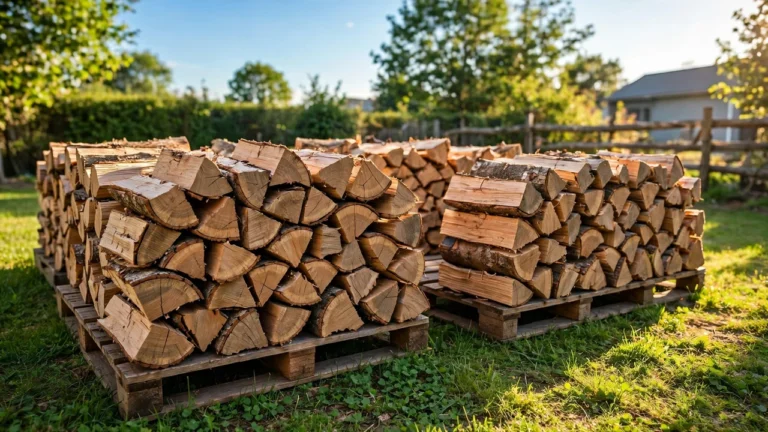
Stack the splits off the ground on pallets or rails, in single rows with gaps between rows so wind can pass through. Face the cut ends toward the sun and the prevailing wind. Cover only the top of the stack with a tarp or firewood cover, and leave the sides open.
A stack wrapped tight on all sides traps damp air and dries slower. Our guide to how to stack firewood shows row spacing and cover options, and our guide on how to store firewood outside covers racks, covers, and damp climates.
Black locust heartwood resists rot, so it holds up well in an outdoor stack even through wet winters. That rot resistance helps with storage, but it does not mean the wood dries fast. Density slows drying, so patience is part of the deal with this species.

Step 5: Test Each Piece With a Moisture Meter
A pin-type moisture meter costs little and settles every argument about whether wood is ready. Split a test piece open and press the pins into the freshly exposed face, not the weathered outside. The reading you want is below 20 percent, which is the target the EPA Burn Wise program recommends. The best range for a clean, hot burn is 15 to 20 percent.
Test several pieces from different parts of the stack, not the driest looking one on top. Pieces from the middle and bottom of the stack dry slower. A reading over 20 percent means the wood needs more time, so put it back and test again in a month or two.
Do not trust cracks in the end grain or a hollow knock on their own. Those signs hint at dryness, but only a meter gives a number.
Green black locust starts at roughly 26 to 28 percent moisture, so it does not have as far to fall as oak or maple. That is one reason some people call it fast to season. The density still slows drying, so test before you burn and never trust a seller’s word alone. If you are buying, split a random piece and test it before the load is unloaded.
Step 6: Build a Small Hot Fire First
Locust is slow to catch in a cold stove, so start small and hot. Lay dry kindling in a loose crisscross, add two or three thin locust splits on top, and light the kindling. Leave the air control wide open until the splits are burning well, then close it down in stages. A top-down lay also works well: big splits at the bottom, kindling on top, so the fire burns down into the dense wood.
Expect little smoke and few sparks from dry locust, which is one of its best traits for indoor use. The fire will run hot once it catches. If the stove has a thermometer, watch it while you learn how your stove responds to this wood. A bed of newspaper and kindling under the first splits helps on a cold morning.
Heads Up: Locust burns very hot. Do not fill a small stove to the top with locust on your first burn, and never load it into a stove that is already running hot. Overfiring can warp stove parts and crack a firebox. Start with a half load, learn how your stove behaves, and keep a working stove thermometer in view.
Step 7: Feed Small Loads and Tend the Coals
Once the fire is going, feed it two or three splits at a time rather than a full load. Locust burns slow and long, so small loads hold a steady temperature without spiking. Place new splits on the hot coals with the bark side down where you can, and leave a little air space between pieces so the fire can breathe.
The coals are where locust earns its name. A good bed of locust coals stays hot for hours and relights fresh splits with little effort, which makes it a strong choice for overnight burns in a stove. In the morning, rake the coals forward, add two splits, and open the air for a few minutes to wake the fire. Sweep out ash only when it builds up past an inch or two, since a thin ash bed helps insulate the coals.
Check the chimney each year, even though dry locust makes less creosote than wet or resinous wood. Any wood burned damp builds creosote, and a chimney fire does not care which species caused it. If you ever burned a load of green firewood or wet firewood by mistake, book a sweep before the next cold snap.
Green Locust vs Seasoned Locust
Green or Wet Locust
Hisses and steams, hard to light, smoky fire, weak heat, heavy creosote buildup in the flue, and a chimney fire risk.
Seasoned Locust (Below 20%)
Lights with kindling, burns hot and steady, low smoke, few sparks, long-lasting coals, and far less creosote.
Troubleshooting: If This Happens, Try This
| If This Happens | Try This |
|---|---|
| The fire will not catch | Test the moisture. Over 20 percent means the wood needs more drying time. Use more kindling and thinner splits to start. |
| Lots of smoke and hissing | The wood is wet. Stop burning it, restack it with airflow, and test again in a month or two. |
| The stove overheats | Load less wood per fill. Mix locust with a cooler wood like maple until you learn your stove. |
| Rounds will not split | Split while green, aim for the natural cracks, and use a hydraulic splitter for knotty rounds. |
| The fire dies overnight | Build a deeper coal bed before bed, load two or three splits late, and close the air down slowly. |
Locust Firewood FAQs
Is locust good firewood?
Yes. Black locust and honey locust are both excellent firewood when dry. Black locust gives about 27.9 million BTU per dry cord, honey locust about 26.7 million, and both burn hot with low smoke, few sparks, and strong coals.
How long does locust firewood take to season?
Plan on 12 to 18 months after splitting and stacking. Thick pieces in a damp or shaded spot may need up to two years. Test with a moisture meter and burn only wood below 20 percent moisture.
Can you burn locust wood in a fireplace?
Yes, dry locust burns well in an open fireplace and in a wood stove. It gives low smoke and few sparks, which suits indoor use. Keep loads modest in a small stove because it burns very hot.
Is black locust or honey locust better for firewood?
Black locust gives a little more heat per cord and resists rot, but it is harder to split. Honey locust gives nearly as much heat and splits with less force, but wild trees carry large thorns that make handling harder. Either one is a fine choice once dry.
Does locust firewood create a lot of creosote?
No, dry locust makes little creosote because it burns hot with low smoke. Wet locust is a different story and builds creosote like any damp wood. Keep the chimney swept every year no matter which species you burn.
Can you burn locust wood green?
You can, but you should not. Green locust hisses, smokes, gives weak heat, and builds creosote in the flue. Season it for at least a year and test it below 20 percent moisture before burning
Quick Reference Card: Locust Firewood Burning Guide
What you need: chainsaw, splitting maul or hydraulic splitter, gloves, eye and ear protection, chaps, tape measure, moisture meter, rack or pallets, tarp, kindling, matches.
Heat: black locust about 27.9 million BTU per dry cord, honey locust about 26.7 million BTU. Season 12 to 18 months. Burn below 20 percent moisture.
- Identify the tree before you cut
- Cut rounds to fit your firebox
- Split locust while it is still green
- Stack the splits for a full year of drying
- Test each piece with a moisture meter
- Build a small hot fire first
- Feed small loads and tend the coals
Remember: dry wood only, small loads in a small stove, chimney swept every year, CO detectors tested monthly.
Locust rewards the people who give it time. Split it green, stack it in the wind, test it with a meter, and it will pay you back with hot fires and coals that last till morning. Start with one stack this season, and you will have some of the best-burning wood in the yard by next winter.
If you heat with other hardwoods too, our black walnut firewood burning guide covers another dense hardwood with its own quirks, and it pairs well with locust in a mixed load.