Best Firewood for Pizza Ovens: Oak, Maple, Ash and 5 More Woods That Bake a Better Crust
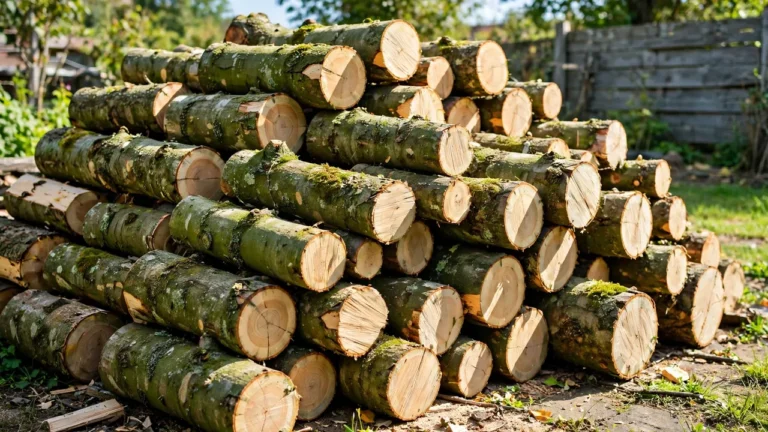
The best firewood for pizza ovens is dense, dry hardwood cut short enough to fit your firebox. Oak leads the list because it burns hot and steady with a clean, mild smoke that lets the toppings do the talking. Maple and ash sit close behind, and a handful of cherry or apple adds a light sweetness without turning the crust bitter.
This guide walks through the whole process in order, from measuring your firebox to feeding the fire and clearing the ash. You will learn which woods to buy, how to test dryness with a meter, and how to keep the oven floor above 750°F so each pizza bakes in about 60 to 90 seconds. No wood on this list is hard to find, and most of it is sold by the same suppliers who sell regular firewood.
Read this before you light anything. Never burn treated, painted, stained, or glued wood in a pizza oven, because the fumes can poison food. Pizza ovens run far hotter than a fireplace, so wear heat-proof gloves, keep children and pets away from the mouth of the oven, and check local burn rules before your first bake.
What You Need
- Kiln-dried or seasoned hardwood splits, cut to your firebox size
- A wood moisture meter
- Kindling and one or two natural firelighters
- A long-handled pizza peel
- Heat-proof gloves
- An infrared thermometer or an oven thermometer
- A metal ash bucket with a lid
- A stiff brush or an ash rake
- A tape measure
At a Glance: The 7 Steps
- Measure your firebox before you buy wood
- Test every load with a moisture meter
- Choose oak as your base wood
- Add one flavor wood in small amounts
- Build a top-down fire with kindling
- Feed the fire in small handfuls
- Let the fire burn down and clear the ash
What Makes the Best Firewood for Pizza Ovens Work
A pizza oven needs heat that stays high and smoke that stays mild. Dense hardwood holds a hot coal bed, and wood under 20% moisture burns clean instead of hissing and smoking. Softwoods and damp wood drop the floor temperature and coat the dome in soot, which is why they never belong in a pizza oven.
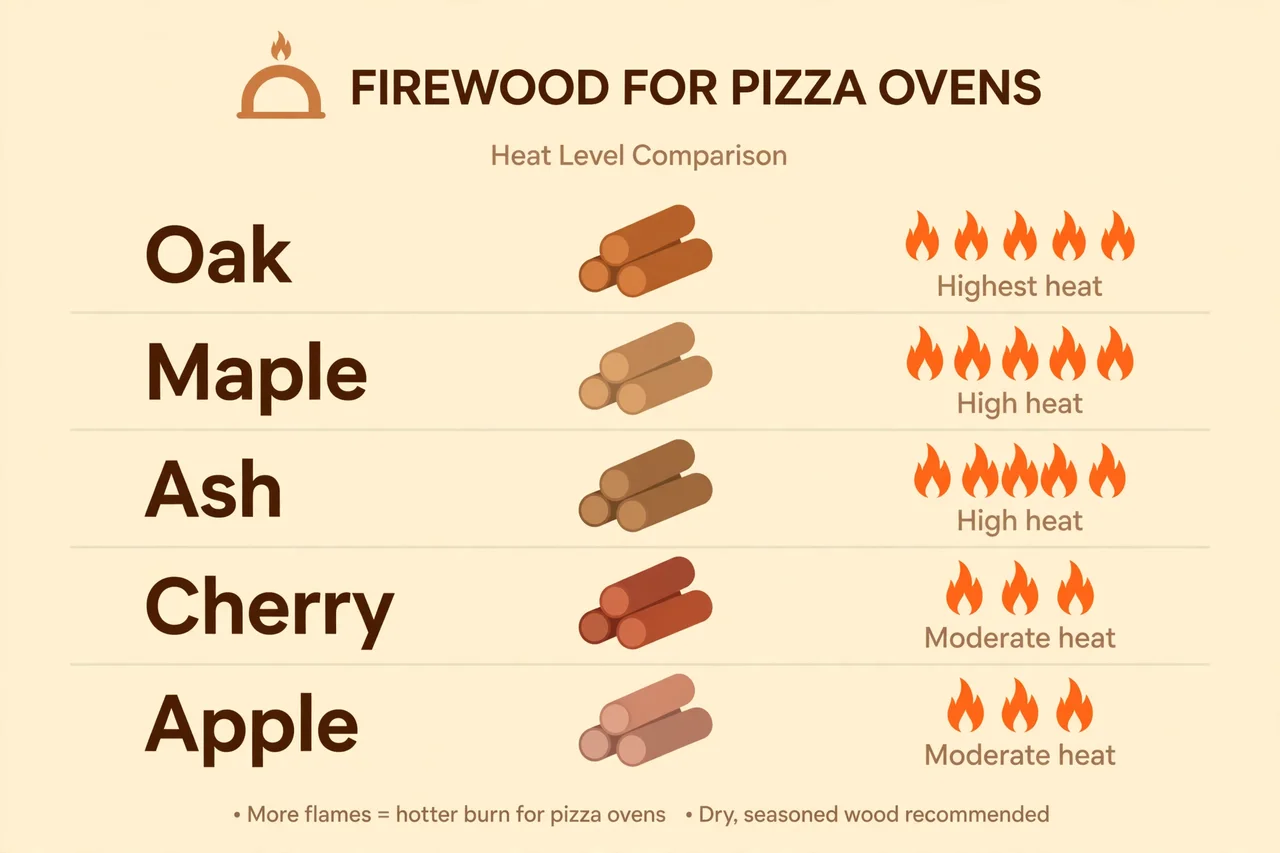
Heat is the first test, and flavor is the second. Oak, maple, ash, and beech all clear the heat test with room to spare, while cherry, apple, and hickory earn their place by adding flavor. The table below ranks the seven woods worth burning, with honest notes on where each one shines and where it falls short.
| Wood | Heat | Flavor | Smoke | Best For |
|---|---|---|---|---|
| Oak | Very high | Clean, mild | Low | Base wood for any oven |
| Maple | High | Mild, faintly sweet | Low | Neapolitan bakes |
| Ash | High | Clean, neutral | Low | Quick heat, fast lighting |
| Beech | High | Clean, neutral | Low | Long, steady bakes |
| Cherry | Medium | Light, fruity | Low | Flavor wood, mixed with oak |
| Apple | Medium | Light, sweet | Low | Flavor wood, mixed with oak |
| Hickory | High | Strong, smoky | Medium | Small amounts only, with oak |
Heat ratings above are relative, based on wood density and common use in pizza ovens. US Forest Service firewood ratings put seasoned oak near the top of common firewoods, at roughly 24 to 28 million BTU per cord, which is why it holds pizza-oven heat so well.
Oak, Maple, and Ash: The Base Woods
Oak is the workhorse because it is dense, widely sold, and steady once it catches. Maple burns a touch faster than oak and adds a faint sweetness that suits a plain Margherita. Ash lights with less fuss than most hardwoods and seasons faster than oak, which makes it a strong pick when you buy green wood and dry it yourself.
Beech deserves a mention too, since it burns long and clean with almost no flavor of its own. Beech needs a long seasoning time, often a full year or two, so buy it kiln-dried or plan well ahead. Any of these four can carry a whole pizza night on its own, and none of them will fight you while you bake.
Cherry, Apple, and Hickory: The Flavor Woods
Cherry and apple burn cooler than oak, so they work as a flavor layer rather than the main fuel. One or two small splits on a hot oak fire add a light, fruity note that pairs well with tomato and cheese. Cherry is the safer of the two for beginners because its flavor stays gentle even if you add a piece too many.
Hickory is the loud one in this group, with a bold smoke that can take over a pizza if you use too much. A single small split gives a pleasant bacon-like note to meat toppings, while a full hickory fire will bury a delicate cheese pizza. Mesquite sits in the same strong-smoke camp, so treat it the same way: a little goes a long way.
Kiln-Dried or Seasoned: Which Should You Buy?
Kiln-dried wood is the safer buy for a pizza oven because it leaves the kiln at 10% to 15% moisture, well under the 20% limit. It lights fast, burns clean, and behaves the same from bag to bag, which matters when the oven floor needs to stay above 750°F. The trade-off is price, since kiln-dried wood costs more than air-dried firewood from a local supplier.
Well-seasoned wood can bake a fine pizza too, as long as you test it before you buy. Seasoned oak often needs a year or two of drying, while ash can be ready in about six months. Learn how to tell if firewood is seasoned before you pay for a load, and carry your moisture meter to the yard so you can check the wood on the spot.
Woods to Skip in a Pizza Oven
Pine, spruce, fir, and other softwoods burn fast, throw sparks, and leave sticky resin in the oven. Treated lumber, painted boards, plywood, and pallet wood can release toxic fumes that settle on food, so they never go near a pizza oven. Driftwood, moldy wood, and wood with visible paint or stain belong in the trash, not the firebox.
- Pine and other resinous softwoods
- Treated, painted, or stained lumber
- Plywood, MDF, and pallet wood
- Moldy, rotten, or damp wood
- Household trash and paper with colored ink
How to Store Pizza Oven Wood
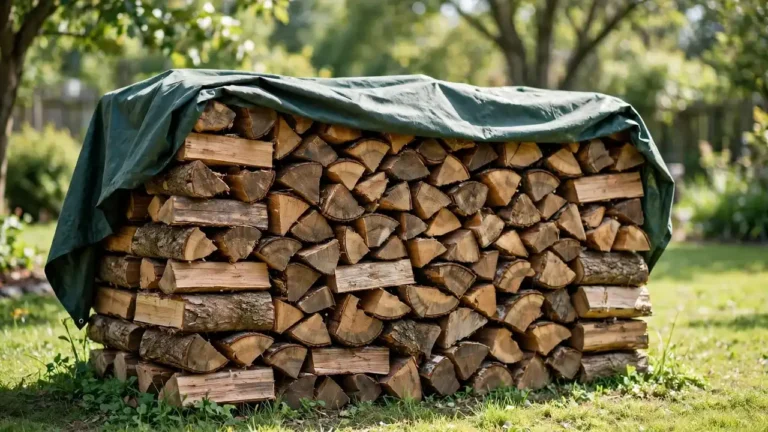
Keep your pizza wood dry between bakes, or it will soak up rain and undo all the work of buying kiln-dried splits. Stack it off the ground on a rack or pallets, under a roof or a tarp that covers the top and leaves the sides open for air. Bring the next bake’s wood indoors a day ahead so it reaches room temperature and lights without a fight.
Small splits dry out faster than big logs, so store pizza wood in its own short pile rather than mixed into your main firewood stack. If you want the full storage picture, read our guide on how long firewood lasts in storage before you stock up for the season.
Step 1: Measure Your Firebox Before You Buy Wood
Grab a tape measure and check the width and depth of the firebox, then write the numbers down before you shop. Most portable ovens take splits of 6 inches or shorter, while large masonry ovens accept pieces up to 16 inches long. Wood that is too long will not sit flat, and a piece that sticks out of the oven mouth is a burn risk. Buy or cut to the size your oven takes, not the size the supplier hands you.
Step 2: Test Every Load With a Moisture Meter
Push the pins of a moisture meter into the fresh face of a split, not the bark, and read the number. Pizza oven wood should read under 20%, and kiln-dried wood often reads between 10% and 15%. A reading above 20% means the wood will hiss, smoke, and drag the floor temperature down. Split one more piece and test the center if the first reading looks high, because the outside of a log can read dry while the core stays wet.
Step 3: Choose Oak as Your Base Wood
Oak is the safe first pick for a pizza oven because it is dense, widely sold, and burns hot with a mild smoke. Ask your supplier for kiln-dried oak cut to your firebox size, and check the ends for cracks and a gray, weathered color that signals dry wood. Maple and ash are strong backups when oak is scarce or pricey, and both burn clean at pizza-oven heat. Keep one species as your base for the whole session so the fire behaves the same from the first pizza to the last.
Step 4: Add One Flavor Wood in Small Amounts
Flavor wood works best as a guest, not the main fuel. Toss one or two small splits of cherry or apple on top of the oak base once the oven is hot, and let the light smoke flavor the crust. Hickory and mesquite carry a much stronger smoke, so use a single small piece at a time or skip them for delicate toppings like fresh mozzarella. Mixing three or four species in one fire makes the flavor muddy and the burn hard to predict.
Step 5: Build a Top-Down Fire With Kindling
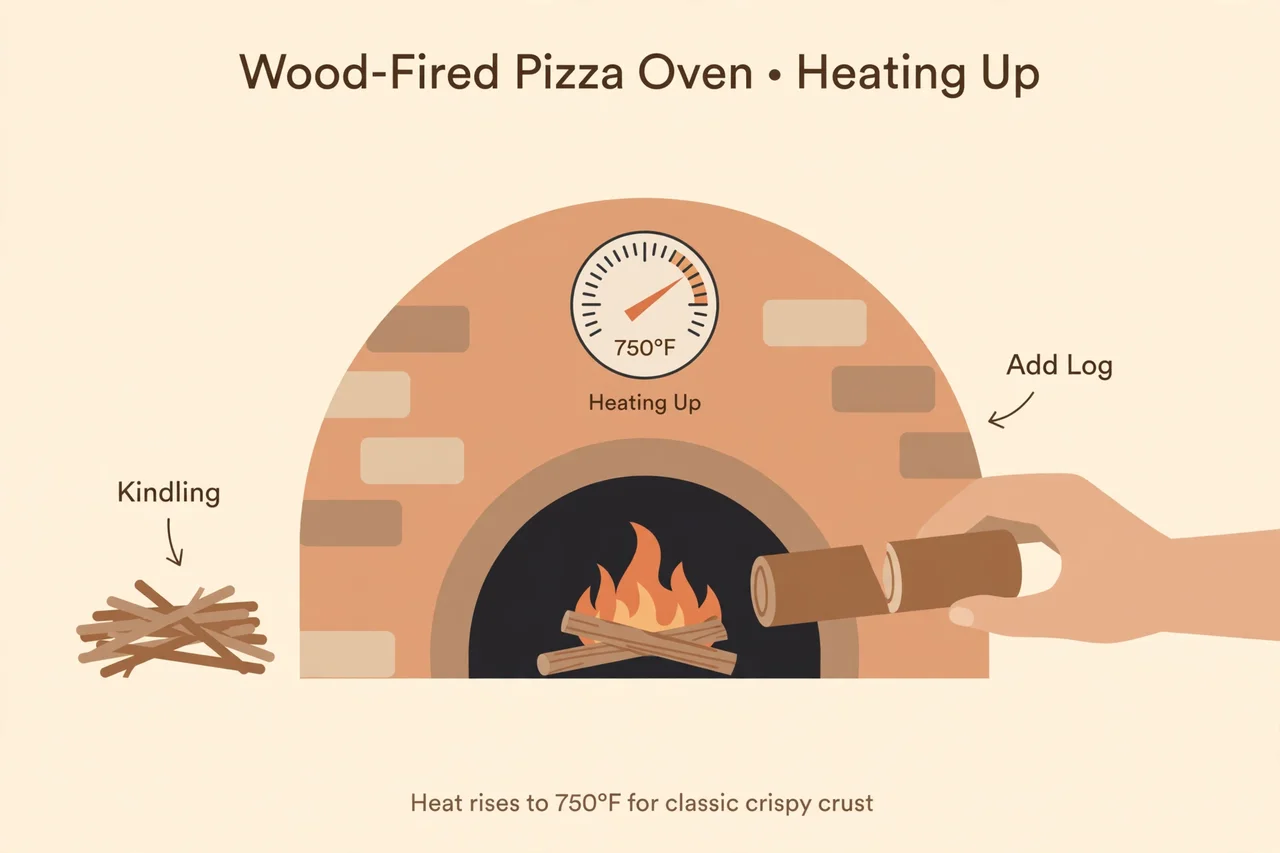
Lay two or three larger splits across the back of the firebox, then stack kindling and one natural firelighter on top. Light the kindling and leave the oven door open so air feeds the flames from above. The fire burns down through the stack instead of smothering itself, which means less smoke and a faster climb to baking heat. Give the fire five minutes before you touch anything, because a top-down fire looks slow at first and then takes off.
Pro Tip: If the kindling will not catch, the wood is wetter than it looks. Test the kindling with your meter and swap in drier pieces instead of adding more firelighters.
Step 6: Feed the Fire in Small Handfuls
Add one split at a time and wait for it to catch before you add the next. A big armful of cold wood drops the floor temperature and fills the dome with smoke, which is the opposite of what a pizza needs. Watch the floor with an infrared thermometer and aim to hold it above 750°F while you bake. When the flame starts to shrink, add one more split and slide the pizza in once the flame is rolling again.
Heads Up: Never lean over the oven mouth to check the fire. The blast of heat at the opening can burn skin in seconds, so stand to the side and use a long-handled tool to move wood.
Step 7: Let the Fire Burn Down and Clear the Ash
Stop adding wood after the last pizza and let the fire burn down to coals on its own. Wait until the oven is fully cool, then scoop the ash into a metal bucket with a lid and set the bucket on concrete away from the house. Ash can hold live embers for a full day, so never tip it into a bin or onto a lawn. Brush the floor clean before your next bake so old ash does not stick to the next crust.
Troubleshooting: When the Fire Will Not Behave
| If This Happens | Try This |
|---|---|
| Oven will not pass 600°F | Wood is too wet, or the fire is too small. Test moisture and add one dry split at a time. |
| Thick white smoke | Wet wood or a smothered fire. Open the air vent, add dry kindling, and stop adding large splits. |
| Crust burns before toppings cook | Floor is too hot. Push the fire to the back and let the floor settle for a few minutes. |
| Soot on the dome and pizza | Resinous or damp wood. Switch to kiln-dried oak and clean the dome with a brush once cool. |
Frequently Asked Questions
Pizza Oven Firewood FAQ
Kiln-dried oak is the best firewood for pizza ovens because it burns hot, holds heat, and gives off a clean, mild smoke. Keep the moisture under 20% and cut the splits to fit your firebox.
Pine burns fast, throws sparks, and leaves sticky resin that coats the oven and the pizza. Use dense hardwood instead, and save pine for an open campfire.
Aim for under 20% moisture, and buy kiln-dried wood at 10% to 15% when you can. Test each load with a moisture meter before you light it.
Cut splits to fit your firebox, which is about 6 inches for most portable ovens and up to 16 inches for large masonry ovens. Short pieces light faster and feed well during a bake.
Natural lump charcoal works in many multi-fuel ovens because it lights fast and burns hot with little ash. Check your oven manual first, because some ovens are built for wood only.
Yes, and a small piece of hickory adds a bold smoky note to the crust. Keep it to one small split per fire so the smoke does not overpower the toppings.
Quick Reference Card: Best Firewood for Pizza Ovens
Oak, maple, or ash, dried under 20% and cut to fit, will carry almost any pizza night. The best firewood for pizza ovens is the driest hardwood you can buy, fed in small amounts while the floor stays hot. Light the oven, bake a pizza, and taste the difference dry wood makes, then grab a moisture meter so every future load is a number you can trust.