How Long Does Firewood Last in Storage? Shelf Life by Species and Storage Method
How long does firewood last in storage? That is the question every wood burner asks when a pile has sat through a wet winter or two. The short answer is good news.
Seasoned firewood that stays dry and off the ground can burn well for 3 to 5 years, and wood kept in a dry shed often lasts longer than that. Wood left on bare dirt or sealed under a full tarp is a different story. It can rot in a single season.
Keep reading and you will know exactly where your pile stands.
This guide gives you a clear plan. You will learn how long firewood lasts in each common storage setup, how seasoning time changes by species, and how to spot wood that has gone bad before it goes in the fire. You will also get a storage routine you can run in one afternoon, plus a quick reference card to keep
Heads Up: Burn Safe Wood Only
Burn only dry, untreated wood. Never burn treated, painted, or stained wood, plywood, or household trash. The fumes are toxic. Wet wood builds creosote in the chimney and raises the risk of a chimney fire, so have your chimney inspected and swept once a year by a certified sweep. Check local burn rules and firewood transport rules before you move wood, since some areas limit movement to slow the spread of pests.
Total Time
One afternoon
Active Time
About 2 hours
Difficulty
Beginner
What You Need
- Moisture meter
- Pallets, rails, or cinder blocks
- Firewood rack or two sturdy posts
- Tarp or sheet metal for a top cover
- Bungee cords or rope
- Work gloves
- Wheelbarrow or garden cart
- Chalk or tags for dating stacks
The Short Answer: How Long Firewood Lasts
Storage life is not one number. It is a range set by moisture, airflow, and ground contact. Dry wood in a shed can outlast wood left on the ground by years. The table below shows the ranges most extension sources point to for wood that starts out seasoned.
Use these ranges as planning guides, not promises. A wet climate, a shaded yard, and a pile pressed against a fence can shorten every number here. A sunny, breezy spot with a roof can stretch them.

Two points in that table deserve attention. The jump from an open ground pile to a raised, top-covered stack is large. Lifting wood off the soil and keeping rain off the top adds years.
The second point is the ceiling. Even in a dry shed, wood slowly loses quality after about four years as fibers break down and insects find it.
What Decides How Long Firewood Lasts
Four factors control the clock. Get them right and a pile bought this fall can heat your home three winters from now. Get one wrong and the same wood can turn soft and moldy by spring.
Moisture at the start
Wood that enters storage above 20 percent moisture is already behind. It needs months of drying before it is safe to burn, and damp wood in a tight pile grows mold fast. The U.S. EPA advises burning wood below 20 percent moisture. A moisture meter is the only reliable check.
Wood can feel dry on the surface while the center stays wet.
Airflow around the pile
Moving air carries moisture away from the wood surface. A stack pressed tight against a wall or wrapped in a full tarp traps damp air and invites mold. Leave a gap of a few inches between the stack and any wall, and leave the sides open so wind can pass through the rows.
Ground contact
Soil holds moisture all year. Wood sitting on dirt pulls that moisture up through the bottom rows, and those rows rot first. Pallets, rails, or cinder blocks break the contact and let air move under the pile. This one change does more for storage life than any cover.
Species and split size
Dense hardwoods such as oak hold moisture longer and season slowly, but they also hold up well in storage once dry. Softwoods dry faster and rot faster. Small splits dry sooner than large rounds, and they also lose quality sooner if left in damp conditions. Learn the traits of the species you burn in our aspen firewood burning guide and the other species guides on this site.
At a Glance: The 8 Storage Steps
- Test the moisture before you stack it.
- Split large rounds before storage.
- Raise the stack off the ground.
- Leave the sides open to the air.
- Cover the top only.
- Rotate the oldest wood to the front.
- Check the pile every few months.
- Test a piece again before you burn it.
Test the Moisture Before You Stack It
Split one log from the middle of the load and press the meter prongs into the fresh face. The outside of a log can read dry while the center still holds water, so a reading from the bark side means little. Aim for below 20 percent before the wood goes into long-term storage.
Wood that reads above 20 percent is not ruined. It needs a seasoning stack in sun and wind, not a sealed shed. Stack it loose, leave it uncovered on dry days, and retest it in a few months. Our guide on how to tell if firewood is seasoned walks through the meter test and the sound and weight checks that back it up.
Split Large Rounds Before Storage
Rounds dry from the outside in, and a thick oak round can stay wet in the center for two years. Splitting opens the grain and lets moisture escape. Split pieces to a width of about 3 to 6 inches for most stoves and fireplaces.
Wear gloves, eye protection, and sturdy boots while you split. Keep children and pets clear of the work area. A splitting maul handles most rounds, and a hydraulic splitter is worth renting when the pile is large. Stack the splits bark side up on the top row so rain runs off.
Raise the Stack Off the Ground
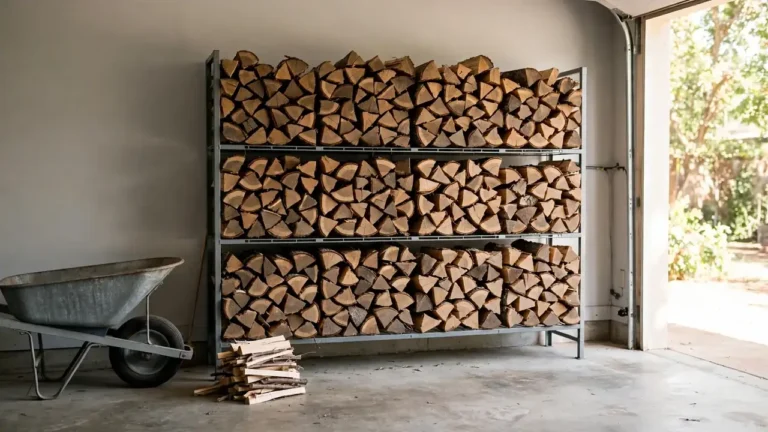
Lay two pallets or a pair of rails on level ground, then build the stack on top of them. A gap of 4 to 6 inches under the bottom row is enough to break ground contact and let air move beneath the wood. Cinder blocks with a pair of treated boards across them work well when pallets are scarce.
Keep the stack stable. Build rows no higher than about 4 feet unless you have end posts to hold them. A falling stack can injure a person and crush a pet, so check the ends after heavy rain or wind. If you need a refresher on stacking technique, read our guide on how to stack firewood before you start.
Leave the Sides Open to the Air
Wind is your drying partner. A stack with open sides dries after rain within a day or two in fair weather. A stack wrapped tight in plastic stays damp for weeks. Resist the urge to seal the pile against every storm.
Face the open side of the stack toward the prevailing wind when you can. In a yard with a fence, leave a gap of at least a few inches between the stack and the fence boards. That gap also keeps termites from using the fence as a bridge into the pile.
Pro Tip
Date each stack with chalk or a tag when you build it. A simple month and year on the end post tells you at a glance which pile to burn first, and it stops old wood from hiding behind a fresh delivery.
Cover the Top Only
Drape a tarp or a sheet of metal over the top of the stack and let it hang a few inches down each side. Tie it down with bungee cords so wind cannot lift it. The top cover sheds rain and snow while the open sides keep air moving.
A full tarp that reaches the ground is one of the most common storage mistakes. It traps moisture underneath and turns the pile into a mold farm. If your tarp is too large, fold it so it covers only the top. Our guide on whether you should cover firewood covers the trade-offs in more detail.
Rotate the Oldest Wood to the Front
Burn the oldest seasoned wood first. New deliveries go to the back of the stack or to a second stack, and the dated pile stays at the front where you grab from it daily. This first-in, first-out habit keeps any single pile from sitting for years while fresh wood burns.
When a new load arrives, move the remaining old wood to the front before you stack the new wood behind it. The extra ten minutes of moving pays off in wood that never gets old enough to rot. It also keeps your supply honest, since you always know how much old wood is left.
Check the Pile Every Few Months
Walk the stack once a season and look for the early signs of trouble. Pull out any piece that feels soft, smells musty, or shows white or green mold. One bad piece can spread mold to its neighbors when the pile stays damp.
Look under the top cover after long rainy spells. A sagging tarp can pool water and drip it straight into the top rows. Tighten cords, re-fold the cover, and restack any leaning rows while the pile is still small enough to manage. A five-minute check beats rebuilding a collapsed stack in January.
Test a Piece Again Before You Burn It
Wood that sat in storage for a year or more can pick up moisture again, even in a covered stack. Split a test piece and check the fresh face with your meter before the first fire of the season. A reading below 20 percent means the wood is ready.
Listen as well as you measure. Two dry pieces knocked together make a sharp, hollow crack. Wet wood gives a dull thud.
If the meter reads high, move that wood to a sunny, breezy spot for a few weeks and test it again. Burning wet firewood wastes heat, smokes up the room, and coats the chimney with creosote, so the retest is worth the minute it takes.
How Long Each Storage Method Keeps Wood Good
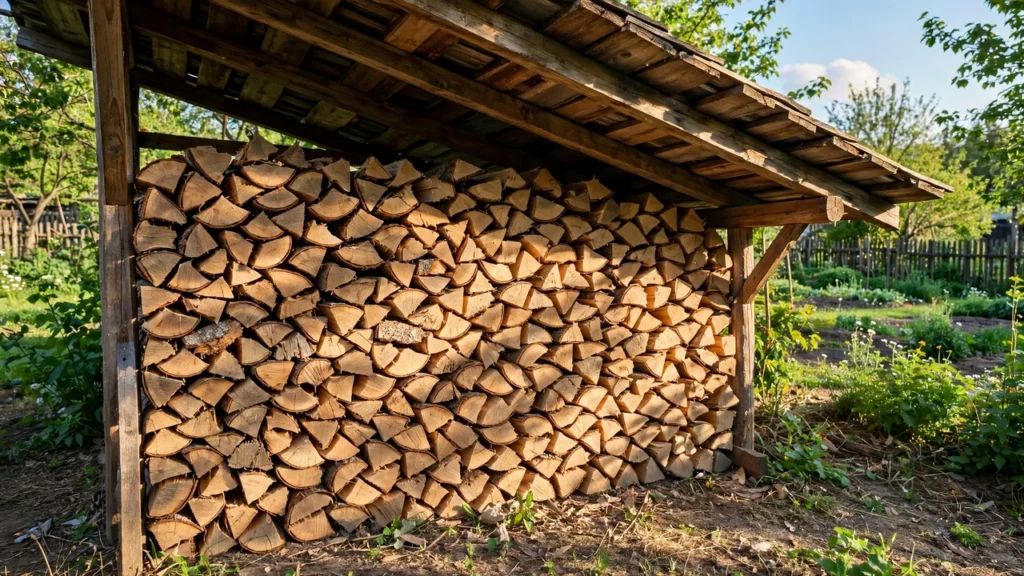
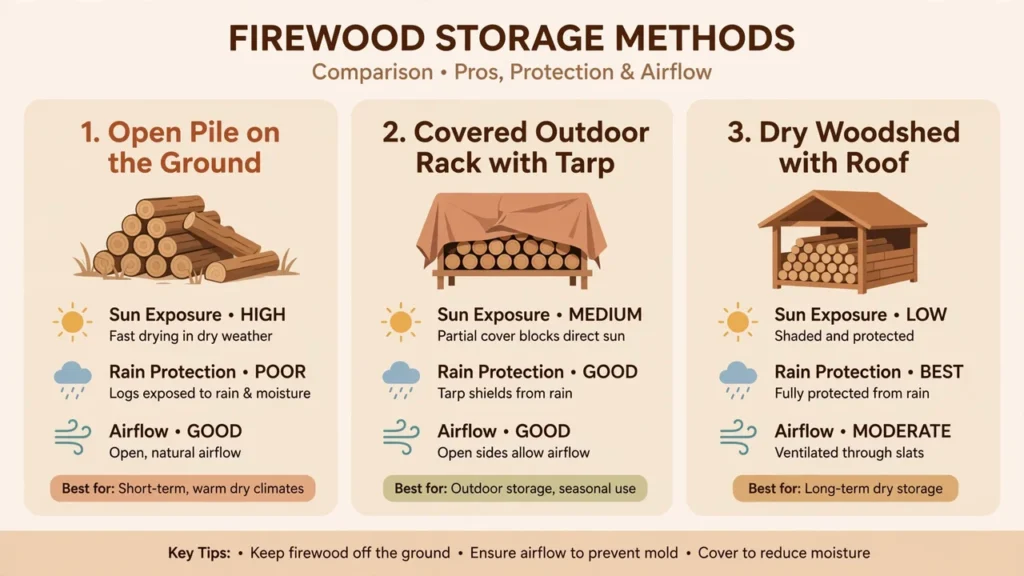
Your setup matters more than your species. The same oak can last one year on bare dirt or five years in a dry shed. The table earlier in this guide shows the ranges, and the notes below explain what each setup does well and where it fails.
An open ground pile is the worst option for storage, though it is fine for short seasoning in dry weather. A raised stack with a top cover is the sweet spot for most homes, since it costs little and adds years of life. A shed or garage wins on longevity, but it needs airflow and a dry floor, or it can trap the same moisture it was meant to keep out. Read our full guide on how to store firewood outside if your pile will live in the yard year round.
Seasoning Timeline by Species
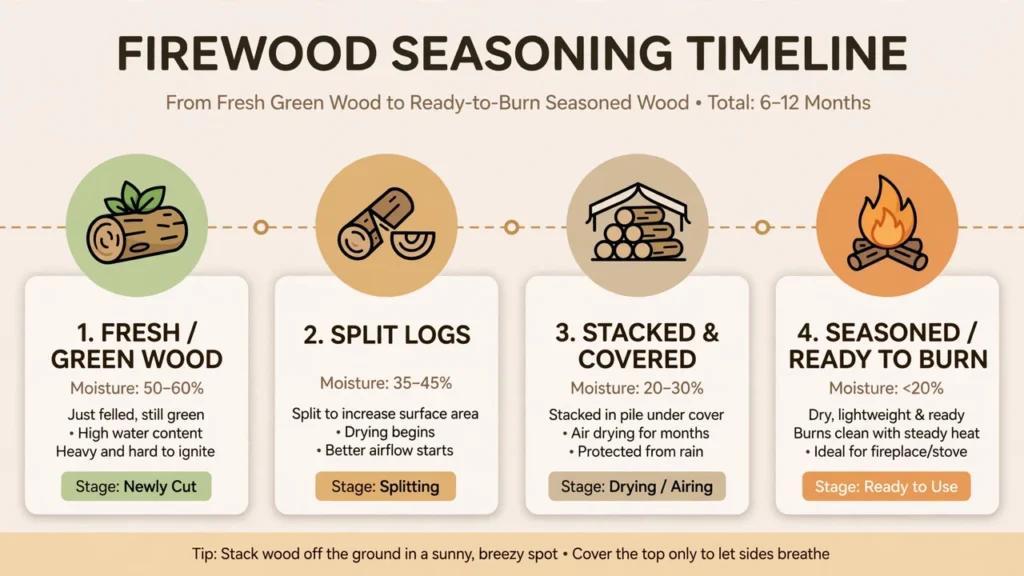
Storage life starts only after seasoning ends. Green wood is not stored wood. It is wood still drying, and it needs sun and wind before it can sit for years. Plan your cutting and buying around the timeline below, and buy in the fall for the following winter when you can.
These ranges come from extension guidance and the EPA. Oak and other dense hardwoods need the longest time, often 12 to 24 months for large splits. Mid-range hardwoods such as ash, cherry, and birch usually need 6 to 12 months. Softwoods such as pine and cedar can be ready in 3 to 6 months.
Climate shifts every number, so the meter reading matters more than the calendar. Our guide on how to season firewood covers the full process, and can firewood be too dry answers the common worry about over-drying.
Signs Your Firewood Has Gone Bad
Bad wood announces itself if you know what to look for. Run through this checklist before you carry a load inside. One bad sign alone may not condemn a piece, but two or three together mean it belongs in the compost pile or the trash, not the fire.
Spoiled Firewood Checklist: Do Not Burn Pieces That Show These Signs
- ✘ Soft or crumbly ends that sink under a thumbnail press
- ✘ White, green, or black mold across the bark or split faces
- ✘ Musty or sour smell when you split a piece open
- ✘ Bark falling off in sheets with powdery wood beneath
- ✘ Insect tunnels or sawdust piles on or under the stack
- ✘ Dull thud instead of a sharp crack when pieces are knocked together
- ✘ Moisture reading above 20 percent on a freshly split face
- ✘ Dark, wet-looking streaks deep inside a split piece
Moldy wood deserves a special note. Burning it can release mold spores into the room, and handling it can irritate skin and lungs. Wear gloves and a dust mask when you clear moldy pieces, and keep them out of the house. Rotted wood also burns poorly, since decayed fibers hold water and give off little heat.
Troubleshooting: When Storage Goes Wrong
Most storage problems have a clear fix. The table below matches the common failure to the action that corrects it.
Frequently Asked Questions
How long does seasoned firewood last in storage?
Seasoned firewood kept dry and off the ground can stay good for 3 to 5 years, and often longer in a dry shed. Wood left on bare ground or under a full tarp tends to rot within 1 to 2 years. Check each piece for soft spots, mold, and smell before you burn it.
Can firewood go bad?
Yes. Firewood can rot, grow mold, and pick up insects when it stays damp. Rotted wood burns poorly and can smell bad. Burn only firm, dry pieces and leave crumbly or moldy pieces out of the fire.
Does firewood expire after one year?
No. One year is not a limit. Dry, covered wood stays burnable for several years.
The risk is not the calendar. The risk is moisture, ground contact, and poor airflow.
How do I know if my stored firewood is still good?
Knock two pieces together and listen for a sharp crack. Look for firm bark, solid ends, and no soft or crumbly spots. Split a piece and test the fresh face with a moisture meter. A reading below 20 percent means it is ready to burn.
Should I cover firewood in storage?
Cover the top only. A top cover keeps rain and snow off the pile while the open sides let air move through. A full tarp traps moisture and speeds up mold and rot.
Can I store firewood in the garage?
Yes, if the garage stays dry and air can move around the stack. Keep the pile off the floor, away from the wall, and away from furnaces and water heaters. Bring only a few days of wood inside the house at a time so insects stay outside.
Quick Reference Card: Firewood Storage Life
What you need: moisture meter, pallets or rails, top cover, bungee cords, gloves, chalk or tags.
Target moisture: below 20 percent on a freshly split face.
Best setup: raised stack, top covered, sides open, in sun and wind.
Shelf life: 2 to 4 years covered outdoors, 3 to 5 years in a dry shed.
Steps: 1. Test moisture. 2. Split large rounds. 3. Raise the stack. 4. Leave sides open. 5. Cover the top only. 6. Rotate oldest first. 7. Check each season. 8. Retest before burning.
Do not burn: soft, moldy, or crumbly pieces, or any treated or painted wood.
Keep Your Firewood Ready for Years
How long does firewood last in storage? With dry wood, a raised stack, a top cover, and open sides, the answer is years, not months. The routine in this guide takes one afternoon to set up and a few minutes each season to keep going.
Start with the wood you have now. Test a piece, lift the stack off the ground, and date the pile. Those three moves alone can add years to your supply. When you are ready to plan next winter, read our guide on how much firewood you need for winter so you buy the right amount in the first place.