Are Gas Fireplaces Bad for Indoor Air Quality? What the Air in Your Home Is Really Doing
You light the gas fireplace on a cold evening, the flames glow, and the room warms up fast. Then a small worry creeps in: is that fire putting anything into the air you are breathing? Are gas fireplaces bad for indoor air quality? The short answer is that a gas fireplace can add pollutants to your indoor air, but how much depends on the type of fireplace, how well it is vented, and how well it is maintained.
This guide gives you a clear, honest answer. You will learn what comes out of a gas flame, how vented and vent-free models differ, the warning signs that your air is suffering, and the exact steps that cut exposure. No scare tactics, no made-up numbers. Where solid data does not exist, this article says so plainly.
⚠️ Safety First — Read This Before Anything Else
Gas fireplaces burn fuel, and burning fuel can produce carbon monoxide (CO) — a colorless, odorless gas that can harm people and pets. Install a working CO alarm on every level of your home and near sleeping areas. Test each alarm monthly and replace alarms on the schedule the maker gives.
If you smell gas (a rotten-egg odor): do not touch light switches, flames, or appliances. Leave your home at once, taking people and pets with you. Call your gas utility emergency line or 911 from outside. Never try to find or fix a gas leak, open a gas line, or relight a fireplace after a strong gas smell. That work belongs to your gas utility or a licensed gas fitter.
Gas-line work, venting changes, conversions, and repairs beyond basic cleaning and the normal user controls in your manual go to a licensed gas professional. Birds and other small pets are more sensitive to CO and fumes than people, so an alarm protects the whole household.
Reading Time
About 12 minutes
Difficulty
Beginner friendly
Bottom Line
Vented: low impact. Vent-free: higher impact.
What You Need for Cleaner Air
- Working CO alarms on every level and near bedrooms (battery or plug-in with battery backup)
- Your fireplace manual — for the model name, vent type, and cleaning steps
- A soft brush and vacuum with a hose attachment for dust and soot
- A window or door you can crack open while a vent-free unit runs
- A calendar reminder for monthly alarm tests and a yearly professional service
- A licensed gas technician’s number saved in your phone before you need it
At a Glance — The Key Points
- A gas flame makes combustion byproducts. The main ones are carbon monoxide, nitrogen dioxide, carbon dioxide, and water vapor.
- Vented fireplaces send most of those byproducts outside. Their effect on indoor air is usually small when the vent is clear and the unit is serviced.
- Vent-free fireplaces release all byproducts into the room. They raise indoor moisture and pollutant levels more than vented models.
- A CO alarm is non-negotiable. CO has no smell and no color, so you cannot detect it without an alarm.
- Yearly service matters. A dirty burner or a blocked vent changes how cleanly the flame burns.
- Ventilation and run time are your two levers. Shorter burns and fresh air keep indoor levels lower.
The Short Answer: Are Gas Fireplaces Bad for Indoor Air Quality?
A gas fireplace does affect indoor air quality, but “bad” depends on the setup. A clean, well-vented direct-vent fireplace that is serviced each year adds very little to the air inside your home, because its exhaust goes outside through a sealed vent. A vent-free fireplace adds more: every bit of what the flame makes stays in the room with you.
That does not mean you must rip out a vent-free unit. It means you should know what it puts into the air, run it in shorter stretches, bring in fresh air while it runs, keep a CO alarm close by, and have it checked each year. The rest of this guide walks through each piece so you can judge your own fireplace with facts instead of worry.
What Actually Comes Out of a Gas Flame?
When natural gas or propane burns cleanly, the flame makes mostly carbon dioxide and water vapor. Real flames are rarely perfect, though. Small amounts of other byproducts appear, and the mix changes with the burner, the gas pressure, and how much oxygen reaches the flame.
Carbon monoxide (CO) is the one to take most seriously. It forms when fuel burns without enough oxygen. CO is colorless and odorless, and it can build up without any warning sign you can see or smell. That is why a CO alarm is the single most important safety device in a home with any gas-burning appliance.
Nitrogen dioxide (NO2) also forms during gas combustion. It can irritate the nose, throat, and lungs. People with asthma or other breathing trouble tend to notice it first. Studies on gas cooking have linked indoor NO2 to breathing symptoms, but solid data on gas fireplaces alone is thin, so this article will not quote figures that do not exist for fireplaces specifically.
Water vapor sounds harmless, and in small amounts it is. A gas flame makes a surprising amount of it, though. In a tight, well-sealed home, hours of burning can push indoor humidity up enough to fog windows and feed mold in cold corners. A vent-free unit adds all of its moisture to the room.
Fine particles from a gas flame are far lower than from a wood fire. Gas burns much cleaner than wood in that respect. Soot still appears when a burner is dirty or the flame touches a cold surface, and that soot can mark walls and ceilings over time.
Vented vs. Vent-Free: How Much Each One Affects Your Air
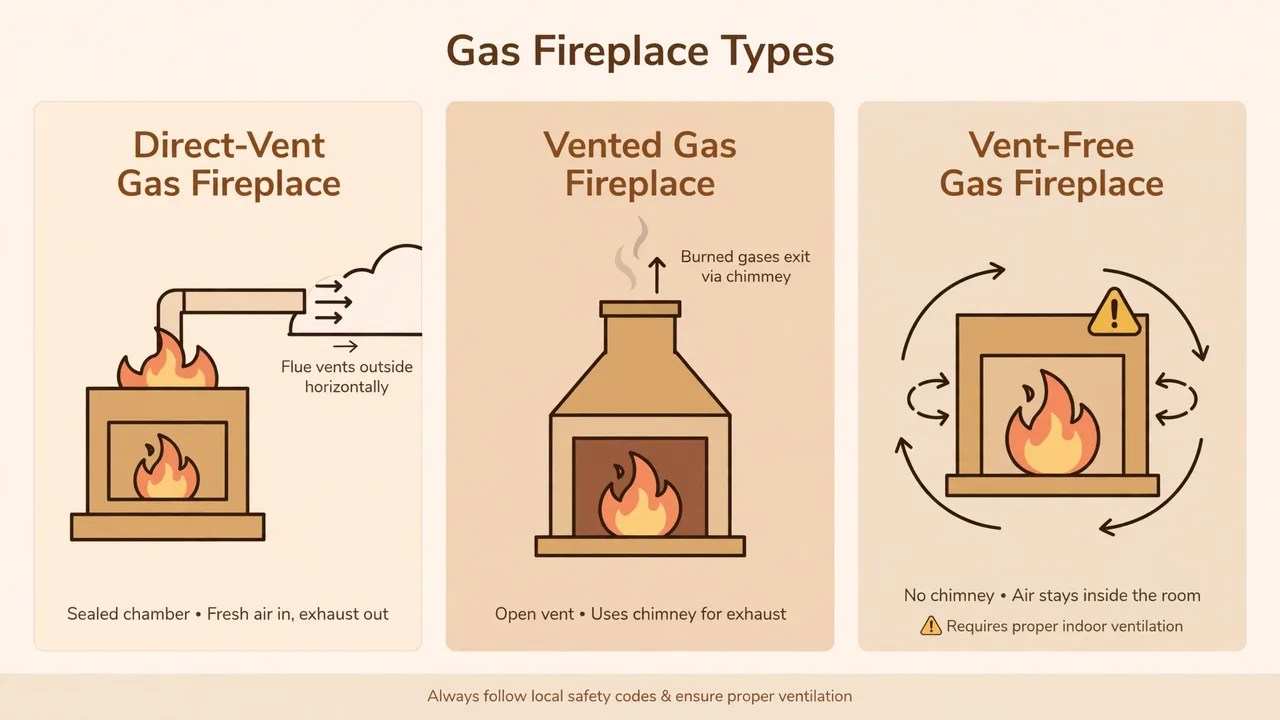
The vent type is the biggest factor in how a gas fireplace affects indoor air. Two fireplaces can burn the same gas and have very different effects on the room, purely because of where the exhaust goes.
A direct-vent fireplace pulls combustion air from outside and sends exhaust back outside through a sealed pipe. The firebox is sealed off from the room, so almost nothing from the flame mixes with your indoor air. For indoor air quality, this is the cleanest gas option. You can learn more in our guide to what a direct-vent gas fireplace is.
A vented fireplace (often called a B-vent model) uses room air for combustion and sends exhaust up a chimney or flue. It still removes most byproducts from the room. The catch is that a blocked flue, a downdraft, or a cracked heat exchanger can let exhaust spill back inside. That is why a yearly check of the vent path matters.
A vent-free (ventless) fireplace has no chimney and no flue. All combustion byproducts — including CO, nitrogen dioxide, carbon dioxide, and water vapor — enter the room. These units are designed to burn very cleanly, and they carry an oxygen-depletion sensor that shuts the unit off if room oxygen drops. Even so, they raise indoor pollutant and moisture levels more than vented models, and they are restricted or banned in some states, cities, and bedrooms. Check your local code before buying or running one. Our full comparison covers the trade-offs in the vented vs. ventless gas fireplace guide.
| Fireplace Type | Where Exhaust Goes | Effect on Indoor Air | Main Watch-Out |
|---|---|---|---|
| Direct-vent | Outside, sealed pipe | Lowest impact | Keep the vent cap clear of snow and nests |
| Vented (B-vent) | Up a chimney or flue | Low impact when the flue is clear | Blocked flue or downdraft can spill exhaust inside |
| Vent-free | Into the room | Highest impact; adds moisture and pollutants | Local code limits; needs fresh air and a CO alarm |
| Gas log set in an open fireplace | Up the chimney, with the damper open | Low to moderate; some room air is drawn up the flue | Never run with the damper closed |
Warning Signs Your Gas Fireplace Is Hurting Your Air
Your fireplace gives off clues when something is wrong. Catching them early keeps a small problem from turning into a health risk. Walk through this list once a month during the heating season.
A yellow, lazy, or flickering flame is the first thing to check. A healthy gas flame burns mostly blue with small yellow tips. A flame that is mostly yellow, tall and lazy, or lifting off the burner can mean the burner is dirty or the air mix is off. That kind of flame makes more CO than a clean blue one.
Soot marks on the glass, on the logs, or on the wall above the fireplace point to incomplete burning. A little dust is normal over a season. Black, greasy soot is not. Turn the unit off and call a technician if soot keeps coming back after cleaning.
A gas smell, a chemical smell, or a sharp odor when the unit runs needs attention right away. A faint smell at the very first light-up of the season can come from dust burning off, and it should fade within minutes. A smell that stays, or a rotten-egg gas smell at any time, means you should follow the gas-smell rule in the safety box at the top of this article: leave and call for help from outside.
Headaches, nausea, dizziness, or tiredness that show up when the fireplace runs and fade when you leave the house are symptoms the CDC links to CO exposure. Treat them as urgent. Get everyone (and pets) into fresh air and call 911 or your gas utility. Do not wait to see if the feeling passes.
Condensation and damp are slower signs. Windows that fog heavily while a vent-free unit runs, or damp patches near the fireplace, tell you moisture is building up. Over a winter, that moisture can feed mold growth, which brings its own air-quality problems.
Heads Up: Never Ignore a CO Alarm
If a CO alarm sounds, do not assume it is a false alarm and do not try to find the source yourself. Get everyone out into fresh air and call 911 or your gas utility from outside. CO has no smell, so your nose cannot judge whether the alarm is right.
How to Cut Down on Indoor Air Pollution From Your Gas Fireplace
You do not need new equipment to make a real difference. These actions are the ones that matter most, in the order that gives you the biggest return for the least effort.
1. Check and test your CO alarms
Press the test button on every CO alarm once a month. Replace batteries when the alarm chirps, and replace the whole alarm on the maker’s schedule (often every 7 to 10 years). Put an alarm on every level of the home and near each sleeping area. A fireplace room without an alarm is a gap worth closing this week, not next season.
2. Book a yearly professional service
A licensed gas technician cleans the burner, checks the gas pressure, inspects the vent or flue, and tests the safety devices. This one visit catches most of the problems that lead to poor burning: dust-clogged burners, cracked parts, and blocked vents. Book it before the heating season starts, when technicians still have open slots.
3. Clean the glass and burner area between services
With the unit off and fully cool, brush dust off the burner ports and vacuum the firebox with a hose attachment. Wipe the glass with a cleaner made for fireplace glass. Dust on a burner changes the flame pattern, and a changed flame pattern changes what the flame puts into the air. Your manual lists the cleaning steps that are safe for your model — follow those, and leave anything involving gas parts to a technician.
4. Bring in fresh air while a vent-free unit runs
Crack a window in the same room, or open a door to another room, while a vent-free fireplace is on. Even a small opening helps dilute what the flame adds to the air. Run the kitchen or bathroom fan for a short while after the fire goes out to clear the room faster. Never block a vent or air supply opening to “keep the heat in.”
5. Run the fireplace in shorter stretches
Long, all-evening burns add up. Try running the fireplace for an hour or two to warm the room, then turning it off and letting the room hold the heat. This matters most for vent-free units, where everything the flame makes stays indoors. A timer or thermostat setting makes this automatic.
6. Keep the room from getting too humid
Watch for fogged windows and damp walls while the fireplace runs. If humidity climbs, open a window briefly or run a dehumidifier in the room. Good air movement — a ceiling fan on low, or a fan moving air toward a door — helps moisture and pollutants spread out instead of pooling near the fireplace.
CO Alarms: Where to Put Them and How to Test Them
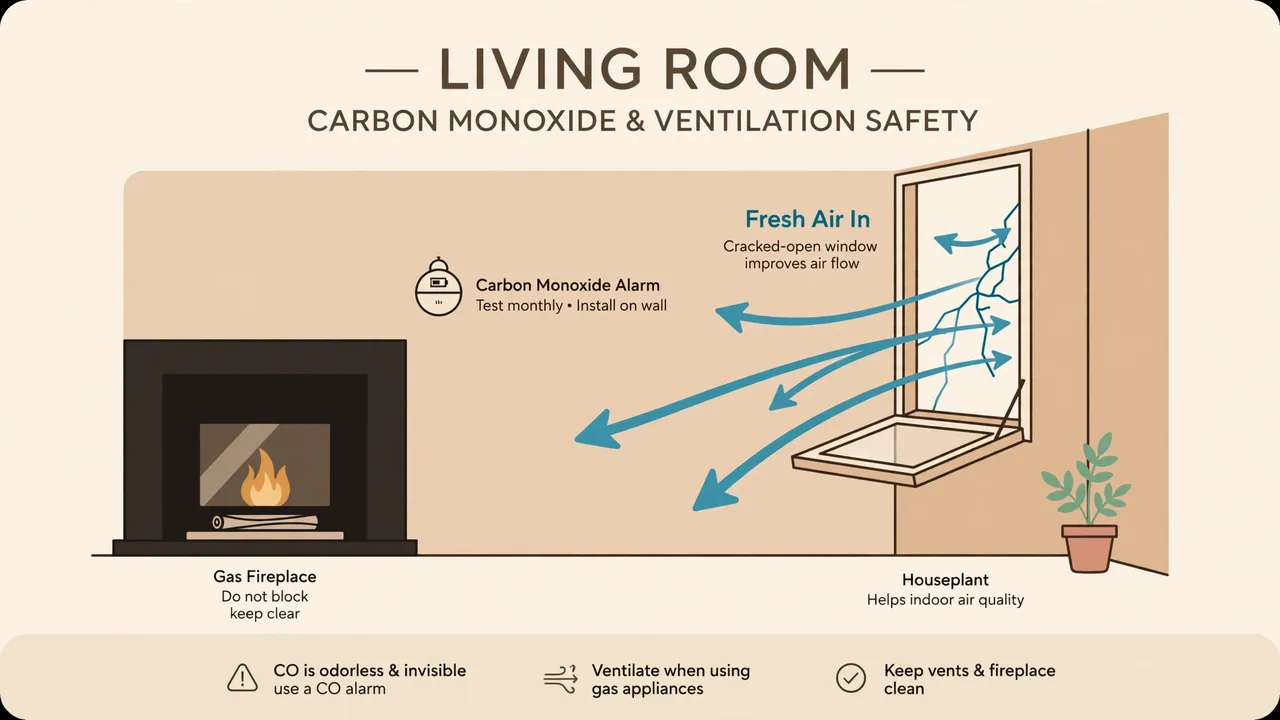
A CO alarm only helps if it is in the right place and actually works. The guidance from the CDC and the U.S. Consumer Product Safety Commission is consistent on the basics: install at least one alarm on every level of the home, place one near each sleeping area, and test alarms monthly.
Put an alarm in the room with the fireplace, on the wall or ceiling at the height the maker recommends, and away from the direct heat of the unit. A second alarm near bedrooms covers the hours when everyone is asleep and least able to notice symptoms. Plug-in models with battery backup keep working through a power cut, which is when many people lean on a gas fireplace most.
Test each alarm monthly by holding the test button until it sounds. Swap batteries at the first low-battery chirp. Write the install date on the back of the alarm with a marker so you know when its service life ends. When an alarm reaches the end of its life, replace it — an old sensor can go quiet without any warning. For the full picture on how CO forms in a gas fireplace, see our guide on whether gas fireplaces produce carbon monoxide.
Pets, Kids, and People With Breathing Trouble
Some members of the household feel poor air sooner than others. Children breathe faster than adults relative to body size, so they take in more of whatever is in the air. People with asthma, chronic bronchitis, or other lung conditions may notice irritation from nitrogen dioxide at levels that leave other people unbothered.
Pets deserve a special note. Birds are famously sensitive to fumes and CO, and small pets in general have less body mass to absorb a dose. Keep bird cages out of the room with a vent-free fireplace, and keep all pets in mind when you decide how long to run a unit. A CO alarm protects them too, but it is a warning device, not a substitute for ventilation and sensible run times.
If anyone in the home has a breathing condition, lean toward a direct-vent model, keep run times short, and bring in fresh air while the unit runs. When in doubt about a family member’s symptoms, talk to a doctor and mention the gas fireplace — that detail helps a clinician weigh CO as a possible cause.
When to Call a Licensed Professional
Some jobs belong to a trained technician, full stop. Call one when you notice any of these: a flame that stays yellow after cleaning, soot that keeps returning, a gas smell, a CO alarm that sounds, a pilot light that will not stay lit, or a vent that looks blocked or damaged.
Call one too before you change anything about the gas supply, the venting, or the installation — including converting a fireplace from one fuel to another or moving a unit. Gas-line work, venting changes, and conversions need a licensed gas professional and, in many places, a permit and an inspection. If you are weighing a switch, our guide on whether gas fireplaces are safe to use indoors covers the safety questions to ask first.
Troubleshooting: If This Happens, Try This
| If This Happens | Try This |
|---|---|
| Flame is mostly yellow and lazy | Turn the unit off, let it cool, and clean dust from the burner ports. If the flame stays yellow, call a licensed gas technician. |
| Soot on the glass or logs | Clean the glass with fireplace-glass cleaner. If soot returns quickly, stop using the unit and book a service visit. |
| Windows fog up while the fireplace runs | Crack a window, run the fireplace for shorter stretches, and check room humidity. Persistent damp needs a technician’s look. |
| A gas smell at any time | Leave the home at once with people and pets. Call the gas utility or 911 from outside. Do not search for the leak. |
| CO alarm sounds | Get everyone into fresh air and call 911 or the gas utility from outside. Do not turn the fireplace back on until a professional clears it. |
| Headaches or nausea while the fireplace runs | Move to fresh air right away and call 911. Tell responders you have a gas fireplace running. |
Frequently Asked Questions
Are Gas Fireplaces Bad for Indoor Air Quality? — Your Questions Answered
Do gas fireplaces release carbon monoxide into the house?
Yes, a gas flame can produce carbon monoxide, especially when the burner is dirty or the flame is starved of oxygen. Direct-vent models send exhaust outside, so very little reaches the room. Vent-free models release it into the room, which is why a working CO alarm is essential.
Is a vent-free gas fireplace safe for indoor air quality?
A vent-free fireplace adds combustion byproducts and moisture directly to the room, so it affects indoor air more than a vented model. It can be used with care: short run times, fresh air from a cracked window, a working CO alarm, and yearly service. Some states, cities, and bedrooms restrict or ban vent-free units, so check your local code.
Can a gas fireplace make asthma worse?
Nitrogen dioxide from gas combustion can irritate airways, and people with asthma may notice symptoms sooner. Keep run times short, bring in fresh air, and keep the unit serviced. If symptoms track with fireplace use, talk to a doctor and mention the fireplace.
Why do my windows fog up when the gas fireplace is on?
A gas flame makes water vapor, and a vent-free unit puts all of it into the room. In a tight home, that moisture condenses on cold windows. Crack a window, shorten run times, and watch for damp patches that could feed mold.
How often should a gas fireplace be serviced for clean air?
Have a licensed gas technician service it once a year, before the heating season. Between visits, clean the burner area and glass as your manual directs and test CO alarms monthly.
Should I leave a window open while using a gas fireplace?
For a vent-free fireplace, yes — crack a window in the same room while it runs to dilute combustion byproducts and moisture. For a direct-vent fireplace, the sealed vent handles exhaust, so a window is less important but still helps freshen the room.
Quick Reference Card — Gas Fireplace Air Quality
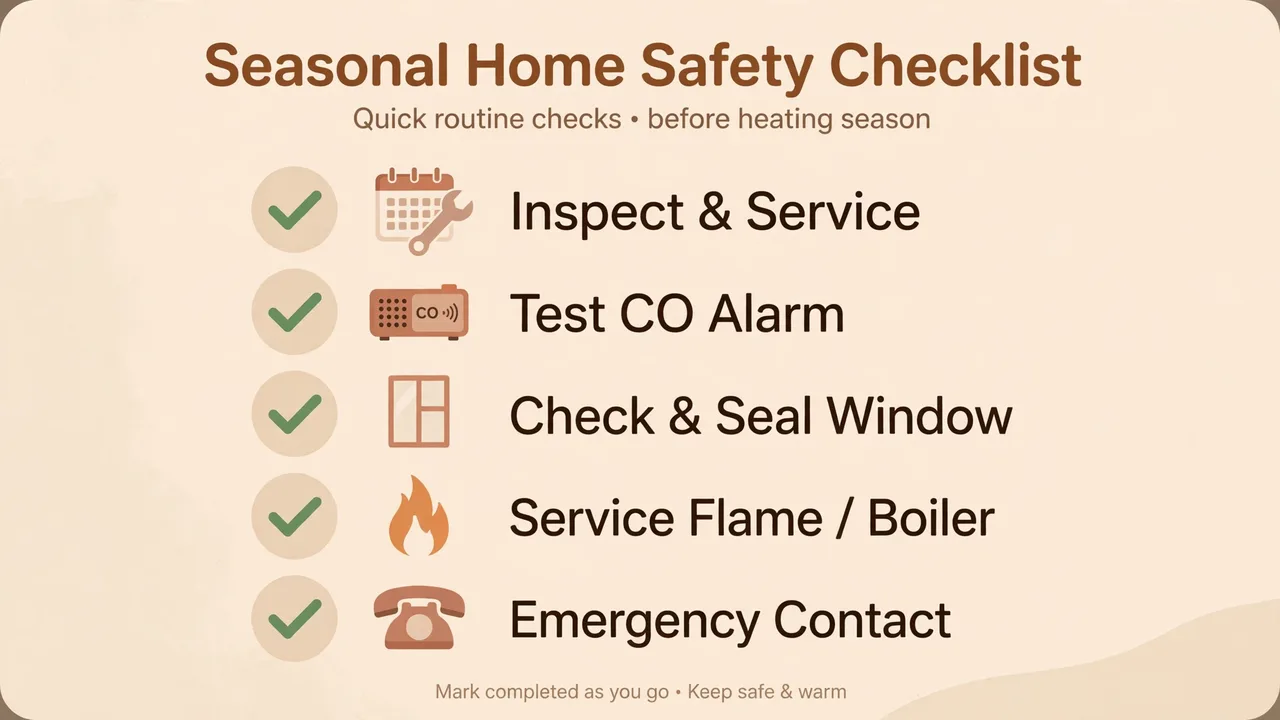
Keep on hand:
- CO alarm on every level + near bedrooms, tested monthly
- Fireplace manual, soft brush, vacuum with hose, glass cleaner
- Licensed gas technician’s number saved in your phone
Every time you run it:
- Check the flame — mostly blue is healthy; mostly yellow means stop and call a technician.
- Vent-free unit? Crack a window in the same room.
- Run it in shorter stretches — an hour or two, then off.
- Smell gas or hear the CO alarm? Leave at once and call for help from outside.
- Once a year: professional service before heating season.
Sources
CO facts in this article follow guidance from the U.S. Centers for Disease Control and Prevention (CDC carbon monoxide guidance) and the U.S. Consumer Product Safety Commission (CPSC Carbon Monoxide Information Center). Where research on gas fireplaces specifically is thin — such as exact indoor pollutant levels — this article says so rather than quoting numbers from unrelated appliances.
The Bottom Line on Gas Fireplaces and Indoor Air
So, are gas fireplaces bad for indoor air quality? They add something to the air, but the size of that something is mostly in your hands. A direct-vent model, serviced yearly, barely moves the needle. A vent-free model moves it more, and it asks more of you in return: fresh air, shorter burns, and a CO alarm that always works.
Start this week with the three habits that cost almost nothing: test every CO alarm, look at your flame color, and save a licensed technician’s number. Those three steps, plus a yearly service, cover most of what can go wrong with the air in a home that heats with gas.
If your fireplace is older, vent-free, or has never been serviced, book that service visit before the cold sets in. Clean air and a warm room are not a trade-off — with the right setup and a few steady habits, you can have both.