Do Gas Fireplaces Need a Carbon Monoxide Detector? Placement, Types, and What to Do When the Alarm Sounds
Do Gas Fireplaces Need a Carbon Monoxide Detector? Yes, they do. Every home with a gas fireplace needs working carbon monoxide alarms, and this guide shows you which type to buy, where to place it, and what to do when it sounds. A gas fireplace burns natural gas or propane, and any appliance that burns fuel can release carbon monoxide when combustion is incomplete or when venting fails. Carbon monoxide has no color and no smell, so you cannot sense it on your own. A detector is the one device that warns you in time.
This guide answers the question in plain terms. You will learn how carbon monoxide forms, how vented and ventless models differ, which detector fits your home, and where each alarm belongs. You will also learn how to test alarms, when to replace them, and the exact steps to take if one sounds. No special tools or trade skills are needed for any of it, and most of the work takes less than an hour.
Safety First: Read This Before You Light the Fireplace
Gas fireplaces carry real carbon monoxide and gas leak risks. Install CO alarms on every level of your home and near every sleeping area, test them monthly, and replace them when the manufacturer says to. Carbon monoxide is colorless and odorless, and it can harm people and pets before anyone notices a problem.
If you smell gas (a rotten egg odor): do not touch light switches, flames, or appliances. Leave the home at once with everyone in the household, including pets. Call the gas utility emergency line or 911 from outside. Never try to find or fix a gas leak yourself, never open a gas line, and never relight anything after a strong gas smell. That work belongs to the gas utility or a licensed gas fitter.
Never bypass safety devices such as thermocouples, oxygen depletion sensors, or spill switches, and never block vents or disable a CO alarm. Gas line work, installation, venting changes, and repairs beyond basic cleaning and normal user controls go to a licensed gas professional. Pets, especially birds, are more sensitive to carbon monoxide and combustion fumes than people are, so alarms protect the whole household.
THE ANSWER
Yes, always
Every gas fireplace home needs working CO alarms.
WHERE THEY GO
Every level
Near sleeping areas and in the fireplace room.
UPKEEP
Test monthly
Replace batteries yearly and the alarm on schedule.
The Short Answer: Yes, and Here Is Why
A gas fireplace is a fuel burning appliance, and every fuel burning appliance can produce carbon monoxide. Gas fireplaces can produce carbon monoxide when the burner runs dirty, when combustion lacks enough oxygen, or when exhaust cannot leave the home the way it should. A detector watches for that failure around the clock, even while you sleep.
Many people assume a vented fireplace is safe because the exhaust goes up a flue. Vented models are safer during normal use, but they still have failure modes. A blocked flue, a cracked vent pipe, a failed seal, or a downdraft can spill exhaust back into the room. A ventless model sends combustion byproducts into the room by design, so the margin for error is thinner. In both cases, a detector is the backup that catches the problem.
Cost is not a reason to skip this. A basic battery powered CO alarm costs far less than a single service visit, and it guards the whole household for years. Many building codes now require CO alarms in homes with fuel burning appliances, so check the rules where you live. Even where no law applies, guidance from the CDC and the Consumer Product Safety Commission calls for alarms on every level and near sleeping areas.
What Carbon Monoxide Is and Why a Gas Fireplace Can Make It
Carbon monoxide, or CO, is a gas that forms when fuel burns without enough oxygen for complete combustion. You cannot see it, smell it, or taste it. Once it is in the air, it enters the blood through the lungs and blocks oxygen from reaching the brain, heart, and other organs. That is why a leak can turn dangerous before anyone feels clearly ill.
Early signs of carbon monoxide exposure include headache, dizziness, nausea, and confusion. These signs can look like the flu, which makes them hard to tell apart from a common illness. If several people in the home feel ill at the same time, or if pets seem weak or confused for no clear reason, suspect carbon monoxide. Move everyone to fresh air and call emergency services. Do not wait to see if the feeling passes.
Several common faults can raise carbon monoxide levels from a gas fireplace. A dirty or misaligned burner can burn fuel poorly. A blocked chimney or vent can trap exhaust indoors. A cracked vent pipe or a loose connection can leak exhaust into the room. A ventless unit run for long stretches in a small, tightly sealed room can also push levels up. Annual maintenance catches many of these faults before they become a hazard, and regular cleaning keeps the burner firing cleanly. A detector adds a second layer of protection for the faults that service visits miss.
Vented vs Ventless Gas Fireplaces: Does the Type Change the Answer?
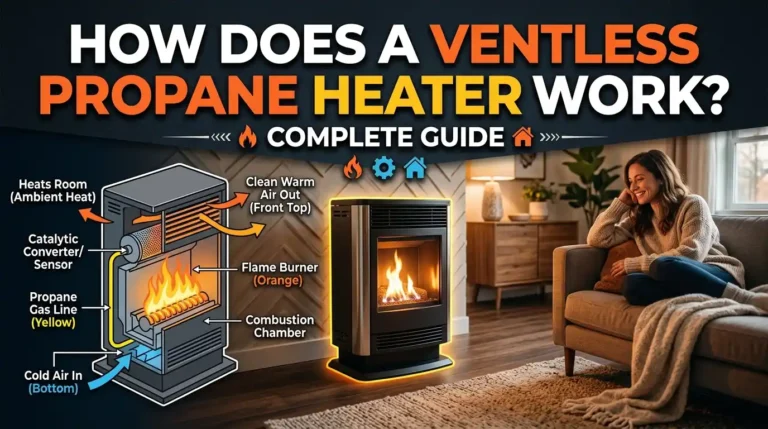
No. Both vented and ventless gas fireplaces need carbon monoxide detectors. The type changes the risk picture, not the answer. A vented fireplace sends exhaust outside through a flue or a direct vent pipe, so carbon monoxide levels stay low during normal use. A ventless fireplace, also called vent free, has no flue at all. Its combustion byproducts, including carbon monoxide and water vapor, enter the room by design.
Ventless units carry an oxygen depletion sensor that shuts the burner down if room oxygen falls too far. That sensor is a safety device, not a carbon monoxide detector, and it cannot warn you about carbon monoxide on its own. Ventless fireplaces are restricted or banned in some states and cities, and many codes bar them from bedrooms and bathrooms. Check local codes before you buy or run one, and never present a ventless unit as risk free.
The table below sums up how the two types compare on the points that matter for detector use.
| Point | Vented Gas Fireplace | Ventless Gas Fireplace |
|---|---|---|
| Where exhaust goes | Outside through a flue or direct vent pipe | Into the room by design |
| CO risk in normal use | Lower, but vent failure can spill exhaust indoors | Higher, since byproducts stay in the room |
| CO detector needed | Yes | Yes, without exception |
| Built in safety device | Thermocouple and spill switch on many models | Oxygen depletion sensor, which is not a CO detector |
| Local rules | Allowed in most areas, subject to venting codes | Restricted or banned in some places and bedrooms |
If you are still weighing the two designs, read our full vented vs ventless gas fireplace comparison before you decide. Whichever type you own, the detector rule stays the same: install alarms, test them, and replace them on schedule.
Which Type of CO Detector Should You Buy?
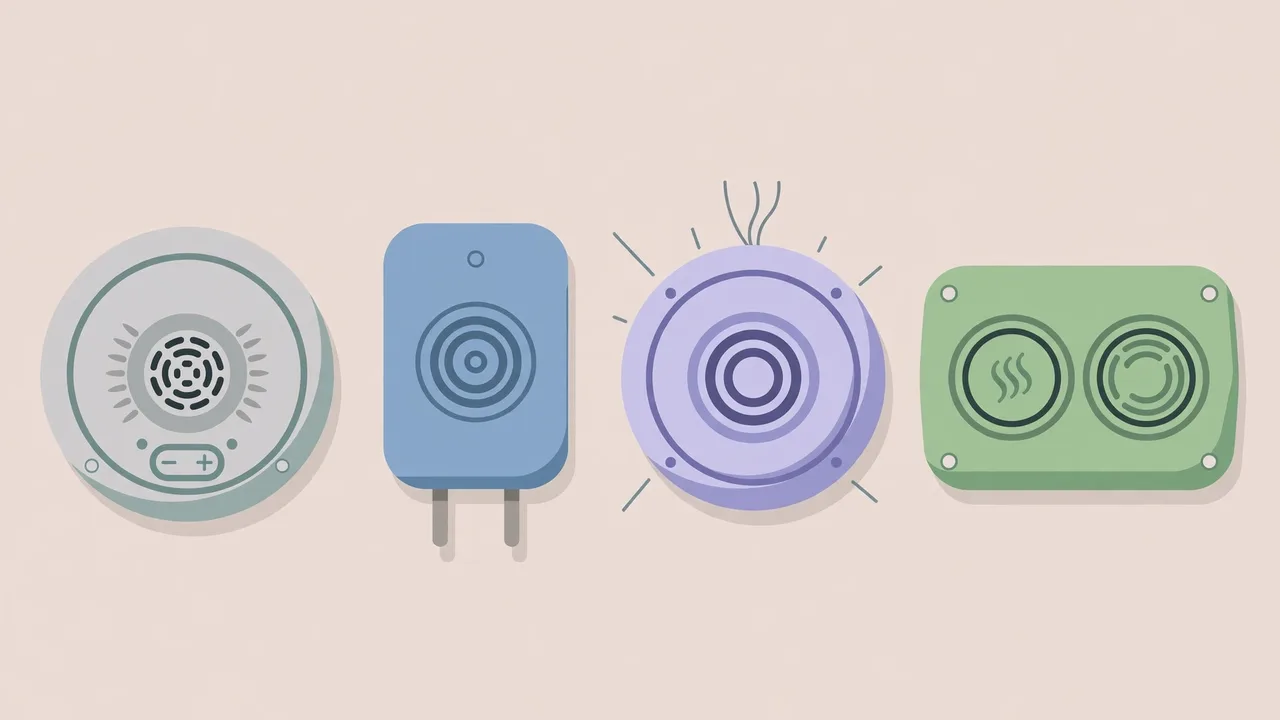
Four types of carbon monoxide alarm cover nearly every home. The right pick depends on your wiring, your budget, and whether you want alarms that sound together. All four do the same core job, which is to sound loudly when carbon monoxide reaches a dangerous level. Choose alarms listed by a recognized testing lab, and follow the placement and distance guidance in the manual that comes with the alarm you buy.
| Detector Type | Power Source | Best For | Notes |
|---|---|---|---|
| Battery only | Replaceable or sealed battery | Renters and rooms with no outlet | Cheapest to fit, works in a power cut, needs battery changes |
| Plug in with battery backup | Wall outlet plus backup battery | Bedrooms and living rooms | Keeps working in a power cut, needs a free outlet |
| Hardwired interconnected | Home wiring plus backup battery | Whole home coverage | All alarms sound together, needs an electrician to fit |
| Combination smoke and CO | Battery, plug in, or hardwired | One device for both hazards | Saves wall space, check that both sensors are listed |
A digital display is worth having if you can find it at a fair price. It shows the current reading and can store the highest level the alarm has seen, which helps a technician trace a fault later. A display is a bonus, not a requirement. A basic listed alarm that sounds loudly does the job that matters most.
Do not rely on a smoke alarm alone. Smoke alarms detect smoke particles, not carbon monoxide gas. A home with a gas fireplace needs both: smoke alarms for fire and CO alarms for carbon monoxide. Combination units cover both hazards in one box, which suits homes that want fewer devices on the wall.
Where to Place CO Detectors in a Home With a Gas Fireplace
Placement decides whether an alarm helps you or stays silent until it is too late. The core rule is simple: put an alarm on every level of the home, outside each sleeping area, and in the room with the gas fireplace. Carbon monoxide mixes with air, so alarms work on a wall or on the ceiling. Follow the height and distance guidance in the manual that comes with your alarm, since models differ.
The room with the fireplace deserves its own alarm. Place it on a wall or ceiling away from the fireplace itself, so normal startup fumes do not trip it, yet close enough to catch a real leak early. Keep it clear of direct heat, steam, and drafts from windows or vents. A spot high on the wall across the room from the fireplace suits most living rooms.
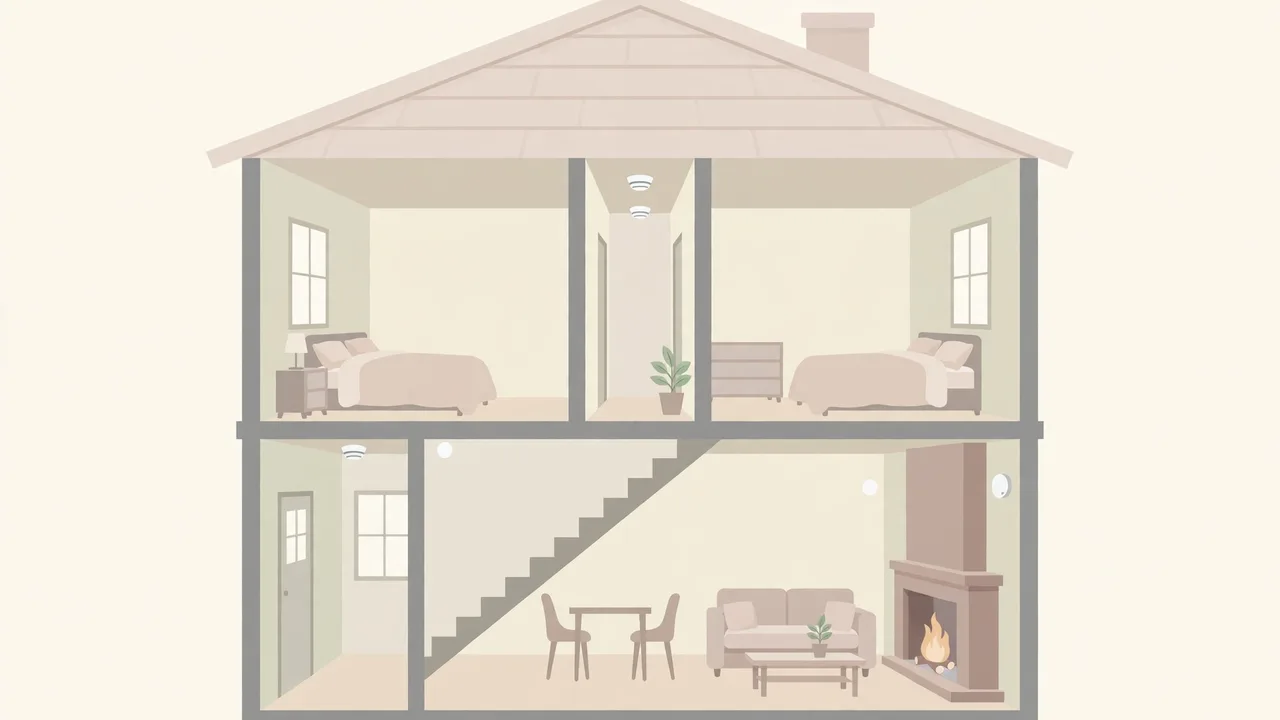
Bedrooms need special care because carbon monoxide is most dangerous while you sleep. Put an alarm in the hallway outside each sleeping area so it wakes the household. A home with bedrooms on more than one level needs alarms on each of those levels. Add one in the basement if you have fuel burning equipment there, and one near the door to an attached garage, since car exhaust can drift indoors.
Some spots make alarms less useful, so avoid them. Do not mount an alarm directly above or beside the fireplace, over a stove, or inside a steamy bathroom. Do not hide one behind furniture, curtains, or a door that stays shut. Do not place one in an unheated space where temperatures fall outside the range printed in the manual. A dusty corner near a vent or a window draft can also cause false alarms, so pick a clean, open stretch of wall.
Placement Checklist
- One alarm on every level, including the basement
- One alarm outside each sleeping area
- One alarm in the room with the gas fireplace, away from the unit
- One alarm near the door to an attached garage
- Keep alarms clear of steam, dust, drafts, and direct heat
- Follow the height and distance guidance in the alarm manual
How to Test, Maintain, and Replace Your CO Detector
Test the alarm every month. Press and hold the test button until it sounds, then let go. A loud alarm means the sounder and the sensor circuit work. A weak sound or silence means the alarm needs a new battery first, and a new alarm if it still fails. Pick a fixed day, such as the first of the month, so testing becomes a habit.
Change batteries at least once a year. Replaceable battery models need fresh batteries yearly, or sooner if the low battery chirp sounds. Sealed battery models need no battery changes, but they still need monthly testing. A chirp that repeats every minute or so usually signals a low battery or an alarm at the end of its life. Check the manual to tell the two apart, and do not pull the battery and leave the alarm dead on the wall.
Keep the alarm clean and note the install date. Dust can block the sensor vents, so vacuum the vents gently from time to time with a soft brush tool. Write the install date on the alarm with a marker when you fit it. Most alarms carry a stated service life, often seven to ten years, printed on the unit or in the manual. Replace the alarm when it signals end of life or reaches that date, even if it still sounds during a test.
Service the fireplace as well as the alarm. A detector warns you about a fault, but it cannot fix one. A yearly service visit checks the burner, the vent, and the safety devices, and it catches wear before it becomes a leak. If the fireplace itself starts beeping or acting strangely, read our guide on why a gas fireplace beeps and book a licensed technician rather than opening the unit yourself.
What to Do If Your CO Alarm Sounds
An alarm that sounds is a call to act, not a call to debate. Carbon monoxide cannot be seen or smelled, so the alarm is your only warning. Treat every alarm as real until a professional clears the home. The steps below take only minutes, and they protect everyone in the house.

- Move everyone to fresh air at once. Wake sleeping family members, gather pets, and leave the home right away. Do not stop to open windows, turn off the fireplace, or pack bags.
- Call 911 or your local fire department from outside. Use a phone once you are out of the house. Tell responders that a carbon monoxide alarm sounded.
- Stay outside until responders say it is safe. Do not go back in to check the alarm, grab a phone charger, or silence the device. Carbon monoxide can build to dangerous levels while you are inside.
- Tell responders about any symptoms. Headache, dizziness, nausea, or confusion in anyone, including pets, matters. Seek medical care when responders advise it.
- Do not use the fireplace again until a professional clears it. A licensed gas technician should find and fix the fault before the fireplace runs again. An alarm that sounded once can sound again.
If you also smell gas while the alarm sounds, follow the gas smell rule as well: leave at once and call the gas utility emergency line or 911 from outside. Never hunt for the leak, never open a gas line, and never relight the fireplace. If you want the full picture on that smell, read our guide on why a gas fireplace smells like gas.
Never Ignore an Alarm
Never silence a CO alarm and go back to sleep, and never assume the alarm is faulty because the fireplace looked fine. Faulty alarms are rare, and the cost of treating a real alarm as false can be severe. If the alarm sounds, leave and call for help. A technician can test the alarm and the fireplace afterward.
Common Mistakes Homeowners Make With CO Detectors
Most detector failures are not device failures. They are placement and upkeep mistakes that leave a home unprotected. The five mistakes below show up again and again, and each one can be avoided once you know about it.
Five Mistakes to Avoid
1. Fitting only one alarm. A single alarm in the living room cannot protect bedrooms on another level. Fit one alarm per level and one outside each sleeping area.
2. Mounting the alarm right above the fireplace. Heat and startup fumes can trip the alarm or damage it over time. Keep it away from the unit, on an open stretch of wall.
3. Relying on a smoke alarm alone. Smoke alarms detect smoke particles, not carbon monoxide. A gas fireplace home needs both kinds of alarm, or a listed combination unit.
4. Pulling the battery after a false alarm. An alarm with no battery guards no one. Find the cause of the false alarm, such as steam or dust, and fix that instead.
5. Never testing the alarm. A dead alarm looks exactly like a working one. Press the test button every month so a failure shows up before an emergency does.
One more habit helps the whole household: talk through the alarm plan with everyone who lives in the home. Children should know that the alarm sound means leaving the house at once, not hiding or waiting. Guests and house sitters should know where the alarms are and what the sound means. A plan that everyone knows is a plan that works under stress.
Frequently Asked Questions
Do gas fireplaces need a carbon monoxide detector by law?
Many building codes require CO alarms in homes with fuel burning appliances, and the exact rules vary by state and city. Check the building code where you live. Even where no law applies, guidance from the CDC and the Consumer Product Safety Commission calls for alarms on every level and near sleeping areas.
Where should I put a CO detector near a gas fireplace?
Place one alarm in the same room, on a wall or ceiling away from the fireplace itself, plus one outside each sleeping area and one on every level of the home. Follow the distance guidance in the alarm manual, and keep the alarm clear of direct heat, steam, and drafts.
Can a gas fireplace set off a CO detector?
Yes. A properly working vented fireplace should not trip an alarm, but a blocked vent, a dirty burner, or a failed seal can let carbon monoxide spill indoors. A ventless unit can also raise indoor carbon monoxide levels. An alarm that sounds needs a real response, not a reset and a shrug.
How often should I test my CO detector?
Press the test button once a month, change batteries at least once a year, and replace the alarm when it signals end of life or reaches the date printed on it. Write the install date on the alarm so you can see at a glance when replacement is due.
Do I need a CO detector if my gas fireplace is vented?
Yes. Vented models send exhaust outside during normal use, but vent blockages, cracked vent pipes, and backdrafting can still spill exhaust indoors. A detector covers those failure modes, and it guards the home while you sleep.
What should I do if my CO alarm goes off at night?
Wake everyone, move to fresh air outside, and call 911 from outside. Do not open windows to clear the air before leaving, and do not go back inside until responders say it is safe.
Quick Reference Card: CO Detectors for Gas Fireplaces
Do this today
- Fit a listed CO alarm on every level of the home
- Place one outside each sleeping area and one in the fireplace room
- Press the test button and note the install date on each alarm
Keep doing this
- Test alarms monthly and change batteries yearly
- Book yearly fireplace service with a licensed gas professional
- Replace each alarm at its end of life date
If an alarm sounds
- Leave at once with everyone, including pets
- Call 911 from outside and stay out until cleared
- If you smell gas, call the gas utility emergency line or 911 from outside
Stay Safe and Warm
Do Gas Fireplaces Need a Carbon Monoxide Detector? The answer is yes, and the work behind that answer is small: fit listed alarms on every level, place one near the bedrooms and one in the fireplace room, test them monthly, and replace them on schedule. That routine costs little and guards your household around the clock.
A detector is only one part of a safe gas fireplace. Pair it with yearly service, clean burners, and clear vents. Learn more about using gas fireplaces safely indoors, and if you want the wider picture on air quality, read our guide on gas fireplaces and indoor air quality. Warmth and safety go together, and a working alarm keeps them that way.