Can You Convert a Propane Fire Pit to Natural Gas? What to Know First
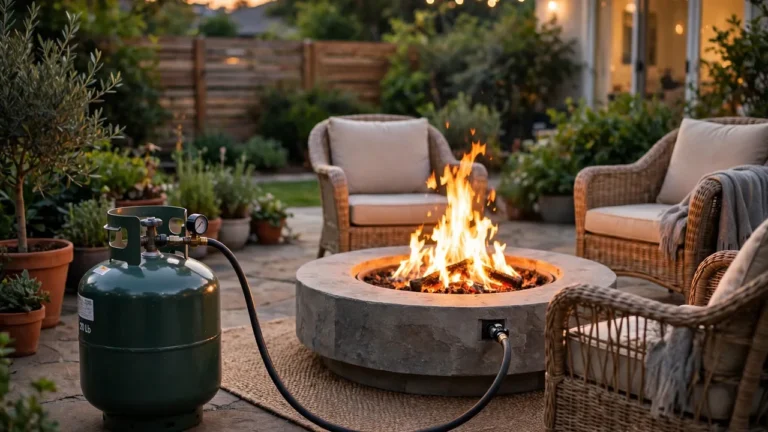
If you love your propane fire pit but hate hauling tanks, you have probably asked this question: can you convert a propane fire pit to natural gas? The short answer is yes for many models, but only with a conversion kit made for your exact model and a licensed professional to run the gas line. Some fire pits cannot convert at all, and the gas line work is never a do-it-yourself job.
This guide walks you through the whole decision. You will learn how to check whether your model can convert, which parts change, what a licensed gas fitter does, what drives the cost, and when buying a natural gas model makes more sense. By the end, you will know exactly what to ask for and who to call.
Plan on one to three days from first phone call to first fire, with most of that time spent waiting for a pro. Your own active time runs about two hours. The planning is straightforward. The gas work belongs to a licensed professional, and this guide never asks you to touch a gas fitting.
Safety First: Gas Work Is for Licensed Pros Only
Gas line work must be done by a licensed professional. Never attempt to modify gas fittings, repair a gas leak, or bypass a safety device yourself. A wrong connection can cause a fire, an explosion, or carbon monoxide poisoning.
If you smell gas, leave the area right away and call your gas utility or 911 from outside. Do not light anything, flip switches, or go back inside to look for the leak.
Total Time
1 to 3 days
Your Active Time
About 2 hours
Difficulty
Moderate planning, pro-only gas work
What You Need
- Your fire pit owner’s manual
- Model name and serial number (on the rating plate)
- Tape measure
- Phone or camera for photos of the rating plate
- Notepad for quotes and part numbers
- Conversion kit made for your exact model
- Flexible gas connector (your pro supplies this)
- Manual shutoff valve (your pro supplies this)
- Leak test solution (your pro supplies this)
- Local permit, if your town requires one
Your licensed gas fitter brings the gas rated parts and tools. You bring the manual, the model number, and the measurements.
At a Glance: The 7 Steps
- Check your fire pit model and manual
- Find the right conversion kit for your model
- Measure the distance to your gas supply
- Ask licensed gas fitters for quotes
- Clear the work area and book the pro
- Watch the leak test and first lighting
- Test the flame and learn the new controls
Why Propane and Natural Gas Are Not Interchangeable
Propane and natural gas burn in different ways, so a fire pit built for one fuel cannot burn the other without changes. Propane arrives at the fire pit at about 11 inches of water column pressure, while natural gas from a house line arrives at about 7 inches of water column. Propane also packs more heat into each unit of volume than natural gas does.
That difference is why the small brass orifice matters so much. The orifice is the tiny opening that meters gas into the burner. A propane orifice is small because propane is dense and high pressure. A natural gas orifice is much larger because natural gas is lighter and lower pressure, so more of it must flow to make a full flame.
Run natural gas through a propane orifice and the flame stays small and weak. Run propane through a natural gas orifice and far too much gas flows, which is dangerous. The fix is a kit with the right size orifice for your burner, plus a new gas valve setting and a new supply line. If you want the full side by side picture, our propane vs natural gas fire pits guide breaks down the fuel differences in more detail.
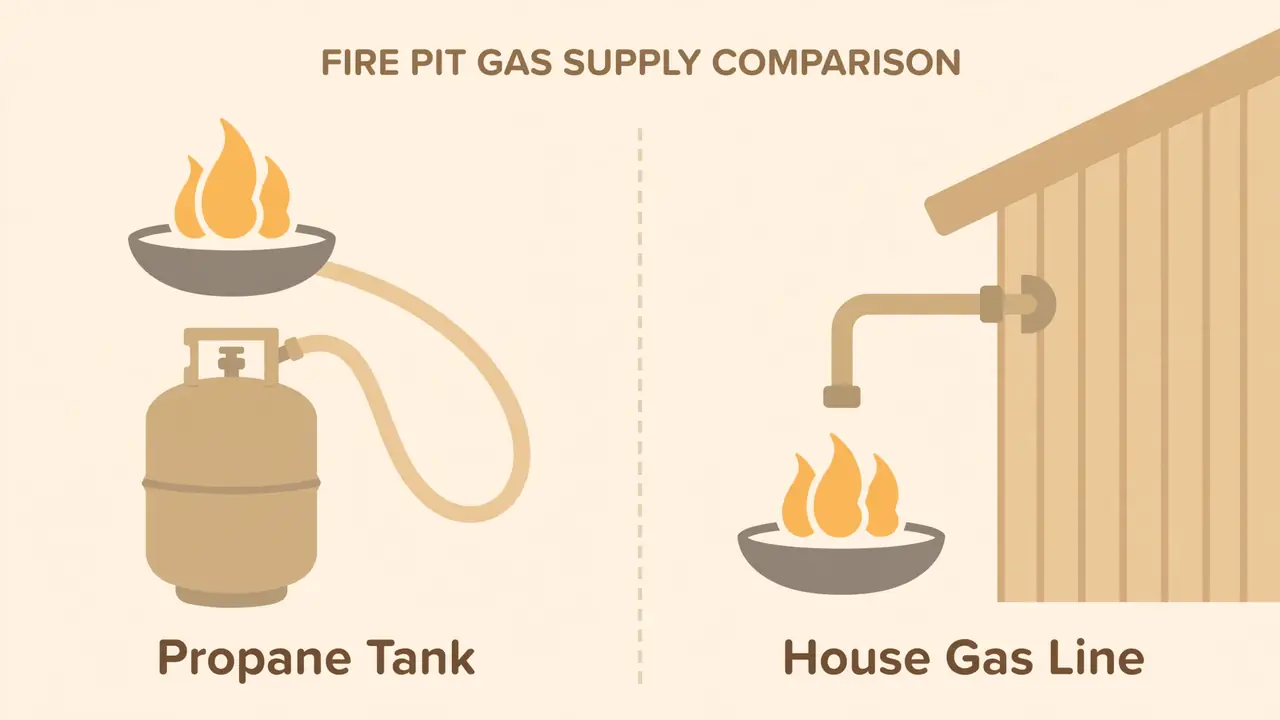
Exact pressures vary by model, burner size, and local gas supply, so treat these figures as typical values. Your manual and your gas fitter will confirm the numbers for your setup.
Check Your Fire Pit Model and Manual
Open your owner’s manual and look for a conversion section. Many permanent and semi permanent fire pits list a natural gas conversion kit by part number. If the manual says the model is propane only, or it lists no kit, stop there. That model was not built to convert, and no generic kit makes it safe.
Find the rating plate on the fire pit base or burner housing and write down the model name, serial number, and BTU rating. Take a clear photo of the plate. You will need these details for every call that follows, and a photo saves you from crawling back under the pit to read small print twice.
Pro Tip
Search the maker website with your exact model number plus the words natural gas conversion kit. If the maker sells no kit for your model, that is your answer. Do not buy a universal kit and hope it fits, because orifice size depends on your burner.
Find the Right Conversion Kit for Your Model
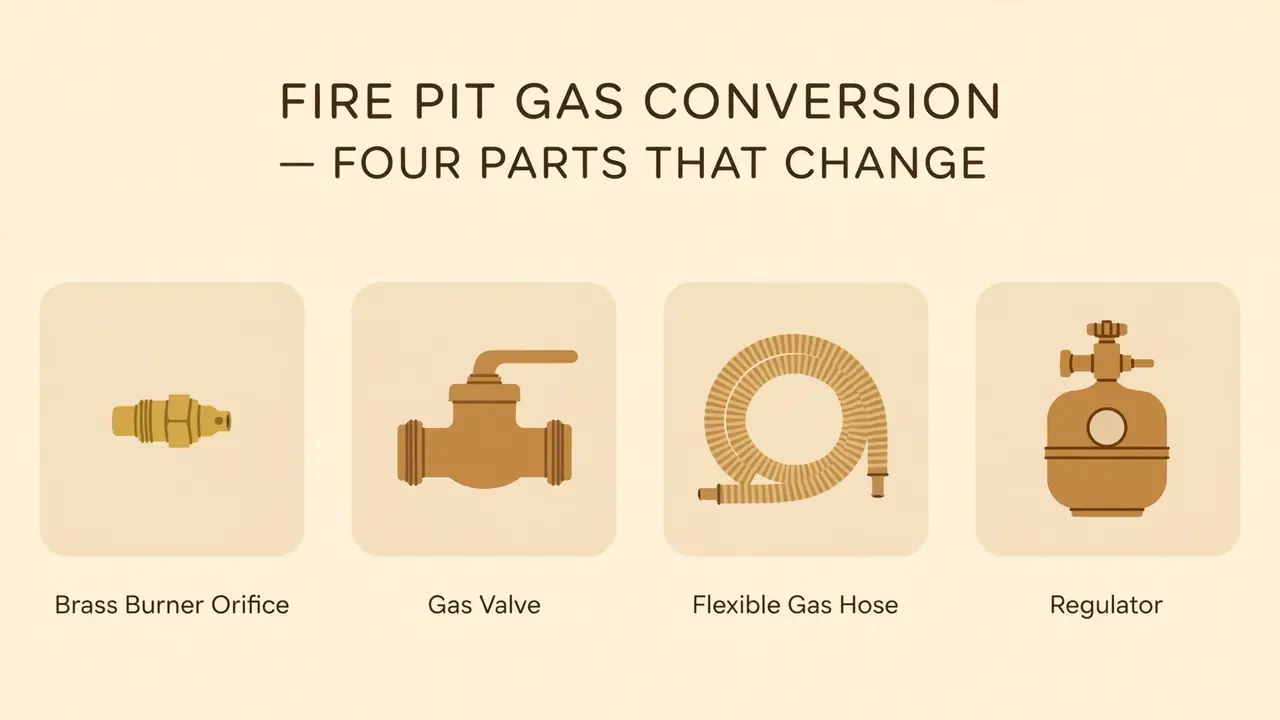
A conversion kit is a small box of parts made for one model or one burner family. A typical kit holds a larger natural gas orifice, a new air mixer or valve spring, and fitting instructions for a licensed installer. Some kits also include a new flexible hose and a quick disconnect fitting.
Order the kit only from the fire pit maker or an authorized dealer. Give them the model and serial number from your rating plate photo and ask them to confirm the part number in writing. Keep the kit sealed until the pro arrives, because a wrong orifice is small and hard to identify once it is out of the bag.
Portable tabletop fire pits and small bowl style pits almost never have a conversion kit. They were built to move, and a fixed gas line defeats the point. If yours is one of these, the honest answer is to keep it on propane or shop for a natural gas model instead. Patio heaters follow the same rule, as explained in our guide on whether you can convert a propane patio heater to natural gas.
Measure the Distance to Your Gas Supply
Walk from your fire pit to the nearest point on your house gas line and measure the route a pipe would take. Note walls, patios, decks, steps, and planting beds along the way. A short straight run costs less in labor and pipe than a long run that crosses a patio or goes under a deck.
Check where the gas meter sits and whether the line near the pit is within reach. Also note where the fire pit will sit for good. A natural gas pit stays put, so pick the spot now. Think about seating, wind, and clearance from the house and low branches before the pro arrives.
Write the measurement down and take a few photos of the route. Fitters give better quotes from real numbers and photos than from a guess over the phone. If the run crosses a driveway or a large patio, say so early, because that changes the job.
Ask Licensed Gas Fitters for Quotes
Call two or three licensed gas fitters or plumbers and describe the job in one clear sentence: convert a named model fire pit from propane to natural gas, kit in hand, with a new gas line run of a measured length. Ask each one the same questions so you can compare the answers fairly.
- Are you licensed for gas piping work in my town?
- Will you pull a permit if one is needed?
- Does your quote cover the line, the shutoff valve, the connection, and the leak test?
- How soon can you start, and how long will the work take?
- What happens if the burner needs a different orifice size?
Ask each fitter to put the quote in writing, with labor and parts listed apart. Prices vary a lot by town, line length, and how the pipe must travel, so no single price fits every home. Two or three written quotes show you the fair range in your area without any guesswork.
Heads Up
If a quote seems far below the others, ask what it leaves out. A missing permit, a missing shutoff valve, or no leak test is not a bargain. It is an unfinished job that puts your home at risk.
Clear the Work Area and Book the Pro
Pick your date and confirm the booking in writing. Tell the fitter the kit part number, the line length you measured, and where the fire pit will sit. Ask what time they will arrive and how long the gas will be off, if the job needs the house supply shut down.
Clear a wide path from the street or driveway to the fire pit, and move chairs, cushions, planters, and toys out of the work zone. Make sure the fitter can reach the gas meter and the inside shutoff without moving heavy furniture. Keep kids and pets inside while the work runs.
On the day, have the sealed kit, the manual, and the rating plate photo ready on a table near the pit. Turn the propane tank valve off and disconnect the tank if the fitter asks you to, and set the tank upright in a ventilated spot away from the work area. If you are unsure how the tank disconnects, our guide on how to connect a propane tank to a fire pit shows the fitting and valve layout.
Watch the Leak Test and First Lighting
Your fitter will fit the new orifice, remove the propane regulator and hose, connect the natural gas line, and fit a manual shutoff valve near the pit. The exact order depends on your model, so let the pro follow the kit instructions and your local code.
Before lighting, the pro pressure tests the new line and checks every joint with leak test solution. Watch for this step and ask to see the result.
A proper test holds pressure with no bubbles at any joint. If a joint bubbles, the pro tightens or reseals it and tests again. Never accept a first lighting without a passed leak test.
When the test passes, the pro lights the burner and sets the flame. The flame should burn mostly blue with steady yellow tips, and it should spread evenly across the burner ring. Ask the pro to show you the shutoff valve and how to turn the gas off fast. This is the one control you must know by heart.
Test the Flame and Learn the New Controls
Let the fire pit run for 15 minutes while you watch the flame from your normal seating spot. A healthy natural gas flame holds steady height and color. If the flame is very low, very yellow, or sooty, turn the pit off at the valve and call the fitter back. Do not try to adjust the orifice or valve yourself.
Learn the new lighting routine while the pro is still there. Natural gas pits light much like propane pits, but the valve positions and the wait time can differ. Our guide on how to light a gas fire pit covers the standard routine, and your manual covers the details for your model.
Write down the flame setting you like for a calm evening and the setting for a windy night. Note the shutoff location on the same card and keep it near the back door.
From now on, your fuel chores change. You will never swap a tank again, but you should still check the burner and the gas line for wear each season. If you want a sense of what you are leaving behind, see how long a propane tank lasts on a fire pit and compare it with never refilling at all.
Before: Life on Propane
- Tank runs out mid evening
- Trips to refill or swap the tank
- Fire pit moves anywhere the tank goes
- Flame tied to how full the tank is
After: Life on Natural Gas
- Fuel flows as long as the valve is open
- No tank to store, lift, or refill
- Fire pit stays in one fixed spot
- Steady flame from the house line
What a Conversion Costs
Total cost has three parts: the conversion kit, the gas line work, and any permit fee. Kit prices differ by maker and model. Line work depends on the length of the run, the pipe route, and local labor rates. Permit fees depend on your town.
Short runs to a nearby wall cost the least in labor. Long runs under a patio or deck cost more because the work takes longer and needs more pipe. If your home gas meter or house line needs an upgrade to feed the fire pit, that adds to the bill, and your fitter will flag it during the quote visit.
Get your quotes in writing before you buy the kit. If the total is close to the price of a new natural gas fire pit, buying new often wins, because you get a fresh warranty and a burner built for natural gas from the start. If the total is well below a new pit and you love your current one, conversion is the better deal.
When to Buy a Natural Gas Model Instead
Conversion is not always the smart move. Buy a natural gas model instead if your maker sells no kit, your pit is portable or tabletop, or the conversion quote comes close to the price of a new pit. A new pit also makes sense if your current burner is worn, rusted, or hard to light.
A new natural gas pit gives you a burner, valve, and orifice built for natural gas from day one, plus a fresh warranty. You still need a licensed pro to run the gas line and connect it, so the line work cost stays the same either way. The choice is about the burner, not the pipe.
If your pit is a permanent stone or steel model in good shape and the maker sells a kit, conversion usually wins. You keep the pit you already like, and the only new parts are the kit and the gas line.
Can You Convert a Propane Fire Pit to Natural Gas in a Rental Home?
If you rent, ask your landlord in writing before you call any fitter. A gas line is a change to the home, and most leases require the owner to approve it first. Your landlord may want to pick the fitter or see the quotes, and the permit may need to list the owner, not you.
Many landlords say no to a fixed gas line in a rental, and that is a fair call. In that case, keep your propane pit and enjoy the freedom it gives you. A tank you can move suits a rental far better than a pipe you cannot take with you when you move.
If This Happens, Try This
Frequently Asked Questions
Frequently Asked Questions
Can any propane fire pit convert to natural gas?
No. Only models with a maker approved conversion kit can convert. Portable and tabletop pits almost never have a kit, and a model listed as propane only should stay on propane.
How much does it cost to convert a propane fire pit to natural gas?
It varies widely by town, kit price, and gas line length. Get two or three written quotes from licensed gas fitters, and compare the total against the price of a new natural gas fire pit before you decide.
Can I run the gas line myself?
No. Gas line work must be done by a licensed professional, and many towns require a permit and an inspection. If you smell gas, leave the area and call your gas utility or 911 from outside.
Will the flame look the same after conversion?
It should look close, with a mostly blue flame and steady yellow tips across the burner. A very low or very yellow flame means the orifice or valve setting is wrong, so call the fitter back.
Do I need a permit to convert my fire pit?
It depends on your local code. Some towns require a permit and an inspection for new gas piping, while others do not. Ask your fitter and your local building office before work starts.
Can I convert back to propane later?
In most cases yes, if you keep the original propane orifice, regulator, and hose and a licensed pro swaps them back. Ask your fitter to bag and label the old parts so nothing gets lost.
Quick Reference Card: Propane to Natural Gas Fire Pit Conversion
What You Need
- Manual, model number, and rating plate photo
- Maker approved conversion kit for your exact model
- Tape measure and photos of the gas line route
- Licensed gas fitter, written quote, permit if needed
Steps
- Check the manual and rating plate for a kit
- Order the kit made for your exact model
- Measure the route to your gas supply
- Get two or three written quotes from licensed fitters
- Clear the area and book the pro
- Watch the leak test pass before first lighting
- Test the flame and learn the shutoff valve
Safety: gas work is pro only. Smell gas? Leave and call your gas utility or 911 from outside.
Your Next Fire, Without the Tank
You now know the answer to the question, can you convert a propane fire pit to natural gas? For many models, yes, with the right kit and a licensed pro running the line and testing it.
Your next step is a five minute one. Grab your manual and rating plate photo, then call your fire pit maker or dealer to ask for the conversion kit part number. The answer to that one call tells you whether conversion is on or whether a new natural gas model is the better path.