Gas Fireplace Maintenance: The Annual Checklist That Keeps Your Fire Safe
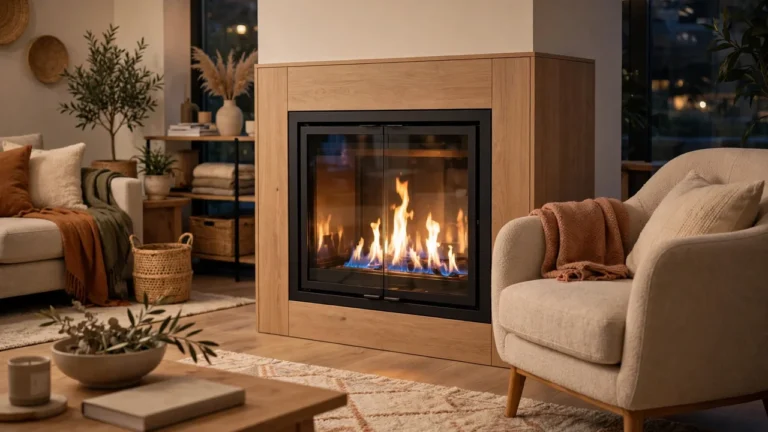
A gas fireplace runs with the flip of a switch, which makes it tempting to forget about it for years at a time. That quiet reliability hides a slow buildup of dust, soot, and wear that can dull the flame, waste gas, and in rare cases create a safety risk. A once-a-year gas fireplace maintenance session catches those small problems while they are still small. This guide walks you through the full annual checklist in order, from cooling the unit down to testing your carbon monoxide alarms, so you can head into heating season with confidence.
Plan on 2 to 3 hours for the whole job, with about 60 to 90 minutes of hands-on work. Most of the checklist is cleaning and looking closely at parts you can see and reach. Anything that involves gas lines, valves, or repairs belongs to a licensed gas professional, and this guide flags those moments clearly. Keep your owner’s manual nearby, because pilot locations and glass removal steps vary by model.
⚠️ Safety First: Gas Smell and Carbon Monoxide
Gas fireplaces burn fuel inside your home, so two rules come before everything else in this checklist. First, keep working carbon monoxide (CO) alarms on every level of your home and near sleeping areas, test them monthly, and replace them when the maker says to. CO has no color and no smell, and pets, especially birds, react to it sooner than people do.
If you smell gas (a rotten-egg odor) at any point, stop what you are doing. Do not touch light switches, flames, or appliances. Leave the house at once with everyone and every pet, then call your gas utility’s emergency line or 911 from outside.
Never try to find or fix a gas leak yourself, never open a gas line, and never relight anything after a strong gas smell. That work is for the gas utility or a licensed gas fitter only.
Total Time
2 to 3 hours
Hands-On Time
60 to 90 minutes
Difficulty
Beginner for cleaning and checks
Best Timing
Early fall, before first use
What You Need
- Owner’s manual for your model
- Soft-bristle brush (old paintbrush works)
- Vacuum with hose and brush nozzle
- Microfiber cloths, at least 3
- Fireplace glass cleaner or white vinegar
- Flashlight and a small mirror
- Compressed air can (optional)
- Fresh batteries for remote and thermostat
- Work gloves
- CO alarm test button (built into each alarm)
- Notepad for parts that look worn
- Phone camera for before and after photos
Leave to a pro: gas valve work, thermocouple replacement, vent repairs, and any repair that needs a part removed from the gas line. Write those items down and hand the list to your technician.
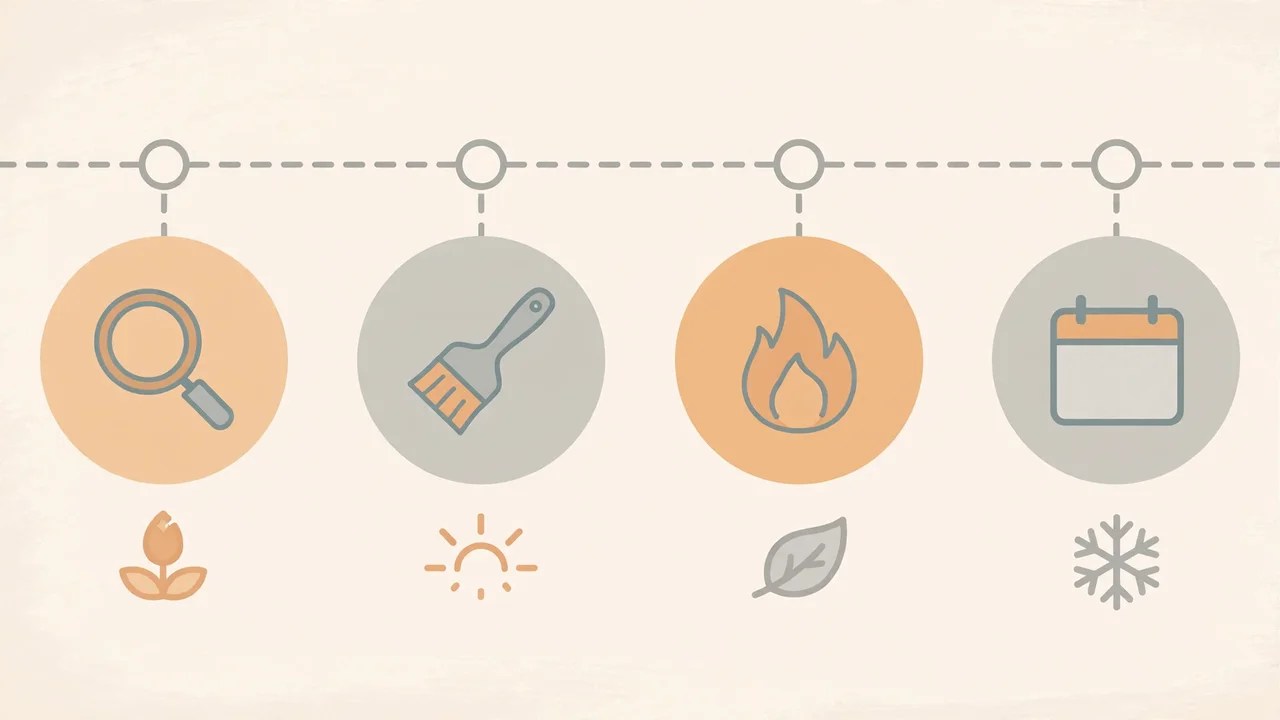
The Annual Checklist at a Glance
- Shut off the gas and let the unit cool
- Lift out the glass and wash it clean
- Brush and vacuum the burner and firebox
- Look closely at the logs and embers
- Check the pilot light and thermocouple
- Light the fire and read the flames
- Walk outside and inspect the vent
- Test the blower, remote, and thermostat
- Test CO alarms and schedule a pro visit
1. Shut Off the Gas and Let the Unit Cool
Turn the fireplace off at the wall switch or remote, then find the gas shut-off valve near the unit and turn it to the closed position. Your manual shows the exact spot, and it is often a small lever or a key valve on the floor or wall beside the fireplace. Wait at least 30 minutes after the last burn before you touch anything inside. Glass, logs, and metal parts hold heat far longer than they look like they do.
While the unit cools, lay a drop cloth or old towel on the hearth to catch dust and soot. Put on your work gloves and pull the owner’s manual out now, not halfway through the job. If the manual is missing, search the maker and model number online and print the cleaning page before you go further.
2. Lift Out the Glass and Wash It Clean
Most gas fireplaces hold the glass panel in place with spring clips or latches along the top and sides. Release them slowly with both hands and lift the panel out onto a towel, glass side up. A white film on the inside is normal: it comes from combustion byproducts settling on the glass over the season. Our guide to how to clean a gas fireplace covers the full glass-cleaning routine if you want more detail.
Spray fireplace glass cleaner or a half-and-half mix of white vinegar and water onto a microfiber cloth, never straight onto the glass, and wipe in slow circles. Stubborn haze may need a second pass after a 5-minute soak. Rinse with a clean damp cloth and dry fully before the panel goes back. Check the glass edges for chips or cracks while you have it out, and set it aside somewhere safe, leaning flat, so it cannot slide off the hearth.
Pro tip: Take a phone photo of the logs and their positions before you move anything. Log placement shapes the flame pattern, and a photo makes it easy to put every piece back exactly where it was.
3. Brush and Vacuum the Burner and Firebox
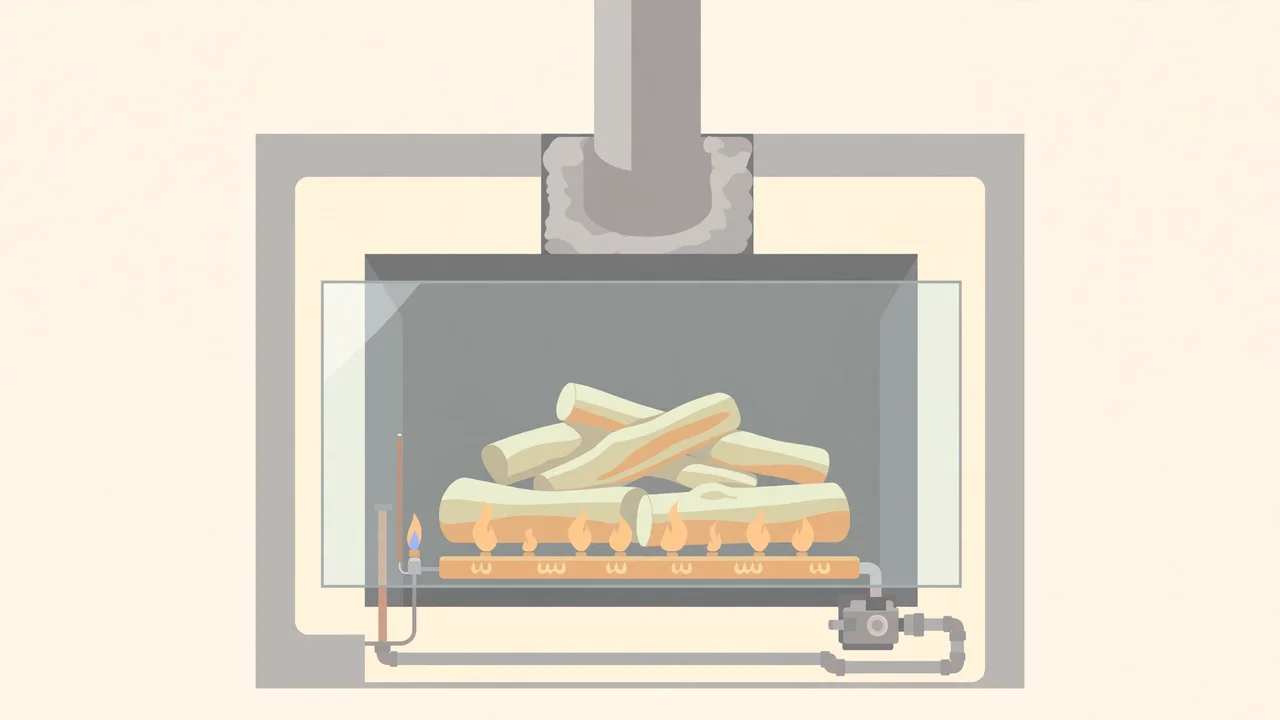
With the glass out, lift the logs and ember material out carefully and set them on the drop cloth in the same order they sat in the firebox. A soft brush sweeps dust, pet hair, and soot off the burner ports, the floor of the firebox, and the walls. Follow with the vacuum hose and brush nozzle, holding the nozzle a finger’s width above the burner so you do not press grit into the small gas ports. Blocked ports are one of the most common reasons flames turn uneven or yellow.
Compressed air can reach the tight corners a brush misses, but use short bursts and keep the can upright. Wipe the firebox walls with a dry microfiber cloth and look for rust spots, flaking paint, or soot streaks that were not there last year. Heavy soot on the walls points to a combustion problem, so note it for the technician rather than scrubbing it away and forgetting about it.
4. Look Closely at the Logs and Embers
Ceramic logs crack, chip, and wear thin over time, and a damaged log can shift and block a burner port. Hold each log up to the light and turn it slowly, checking the underside and the ends where heat stress shows first. Small surface cracks that do not change the shape are usually fine, but a log that is broken, crumbling, or missing a chunk needs replacing with the exact part for your model. Generic logs can change the flame pattern and are not a safe swap.
Spread the ember material back in a thin, even layer across the burner, leaving the pilot area clear. Clumps of ember material smother the flame and create soot. Put the logs back using your phone photo as the guide, and double-check that no log sits directly on top of a burner port.
5. Check the Pilot Light and Thermocouple
Open the lower access panel and find the pilot assembly with your flashlight. The pilot flame should be a steady blue cone that touches the tip of the thermocouple, the thin metal rod beside it. A flame that is weak, yellow, or pointing away from the rod will not hold the gas valve open, and the fireplace may shut itself off.
Dust on the pilot orifice is the usual cause, and a gentle puff of compressed air often clears it. If you are unsure how the pilot works on your model, see our guide on whether to leave the pilot light on in a gas fireplace.
Look at the thermocouple itself for white crust, bending, or a tip that has thinned to a point. A worn thermocouple is a pro replacement, not a cleaning job. Do not bend it back into place or adjust the pilot gas screw beyond what the manual describes as a user control. If the pilot will not stay lit after cleaning, write it down and book a technician.
Heads up: If the pilot area smells of gas while the unit is off, stop and follow the gas smell rule above: leave the house and call the gas utility or 911 from outside. A pilot that will not light after two tries is also a stop point. Repeated lighting attempts can let gas build up inside the firebox.
6. Light the Fire and Read the Flames
Put the glass panel back, latch it firmly, and turn the gas valve back on. Light the fireplace the normal way and let it run for 10 minutes so the flame settles.
A healthy gas flame is mostly blue with small yellow tips at the ends, steady across the full burner, and quiet. Watch for lazy yellow flames, flames that lift off the burner, or one side burning much higher than the other. Those signs point to dirty burner ports, a venting problem, or a gas pressure issue.
Stand back and look at the whole picture for a minute. The logs should glow evenly, the glass should stay clear, and there should be no smell beyond a faint dusty odor for the first few minutes of the season. A strong gas smell, a roaring sound, or black soot forming on the glass means shut the unit off and call a professional. Do not keep running it to see if the problem clears up.
Reading Your Flame: What the Colors Mean
| Flame look | What it usually means | What to do |
|---|---|---|
| Blue with small yellow tips | Normal, complete burn | Nothing. This is the target. |
| Mostly yellow and lazy | Not enough air or dirty burner | Clean burner ports. If it stays yellow, call a pro. |
| Flame lifts off the burner | Too much gas pressure or a vent draft | Shut off and call a licensed technician. |
| Uneven, one side higher | Blocked ports or a shifted log | Re-check log placement and clean the ports. |
| Orange flickers and sparks | Dust or debris burning off | Normal for the first minutes of the season. If it lasts, clean again. |
7. Walk Outside and Inspect the Vent
Go outside and find the vent termination on the wall or roof. Clear away leaves, nests, spider webs, and any plant growth within 12 inches of the opening. Look for rust, loose joints, sagging sections, and a cap that is bent or missing. A blocked or damaged vent can push exhaust back into the room, so this five-minute check matters more than it looks like it should.
From inside, check that the vent pipe joints you can see are tight and that nothing is stored against the pipe in the attic or closet it passes through. Never block a vent, cover a termination, or run the fireplace with a damaged vent cap. Vent repairs and any change to the vent run are licensed-professional work, so add them to the list for your technician if you find anything wrong.
8. Test the Blower, Remote, and Thermostat
Turn the blower on and listen. It should start smoothly and move air without rattling, squealing, or a burning smell. Vacuum the blower intake grille and the vents around the fireplace surround, since dust there cuts airflow and makes the blower work harder. If your model has a filter, wash or replace it per the manual.
Swap in fresh batteries for the remote and the wall thermostat, then test every function: on, off, flame height, and blower speed. A remote that only works from two feet away usually needs new batteries, not a new remote. Test the wall switch too, since a loose switch is a cheap fix that often gets blamed on the fireplace itself.
9. Test CO Alarms and Schedule a Pro Visit
Press the test button on every CO alarm in the house and confirm each one sounds loudly. Replace any alarm that stays silent, and check the manufacture date on the back: most CO alarms last 7 to 10 years and need replacing after that even if they still beep. Keep alarms on every level and near sleeping areas, and never paint over them or cover the sensor slots. If you want the full picture on CO risk, read our guide on whether gas fireplaces produce carbon monoxide.
Book a licensed gas technician for a full annual service, even if everything on this list looks fine. A pro checks gas pressure, the heat exchanger, the gas valve, and the venting with tools you do not own, and catches wear you cannot see. Pair that visit with this checklist each fall and the fireplace stays safe and steady for its full life. Regular care is a big part of how long a gas fireplace lasts, and the service visit is the one item on the list you should never skip.
Annual Checklist by Part: How Often and Who Does It
| Part | How often | What to check | Who |
|---|---|---|---|
| Glass panel | Every year; wipe monthly in winter | Film, chips, cracks, seal | You |
| Burner and firebox | Every year | Dust, blocked ports, soot, rust | You |
| Logs and embers | Every year | Cracks, crumbling, placement | You |
| Pilot and thermocouple | Every year | Flame color, reach, wear | You check; pro repairs |
| Vent and termination | Every year; glance monthly | Blockage, rust, loose joints | You check; pro repairs |
| Blower and remote | Every year | Noise, airflow, batteries | You |
| CO alarms | Test monthly; replace at 7 to 10 years | Sound, date, placement | You |
| Gas valve and pressure | Every year | Leaks, pressure, valve wear | Licensed pro only |
If This Happens, Try This
| If this happens | Try this |
|---|---|
| Pilot will not stay lit | Clean the pilot orifice gently. If it still drops out after two tries, stop and book a pro. |
| Flame stays yellow after cleaning | Check log placement and burner ports again. Still yellow means a pro check for air or pressure. |
| White film returns fast on the glass | A thin film is normal. A thick film in days points to a combustion problem, so book a service visit. |
| Blower rattles or squeals | Vacuum the intake and check for loose screws. If the noise stays, the blower motor needs a pro. |
| Remote does nothing | Replace the batteries and test the wall switch. If the switch works and the remote does not, the receiver may need a pro. |
| You smell gas at any point | Do not troubleshoot. Leave the house at once and call the gas utility or 911 from outside. |
Frequently Asked Questions
How often should gas fireplace maintenance be done?
Do the full checklist once a year, in early fall before the heating season starts. Give the glass a quick wipe and the vent a glance once a month while the fireplace is in regular use.
Can I do gas fireplace maintenance myself?
Yes, for cleaning and visual checks: glass, burner, logs, vent, blower, and CO alarms are all owner-level work. Gas valve work, thermocouple replacement, vent repairs, and pressure checks belong to a licensed gas professional.
How long does the annual checklist take?
Plan on 2 to 3 hours in total, with 60 to 90 minutes of hands-on work. The rest is cool-down time and the 10-minute flame observation at the end.
What does it mean if my gas fireplace flame is yellow?
A mostly yellow, lazy flame usually means the burner is dirty or the fire is not getting enough air. Clean the burner ports and check log placement first. If the flame stays yellow, shut the unit off and call a licensed technician.
Do I need a carbon monoxide detector with a gas fireplace?
Yes. Keep working CO alarms on every level of your home and near sleeping areas, test them monthly, and replace them at 7 to 10 years or when the maker says to. CO has no color and no smell, so the alarm is your only warning.
When should I call a professional instead of doing it myself?
Call a licensed gas technician for a gas smell, soot buildup, a flame that stays yellow, a pilot that will not stay lit, or any vent damage. Book a full professional service once a year even when everything looks fine.
Quick Reference Card: Gas Fireplace Annual Checklist
What you need: manual, soft brush, vacuum, microfiber cloths, glass cleaner or vinegar, flashlight, mirror, fresh batteries.
- Shut off gas, wait 30 minutes to cool.
- Remove and wash the glass; check for chips.
- Brush and vacuum burner and firebox.
- Check logs for cracks; reset embers in a thin layer.
- Check pilot flame and thermocouple condition.
- Relight, watch flames for 10 minutes; blue with yellow tips is right.
- Clear and inspect the outside vent.
- Test blower, remote, and thermostat; swap batteries.
- Test CO alarms; book the yearly pro service.
Gas smell? Leave at once, call the gas utility or 911 from outside. Never hunt for the leak yourself.
You have now worked through the full annual checklist: a cool unit, clean glass and burner, sound logs, a steady pilot, a healthy blue flame, a clear vent, a working blower, and tested CO alarms. That is the whole job, and your fireplace is ready for the season. If anything on the list raised a flag, you also have a clear note for your technician. For a closer look at one common warning sign, read our guide on why a gas fireplace smells like gas.
Sources: CDC: Carbon Monoxide Poisoning | U.S. Consumer Product Safety Commission: Carbon Monoxide Information Center