Alder Firewood: Burning Guide for Warm, Clean Fires
If you have a stack of alder and wonder how it burns, this Alder Firewood: Burning Guide has the answers. Alder lights fast, splits with little force, and gives off a mild, sweet smell that suits a quiet evening by the fire.
Alder is a soft hardwood, so it will not match oak or locust for heat. It burns through faster and asks for more frequent feeding. That trade can still work in your favor for short fires, mild days, and campfires, and it works even better when you mix alder with a denser wood.
Safety first. Burn alder only in a vented fireplace, wood stove, or outdoor fire pit built for wood fires. Never burn wood in an unvented indoor space. Keep working carbon monoxide detectors in your home, have your chimney inspected and swept once a year by a certified sweep, and never burn treated, painted, or stained wood. Check local burn rules and firewood transport rules before you cut or move wood.
30 to 45 min to build a fire
per load
What You Need
- Seasoned alder logs
- Dry kindling and small splits
- Fire starters or newspaper
- Moisture meter
- Work gloves
- Log carrier or wheelbarrow
- Fireplace poker and tongs
- Metal ash bucket with a tight lid
- Working carbon monoxide detector
- Long matches or a long lighter
At a Glance
- Choose seasoned alder, not green wood.
- Split alder logs to fireplace size.
- Stack alder off the ground with airflow.
- Test each load with a moisture meter.
- Load the firebox in a loose crisscross stack.
- Light the fire from the top down.
- Feed the fire and close it down safely.
Get to Know Alder Before You Burn It
Red alder grows fast in damp soil across the Pacific Northwest, and black alder grows in wet ground in the eastern United States and Europe. Both are true hardwoods, but their wood is light and soft next to oak or hickory. Fresh cut ends show a pale cream color that turns a warm orange tan as the wood dries.
That light build shapes how alder burns. It catches flame with little coaxing and gives a bright, lively fire. It also burns through faster than dense wood, so a firebox full of alder needs new logs sooner. The coals it leaves are fair to good, enough to relight a fresh load but not the deep, long lived bed that oak leaves behind.
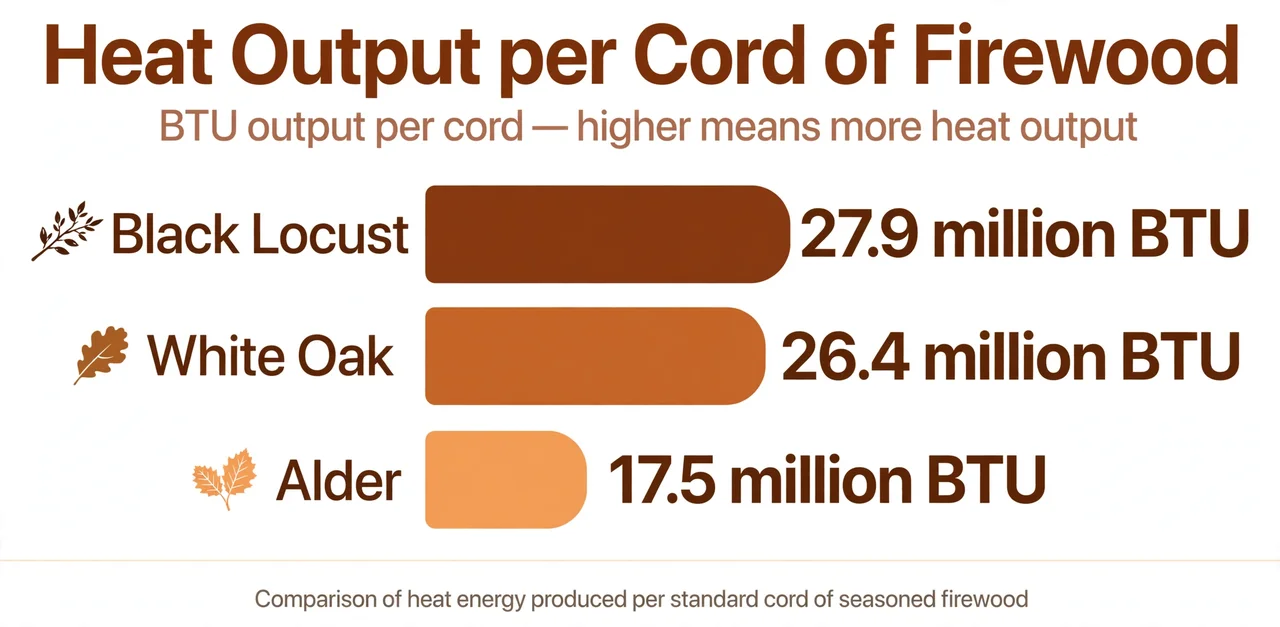
Published firewood charts list alder at about 17.5 million BTU per cord. White oak sits near 26.4 million BTU per cord, and black locust near 27.9 million BTU per cord. Oregon State University Extension lists a dry cord of alder at 2,540 pounds, with splitting rated as light work, starting rated fair, and coaling rated good. Figures differ a little from chart to chart, but the pattern holds in every one: alder gives moderate heat, not top tier heat.
| Firewood | Heat per Cord (approx.) | Seasoning Time | Splitting | Coals |
|---|---|---|---|---|
| Alder | About 17.5 million BTU | 6 to 12 months | Splits with little force | Fair to good |
| White oak | About 26.4 million BTU | 12 months or more | Takes real force | Strong, long lived |
| Black locust | About 27.9 million BTU | About 12 months | Moderate | Strong, long lived |
BTU figures are approximate and vary a little between published charts. Heat figures come from the New Jersey Forestry Association firewood chart and the Oregon State University Extension fuelwood guide.
Alder also has a mild, sweet scent when it burns, and it gives off little smoke once it is dry. Sparks stay moderate, so a screen still belongs in front of an open fireplace. For a full walkthrough of drying any species, read our guide on how to season firewood.
How to Spot Alder in the Woodpile
Alder bark is smooth and gray brown on young trees, and it turns darker and cracked with age. The cut face starts pale cream and shifts to a warm orange tan within hours of cutting. That color change is one of the fastest ways to tell alder from pale woods like ash or maple.
The leaves give it away in summer: oval, slightly toothed, with a small notch at the tip. In winter, look for small dark cones that hang on the bare branches. If a seller offers you alder, ask to see a fresh cut face. The orange tan tint, light weight, and smooth bark together make a strong match.
Choose Seasoned Alder, Not Green Wood
Green alder holds a lot of water, and wet wood hisses, smokes, and gives off far less heat. Look for ends that have turned gray or tan, with cracks that run out from the center. Pick up a split and feel its weight. Dry alder feels light for its size, and two dry pieces give a hollow knock when struck together.
Bark that peels off with a light pull is one more good sign. If the bark still grips tight and the ends look fresh and damp, give that stack more time. A moisture meter settles the question in seconds, and Step 4 shows how to use one.
Split Alder Logs to Fireplace Size
Measure your firebox first, then cut alder to fit with room to spare. Most fireplaces take 16 inch lengths well. Our guide to firewood sizes and what length to buy shows how to match log length to your firebox depth.
Split alder soon after cutting, while the wood is still green. It parts with little force, and a sharp maul or a small splitter handles most rounds with ease. Wear gloves, eye protection, and sturdy boots, and keep children and pets clear of the splitting area. Smaller splits dry faster, so split rounds wider than 6 inches across into two or more pieces.
Stack Alder Off the Ground With Airflow
Set your stack on pallets, rails, or scrap lumber so air can move under the bottom row. Build the stack in a sunny spot with wind on its side, and leave gaps between rows. Tight, solid walls of wood trap damp air and slow drying to a crawl.
Cover the top of the stack with a tarp or a sheet of metal, and leave the sides open. Rain on the sides dries off fast when air can pass through. A full cover that drapes to the ground traps moisture and can grow mold. For the full method, see our guide on how to store firewood outside.
Alder Seasoning Timeline
| When | What to Do | What to Look For |
|---|---|---|
| Month 0 | Cut and split the same week | Fresh pale ends, heavy logs |
| Months 1 to 3 | Stack off the ground, top covered | Ends start to gray and crack |
| Months 4 to 6 | Keep sides open to wind and sun | Bark loosens, logs feel lighter |
| Months 6 to 12 | Test with a moisture meter | Reads 20% or less, ready to burn |
Most alder seasons in 6 to 8 months in a dry climate. Damp climates can need the full 12 months.

Test Each Load With a Moisture Meter
Split one piece from the load you plan to burn, then press the meter pins into the fresh face in the middle of the split. The outside of a log can read dry while the center still holds water, so always test a fresh split face. Aim for 20% moisture or less. Wood above that mark smokes more, gives less heat, and lays down more creosote.
If a load reads high, set it aside and pull from a drier part of the stack. Need the wood sooner? Our guide on how to dry firewood fast covers ways to speed the process without cutting corners on safety.
Heads Up: Wet alder is the main cause of smoke and creosote trouble with this wood. Burning wood above 20% moisture cools the flue, and cool flue gas leaves sticky creosote on the chimney walls. Thick creosote can catch fire inside the chimney. If you see heavy smoke, hear a roar from the flue, or smell a hot, tar like odor, close the air supply if it is safe to do so, get everyone out, and call the fire department.
Load the Firebox in a Loose Crisscross Stack
Lay two alder splits parallel on the firebox floor with a gap of about 2 inches between them. Lay two more across the top at right angles, then add kindling in the gaps. Air must reach each piece, or the fire will smolder and smoke.
Keep the stack below the top of the firebox opening and away from the glass doors. A tight, packed load looks full and generous, but it starves the fire of air and wastes wood. Loose loads burn cleaner and hotter, and they light with far less fuss.
Light the Fire From the Top Down
Open the damper and the air control all the way before you strike a match. Place a fire starter and a small pile of kindling on top of the stack, then light the kindling. Flame burns down through the stack, warming the flue fast and cutting smoke at startup.
Alder catches fast, so watch the first minutes and keep the air control open until the fire is going strong. Once the logs are fully lit, ease the air control back to hold a steady flame. Never use gasoline, kerosene, or lighter fluid to start a wood fire.
Pro Tip: Use alder as the top layer over a base of oak or locust. The alder catches in seconds and brings the dense logs underneath up to temperature, while the oak or locust below holds heat for hours. This mix gives you the fast start of alder and the long burn of a dense hardwood in one fire.
Feed the Fire and Close It Down Safely
Add two or three splits at a time once the first load has burned down to coals. Rake the coals toward the center before each new load so fresh wood sits on live heat. Alder burns through in about 45 to 60 minutes per load in many stoves, so check the fire often on cold nights.
At bedtime, let the fire burn down to coals and close the air control to slow the burn. Never leave a roaring fire unattended with the air control wide open. Scoop ash into a metal bucket with a tight lid, set the bucket outside on concrete or bare ground, and wait at least 3 days before you throw ash away. Coals can stay hot far longer than most people expect.
When Alder Works Best and When to Mix It
Alder shines on mild days, for short evening fires, and in fire pits and campfires where a fast, bright flame matters more than all night heat. It also works well as kindling wood for denser species, since it catches with little effort. If you heat with wood all winter, our guide on how much firewood you need for winter helps you plan how much alder and how much dense wood to keep on hand.
For overnight heat or a cold snap, mix alder with oak, locust, or birch. The dense wood carries the long burn, and the alder keeps the fire lively and quick to restart. Our locust firewood burning guide and our birch firewood burning guide show how those two species compare for heat and coals.
Red alder has one more claim to fame: it is a classic smoking wood for salmon and other fish, prized for its mild, slightly sweet smoke. Use only clean, untreated alder for food smoking, and keep smoking wood separate from any lumber or pallet wood.
Troubleshooting Alder Fires
| If This Happens | Try This |
|---|---|
| The fire will not catch | Check that the damper and air control are fully open, add dry kindling, and test the wood with a moisture meter. |
| Heavy smoke fills the room | The wood is likely wet. Let the fire die down if safe, ventilate the room, and burn only wood that tests at 20% or less. |
| The fire burns out too fast | Mix in oak or locust, use larger splits, and add two or three logs at a time instead of one. |
| Weak heat from a full firebox | Alder gives moderate heat by nature. Add dense hardwood to the mix and check that the flue is clean and drafting well. |
| Black, sticky buildup in the flue | That is creosote. Stop burning wet wood and book a certified chimney sweep before the next fire. |
Alder Firewood Questions
Is alder good firewood?
Yes, for quick, clean fires. Alder lights fast, splits with little force, and gives off a mild, sweet smell. Its heat is moderate, so it works best for mild days, short fires, and campfires, or mixed with a denser wood like oak or locust.
How long does alder take to season?
Alder usually seasons in 6 to 12 months after cutting and splitting. In a dry climate with good airflow, 6 to 8 months is common. Damp climates can need the full 12 months. Test with a moisture meter and burn only wood that reads 20% or less.
Does alder burn hot?
Alder gives moderate heat, about 17.5 million BTU per cord. That is well below white oak at about 26.4 million BTU per cord. It burns bright and fast, so it suits short fires better than all night heating.
Does alder produce a lot of smoke or creosote?
Dry alder gives off little smoke. Wet alder smokes heavily and lays down more creosote in the chimney, which raises the risk of a chimney fire. Season alder fully, keep the flue warm with a strong start, and have the chimney swept once a year.
Can you burn alder in a wood stove?
Yes, seasoned alder burns well in a wood stove. Follow your stove manual for load size and air settings, and check local burn rules. Never burn treated, painted, or stained wood in any stove or fireplace.
Is alder good for smoking food?
Yes. Red alder is a classic mild smoking wood for salmon and other fish. Use only clean, untreated alder, and keep smoking wood separate from lumber, pallets, or any painted wood.
Quick Reference Card: Alder Firewood
What you need: seasoned alder logs, dry kindling, fire starters, moisture meter, gloves, poker, metal ash bucket, working CO detector.
Key numbers: about 17.5 million BTU per cord, seasons in 6 to 12 months, burn only at 20% moisture or less, 16 inch log length fits most fireplaces.
- Choose seasoned alder, not green wood.
- Split alder logs to fireplace size.
- Stack alder off the ground with airflow.
- Test each load with a moisture meter.
- Load the firebox in a loose crisscross stack.
- Light the fire from the top down.
- Feed the fire and close it down safely.
Alder will not win a contest for the hottest firewood, and it never pretends to. It wins on speed, ease, and a clean, mild burn that fits real evenings at home.
Season it well, mix it with dense wood when you need long heat, and keep your chimney swept and your detectors working. Your next step is to check your stack with a moisture meter and read our guide on how to season firewood if any load still reads high.