Fir Firewood Burning Guide: How to Season, Split, and Burn Fir for Quick, Clean Heat
Fir firewood shows up in a lot of driveways and wood piles, often free or cheap after a tree comes down or a neighbour clears a lot. It lights fast, throws a bright flame, and warms a room in minutes. It also smokes, pops, and coats a chimney with creosote when it goes into the fire wet or green. The difference between a good fir fire and a smoky, sooty one comes down to three things: knowing which fir you have, seasoning it fully, and burning it hot with plenty of air.
This guide walks you through the whole process in order. You will learn to tell Douglas fir from true firs, split and stack a pile so it dries, test it with a moisture meter, and burn it in a way that keeps the heat up and the smoke down. Expect seasoning to take 6 to 12 months. The hands-on work — splitting and stacking a cord — takes a weekend afternoon, and each fire takes only a few minutes to lay.
⚠︎ Heads Up: Read This Before You Burn Fir
Fir is resinous, so it builds creosote faster than most hardwoods, above all when it is wet or the fire burns cool. Have your chimney inspected and swept by a certified sweep at least once a year, and check it mid-season if you burn a lot of fir.
Fit working carbon monoxide detectors on every floor, and never burn fir in an unvented indoor space. Never burn treated, painted, or stained wood. Check local burn bans and air-quality rules before lighting up, and do not move firewood across quarantine or county lines — it can carry pests.
Total Time
6–12 months to season
Active Time
2–4 hours per cord
Difficulty
Beginner-friendly
What You Need
- Fir logs, cut to 16 inches or to fit your firebox
- Splitting maul or axe
- Moisture meter
- Fireplace screen or spark guard
- Work gloves and eye protection
- Kindling and fire starters
- Long matches or a long lighter
- Fire poker and tongs
- Metal ash bucket with a tight lid
- Pallets or rails to stack on
- Tarp or cover for the top of the stack
- Chimney sweep booking or brush
At a Glance: The Steps
- Identify the fir in your pile
- Split fir logs while the wood is still green
- Stack fir bark-side up in sun and wind
- Test fir with a moisture meter before you burn it
- Lay a fir kindling base to start the fire
- Load fir in small batches and leave the air open
- Mix fir firewood with hardwood for steady heat
- Check the flue and clear ash after fir fires
Identify the Fir in Your Pile
The word “fir” covers two groups that burn differently. Douglas fir is not a true fir at all. Its scientific name is Pseudotsuga menziesii, and it gives off more heat per cord. True firs such as balsam, white fir, grand fir, and noble fir belong to the genus Abies and burn cooler.
Tell them apart by the cones. Douglas fir cones hang down and show a small three-pointed bract between the scales. True fir cones stand upright and fall apart on the branch. If a seller offers “fir” without a species, ask which one it is.
Split Fir Logs While the Wood Is Still Green
Green fir splits far more readily than dry fir, so do this work soon after the tree is cut. Set a round on a flat block, bark side down, and aim the maul at a crack in the end grain. Straight-grained Douglas fir usually opens in one or two strikes.
Split each piece down to 3 to 6 inches across at the wide end. Thin splits dry faster, catch fire fast, and fit the stove without forcing the door. Work around knots instead of through them, and wear gloves and eye protection. Fir resin is sticky, and chips fly.
Stack Fir Bark-Side Up in Sun and Wind
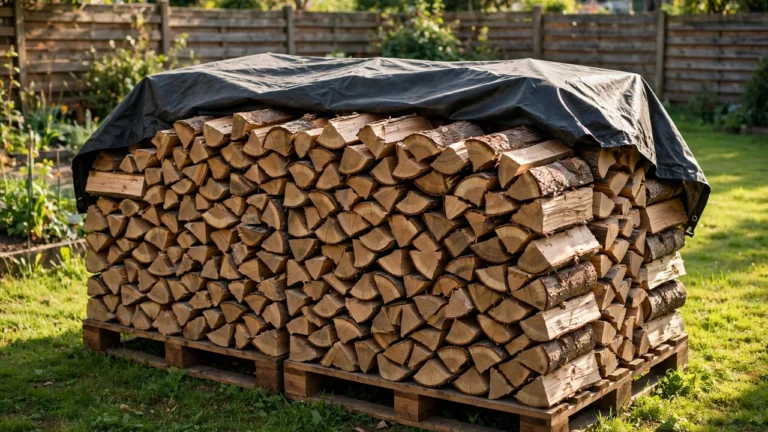
Raise the stack off the ground on pallets or rails. Wood that sits on soil pulls moisture up and rots from the bottom row first. Build single rows with a few inches of space between pieces so air can move through.
Face the cut ends toward the sun and the prevailing wind. Put bark side up on the top row so rain runs off, and cover only the top with a tarp. Leave the sides open. Our guide on how to stack firewood covers row spacing and cover choices in more detail.
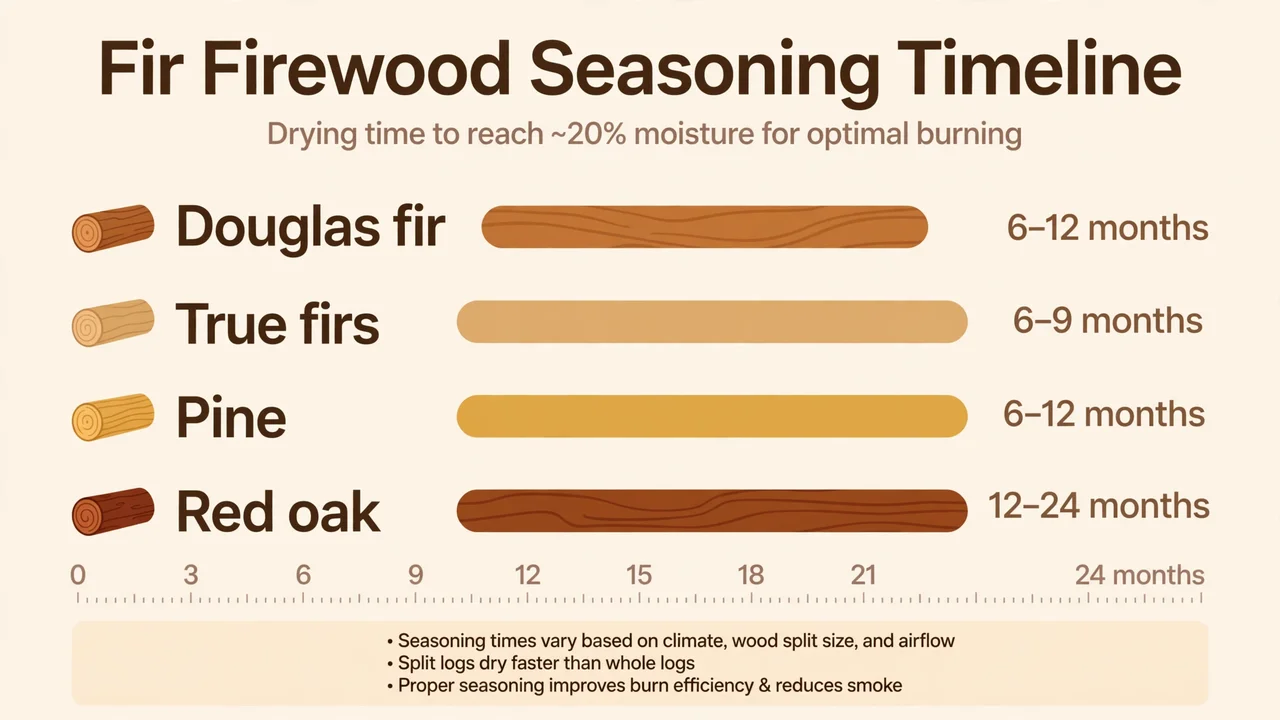
Test Fir With a Moisture Meter Before You Burn It
Colour and weight can mislead you. Fir can look grey and feel light while the centre still holds water, and that hidden moisture is what makes a fir fire smoke and hiss. A pin moisture meter removes the guesswork. Split a test piece fresh and push the pins into the newly exposed face.
Burn fir only when it reads under 20% moisture. Test three pieces from different spots before you call a pile seasoned. Our guide on how to tell if firewood is seasoned covers the meter test and the sound and bark checks that back it up.
Pro Tip
Write the moisture reading and the date on a scrap of wood and tuck it into the stack. When you test again in a month, you can see the trend instead of guessing whether the pile is still drying.
Lay a Fir Kindling Base to Start the Fire
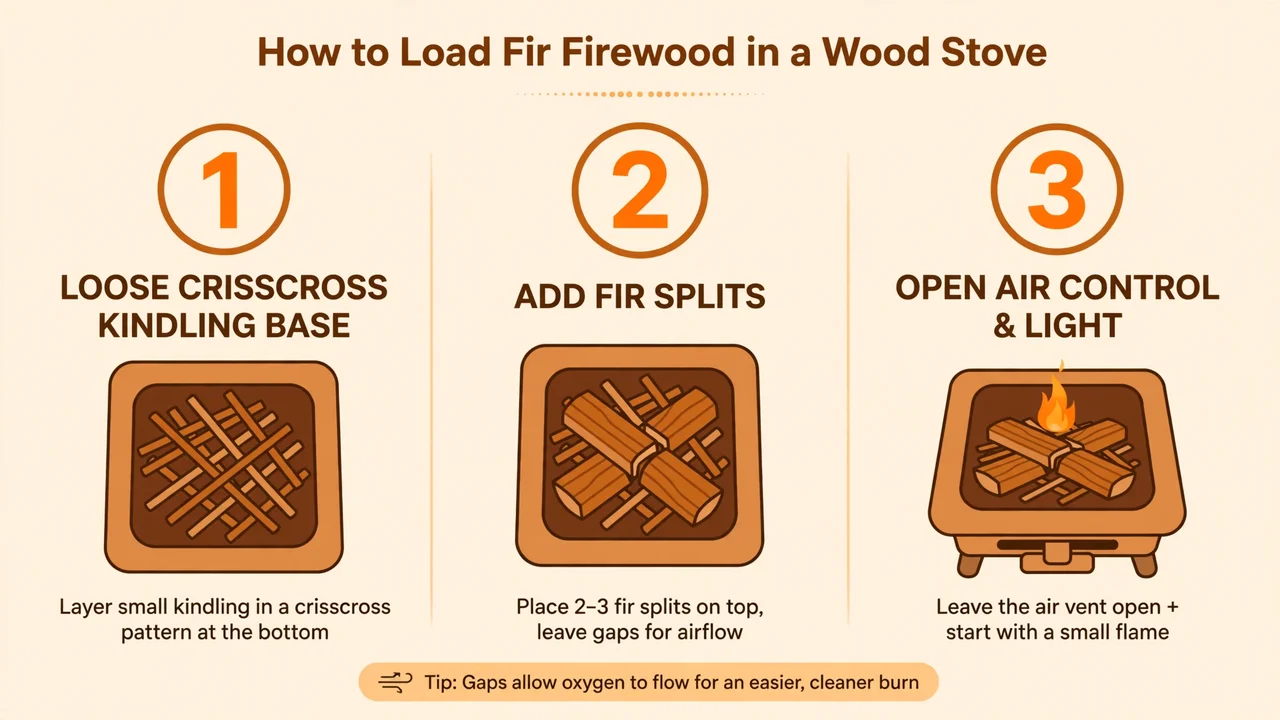
Fir earns its keep at the start of a fire. Split a few pieces down to pencil-thin sticks and lay them in a loose crisscross or teepee shape, leaving gaps for air. Tuck a fire starter or a twist of dry newspaper underneath, not on top.
Light the starter at two points and leave the door cracked or the damper wide open for a few minutes. The quick flame warms the flue and pulls the draft up. Never use gasoline or lighter fluid. The flare can crack glass and throw burning resin out of an open fireplace.
Load Fir in Small Batches and Leave the Air Open
Once the kindling burns well, add two or three fir splits at a time, laid across each other with gaps between them. Fir burns fast, so small loads keep the fire hot and under control. A stove stuffed with fir and choked down will smoulder and lay creosote in the flue.
Keep the air control open until the stove top reads 400 to 600°F. Below about 250°F at the flue, smoke cools and condenses into creosote. Fir pops as resin pockets heat up, so keep the screen on an open hearth and never damp a fir fire down overnight.
Mix Fir Firewood With Hardwood for Steady Heat
Fir on its own gives fast heat and then fades. Hardwood alone is slow to catch and slow to warm a cold room. Start with fir, then add hardwood splits once the flue is warm. The fir gets the fire hot quickly, and the hardwood holds the heat and leaves coals that last.
A practical mix is half fir and half hardwood by volume for an evening fire. Use more fir in mild weather and more hardwood in deep cold. Our guide to the best firewood to burn lists hardwoods that pair well with fir, including ash and red oak.
Check the Flue and Clear Ash After Fir Fires
Fir leaves less ash than many hardwoods, but it leaves more creosote, so the flue deserves more attention than the ash pan. Once a month during burning season, check the flue for black, shiny, or tarry deposits. A layer thicker than 1/4 inch means it is time for a sweep.
Let ash cool for at least 48 hours before moving it, and store it only in a metal bucket with a tight lid on concrete outside. Fir ash can hide live embers for days. Keep an inch of ash in the firebox to insulate the next fire.
Fir Compared With Pine, Cedar, and Oak
Fir sits in the middle of the softwood range, and Douglas fir sits at the top of it. The table below uses published heat figures for seasoned wood at 20% moisture. Figures are approximate and vary by source, region, and growing conditions, so treat them as a comparison, not a promise. Sources disagree by a few million BTU per cord on Douglas fir, with most charts landing between 18 and 21 million.
| Species | Heat per cord (million BTU, approx.) | Seasoning | Smoke | Sparks | Coals |
|---|---|---|---|---|---|
| Douglas fir | 18–21 | 6–12 months | Moderate–high | Moderate | Fair |
| White fir | 14–16 | 6–9 months | Moderate | Moderate | Poor–fair |
| Balsam fir | About 14 | 6–9 months | Moderate | Low–moderate | Poor |
| Noble fir | About 16 | 6–9 months | Moderate | Moderate | Poor–fair |
| Ponderosa pine | About 15 | 6–12 months | Moderate–high | Moderate | Poor |
| Red oak | 24–29 | 12–24 months | Low | Few | Excellent |
Heat figures are approximate values for seasoned wood at about 20% moisture, compiled from published firewood charts. Sources vary, and no single figure is exact for every tree. Seasoning times assume split wood stacked off the ground with airflow.
The gap that matters most is between Douglas fir and the true firs. A cord of Douglas fir holds roughly a third more heat than a cord of balsam fir, which is why sellers in the Pacific Northwest can charge more for it and why it is often called the best softwood for firewood. True firs land close to pine on heat, and they share pine’s fast burn and light coals. If you already burn pine, fir will feel familiar — a little denser, a little hotter, and about as smoky.
Against oak, fir loses on every measure except speed. Oak gives more heat per cord, burns longer, sparks less, and leaves a deep coal bed. Fir wins on ignition and seasoning time: it is ready in half the time and lights with one match on a cold morning. That trade is the whole point of fir. Use it for what it does well — fast heat, kindling, and shoulder-season fires — and let hardwood carry the long, cold nights. For a closer look at pine’s own quirks, see our pine firewood burning guide.
When Fir Is the Wrong Choice
Fir is a poor pick for overnight heat. It burns through in a few hours and leaves a thin coal bed, so a stove loaded with fir at bedtime will be cold by morning. Load hardwood for the overnight burn and save the fir for mornings, when you want heat fast.
Skip fir in an open fireplace with no screen. The popping resin throws embers onto rugs and floors, and a screen is the only thing standing between a spark and a burn mark. Fir is also a weak choice on air-quality alert days or in neighbourhoods with strict smoke rules, since it smokes more than seasoned hardwood. On those days, burn the cleanest, driest hardwood you have, or skip the fire.
Never burn fir that is still green. Green fir is the worst version of this wood: it hisses, smokes, gives little heat, and lays creosote down fast. If you are unsure whether a load is ready, read our guide on burning green firewood before you light it. Waiting a few more months beats a chimney fire every time.
| If This Happens | Try This |
|---|---|
| The fir hisses and steams in the fire | The wood is still wet. Pull it out, let the fire recover, and test the pile with a moisture meter. Do not burn any piece that reads over 20%. |
| Thick smoke rolls from the chimney | Open the air control and build a hotter fire. Cool, smouldering fires make smoke and creosote. Check that the wood is seasoned and the flue is clear. |
| Sparks pop out of an open fireplace | Put the screen in place and keep it there while fir burns. Load smaller pieces and avoid poking the fire while resin pockets are popping. |
| The fire dies soon after you load fir | You may have loaded too much at once or choked the air. Add two or three splits only, leave gaps for airflow, and keep the air open until the stove top reads 400 to 600°F. |
| Black, shiny deposits appear in the flue | That is glazed creosote. Stop burning fir until a certified sweep inspects and cleans the chimney. Burn only fully seasoned wood afterwards. |
| Roaring sound, or flames at the chimney cap | That may be a chimney fire. Get everyone out and call emergency services. Do not put water down the chimney, and have a sweep inspect the flue before you burn again. |
Frequently Asked Questions About Fir Firewood
Fir Firewood FAQ
Is fir good firewood?
Fir is decent firewood when it is fully seasoned and used for the right job. It lights fast, burns hot for a short time, and makes excellent kindling. It is a weak choice as a sole heat source because it burns fast, sparks, and builds creosote more quickly than hardwoods.
How long does fir firewood take to season?
Fir usually takes 6 to 12 months to season when it is split, stacked off the ground, and exposed to sun and wind. Douglas fir often needs the full 12 months because of its resin. Burn it only when a moisture meter reads under 20%.
Does fir firewood create a lot of creosote?
Fir creates more creosote than most hardwoods, above all when it is wet or burned in a cool, smouldering fire. Fully seasoned fir burned hot with plenty of air makes far less. Have the chimney swept at least once a year and check it mid-season if you burn a lot of fir.
Can you burn fir in a wood stove?
Yes, you can burn seasoned fir in a wood stove. Load it in small batches, keep the air open until the stove top reaches 400 to 600°F, and mix it with hardwood for longer heat. Do not damp a fir fire down for the night.
Is Douglas fir the same as true fir?
No. Douglas fir is not a true fir. Its scientific name is Pseudotsuga menziesii, and it gives off more heat per cord than true firs such as balsam, white fir, grand fir, and noble fir. True firs belong to the genus Abies.
Quick Reference Card: Fir Firewood
You need: fir logs, maul, moisture meter, screen, gloves, kindling, poker, metal ash bucket, pallets, top cover.
Season: split to 3–6 inches, stack off the ground, sun and wind, cover top only, 6–12 months, burn under 20% moisture.
Burn: fir kindling base, 2–3 splits per load, air open, stove top 400–600°F, screen on open fires, mix with hardwood.
Stay safe: sweep the chimney yearly, fit CO detectors, never burn treated wood, respect burn bans.
Your Next Fir Fire
You now know how to handle fir firewood from the log pile to the last ember. Split it green, stack it in the sun, test it with a meter, and burn it hot in small loads with the air open. Mix in hardwood when you want heat that lasts, and keep the chimney clean.
Start with the pile you have. Split a few rounds this weekend, test a piece from last year’s stack, and light a small fir fire to see how it behaves in your stove. Once you know your fir, it stops being a problem wood and becomes the fast, bright heat it was meant to be.
References
Heat and seasoning figures in this guide come from published firewood charts and wood-heating guides. Figures vary by source, so the ranges in the comparison table reflect that spread rather than a single chart.
- Don’s Notes — Firewood species chart (heat per cord, splitting, smoke, sparks)
- Wood Heat — The Outpost (seasoning, stove temperatures, creosote guidance)
- Bob Vila — Firewood Types (Douglas fir and fir burning traits)
- Chimney Insight — Hardwood vs. Softwood Firewood (BTU ranges, seasoning times)
Last updated: 7 November 2026. This guide is general information, not a substitute for a certified chimney sweep or your stove manufacturer’s manual. If your chimney, stove, or flue shows damage, call a professional before lighting another fire.