Can You Put an Electric Fireplace on Carpet? Yes — With the Right Base and Clearances
Can you put an electric fireplace on carpet? Yes, you can in most cases. A freestanding or TV-stand electric fireplace can sit on carpet as long as it rests flat, stays stable, and keeps the clearances printed in its manual. The heater inside warms the air in front of the unit, not the floor beneath it, so the carpet below rarely gets hot.
The real risks are tipping, blocked vents, and a wobbly base, and each one has a plain fix. A few checks up front keep all three under control. Most setups need nothing more than a tape measure and a flat board.
This guide walks through the full setup in order. You will check your carpet type, measure clearances, build a firm base, and test the heater before you settle in for the evening. The whole job takes about 30 minutes, and most of it is measuring and checking. Read the safety note below first, then work through the steps.
Safety note: This guide covers general setup only. Always follow the manual that came with your model, since clearances and vent locations vary by brand. Never use an extension cord or power strip with a space heater. If an outlet feels warm, sparks, or smells odd, switch the unit off, unplug it, and call a licensed electrician.
What You Need
- Tape measure
- Level (a phone level app works)
- Flat base: hearth pad, plywood board, or heat-resistant mat
- Non-slip rug pad (optional)
- Vacuum cleaner
- Outlet tester (optional)
- Your fireplace manual
- Painter’s tape for marking clearances
The Short Answer: Yes, With Three Checks
An electric fireplace can sit on carpet when three things hold true. The base is flat and firm. The vents stay open.
The plug goes into a wall outlet with room to spare on the circuit. When any one of those fails, fix it before you switch the heater on.
Most makers design freestanding units for normal living-room floors, and carpet counts as normal. The manual is the final word for your model, though, because vent placement and minimum clearances differ across brands. If the manual says your model needs a hard surface, follow the manual and use a base board. For a wider look at what these units do and how they behave in a home, read our guide on are electric fireplaces safe.
What Happens Under an Electric Fireplace on Carpet
An electric fireplace heats with a fan and a heating element, much like a space heater with a flame display. Warm air blows out of the front or top vents and into the room. The bottom of the unit stays close to room temperature, which is why the carpet underneath does not heat up the way it would under a radiator.
Carpet adds two wrinkles that hard floors do not. Thick pile can press against low side or bottom vents and choke airflow, which makes the heater work harder and can trip its overheat shutoff. Soft pile also lets a heavy unit sink on one side, so the fireplace can tilt and wobble.
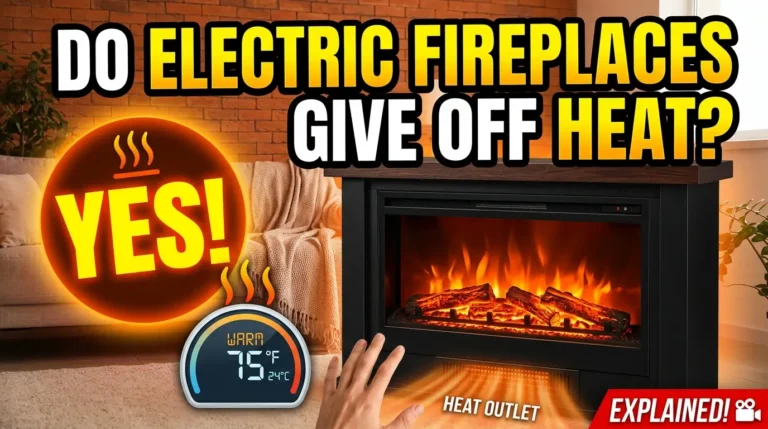
Both problems show up slowly, which is why the test run in Step 7 matters. To learn how much warmth these units put out, see do electric fireplaces give off heat.
Heater Power and Circuit Load
Most plug-in electric fireplaces run on a standard 120-volt household circuit in the US. Divide watts by 120 to get amps. A 15-amp circuit carries 1,800 watts at most, and electricians suggest keeping steady loads at 80 percent of that, or 1,440 watts.
| Heater setting | Power draw | Current | What it means |
|---|---|---|---|
| Low heat | 750 watts | 6.3 amps | Leaves room on a 15-amp circuit for a lamp or phone charger |
| High heat | 1,500 watts | 12.5 amps | Nearly fills a 15-amp circuit, so give it a circuit of its own |
| Flame effect only | Very low | Under 1 amp | LEDs and a small motor draw little power |
| 15-amp circuit limit | 1,800 watts max | 15 amps | Suggested steady limit is 1,440 watts (80 percent) |
Check your model label for its exact wattage. If the label reads higher than 1,500 watts, it needs a 20-amp circuit or a dedicated line, so ask an electrician.
How Carpet Type Changes the Setup
Not all carpet behaves the same under a heavy box. Low-pile carpet and berber stay firm and flat, so a fireplace often sits fine with no base at all. Plush and shag carpet compress under weight, tilt the unit, and creep up around low vents. Carpet tiles fall in the middle: firm, but they can shift if the unit moves.
Press your palm hard into the carpet where the fireplace will sit. If your hand sinks more than about half an inch, treat the carpet as soft and plan on a base board. The table below sums up the call for each common type.
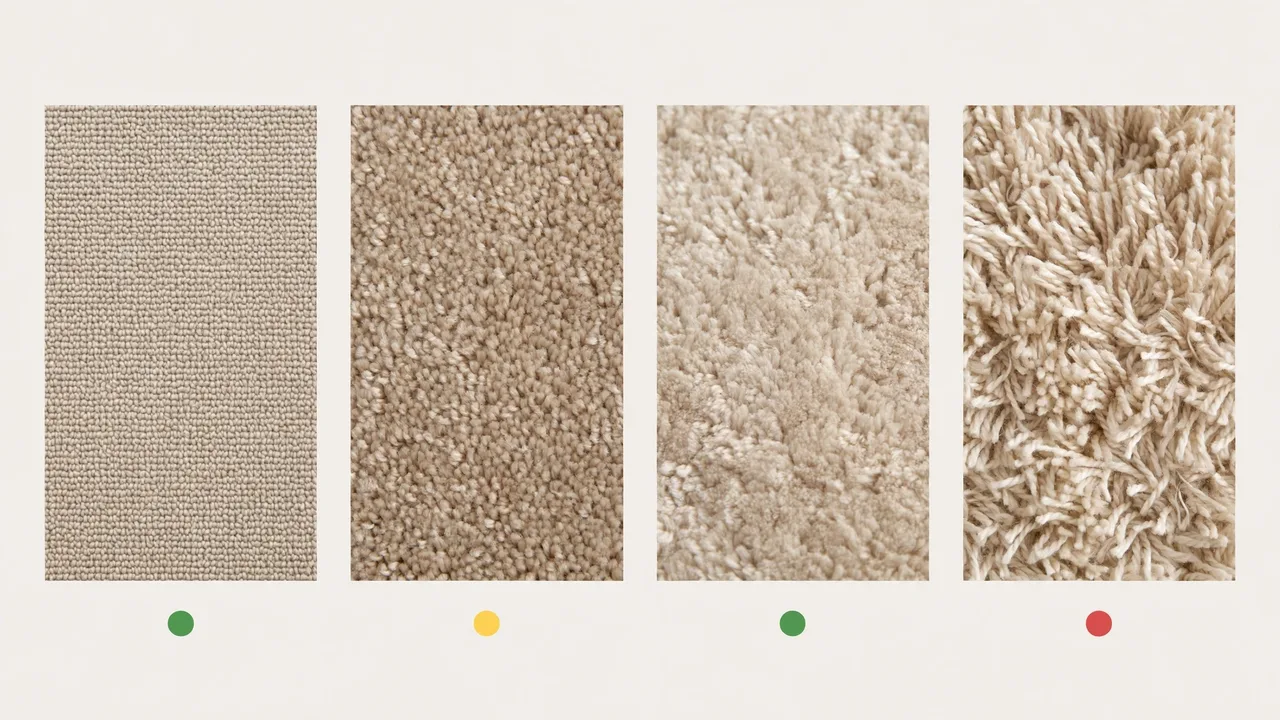
Carpet Types at a Glance
| Carpet type | Stability | Vent risk | What to do |
|---|---|---|---|
| Low-pile / berber | Firm | Low | Often fine with no base; check vents stay clear |
| Medium pile | Fair | Low to medium | A thin base board adds stability |
| Plush | Soft | Medium | Use a firm base; check side vents often |
| Shag / high pile | Poor | High | Base required; pick a hard-floor spot if you can |
| Carpet tiles | Firm | Low | Fine as-is; watch for tiles shifting under the unit |
Read the Manual Before You Move Anything
Open the manual to the pages on placement, clearances, and floor surfaces. Look for three facts: the minimum clearances on each side, the vent locations, and any line about carpet or soft floors. Some manuals name carpet outright. Others say nothing, which means the general clearances still apply.
Note the unit weight and the cord length while you have the manual open. Weight tells you how much the carpet will compress. Cord length tells you which outlet you can reach without pulling the cord tight. Keep the manual nearby through the test run in Step 7.
Check Your Carpet Type and Pile Height
Vacuum the spot first so grit and fibers do not get pressed into the unit feet. Press your palm into the carpet and watch how far it sinks. Measure the pile with a ruler if you want a number: under a quarter inch reads as low pile, while anything past half an inch reads as soft.
Look at where the vents sit on your model. Bottom vents need a gap between the unit base and the carpet, so soft pile is a problem for them. Front and top vents care less about the floor and more about what sits in front of the unit. If the vents sit low on the sides, plan on a base board even for medium pile.
Measure the Spot and Mark the Clearances
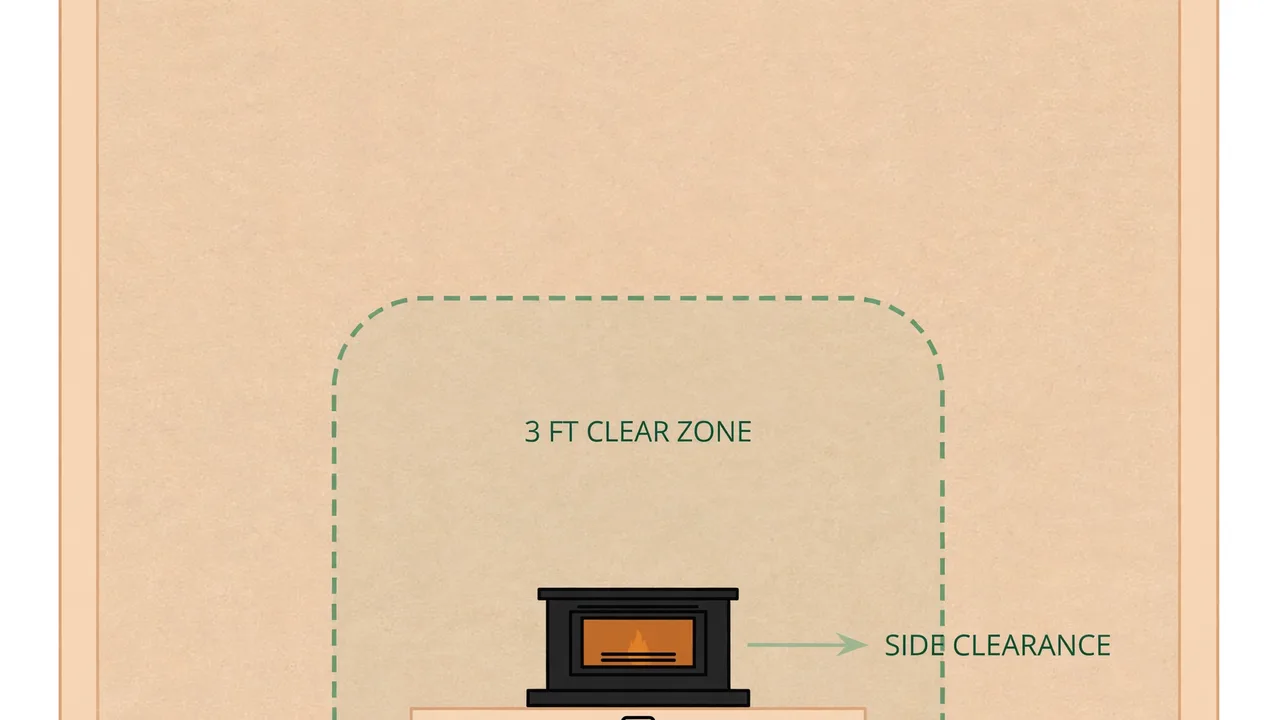
Measure the width of the fireplace, then mark its footprint on the carpet with painter’s tape. Add the clearances from the manual on each side. Fire-safety guidance for space heaters calls for 3 feet of clear space in front of the heater, so keep curtains, bedding, books, and clutter outside that zone.
Check the wall behind the spot, too. The plug needs to reach the outlet with slack, and the cord must not run under the carpet or across a walkway. A cord under carpet frays out of sight, and a cord across a walkway trips people. Pick a spot where the cord lies flat against the wall.
Set a Flat, Firm Base Under the Unit
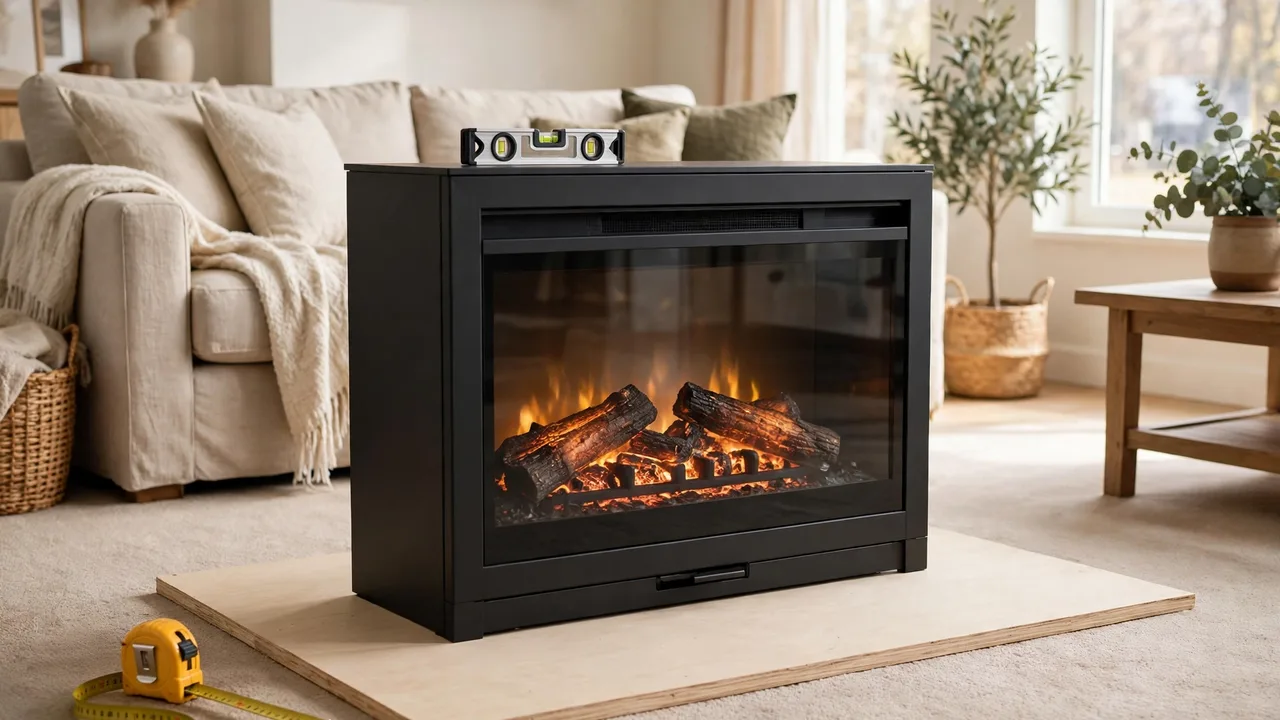
Choose a base that fits the carpet: a hearth pad, a piece of 3/4-inch plywood, or a heat-resistant fireplace mat. Cut or pick a board a few inches wider than the fireplace on every side. Lay a non-slip rug pad under the board if the carpet is slick, then set the board down and press each corner to check for rocking.
The base does two jobs at once. It spreads the weight so the unit cannot sink on one side, and it lifts low vents clear of carpet fibers. A board also makes cleaning easier, since you can slide the unit forward on the board instead of dragging it across carpet.
Pro tip: Cut the base a few inches wider than the fireplace on every side. The extra edge stops the unit from creeping off the board when you open doors or move it for cleaning.
Place the Fireplace and Check That It Sits Level
Lift the fireplace onto the base with a helper if it is heavy. Do not drag it, since dragging tears carpet fibers and can crack plastic feet. Set the level on top and check front to back, then side to side. Shim a low corner with a thin piece of cardboard or a furniture pad until the bubble sits centered.
Push the top of the unit firmly from the front and from each side. It should not rock or slide. If it moves, the base is uneven or the carpet underneath is too soft, so add a thicker board or move to a firmer spot.
Homes with small children or pets gain from a wall anchor strap when the maker supplies one. A cabinet can hold a small insert instead of the floor; see can you put an electric fireplace in a cabinet for that setup.
Plug Into a Wall Outlet on Its Own Circuit
Plug the fireplace straight into a wall outlet. Give the heater a circuit of its own when you can, and unplug other heaters from that circuit. A 1,500-watt heater pulls 12.5 amps, which leaves almost no room on a 15-amp circuit for anything else. The full install walkthrough covers outlet checks and cord routing in how to install an electric fireplace.
Push the plug fully home and check that it sits tight, with no wobble in the socket. A loose plug arcs and heats up, and that heat shows up at the outlet face first. Touch the outlet plate after a few minutes of running; it should feel no warmer than the wall around it.
Heads up: Never run an electric fireplace heater through an extension cord or power strip. Heaters draw a steady high current, and thin cords can overheat out of sight. Plug the unit straight into a wall outlet, and call an electrician if the nearest outlet is too far away.
Run the Heater and Check the Carpet After 30 Minutes
Switch the heater to high and set a timer for 30 minutes. Stay in the room while it runs. Listen for the fan: a steady hum is normal, while a strained whine can mean a blocked vent. Watch the flame display and the controls for error lights or a sudden shutoff.
When the timer ends, switch the heater off and feel the carpet at the front edge, the sides, and under the front lip of the base. Warm to the touch is fine. Hot enough that you pull your hand back is not, so switch the unit off, let it cool, and raise the vents or add a thicker base before you run it again. Repeat the check after an hour of use on the first evening.
If Something Feels Off, Check Here First
Most problems after a carpet install trace back to airflow, stability, or power. Work down the table below before you call for service. Vacuum the vents first, since carpet fibers and dust collect there fast. Our cleaning walkthrough shows the vent and filter spots to hit in how to clean an electric fireplace.
Troubleshooting
| If this happens | Try this |
|---|---|
| Fireplace rocks on plush carpet | Add a firm plywood or hearth-pad base wider than the unit |
| Vents clog with carpet fibers | Vacuum the vents, then raise the unit on a base board |
| Heater shuts off soon after starting | Clear the vents, check the 3-foot front zone, and let it cool before restarting |
| Carpet feels hot under the front edge | Switch off, check vent clearance, and add a thicker base |
| Plug or outlet feels warm | Stop using that outlet and call a licensed electrician |
| Breaker trips when the heater runs | Move other loads off the circuit and give the heater its own circuit |
Frequently Asked Questions
Can you put an electric fireplace directly on carpet with no base?
On low-pile or berber carpet, often yes, when the unit sits flat and the vents stay clear. On plush or shag carpet, use a firm base board so the unit stays level and the vents stay open.
Will an electric fireplace damage or melt carpet?
No, when it is set up per the manual. The heater warms the air in front of the unit, and the base stays near room temperature. Damage comes from blocked vents, a tipped unit, or a hot outlet, not from normal heat through the floor.
Do you need a hearth pad under an electric fireplace on carpet?
Not always. A hearth pad or plywood board is a smart pick for plush carpet, soft floors, or any unit with low vents. For firm low-pile carpet, a base is optional but still helps with stability and cleaning.
Can an electric fireplace sit on carpet in a bedroom?
Yes, with the same rules: flat base, clear vents, 3 feet of open space in front, and a wall outlet on its own circuit. Keep bedding and curtains out of the clear zone, and use the timer or tip-over shutoff when your model has one.
Is it safe to leave an electric fireplace on carpet overnight?
Follow your manual first. Many models have timers and tip-over shutoff, but never leave a heater running in a room with no one home. Switch it off before sleep unless the manual states overnight use is allowed for your model.
Quick Reference Card
You need: tape measure, level, flat base board, vacuum, manual, painter’s tape.
- Read the manual for clearances and vent spots.
- Check carpet pile; soft pile needs a base.
- Mark the footprint and a 3-foot clear zone in front.
- Set a firm base wider than the unit.
- Place, level, and push-test the fireplace.
- Plug into a wall outlet on its own circuit.
- Run on high for 30 minutes and check the carpet.
Enjoy the Warmth
Can you put an electric fireplace on carpet? Yes, and the setup is short once you know the checks. A firm base, open vents, and a wall outlet on its own circuit cover nearly every case. Run the 30-minute test on the first evening, then settle in.
If your room has hard floors in another spot, that spot works too, and the same clearances apply there. For more on keeping the unit safe over time, read our electric fireplace safety tips. Stay warm, and check the vents each time you vacuum the room.