How to Remove Rust From a Fire Pit and Keep It From Coming Back
Your fire pit looked great when it was new, and now orange patches creep across the rim and bowl. Rust shows up fast on steel fire pits, because heat, rain, and ash work together to wear down the finish. The good news is that most surface rust comes off with a wire brush, some white vinegar, and an afternoon of steady work. This guide walks you through how to remove rust from a fire pit from start to finish, including how to seal the metal so the rust stays away longer.
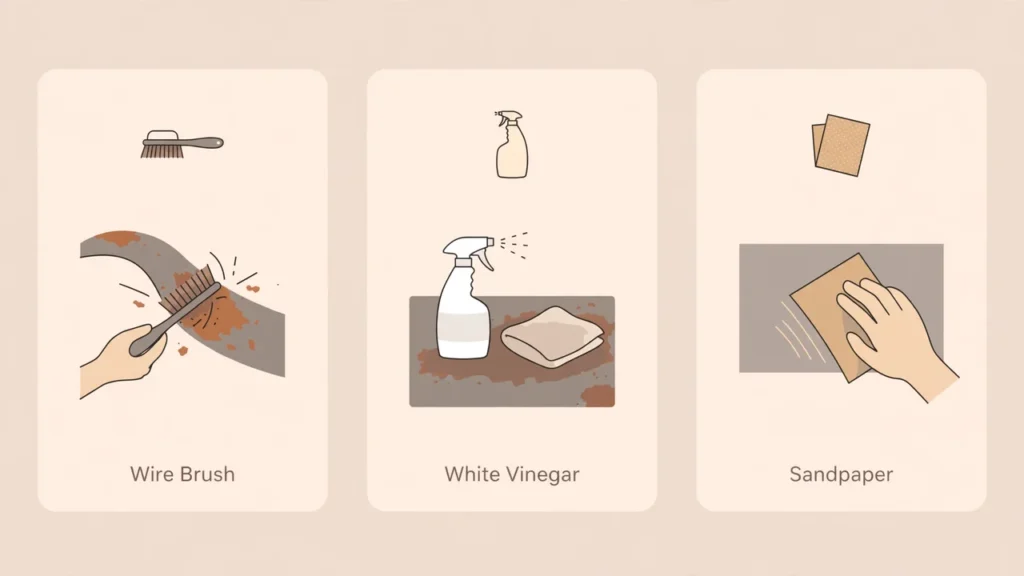
You do not need special skills or pricey gear for this job. A wire brush, white vinegar, sandpaper, and a can of heat-resistant paint cover nearly every case. Expect 2 to 3 hours from start to finish, with most of that time spent waiting for vinegar to soak and paint to dry. Plan the work for a dry, calm day so wind does not blow dust and paint spray back at you.
Safety note: Wear gloves and safety glasses before you touch a wire brush, and work outside or in a well-ventilated space. Vinegar fumes are mild, but rust dust and paint spray are not things you want in your eyes or lungs. Never burn treated, painted, or stained wood in your fire pit. The fumes are toxic, and the chemicals can damage the metal further.
What You Need
Heat-resistant paint must be rated for high heat, often labelled for grills, stoves, or engines. Check the label for a temperature rating of at least 650 degrees Fahrenheit before you buy it.
At a Glance
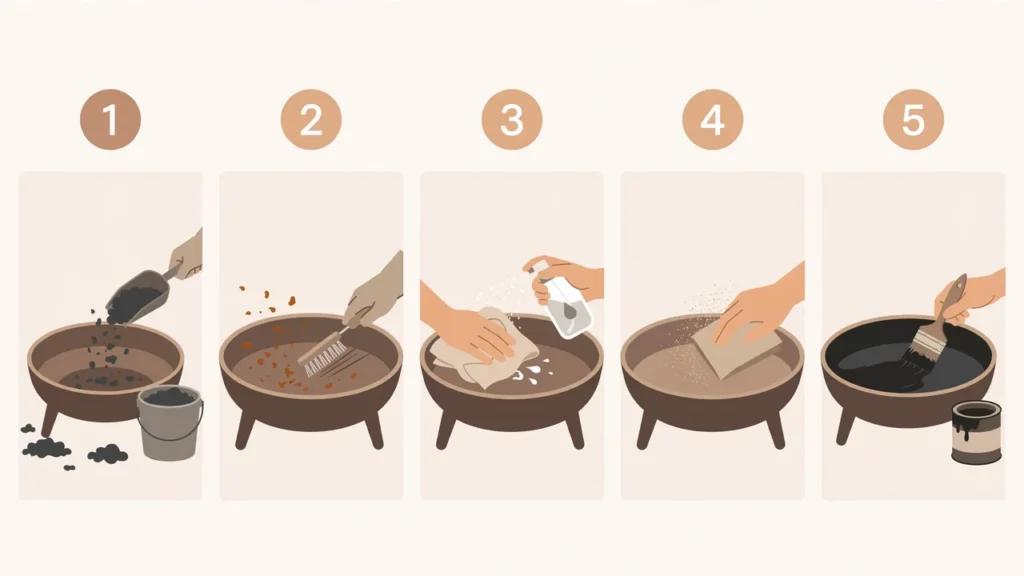
- Empty the fire pit and let it cool completely.
- Scrub off loose rust with a wire brush.
- Soak the rusty spots with white vinegar.
- Scrub the softened rust with steel wool.
- Sand the surface smooth.
- Wipe away dust and let the metal dry.
- Seal the clean metal with heat-resistant paint.
Pick the Right Rust Removal Method for Your Fire Pit
Not every rusty fire pit needs the same treatment. Light surface rust lifts off with a brush and vinegar in under an hour. Heavy, flaky rust that has eaten into the metal needs sanding or a wire wheel. The table below compares the four common methods so you can pick the one that fits the rust you see.
Cost figures below use broad ranges because prices vary by store, brand, and region. Treat them as a rough guide, not a quote.
| Method | Best For | Effort | Typical Cost |
|---|---|---|---|
| Wire brush and white vinegar | Light to medium surface rust | Medium | Low, under $15 |
| Hand sanding | Stubborn patches and rough spots | Medium to high | Low, under $10 |
| Wire wheel on a drill | Heavy, flaky rust over a large area | Low to medium | Medium, $15 to $40 |
| Commercial rust remover gel | Pitted rust in hard-to-reach spots | Low | Medium, $10 to $25 |
This guide uses the wire brush and vinegar method, with sanding to finish. It is the cheapest route, it works on the widest range of rust, and it uses supplies most homes already have.
Empty the Fire Pit and Let It Cool Completely
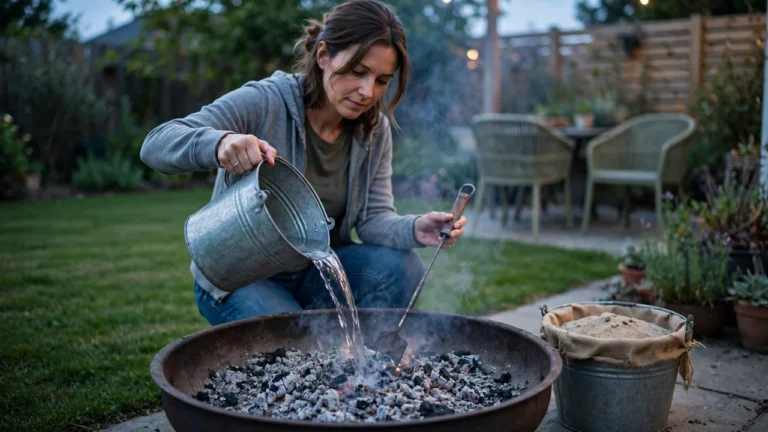
Pull out every bit of ash, charcoal, and half-burned wood before you start. A metal scoop or an old dustpan works well, and a stiff brush sweeps the fine ash out of the corners. Bag the ash and set it aside for disposal.
Check that the metal is fully cold by holding your palm a few inches above the surface. If you feel any warmth, wait longer. The steps in this guide and the advice in our post on how to put out a fire pit safely both start from the same rule: never work on a warm fire pit.
Scrub Off Loose Rust With a Wire Brush
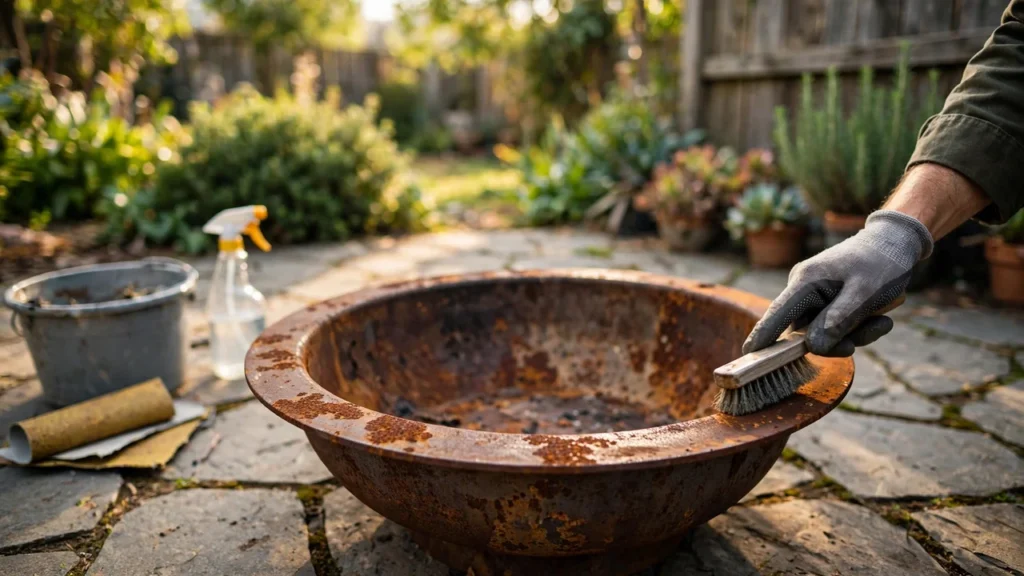
Put on your gloves, safety glasses, and dust mask. Grip the wire brush firmly and scrub the rusty areas with short, firm strokes, working in one direction. Flakes of rust will fall away in orange dust, which tells you the brush is doing its job.
Brush the rim, the bowl, the legs, and the underside. Rust hides on the bottom edge and around bolt holes, so turn the pit on its side if you can move it safely. A wire wheel on a drill speeds this step up on a large pit, but a hand brush handles most jobs fine.
Pro tip: Brush the rust off over a drop cloth or a tarp. The flakes stain concrete and deck boards, and a cloth makes cleanup a five-minute job instead of a scrubbing session of its own.
Soak the Rusty Spots With White Vinegar
Pour white vinegar into a spray bottle and mist the rusted areas until they are wet all over. For thick patches, lay a rag soaked in vinegar over the spot and press it flat against the metal. The acid in vinegar loosens the bond between rust and steel, which makes the next scrub far easier.
Leave the vinegar to work for 30 minutes on light rust and up to 2 hours on heavy patches. Check after half an hour. When the rust looks darker and softer, it is ready. Keep the surface damp during the soak by misting it again if it starts to dry out.
Heads up: Vinegar will strip the finish around the rust too, so expect the bare metal to look dull and grey after this step. That is normal. The paint step at the end restores the colour and protects the steel.
Scrub the Softened Rust With Steel Wool
Take a pad of medium-grade steel wool and scrub the soaked areas in small circles. The rust should come away as a dark paste. Rinse the pad often in a bucket of clean water so it keeps cutting instead of smearing rust back onto the metal.
Switch to fine-grade steel wool for the last pass. It smooths the fine scratches left by the coarser pad and leaves a surface that paint grips well. Wipe the area with a damp rag as you go so you can see which spots still need work.
Sand the Surface Smooth
Wrap 80-grit sandpaper around a sanding block and work over any rough or pitted areas. Sand in one direction with even pressure, and stop when the surface feels level under your fingers. Deep pits may never sand fully flat, and that is fine. Smooth is the goal, not perfect.
Follow with 220-grit sandpaper over the whole cleaned area. This finer grit removes the scratches from the coarse paper and gives the paint a surface it can bond to. Brush off the sanding dust with a dry rag when you finish.
Wipe Away Dust and Let the Metal Dry
Mix a few drops of dish soap into a bucket of warm water and wash the whole fire pit with a rag. Soap lifts the last of the rust dust, vinegar residue, and grease. Rinse with clean water and wipe it down with a dry towel.
Leave the pit in the sun for at least 30 minutes until every surface is fully dry. Paint will not stick to damp metal, and trapped moisture under paint rusts faster than bare metal does. Touch the inside of the bowl and the underside of the rim to check for hidden damp spots.
Seal the Clean Metal With Heat-Resistant Paint
Tape off any parts you do not want painted, such as handles, mesh screens, or decorative trim. Shake the can of heat-resistant spray paint for a full minute, then hold it 10 to 12 inches from the surface. Spray in light, even passes, overlapping each pass by about half.
Apply 2 to 3 thin coats, waiting 10 to 15 minutes between coats. Thin coats dry harder and peel less than one heavy coat. Let the final coat cure for 24 hours before you light a fire, or follow the cure time printed on the can. Some paints need a short, low fire to finish curing, so read the label before the first burn.
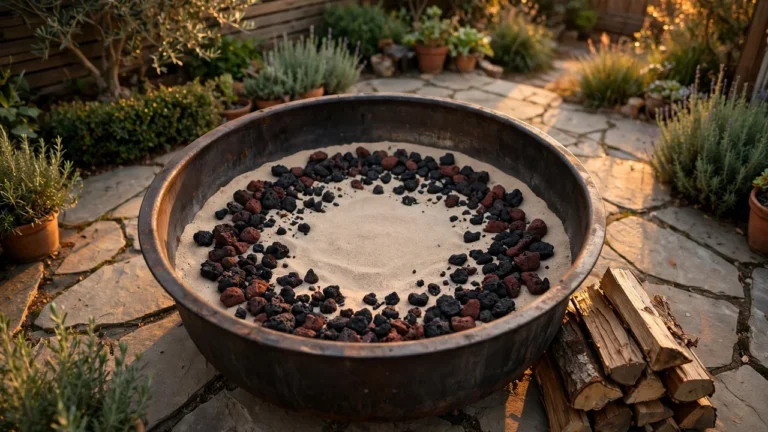
While the paint cures, think about what goes back inside the pit. The filler you choose affects how much moisture sits against the metal, so read our guide on what to put in the bottom of a fire pit before you reload it.
Before and After: What to Expect
Orange and brown patches across the rim and bowl, rough flaky texture, and dull paint that chips when you brush it.
Smooth, even colour with a fresh heat-resistant coat, no loose flakes, and a surface that sheds rain instead of holding it.
Deep pitting from years of rust may still show as shallow dimples under the new paint. The metal is protected, even if the surface is not flawless.
Keep Rust From Coming Back
Rust returns when bare steel meets water and air, so prevention is about keeping the metal dry and coated. Store the pit under a fitted cover when it is not in use, and bring it under a roof or into a shed for the wettest months if you can. A cover that traps moisture underneath does more harm than good, so pick one with vents or a breathable fabric.
Empty ash after every fire. Ash holds moisture against the steel, and wet ash is one of the fastest ways to start new rust. Brush out the bowl while it is cold, and wipe the rim dry after rain. A quick wipe with a light coat of cooking oil on the outside metal adds a thin barrier, but never oil the inside of the bowl where fire touches it.
Check the paint once a season. Touch up chips and scratches with the same heat-resistant paint before rust gets a foothold. Small repairs take ten minutes and save you from repeating the whole job next year. For more on safe burning habits that protect your pit, see what you can burn in a fire pit and our guide to keeping a fire going in a fire pit.
Common Mistakes to Avoid
1. Painting over rust you did not remove. Paint sticks to loose rust for a few weeks, then peels off in sheets and takes the rust with it. Brush and sand until the surface feels solid before you open the paint can.
2. Using regular spray paint. Standard paint burns, bubbles, and gives off fumes on the first fire. Only use paint rated for high heat, and check the temperature rating on the label.
3. Skipping the drying step. Paint over damp metal traps water underneath, which rusts the steel from the inside out. Wait until every surface feels dry to the touch, including the underside.
4. Leaving ash in the pit. Ash soaks up rain and holds it against the metal for days. Empty the bowl after every fire, even when you plan to burn again soon.
5. Scrubbing with a grinder on thin metal. An angle grinder eats through thin fire pit steel fast. Use it only on thick, heavily rusted steel, and keep the wheel moving so it never digs in one spot.
Frequently Asked Questions
Can you use a rusty fire pit?
Light surface rust is safe to burn in, because the fire does not touch the rust in a way that harms you. Deep rust that has eaten through the metal is a different story. Thin spots and holes weaken the pit and can let embers drop through, so clean and repair the metal first.
Does vinegar remove rust from a fire pit?
Yes. White vinegar is a mild acid that loosens rust from steel. Spray it on, let it soak for 30 minutes to 2 hours, then scrub with steel wool. It works best on light to medium rust. Heavy, flaky rust still needs a wire brush or sanding first.
What kind of paint do you use on a fire pit after removing rust?
Use a heat-resistant spray paint rated for at least 650 degrees Fahrenheit. Look for paint labelled for grills, stoves, or engines. Apply 2 to 3 thin coats and let it cure for 24 hours before the first fire.
How do you keep a fire pit from rusting again?
Keep it dry and keep the coating intact. Use a fitted, breathable cover, empty ash after every fire, wipe the rim dry after rain, and touch up paint chips each season. Storing the pit under cover during wet months makes the biggest difference.
Can you use WD-40 to remove rust from a fire pit?
WD-40 loosens light rust, but it leaves an oily film that is flammable and not safe for a surface that holds fire. Vinegar, steel wool, and sanding are safer choices. If you ever use an oil-based product on the outside metal, wash it off fully with soap and water and let it dry before burning.
Quick Reference Card: Remove Rust From a Fire Pit
You need: wire brush, steel wool, 80 and 220 grit sandpaper, white vinegar, spray bottle, rags, gloves, safety glasses, dust mask, heat-resistant spray paint.
- Empty the pit and confirm it is fully cold.
- Wire-brush off all loose rust.
- Spray with white vinegar and soak 30 minutes to 2 hours.
- Scrub with steel wool, medium then fine grade.
- Sand smooth with 80 grit, then 220 grit.
- Wash with soapy water and dry for at least 30 minutes.
- Spray 2 to 3 thin coats of heat-resistant paint, 10 to 15 minutes apart.
- Let the paint cure 24 hours before the first fire.
Prevent rust: cover the pit, empty ash after every fire, and touch up paint chips each season.
Your fire pit is clean, sealed, and ready for the next fire. The whole job takes an afternoon, and most of that time is waiting for vinegar and paint to do their work. Keep the pit covered, empty the ash after each burn, and touch up chips when you spot them. A little care each season keeps the rust away for years, so your next fire starts on clean steel instead of a rust patch.