What to Put in the Bottom of a Fire Pit: Sand, Lava Rock, and Fire Glass
What to put in the bottom of a fire pit is one of the first questions new pit owners ask, and it matters more than most people think. The bottom layer shields the floor of the pit from direct heat, helps water drain away, and keeps ash from turning into a wet, sticky mess. Get it wrong and the metal floor can warp, rust can eat through a steel bowl in a single season, and a hot fire can crack a stone base.
By the end of this guide, you will know exactly which materials belong in your pit, how deep each layer should be, and what to leave out. The work takes about 30 minutes for most backyard pits. You need no special tools, and the materials cost little. The steps below cover both wood-burning pits and gas pits, since the right bottom layer is different for each type.
Safety first — read this before you start
Fire pits get hot enough to cause serious burns. Keep children and pets well clear while the pit is lit and while it cools. Never use river rocks or smooth stones pulled from a stream in a fire pit. Trapped water inside them can turn to steam and make the stone crack or pop apart, and flying chips can hurt anyone nearby.
Never burn treated, painted, or stained wood, plywood, or household trash. The fumes are toxic. Check your local rules and any burn bans before you light a fire, and keep a hose or a bucket of sand close by.
What You Need
- Play sand or paver sand — one or two bags for most pits
- Lava rock (wood-burning pits) or fire glass (gas pits) — one bag is often enough
- A metal scoop or old kitchen pot for moving sand
- A stiff brush and a small dustpan
- Work gloves
- A tape measure or ruler
- A bucket for old ash
- A level or a straight board (optional, for a flat finish)
If your pit is gas, check the maker’s manual before you buy fire glass. Some burners need a set depth of glass to work well, and the manual gives that number.
At a Glance
- Check what kind of fire pit you have
- Empty the pit and clean the floor
- Inspect the floor and clear the drain holes
- Spread a sand base layer
- Add lava rock or fire glass on top
- Level the layer and set the grate
- Light a small test fire
What Goes in the Bottom of a Fire Pit?
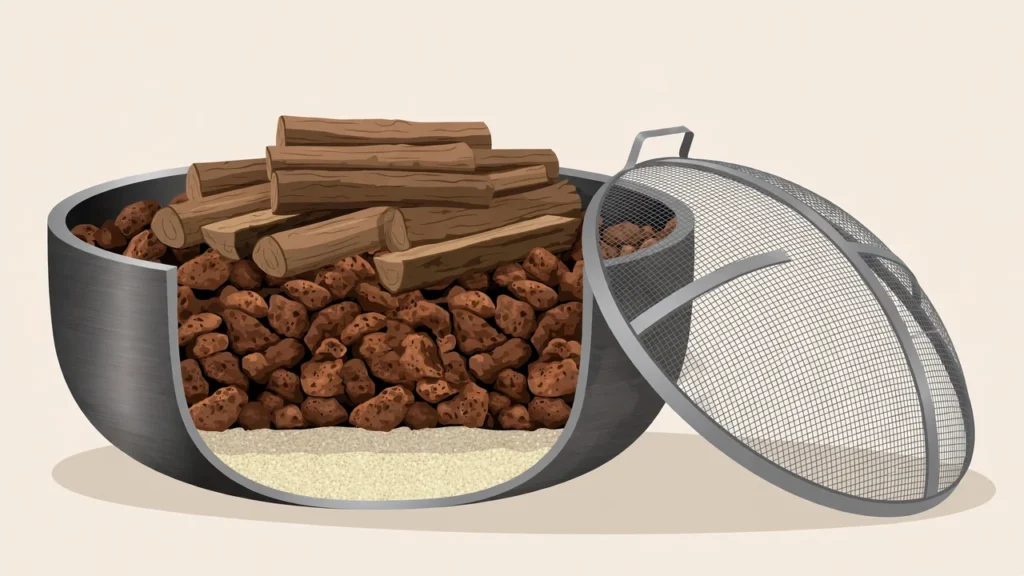
The short answer is a heat-proof base layer, then a top layer that fits your pit type. For a wood-burning pit, that means 1–2 inches of sand on the floor, topped with 2–3 inches of lava rock. For a gas pit, sand still works as a base, but the top layer is fire glass spread 1–2 inches deep over the burner.
These depths are common guidance from pit makers, not hard rules. Your manual may call for a different depth, and the manual wins. The table below compares each material so you can pick the right one for your pit.

Check What Kind of Fire Pit You Have
Wood-burning and gas pits need different bottom layers, so pin down your type before you buy anything. A wood pit has an open bowl or ring and no gas line, hose, or burner. A gas pit has a burner ring or pan, a gas line or propane hose, and a control knob or key valve.
Look under the pit too. A steel bowl with a drain hole in the middle is a wood pit in most cases. A shallow pan with a round burner and small holes is a gas pit. If you see a gas line and you are not sure how it works, stop and read the manual or call the maker before you go further.
Empty the Pit and Clean the Floor
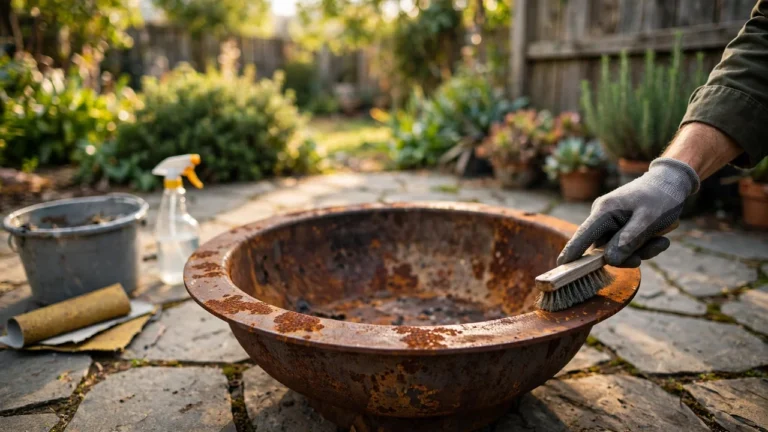
Wait until the pit is fully cold. A fire pit can stay hot for hours after the flames die down, so touch the floor with the back of your hand from a safe distance first. Scoop out all old ash, half-burned wood, and old lava rock into a metal bucket.
Brush the floor with a stiff brush until you can see bare metal or stone. Old ash holds water against the floor, and that trapped water is what rusts steel bowls and stains stone. For a full clean, see our guide on how to clean a fire pit before you add new material.
Inspect the Floor and Clear the Drain Holes
Look over the whole floor for rust spots, thin patches, cracks, or warped metal. Small rust spots can be brushed off, but a floor with holes or deep pitting needs repair or a new bowl before you use the pit again. A cracked stone floor needs a mason or a new fire brick base.
Find the drain hole or holes and poke them clear with a stick or a screwdriver. Blocked drains are the top cause of standing water in a pit, and standing water rusts steel fast. If your pit has no drain hole, note that now — you will need to cover the pit in rain and tip out water by hand after storms.
Heads up: never use river rocks
Smooth stones from a river, lake, or beach can hold water deep inside, even when they feel dry on the outside. Heat turns that water to steam, and the pressure can crack the stone or make it pop apart with force. Use lava rock, crushed gravel, or fire glass instead. These are made or graded to handle heat.
Spread a Sand Base Layer
Pour play sand or paver sand into the pit and spread it 1–2 inches deep across the whole floor. Sand is the base layer because it takes heat well, drains better than bare metal, and stops hot coals from sitting right on the floor. It also makes ash cleanup far easier later.
Use a tape measure to check the depth in three or four spots. A thin patch lets heat through to the floor, and a deep pile in the middle pushes your fire up too high. Level the sand with a flat board or the back of a scoop until it looks even from edge to edge.
Add Lava Rock or Fire Glass on Top
For a wood-burning pit, pour lava rock over the sand until it is 2–3 inches deep. Lava rock is light, full of tiny air pockets, and made to take high heat without cracking. It spreads heat across the pit floor and gives coals a bed to sit on, which helps a fire burn more evenly.
For a gas pit, spread fire glass over the burner instead, 1–2 inches deep, and leave the burner holes clear enough for gas to flow. Fire glass is tempered glass made for gas fire features, and it throws back a lot of heat. If you are torn between the two materials, our lava rock vs fire glass for fire pits guide compares them side by side. Never put fire glass in a wood pit — soot coats it fast and it loses its shine.
Level the Layer and Set the Grate
Run a straight board across the top of the layer and pull off any high spots. The surface should sit at least 2 inches below the rim of the pit so logs stay inside and wind does not push embers out. A layer that sits too high also makes the pit harder to cover.
Set the fire grate or log grate back on top of the layer, if your pit has one. The grate should sit flat and steady, not rock from side to side. A wobbly grate means the layer is uneven underneath it, so lift the grate and smooth that spot before you light anything.
Light a Small Test Fire
Build a small fire with dry kindling and one or two small logs, then watch it for 15–20 minutes. You are checking that the layer stays put, the fire draws air well, and no smoke pours out of odd places. A thin wisp of steam from new sand in the first minutes is normal — it is water drying out of the sand.
Let the test fire burn down on its own and cool fully before you build a full-size fire. If the sand shifted and left a bare patch on the floor, add sand to that spot and level it again. Once the test fire burns clean, your pit is ready for normal use. When the evening ends, follow the steps in our guide on how to put out a fire pit safely.
What Never Belongs in the Bottom of a Fire Pit
Some materials look like they would work but cause real harm in heat. Keep all of these out of your pit, even as a thin layer under sand.
- River rocks and smooth beach stones — trapped water can make them crack or pop apart when heated.
- Concrete chunks or broken pavers — regular concrete can spall and flake in high heat. Only fire-rated brick or castable refractory material belongs near flame.
- Treated, painted, or stained wood — the fumes are toxic, and the ash is not safe to spread on soil.
- Glass bottles and jars — ordinary glass shatters in heat and leaves sharp pieces in the ash.
- Plastic, foam, or rubber — these melt, give off toxic fumes, and leave a sticky residue.
- Charcoal briquettes with lighter fluid — made for grills, not open pits, and the fluid smell lingers in the pit.
If you are building the pit itself from blocks, check what blocks are safe for a fire pit before you stack anything near flame. Only burn clean, dry, untreated wood — see what you can burn in a fire pit for the full list.
Wood Pit vs Gas Pit: What Changes at the Bottom
The base is the same for both types: sand on the floor to shield it from heat. The top layer is where they split. Wood pits take lava rock because it holds up under coals and ash. Gas pits take fire glass because it covers the burner, spreads heat, and looks good with flames dancing through it.
Gas pits also need more care around the burner. Keep fire glass out of the burner holes, and never pile it so deep that gas cannot flow. Wood pits need more care around drainage, since ash and rain mix into a paste that holds water against the floor. Where you place the pit matters too — if you are weighing a spot on the lawn, read can a fire pit go on grass first.
How Often Should You Replace the Bottom Layer?
Sand lasts a long time if it stays dry. Scoop out and replace it once a year, or sooner if it smells sour or has turned into a hard crust. Lava rock breaks down with heat and ash, so top it up each season and replace the full layer every one to two years.
Fire glass lasts for years in a gas pit if you keep soot off it. Wash it in a bucket of warm soapy water once a season, rinse it well, and let it dry fully before it goes back in the pit. Wet fire glass can steam and spit when the burner lights.
Frequently Asked Questions
Do I need sand in the bottom of a fire pit?
Yes, in most pits. A 1–2 inch sand layer shields the floor from direct heat, helps water drain, and makes ash cleanup far easier. It also slows rust on steel bowls.
Can I use regular gravel in a fire pit?
Crushed gravel is fine as a drainage layer under sand, but never use smooth river rocks or beach stones. They can trap water inside and crack or pop apart when heated.
How deep should the bottom layer of a fire pit be?
Aim for 1–2 inches of sand on the floor, plus 2–3 inches of lava rock for a wood pit or 1–2 inches of fire glass for a gas pit. Your pit manual may call for a different depth, and the manual wins.
Can I put fire glass in a wood-burning fire pit?
No. Fire glass is made for gas burners. In a wood fire it gets coated in soot fast, loses its shine, and can crack under falling logs. Use lava rock in wood pits instead.
What should I put under a fire pit to protect the ground?
A heat shield, a layer of sand, or a stone pad under the pit stops heat from scorching grass or cracking a patio. Keep the pit at least 10 feet from your house, fences, and low tree branches.
Quick Reference Card — What to Put in the Bottom of a Fire Pit
What you need: play sand, lava rock (wood pits) or fire glass (gas pits), scoop, stiff brush, gloves, tape measure, bucket.
Depths: sand 1–2 in; lava rock 2–3 in; fire glass 1–2 in. Top of layer at least 2 in below the rim.
- Check your pit type — wood or gas.
- Empty and clean the floor.
- Inspect the floor and clear drain holes.
- Spread 1–2 in of sand.
- Add lava rock or fire glass on top.
- Level the layer and set the grate.
- Light a small test fire for 15–20 min.
Never use: river rocks, concrete chunks, treated wood, glass bottles, plastic, or charcoal briquettes with lighter fluid.
Your fire pit now has a bottom layer that shields the floor, drains water, and holds heat where it belongs. Sand, lava rock, and fire glass each have a job, and now you know which one fits your pit.
Keep the layer topped up each season and the drains clear, and the pit will last far longer. When you are ready for your next fire, pick dry, untreated wood and enjoy the evening. What to put in the bottom of a fire pit is a small job with a big payoff — and it is done.