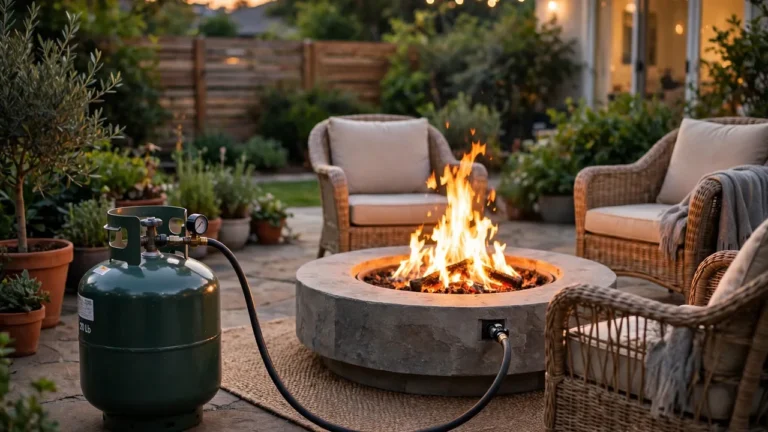
What Blocks Are Safe for a Fire Pit? Bricks, Cinder Blocks, and Pavers Explained
You have a pile of blocks and a plan for a fire pit. Before you stack a single block, ask this: what blocks are safe for a fire pit? The answer matters more than the look of the pit.
Some blocks take direct flame all night. Others crack, flake, or pop apart when they get hot.
This guide gives you a plain answer for each block type: fire brick, standard brick, cinder block, concrete pavers, and stone. You will learn which blocks can touch the fire, which blocks belong on the outside wall, and which ones to keep far from the heat.
You will also build the pit the right way, with a dry-fit ring, a level gravel base, and a fire brick liner that shields the outer wall. Plan on a weekend afternoon for the build, plus three short curing fires before your first big blaze. The work is plain, the tools are basic, and the result is a pit you can use for years.
Safety note: A fire pit is an open flame in your yard. Keep it clear of your house, deck, fence, and low tree limbs, and check your local rules for the exact distance and for any burn bans. Never burn treated, painted, or stained wood.
Never use gasoline or lighter fluid to start a fire. Keep a hose or a bucket of water close, and never leave a fire burning alone. Let ashes cool fully before you touch them or throw them out.
What You Need
- Fire brick, enough for one inner ring
- Outer wall blocks: concrete blocks, retaining wall blocks, pavers, or stone
- Cap stones for the top of the wall
- Gravel for the base
- Coarse sand for leveling
- Tape measure, string, and stakes
- Long level (2-foot or 4-foot)
- Shovel and wheelbarrow
- Work gloves and safety glasses
- Chalk for marking blocks
- Refractory mortar (optional, for fire brick joints)
- Metal fire ring insert (optional, adds a heat shield)
The Short Answer: Which Blocks Can Touch Fire?
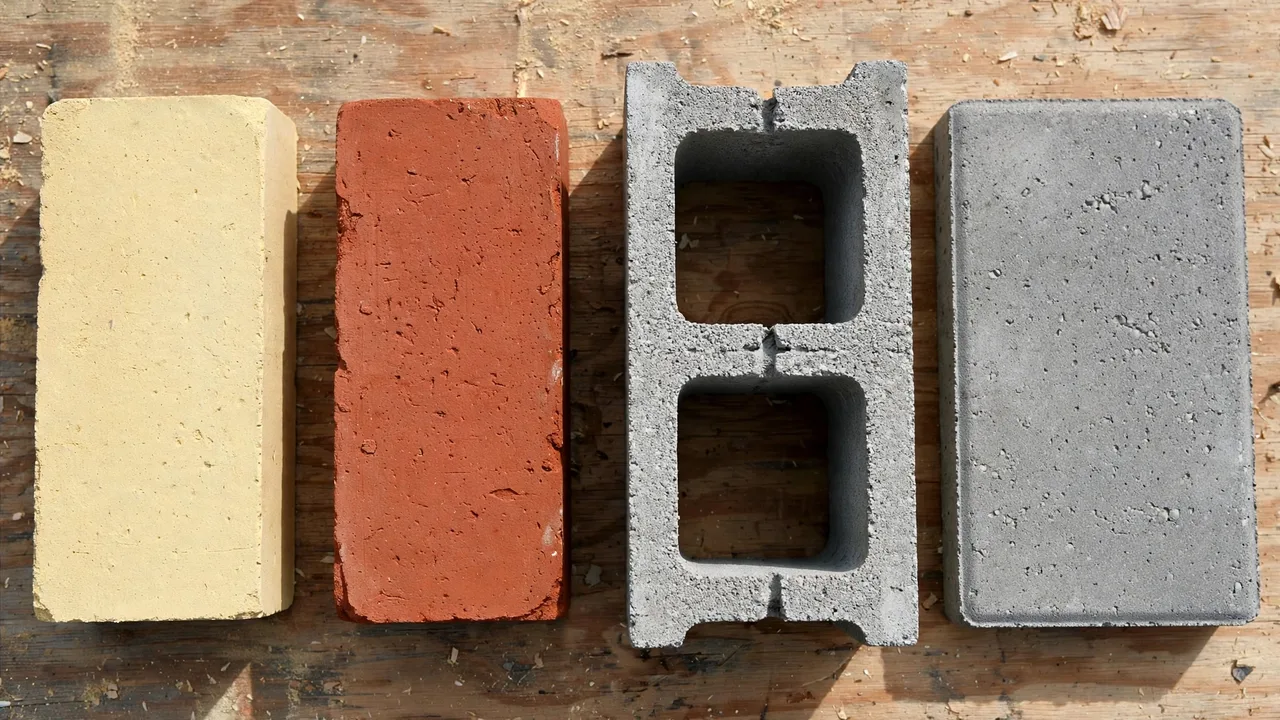
Fire brick is the one block made to touch flame. It lines the inside of the pit, and the fire burns against it. Every other common block belongs on the outside wall, the patio, or the cap, where the heat is far lower.
Standard clay brick, cinder block, and concrete pavers all share one flaw. They hold tiny amounts of water inside, and heat turns that water to steam. Steam needs room to escape, and when it has none, the block cracks, flakes, or pops. A fire brick liner stops most of that heat from reaching the outer wall in the first place.
| Block Type | Touch the Fire? | What Heat Does to It | Best Use |
|---|---|---|---|
| Fire brick | Yes — made for it | Holds up to direct flame; often rated to around 1,800°F | Firebox liner (inside ring) |
| Standard clay brick | No | Can crack and flake after repeated heat | Outer wall, away from flame |
| Concrete / cinder block | No | Trapped water turns to steam; can crack, spall, or pop | Outer wall only, behind a liner |
| Concrete pavers | No | Same steam and crack risk as concrete blocks | Patio or apron around the pit |
| Natural stone | No (most types) | River rock and soft stone can pop; dense stone holds up better | Outer wall or cap, away from flame |
| Retaining wall block | No | Concrete mix, same limits as cinder block | Outer wall only, behind a liner |
Heat ratings vary by brand, so check the label or ask your supplier. Prices vary by region and supplier, so check your local yard for current costs.
At a Glance: The 9 Steps
- Measure your fire pit spot and pick a size
- Check what blocks are safe for a fire pit before you buy
- Buy fire brick for the inside ring
- Pick your outer wall block
- Test-fit a dry ring on the ground
- Dig a level gravel base
- Stack the outer wall with staggered joints
- Set the fire brick liner with a small gap
- Cure the pit with three small fires
Measure Your Fire Pit Spot and Pick a Size
Walk your yard and pick the flattest open spot you have. Mark a circle with string and a stake, then stand in the middle and look around. You need clear sky above and clear ground on all sides. If the spot sits on lawn, read our guide on whether a fire pit can go on grass before you dig, since grass needs a gravel or paver base under the pit.
Most backyard pits run 36 to 44 inches across on the inside. That size fits a small group and burns a normal armload of wood. A wider pit looks grand, but it eats more wood and throws more heat at your chairs. Pick your size from our guide to what size fire pit you need, then measure the block count against that circle.
Check What Blocks Are Safe for a Fire Pit Before You Buy
Read the label on every block before it goes in your cart. The label is your best clue. Fire brick will say “fire brick” or “refractory” on the box or the yard tag.
Standard brick, cinder block, and pavers will say “concrete” or “clay” with no heat rating. If a block has no heat rating, treat it as an outer-wall block and keep it out of the firebox.
Ask the yard staff one plain question: “Is this rated for direct flame?” A good yard will answer fast. If the answer is vague, or the staff member has to guess, pick a different block. A wrong block in the firebox can fail during your first big fire, and you will be rebuilding the pit instead of using it.
Heads Up: Concrete Can Pop
Concrete blocks and pavers hold water inside, even when they feel dry. A hot fire turns that water to steam, and the steam can crack the block or fling chips off the surface. Never use concrete blocks, pavers, or river rock as the firebox wall.
Never build a fire against a block that is wet from rain. Let damp blocks dry in the sun for a day or two before you light up.
Buy Fire Brick for the Inside Ring
Count the fire brick by laying the ring out on the driveway first. Stand the bricks on edge in a circle at your chosen diameter and count how many it takes to close the ring. Buy that count, plus 4 to 6 extra bricks for spares and cuts. Fire brick costs more than standard brick, but you need far fewer of them, since they form one thin inner ring.
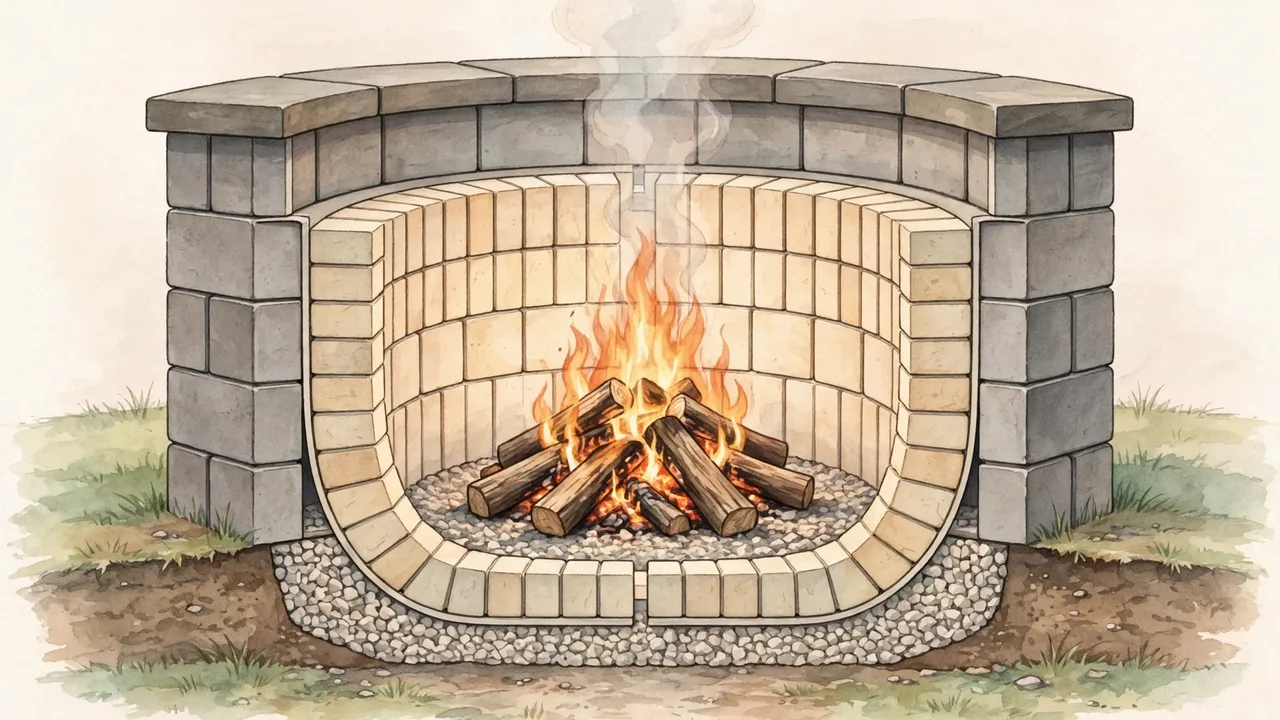
The liner is the part that takes the beating. It absorbs the flame heat and shields the outer wall, so the outer blocks stay cool enough to last. Without a liner, even a thick outer wall faces full flame heat on its inner face, and that is where cracks start.
Pick Your Outer Wall Block
Choose the outer block for looks and for how it stacks, not for heat. Cinder blocks stack fast and cost little, and they hide well behind a stone cap. Retaining wall blocks lock together with a lip, which keeps courses straight with no mortar. Natural stone looks the most at home in a garden, and our guide to building a stone fire pit walks through the stone option in full.
Match the block to your skill level. Dry-stacked blocks forgive small errors, since you can lift and reset a block in seconds. Mortared walls look tidy, but a crooked course sets hard and stays crooked. For a first pit, dry-stack the outer wall and save mortar for the cap, if you use it at all.
Test-Fit a Dry Ring on the Ground
Lay the full outer ring on flat ground with no mortar and no glue. Place each block tight against the next, and step back to check the shape. A ring that looks round from above and level from the side will build fast. A ring with a flat spot or a high block will fight you on every course, so fix it now while the blocks are still loose.
Mark each block with chalk as you go: a number on the top face, in order around the ring. The marks feel fussy, but they pay off when you take the ring apart to dig the base. You will rebuild the same ring in the same order, with no guessing and no leftover blocks.
Pro Tip
Lay the fire brick ring inside the outer ring during the dry fit too. The two rings must fit together with a small gap, and the dry fit is the time to find out. If the liner crowds the outer wall, widen the outer ring by one block before you dig.
Dig a Level Gravel Base
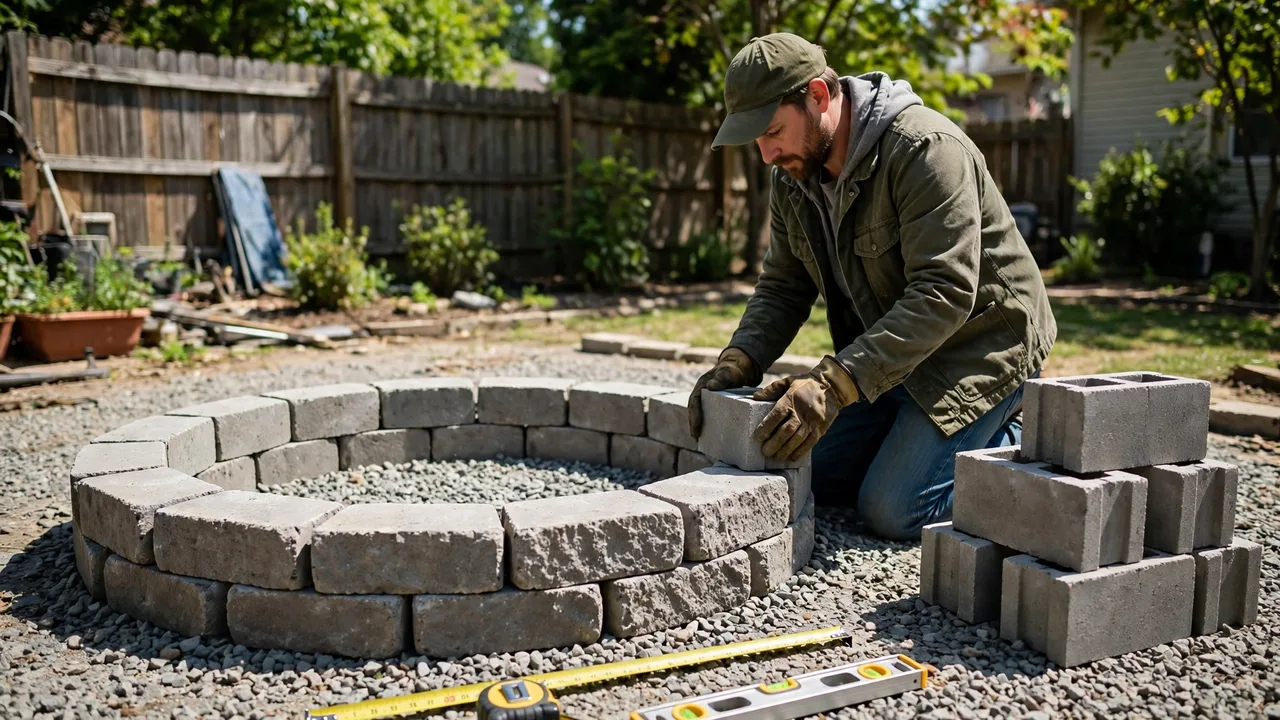
Take the dry ring apart and mark its outline on the ground with spray paint or a garden hose. Dig out the turf and soil inside the outline to a depth of about 6 inches. If you want a pit sunk into the ground, read our guide to building an in-ground fire pit for the deeper dig and drainage notes.
Spread 4 inches of gravel in the hole and tamp it flat with a hand tamper or the flat of a shovel. Set your level across the gravel in two directions and rake the high spots down. A base that is level now keeps every course level later, and it drains rain away from the blocks.
Stack the Outer Wall With Staggered Joints
Rebuild the outer ring on the gravel, one course at a time. Set the first course with care, since it sets the line for the whole wall. Check the level after every 3 to 4 blocks, and tap a high block down with a rubber mallet instead of lifting it out.
Stagger the joints on the second course so each block sits across the seam below it. The stagger locks the wall together and stops a single straight seam from running top to bottom. Build 2 to 3 courses high for a standard pit, then check the top with the level one last time before you add the cap.
Set the Fire Brick Liner With a Small Gap
Stand the fire bricks on edge inside the outer wall to form the inner ring. Leave about a half-inch gap between the liner and the outer wall. That gap matters: fire brick grows a little when it heats up, and the gap gives it room to expand without pushing the outer wall apart.
Leave the liner dry-stacked, or butter the joints with refractory mortar if you want a tidier look. Never use standard mortar on fire brick, since it cracks under heat and falls out in chunks. A metal fire ring insert can sit inside the liner as an extra shield, but it is a bonus, not a must.
Cure the Pit With Three Small Fires
Light a small fire on the first day and let it burn for about 30 minutes, then let the pit cool fully. Repeat with a slightly bigger fire on the second day, and a third on the next day. Small fires drive out leftover damp from the blocks and mortar at a slow pace, which keeps new blocks from cracking on their first real blaze.
Burn only dry, untreated wood during the curing fires and after. Check our guide to what you can burn in a fire pit for the full list of safe fuels and the items to keep out. Watch the liner and the outer wall during each curing fire, and note any cracks while they are still small.
If Something Goes Wrong
| If This Happens | Try This |
|---|---|
| An outer block cracked after the first fire | Check the liner gap and the liner itself. Replace the cracked block and fix the liner before the next fire. |
| Popping sounds during a fire | Let the fire burn down, then let the blocks dry fully. Burn smaller fires next time, and never use river rock in the pit. |
| The wall leans after a month | Lift the leaning blocks, re-level the gravel base, and restack the courses with staggered joints. |
| Smoke blows into the seats | Check the wind before you light up, keep fires modest, and move chairs to the upwind side. |
Questions People Ask About Fire Pit Blocks
Can I use regular cinder blocks for a fire pit?
No, not as the firebox wall. Regular cinder blocks can crack or pop when flame heat turns trapped water to steam. Use them for the outer wall only, with a fire brick liner between the fire and the blocks.
Are concrete pavers safe in a fire pit?
No, not where flame touches them. Concrete pavers carry the same steam and crack risk as concrete blocks. Pavers work well for the patio or apron around the pit, where they stay cool.
What is the safest block for the inside of a fire pit?
Fire brick is the safest choice for the inside ring. It is made to take direct flame heat, and it shields the outer wall blocks from the worst of the heat.
Can I use red bricks for a fire pit?
Standard red clay brick is not a firebox liner. It can crack and flake after repeated heat. Use red brick on the outer wall only, and line the inside with fire brick.
Do I need mortar between fire bricks?
No. Dry-stacked fire brick works well and lets you swap a cracked brick fast. If you want mortar, use refractory mortar made for high heat, never standard mortar.
Quick Reference Card
What you need: Fire brick for the liner, outer wall blocks, cap stones, gravel, sand, level, tape measure, shovel, gloves.
Rule to remember: Fire brick touches the fire. All other blocks stay on the outside, behind the liner.
- Measure the spot and pick a size
- Check block labels for a flame rating
- Buy fire brick for the inside ring
- Pick your outer wall block
- Dry-fit the ring and mark the blocks
- Dig a level gravel base
- Stack the outer wall, staggered joints
- Set the liner with a half-inch gap
- Cure with three small fires
You Are Ready for the First Fire
You now know what blocks are safe for a fire pit and which ones to keep out of the firebox. Fire brick lines the inside, and the outer wall can be cinder block, pavers, stone, or retaining wall block. That one choice is what keeps your pit standing season after season.
Build it this weekend, cure it with three small fires, and enjoy the first real blaze. When the pit is done, give it a proper home with our guide to building a fire pit area in your backyard, and the whole setup will feel finished.