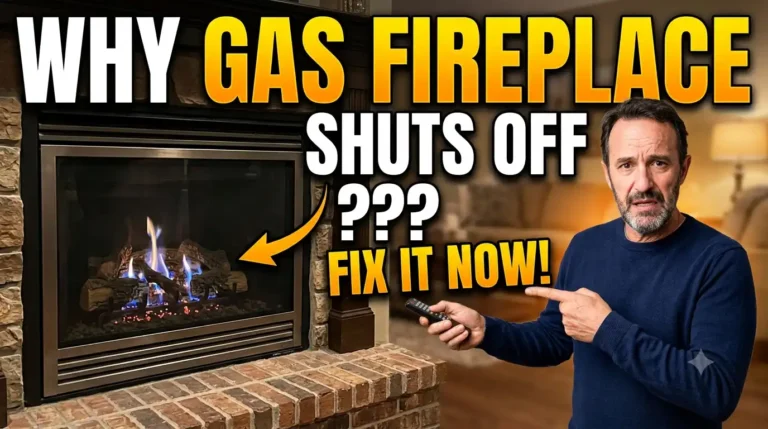
How to Childproof a Gas Fireplace: A Parent’s Step-by-Step Safety Guide
A gas fireplace looks calm and safe. There is no open flame to grab, no wood to pull out, and no sparks on the rug. That calm look is the trap. The glass front can reach 500 to 1,000 degrees Fahrenheit while the fire runs, according to the U.S. Consumer Product Safety Commission, and a small hand pressed against it can suffer a severe burn in seconds. This guide shows you how to childproof a gas fireplace in seven clear steps, from testing the glass heat to fitting a gate, locking the controls, and setting up a play-free zone.
You will finish with a hearth a toddler cannot reach, controls a preschooler cannot switch on, and a monthly check routine that keeps the setup working as your child grows. Most of the work takes about two hours, and the tools are basic. Read the safety note below before you touch anything, then work through the steps in order.
Heads Up: Read This Safety Note First
Gas fireplaces carry two risks that childproofing alone does not fix: burns from hot glass and carbon monoxide (CO) from combustion. CO is colorless and odorless, so install CO alarms on every level of your home and near sleeping areas, test them monthly, and replace them as the maker directs. Learn more in our guide to whether gas fireplaces produce carbon monoxide.
If you smell gas (a rotten-egg odor), do not touch switches, flames, or appliances. Leave the home at once with everyone, including pets, and call your gas utility emergency line or 911 from outside. Never try to find or fix a leak, open a gas line, or relight anything after a strong gas smell. That work belongs to the gas utility or a licensed gas fitter. If you want the warning signs spelled out, see why a gas fireplace smells like gas.
Never open gas lines, adjust gas valves beyond the normal user controls in your appliance manual, bypass safety devices, or block vents. Gas-line work, venting changes, and repairs beyond basic cleaning go to a licensed gas professional. Pets, above all birds, react to CO and combustion fumes sooner than people do, so a working CO alarm protects the whole household.
Total Time
About 2 hours
Active Time
45 to 60 minutes
Difficulty
Beginner
What You Need
- Multi-panel safety gate or fireplace fence
- Mesh safety screen or retrofit barrier made for your model
- Switch plate cover or control lock
- Infrared thermometer
- Measuring tape
- Hearth guard or corner protectors
- Remote control lockbox or a high shelf
- Painter’s tape or floor markers
- Working CO alarm on every level
- Screwdriver and wall anchors (if wall-mounting)
Check your fireplace manual before buying a barrier or screen. Some makers list approved parts by model number, and a part made for your unit will fit without gaps.
At a Glance: The 7 Steps
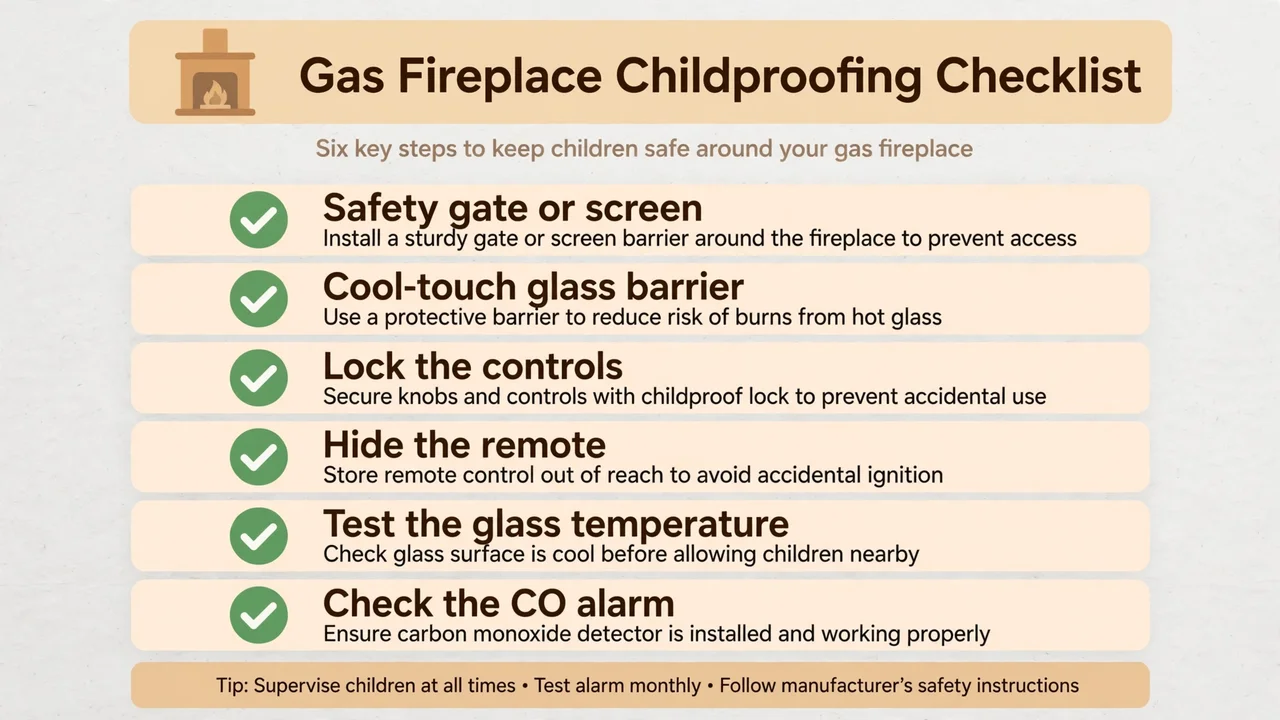
- Test how hot the glass and trim get
- Fit a safety gate around the hearth
- Check the built-in safety screen and add one if yours is missing
- Lock the fireplace controls and hide the remote
- Pad the hearth corners and edges
- Clear a play-free zone around the fireplace
- Test the whole setup and recheck it every month
How to Childproof a Gas Fireplace in 7 Steps
Test how hot the glass and trim get
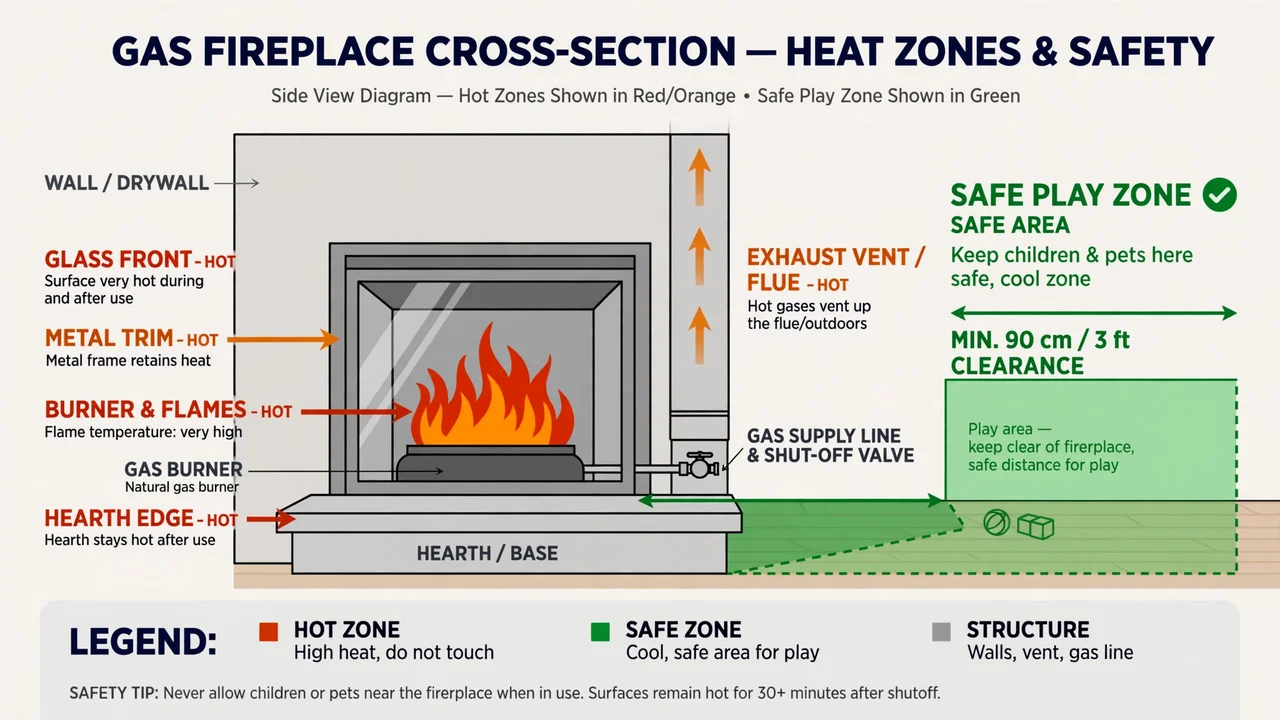
Run the fireplace for 30 minutes, then point an infrared thermometer at the glass, the metal trim, and the hearth edge. The U.S. Consumer Product Safety Commission warns that gas fireplace glass can reach 500 to 1,000 degrees Fahrenheit, and the metal frame gets hot too.
A thermometer reading tells you exactly which parts need a barrier and which parts need a gate. Nationwide Children’s Hospital notes that the glass can stay hot for an hour or two after the fire is off, so repeat the test 60 minutes after shutdown and note that reading as well.
Heads Up: Glass that looks clear and calm can still burn. Keep children away from the fireplace while it runs and for at least an hour after you switch it off, even when the flames are gone and the room feels cool.
Fit a safety gate around the hearth
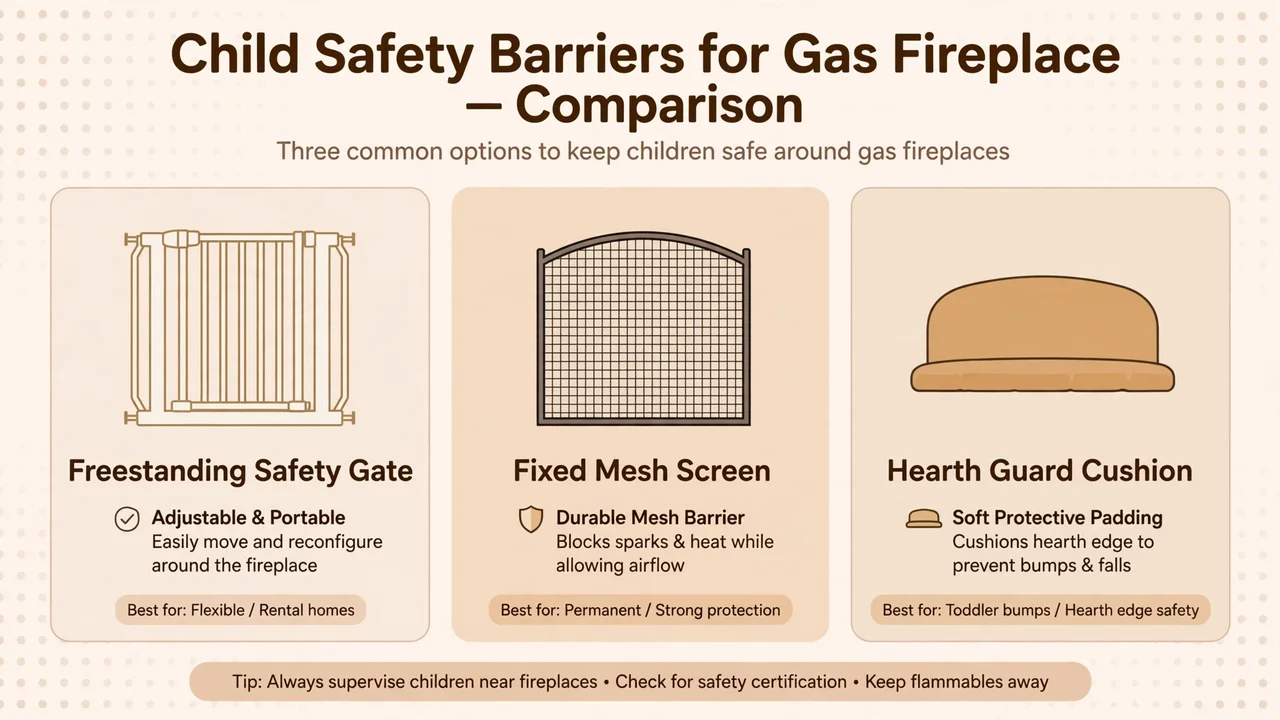
A freestanding multi-panel fireplace fence is the strongest single barrier in this guide. Measure the hearth width, add at least 3 feet of clear space on each side for the gate to stand clear of the heat, and buy a gate that spans the full width. Set it up, lock each joint, and pull hard on every panel.
Wall-mounted gates hold firmer in homes with climbers and work well when the hearth has a flat wall on each side. Freestanding gates suit renters and odd-shaped hearths because they need no holes in the wall.
Pro Tip: Mark the gate footprint on the floor with painter’s tape before you buy. Walk around it for a day and see whether the family trips over it or the dog knocks it sideways. A taped outline costs nothing and saves a return trip to the store.
Check the built-in safety screen and add one if yours is missing
Look at the glass front. If a fine mesh screen sits in front of the glass, your unit has its factory barrier. Since January 1, 2015, new vented gas fireplaces have shipped with a protective barrier. Check that the screen is firmly clipped in place.
Older fireplaces often have bare glass. Order a retrofit barrier made for your exact model from the maker or an authorized parts dealer, and follow the fitting steps in the manual. Never run the fireplace with the screen removed, and never swap in a generic screen that was not made for your unit.
Lock the fireplace controls and hide the remote
Children learn fast, and a wall switch at knee height is a toy they will find. Fit a switch plate cover over the fireplace wall switch, and use the control lockout if the manual describes one. Take the batteries out of the remote and store it in a lockbox or on a high shelf.
Check the pilot controls and any manual override knob on the unit itself. If the manual shows a child lock or a keyed control, use it every time the fireplace is off for the day. A fireplace a child cannot switch on cannot burn a child.
Pad the hearth corners and edges
Stone and tile hearths have sharp corners at toddler head height. Press a hearth guard or corner protectors onto every exposed edge, and run your palm along each one to feel for gaps where the padding lifts. A guard that peels off in a week teaches you to stop checking.
Choose padding with strong adhesive or straps made for hearths, and check the maker’s heat rating before you buy. Cheap foam meant for a coffee table can soften near a hot hearth, so pick a guard rated for fireplace use. Replace any pad that cracks, flattens, or loses its grip.
Clear a play-free zone around the fireplace
Move toys, books, and climbing furniture at least 3 feet back from the gate, and keep it clear every day. A toy left against the gate becomes a step, and a small chair becomes a ladder. Clear that strip each night.
Holiday decorating needs the same rule. Stockings, garlands, and gift piles near the hearth pull children toward the heat, so hang decor above the mantel and keep the floor clear. Our gas fireplace Christmas safety guide covers which decorations stay safe around a running fireplace. Teach the rule in plain words: hot, no touch, stay back.
Test the whole setup and recheck it every month
Walk the full setup as a curious toddler would. Push the gate, tug the screen, and press the switch cover. Then press the test button on every CO alarm and listen for the sound. A gate that holds, a screen that stays put, and working alarms mean the system works as a whole.
Repeat this check monthly, and again whenever a child hits a new milestone. A setup that worked at nine months can fail at fourteen months. Fold the check into your annual gas fireplace maintenance checklist and our guide to how to clean a gas fireplace.
Pro Tip: Pair the monthly check with the CO alarm test, and write both dates on a card taped inside a kitchen cabinet. One shared reminder means neither job slips, and the card shows a babysitter or grandparent exactly when the last check happened.
Before and After: What Changes
Before
- Bare glass within reach of small hands
- Remote on the coffee table, switch at knee height
- Toys piled against the hearth
- Sharp stone corners at head height
- CO alarm never tested
After
- Gated hearth with a fitted mesh screen
- Locked controls and a remote out of reach
- Clear 3-foot play-free zone
- Padded corners on every exposed edge
- CO alarms tested every month
Troubleshooting: If This Happens, Try This
| If This Happens | Try This |
|---|---|
| The gate wobbles or slides on the floor | Add rubber feet, level the panels, or switch to a wall-mounted gate with brackets. |
| Your child climbs over the gate | Fit a taller gate, move furniture away from it, and remove anything that works as a foothold. |
| Small hands reach through gaps in the screen | Fit a retrofit barrier made for your model and check that no gap lets a small hand pass. |
| The remote keeps ending up in small hands | Store it in a lockbox, take the batteries out when the fireplace is off, and keep it on a high shelf. |
| The CO alarm chirps or will not test | Change the battery, check the expiry date, and replace the alarm if it still fails. If the alarm sounds for real, leave the home and call 911 from outside. |
| The hearth guard keeps peeling off | Clean the stone first, use a guard rated for fireplace heat, and replace pads that have cracked or flattened. |
Frequently Asked Questions
At what age can I stop childproofing the gas fireplace?
There is no fixed age. Keep the gate and screen in place until your child follows the stay-back rule without reminders, which for most children is school age. Remove barriers in stages, and keep supervising whenever the fireplace runs.
Can I use a regular baby gate for a gas fireplace?
Use a gate or fence made for fireplaces, not a standard plastic baby gate. Plastic can warp or melt near heat, and narrow gates leave the sides of the hearth open. Check your fireplace manual for the clearance the maker requires.
Do I need a screen if my fireplace already has glass?
Yes. The glass itself is the burn risk, and a mesh screen keeps small hands off it. Fireplaces built since 2015 ship with a barrier, while older units need a retrofit barrier made for the model.
How far should kids stay from a gas fireplace?
Keep a clear zone of at least 3 feet around the hearth, and let the gate enforce it. The glass also stays hot for an hour or more after the fire is off, so keep children back during that cool-down time too.
Is it safe to leave a gas fireplace on with a baby in the room?
Never leave a baby or small child alone in a room with a lit gas fireplace. Stay in the room, keep the gate closed, and switch the fireplace off when you leave the room or go to sleep. Learn more about safe indoor use in our guide to whether gas fireplaces are safe to use indoors.
Quick Reference Card
What You Need
Safety gate or fireplace fence, mesh screen or retrofit barrier, switch cover or control lock, hearth guard, infrared thermometer, measuring tape, remote lockbox, working CO alarms.
Steps
- Test glass, trim, and hearth heat with a thermometer.
- Fit a safety gate around the hearth.
- Check the built-in screen, add a retrofit barrier if missing.
- Lock the controls and hide the remote.
- Pad the hearth corners and edges.
- Clear a 3-foot play-free zone.
- Test the setup and recheck it every month.
Gas smell? Leave at once, call the gas utility or 911 from outside. Test CO alarms monthly.
You have done the hard part. The glass is guarded, the controls are locked, the hearth is padded, and the play zone is clear. Learning how to childproof a gas fireplace takes one afternoon, and it buys you seasons of relaxed evenings by the fire.
Keep the monthly check on your calendar, and revisit the setup each time your child learns a new skill. As a next step, run through the annual gas fireplace maintenance checklist so the fireplace itself stays as safe as the room around it.