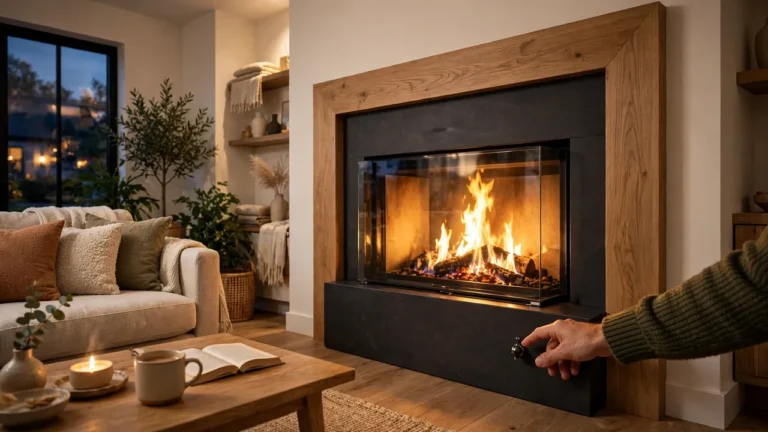
Should You Leave the Pilot Light On in a Gas Fireplace? What to Do in Every Season
Gas Safety: Read This First
Gas fireplaces carry carbon monoxide (CO) risks. CO is colorless and odorless, so install CO alarms on every level of your home and near sleeping areas, test them monthly, and replace them as the maker directs. CO alarms protect the whole household, and pets, especially birds, react to CO and combustion fumes sooner than people do.
If you smell gas (a rotten egg odor), do not touch switches, flames, or appliances. Leave the home at once with people and pets, then call your gas utility emergency line or 911 from outside. Never try to find or fix a gas leak, open a gas line, or relight a fireplace after a strong gas smell. That work belongs to the gas utility or a licensed gas fitter.
Turn the pilot light on and off only with the normal user controls in your manual. Gas line work, installation, venting changes, and repairs go to a licensed gas professional. Never bypass a safety device, block a vent, or disable a CO alarm.
Should you leave the pilot light on in a gas fireplace? The short answer is that it depends on the season, how often you use the fireplace, and which type of ignition your model has. A pilot light left on through winter can be a sensible choice for a fireplace you use every week. The same flame left on through a long, warm summer burns gas for months while giving you nothing back.
This guide walks through how a pilot light works, the two main ignition types, and a plain decision framework you can apply to your own home. You will also find a short action sequence for turning the pilot off for summer, a seasonal guide, and answers to the questions owners ask most. No step here asks you to open a gas line or work past the controls in your manual.
Time to Decide
About 10 minutes
Difficulty
Beginner
What You Need
Your manual, a flashlight
Key Takeaways
- A standing pilot burns gas around the clock. An intermittent pilot lights only when you call for heat, so it uses no pilot gas while idle.
- Leave the pilot on during the heating season if you use the fireplace often. Turn it off for the warm months if you will not use it for weeks.
- The exact gas use of a standing pilot varies by model and by local gas rates, so check your manual and your gas bill rather than trusting a single number.
- A pilot that will not stay lit, burns yellow, or goes out with a gas smell is a warning sign. Turn the fireplace off and call a licensed technician.
- Turning the pilot off uses only the normal controls in your manual. Gas line work and repairs belong to a licensed gas professional.
What a Pilot Light Does in a Gas Fireplace
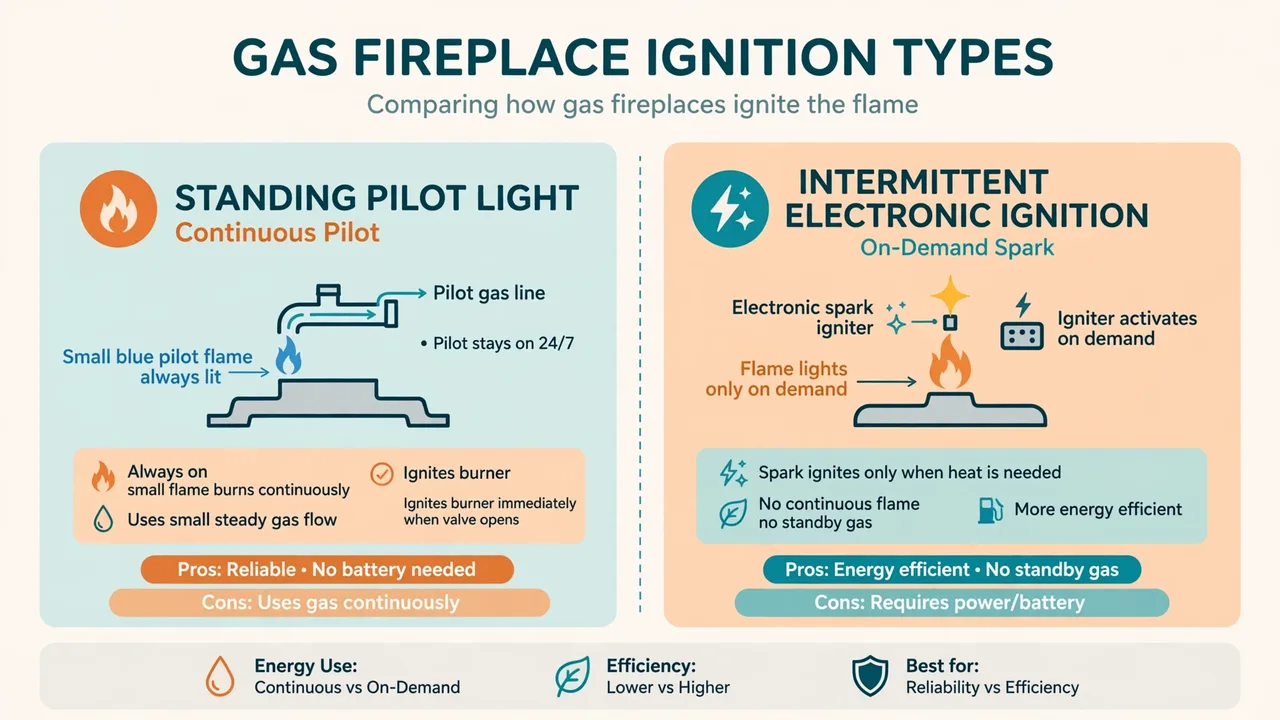
A pilot light is a small flame inside your gas fireplace. Its one job is to light the main burner when you turn the fireplace on. On a standing pilot model, that small flame burns all the time, day and night, whether the main burner is running or not. On an intermittent pilot model, the pilot lights only when you call for heat, then shuts down again when the fireplace turns off.
The pilot also plays a safety role. A standing pilot heats a sensor called a thermocouple, or a thermopile on larger models. While the flame burns, the sensor holds the gas valve open. If the pilot flame goes out, the sensor cools and the valve closes, which stops gas from flowing to the burner. That shutoff is one reason you should never bypass or tamper with the pilot safety parts.
Knowing which type you own changes the answer to the main question. If your fireplace has electronic ignition, there is no standing pilot to worry about, and the leave it on or turn it off question does not apply. Check your manual or look for the control knob: standing pilot models have a pilot position on the gas control valve, while intermittent models have an electronic ignition module and often a wall switch or remote only. If you are unsure which type you have, the model plate inside the access panel or the manual will name it.
Standing Pilot vs Intermittent Pilot: How They Differ
The two ignition types look similar from the couch, but they behave very differently when the fireplace sits idle. The table below lays out the practical differences that drive the leave it on or turn it off decision.
| Feature | Standing Pilot | Intermittent Pilot (IPI) |
|---|---|---|
| Pilot flame | Burns all the time | Lights only when heat is called for |
| Gas use while idle | Small, steady gas use around the clock | No pilot gas use while idle |
| Needs electricity | No, the pilot works without power | Yes, the ignition module needs power or a battery |
| Heat in a power cut | Often still works, since the pilot is gas fed | May not light without power, unless it has battery backup |
| Warm season choice | Turn it off to stop idle gas use | Nothing to turn off, it already rests |
| Common in | Older and mid age models | Newer models |
The power cut row matters more than most owners expect. A standing pilot fireplace can often keep heating during an outage, which is a real comfort benefit in cold regions. If you live where winter storms cut power, that benefit may be worth the idle gas use during heating season. Learn more about whether a gas fireplace can run without electricity before you weigh that trade off.
The Short Answer: Should You Leave the Pilot Light On?
Leave the pilot on while you are using the fireplace often, and turn it off when you will not use it for weeks. That single rule covers most homes. During the heating season, a standing pilot keeps the fireplace ready, helps prevent moisture and dust from settling in the burner area, and keeps heat available during a power cut. During the warm months, the same flame burns gas for no benefit.
The exact break point depends on your climate and your habits. If you light the fireplace three or four evenings a week through winter, leave the pilot on until the cold weather ends. If you light it once a month or less, turning the pilot off between uses saves gas with little downside. If your model uses intermittent ignition, the question answers itself: the pilot already shuts down between uses.
When Leaving the Pilot On Makes Sense
There are clear cases where keeping the pilot lit is the right call. Match your own pattern to the list below, and if two or more points fit, leave it on for the season.
- You use the fireplace several times a week. Relighting a pilot every few days is a chore, and the gas saved is small over such short gaps.
- It is the middle of the heating season. Cold snaps can arrive fast, and a lit pilot means heat at the touch of a switch.
- Power cuts are common where you live. A standing pilot model can often still heat during an outage, which matters most on the coldest nights.
- Your home runs damp in winter. A small, steady flame adds a little warmth to the firebox, which can help keep moisture and musty smells down inside the unit.
- Your manual advises keeping it lit. Some makers state a preference for their model. The manual for your exact model outranks any general guide, including this one.
When Turning the Pilot Off Makes Sense
There are clear cases for switching the pilot off too.
- Warm weather has arrived and you will not use the fireplace for weeks. A pilot left on all summer burns gas every hour of every day for months.
- You are going on a long trip. An empty house needs no pilot flame. Turn it off before you leave and relight it when you return.
- You use the fireplace rarely, even in winter. A monthly fire does not need a pilot burning the other 29 days.
- You are closing up a seasonal home. Shutting the pilot down is part of closing the house, along with the other seasonal checks in your manual.
- You want to cut idle gas use. Turning the pilot off is the one change that removes its gas use completely.
One caution: turning the pilot off does not turn off the gas supply to the house, and it does not replace an annual service. Keep up with cleaning your gas fireplace and having it checked on the schedule your manual gives, whether the pilot is on or off.
Seasonal Guide: What to Do With the Pilot All Year
Most owners only need to touch the pilot twice a year: off in spring, on in fall. The table below gives a starting point for each part of the year. Adjust it to your climate, since a mild region may have a short heating season and a cold region may have a long one.
| Season | How Often You Use It | Pilot Setting | Why |
|---|---|---|---|
| Deep winter | Several times a week | On | Ready heat, plus warmth in a power cut |
| Shoulder season | Once a week or less | On or off, your call | Short gaps, so the saving is small either way |
| Warm months | Not at all | Off | Stops months of idle gas use |
| Long trip or empty house | Not at all | Off | No one is home to use the heat |
| Any season | Rarely | Off between uses | The pilot would burn far more days than the fireplace runs |
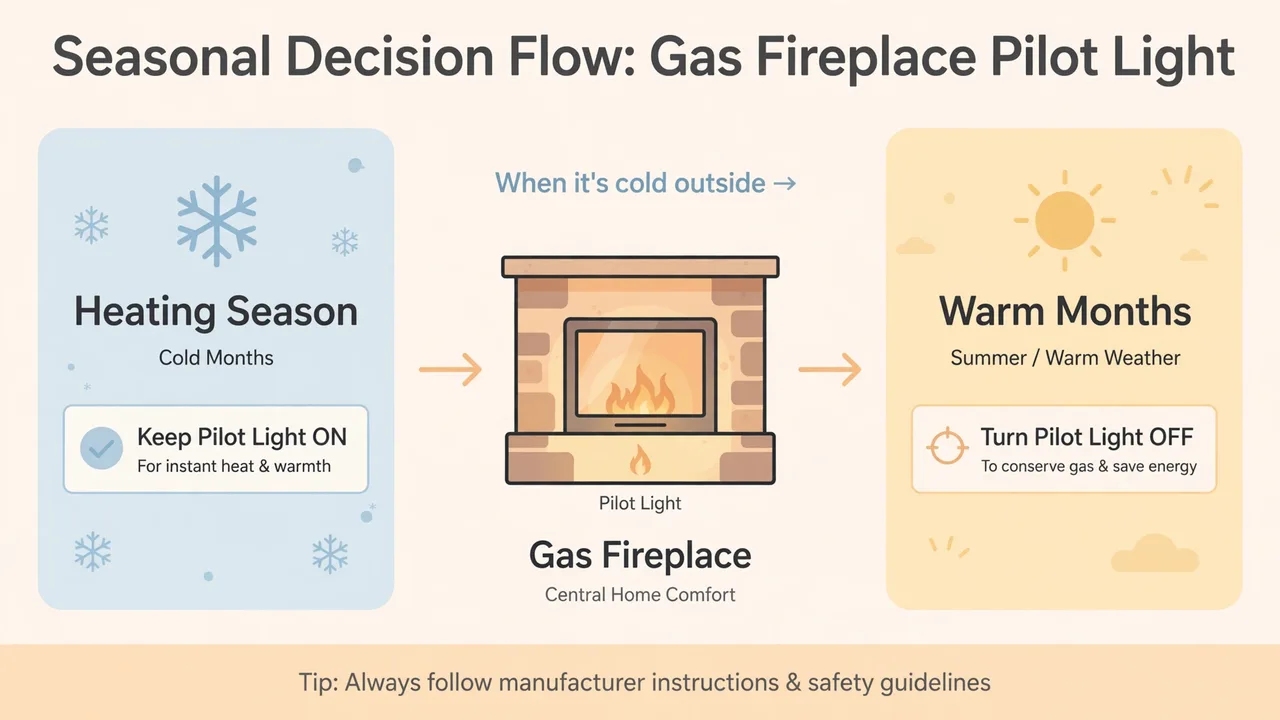
If your winters are mild and you light the fireplace only on a handful of cold evenings, you can leave the pilot off for most of the year and light it only for those evenings. If your winters are long and cold, leave it on from the first cold snap until spring. Your own use pattern is a better guide than any fixed date on a calendar.
What Leaving the Pilot On Costs You
A standing pilot burns a small amount of gas without pause, so the cost of leaving it on is the gas it uses over the months it stays lit. The exact figure varies by model, because pilot flames differ in size, and by your local gas rate. No single number fits every fireplace, so be wary of any article that quotes one as a fact for all models.
Three things decide what you pay. The first is the pilot size, which your manual may list. The second is your gas rate, which appears on your gas bill. The third is how many months the pilot stays lit. A pilot left on for three warm months costs roughly a quarter of one left on all year, since the flame burns at the same rate the whole time. Turning it off for the warm months removes that use completely.
To see the effect in your own home, compare gas bills from months when the pilot was on against months when it was off, with the main burner unused in both. That comparison gives you a real number for your model and your rates, which beats any generic estimate. For the wider running costs of the fireplace, see how much it costs to run a gas fireplace.
Pro Tip: Check Your Bill, Not a Guess
Your gas bill is the honest measure of pilot use. Note the meter reading the day you turn the pilot off in spring, then again the day you relight it in fall. The gap between those readings, minus any other gas use in the house, shows what the pilot would have burned across the summer.
Turn the Pilot Off for Summer
The steps below turn off a standing pilot with the normal user controls in your manual. Read your manual first, since control layouts differ by model. If any step does not match what you see, stop and call a licensed gas professional.
Find the Gas Control Knob
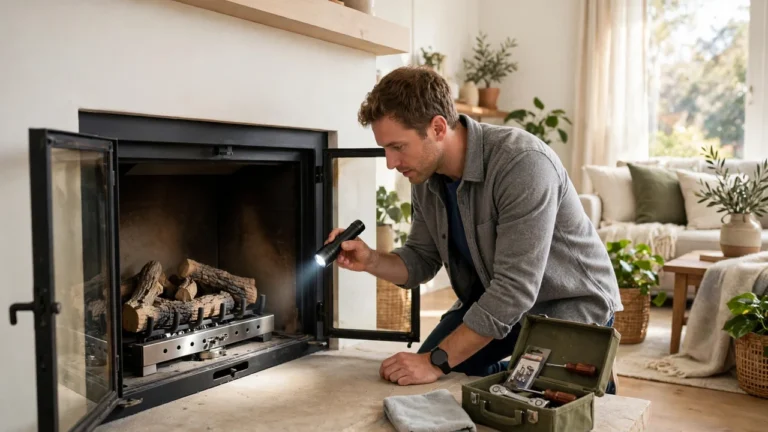
Open the lower access panel of the fireplace, or the panel your manual points to, and look for the gas control valve. The knob usually has positions marked Off, Pilot, and On. A flashlight helps here, since the valve sits low and the markings can be small. Note the current position before you touch anything, so you can put it back the same way in fall.
Turn the Knob to the Off Position
Turn the gas control knob to the Off position, following the direction your manual shows. On most models you press the knob in lightly, then turn it. The pilot flame should go out at once. Do not force the knob if it resists. A stuck valve is a job for a licensed gas professional, not a reason to push harder.
Confirm the Pilot Flame Is Out
Look into the firebox and confirm the small pilot flame is gone. Wait a few minutes, then check again to be sure it has not relit. A faint gas smell right after shutoff can come from the small amount of gas released as the flame dies, and it should clear fast with the room aired. A strong or lasting gas smell means something else is wrong, so leave the home with people and pets and call your gas utility emergency line or 911 from outside. If you are unsure whether a smell is a problem, treat it as one and leave.
Heads Up: A Pilot That Keeps Going Out Is a Warning
If the pilot goes out on its own, or will not stay lit when you relight it, do not keep trying. Turn the control to Off, air the room, and call a licensed gas professional. A pilot that will not stay lit can point to a worn thermocouple, a dirty pilot assembly, or a venting problem, and none of those are user fixes. Never bypass a safety device to keep a pilot burning. For more on gas fireplaces and carbon monoxide, see do gas fireplaces produce carbon monoxide.
Close the Access Panel
Put the access panel back in place and leave the room tidy. A closed panel keeps dust and pet hair out of the firebox over the summer, and it keeps small hands and paws away from the controls. This is also a good moment to book the annual service if it is due before fall, since technicians book up fast once cold weather arrives.
Note the Date for Fall Relighting
Write down the date you turned the pilot off and tape the note inside a kitchen cupboard or add it to your phone calendar. When the first cold evenings arrive, you will know exactly when the pilot went off and how long it rested. That note also helps a technician, since it tells them the pilot was shut down on purpose rather than failing on its own.
Relight the Pilot When Cold Weather Returns
Relighting follows the same controls in reverse, and your manual gives the exact sequence for your model. The short version is to turn the knob to Pilot, hold it in while you light the flame, keep holding it for the time your manual states so the thermocouple warms up, then turn it to On. Follow our full walkthrough on how to light a gas fireplace if you want the step by step version. If the pilot will not stay lit after two tries, stop and call a licensed gas professional.
Vented vs Ventless: Does the Pilot Answer Change?
The pilot decision is the same for vented and ventless models, but the safety notes differ. A vented fireplace sends combustion gases up a flue, while a ventless model releases combustion byproducts, including CO and water vapor, into the room. Ventless models are restricted or banned in some areas and in bedrooms, so check your local codes before you use one at all.
On a ventless model, the oxygen depletion sensor and the CO alarm do the safety work, so test both on the schedule your manual gives and never disable either one. A standing pilot left on in a ventless unit adds its own small amount of combustion byproducts to the room all summer, which is one more reason to turn it off in the warm months. Read the full comparison of vented vs ventless gas fireplaces if you are still deciding which type you own or want. Also check whether a gas fireplace needs a chimney, since venting and pilot choice are linked.
If the Pilot Will Not Stay Lit
A pilot that goes out or refuses to light is the most common pilot problem owners face. Work through the table below, and remember that anything past basic cleaning and the normal controls in your manual belongs to a licensed gas professional.
| If This Happens | Try This |
|---|---|
| Pilot lights, then goes out when you release the knob | Hold the knob in longer so the thermocouple warms fully. If it still drops out, call a licensed gas professional. The sensor may be worn. |
| Pilot flame looks yellow or lazy instead of blue | Turn the fireplace off and call a licensed gas professional. A yellow flame can point to poor combustion or a dirty pilot. |
| Pilot goes out often on windy days | Check for drafts near the fireplace and ask a technician to check the vent and the pilot assembly. |
| You smell gas after the pilot goes out | Leave at once with people and pets. Call your gas utility emergency line or 911 from outside. Do not relight anything. |
| Pilot will not light at all after a long rest | Check the steps in your manual once more, then call a licensed gas professional. Dust in the pilot tube is a common cause. |
For a fuller sense of how long your unit should serve you, see how long gas fireplaces last. A pilot that keeps failing on a unit near the end of its life may be one more sign that a service visit, or a replacement, is due. If you are weighing a new unit, our guide to choosing a gas fireplace covers ignition types as one of the key choices.
Frequently Asked Questions
Should you leave the pilot light on in a gas fireplace all year?
No, not in most homes. Leave it on during the heating season while you use the fireplace often, and turn it off for the warm months when you will not use it for weeks. That pattern gives you ready heat in winter and stops idle gas use in summer.
Does a pilot light use a lot of gas?
A standing pilot uses a small amount of gas, but it burns around the clock, so the total adds up over months. The exact amount varies by model and by your local gas rate. An intermittent pilot uses no gas while idle, since it lights only when you call for heat.
Is it safe to turn off the pilot light in summer?
Yes, turning the pilot off with the normal controls in your manual is safe. Turn the gas control knob to Off, confirm the flame is out, and relight it in fall with the steps in your manual. If you smell gas at any point, leave the home with people and pets and call your gas utility emergency line or 911 from outside.
Can I relight the pilot light myself?
Yes, if your manual gives relighting steps for your model, you can follow them. Turn the knob to Pilot, hold it in while you light the flame, keep holding it for the time your manual states, then turn it to On. If the pilot will not stay lit after two tries, stop and call a licensed gas professional.
What should I do if the pilot light goes out on its own?
Turn the control to Off and air the room. If you smell gas, leave the home at once with people and pets and call your gas utility emergency line or 911 from outside. If there is no gas smell, a dirty pilot assembly or a worn thermocouple is a likely cause, and a licensed gas professional should check it.
Does a gas fireplace with electronic ignition have a pilot light?
It has an intermittent pilot, not a standing one. The pilot lights only when you call for heat, then shuts down again. That means there is no pilot to leave on or turn off, and no idle pilot gas use.
Will turning off the pilot light save money?
Yes, it removes the pilot gas use completely for the months it stays off. How much you save depends on your model and your gas rate, so compare your own gas bills to see the effect. The saving is largest across a long warm season.
Should I turn off the pilot light when I go on vacation?
Yes, if you will be away for a week or more, turn the pilot off before you leave. An empty house needs no pilot flame. Relight it when you return, following the steps in your manual.
Quick Reference: Pilot Light On or Off
The rule: On while you use the fireplace often. Off when you will not use it for weeks.
Turn it off:
- Find the gas control knob behind the access panel.
- Turn the knob to Off.
- Confirm the pilot flame is out.
- Close the access panel.
- Note the date, and relight in fall with the steps in your manual.
Leave it on: Heating season, frequent use, cold regions, or when power cuts are common.
Call a professional: Pilot will not stay lit, yellow flame, gas smell, or any repair past the normal user controls.
Conclusion
Should you leave the pilot light on in a gas fireplace? For most owners, the answer splits by season: on through the cold months while the fireplace earns its keep, off through the warm months while it rests. That simple rhythm saves gas, keeps heat ready when you need it, and asks nothing more of you than two short visits to the control knob each year.
Check your manual for the exact controls on your model, keep your CO alarms tested, and book the annual service before the cold returns. If you are ready to relight in fall, start with our guide on how to light a gas fireplace, and your fireplace will be warm and ready for the first cold evening.