What Is the White Film on Gas Fireplace Glass? Causes, Cleaning, and When to Worry
You light your gas fireplace on a cold evening, settle in, and notice the glass looks cloudy. A pale white film coats the inside of the glass, and the flames behind it look dull and washed out. What is the white film on gas fireplace glass? In most cases, it is a thin layer of mineral deposits left behind when water vapor from combustion dries on the glass, mixed at times with fine soot or sulfur residue from the gas itself.
This guide explains what causes the film, how to tell a harmless deposit from a warning sign, and how to clean the glass the safe way. By the end, your fireplace glass will be clear again, and you will know how often to clean it and when to call a licensed gas professional instead of cleaning it yourself.
Plan on about 30 to 45 minutes for the full cleaning, and most of that time is waiting for the glass to cool. The work itself is light, and you need only a few basic supplies.
⚠️ Safety First — Read Before You Touch the Fireplace
Gas fireplaces carry carbon monoxide (CO) risks. CO is colorless and odorless, so you cannot see or smell it. Install CO alarms on every level of your home and near sleeping areas, test them monthly, and replace them per the manufacturer instructions. CO alarms protect your whole household, and pets — especially birds — are more sensitive to CO and combustion fumes than people are.
If you smell gas (a rotten-egg odor): do not touch light switches, flames, or appliances. Leave your home at once, taking people and pets with you. Call your gas utility’s emergency line or 911 from outside the home.
Never try to find or fix a gas leak, open a gas line, or relight the fireplace after a strong gas smell. That work belongs to the gas utility or a licensed gas fitter.
Never open gas lines, adjust gas valves beyond the normal user controls in your appliance manual, bypass safety devices such as thermocouples or oxygen-depletion sensors, block vents, or disable CO alarms. Installation, venting changes, and repairs beyond basic cleaning go to a licensed gas professional.
Total Time
30–45 min
Active Time
15–20 min
Difficulty
Beginner
What You Need
- Fireplace glass cleaner (made for ceramic fireplace glass) — or a paste of baking soda and water as a backup
- Two soft, lint-free cloths (microfiber works well)
- A soft-bristle brush or old toothbrush
- Rubber gloves
- A bucket of warm water
- Paper towels for the final buff
- Your fireplace manual (for the glass removal steps on your model)
- A flashlight, to check the burner and glass edges
Avoid oven cleaner, abrasive pads, and ammonia-based glass cleaner. Those products can scratch ceramic glass or damage the gasket seal around the glass.
At a Glance — The 7 Steps
- Turn the fireplace off and let it cool
- Check the flame color and look for warning signs
- Open the glass panel the safe way
- Wipe away loose soot with a dry cloth
- Apply fireplace glass cleaner to the film
- Buff the glass until it shines
- Refit the glass and test the fire
What Causes the White Film?
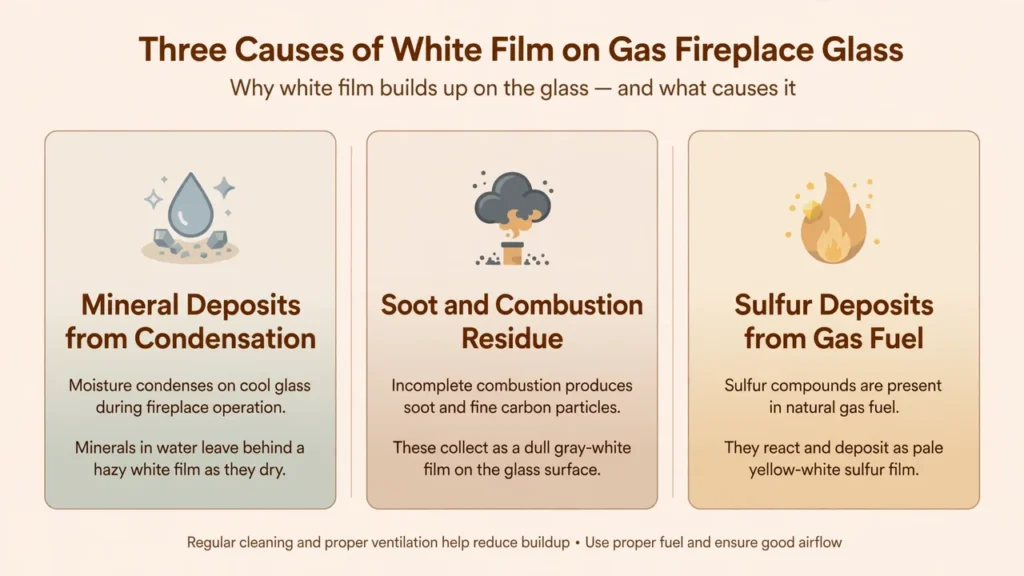
Burning gas makes water vapor. When that vapor meets the cooler surface of the glass, it condenses, and the tiny mineral traces in the moisture stay behind as a white haze once the water dries. New fireplaces show this film more often, because the glass and the burner are still curing during the first weeks of use.
Soot adds a second layer to the problem. A burner that runs with too little air, or logs placed in the wrong spot, can send fine black or gray soot onto the glass. Sulfur compounds in the gas can leave a pale yellow-white deposit too. Each cause looks a little different, and each one calls for a slightly different fix.
| What the Film Looks Like | Likely Cause | How Common | Fix |
|---|---|---|---|
| Milky white haze, even across the glass | Mineral deposits from condensation | Most common, especially in new units | Clean with fireplace glass cleaner; repeat after a few burns |
| Gray or black smudges, often near the top | Soot from poor combustion or misplaced logs | Common after log moves or vent blockage | Clean the glass, check log placement, book a service visit if soot returns fast |
| Pale yellow-white crust near the edges | Sulfur residue from the gas supply | Less common; varies by gas supply | Clean with fireplace glass cleaner; ask your gas supplier if it keeps coming back |
| White film that returns within a day or two | Burner or venting problem, not normal deposits | Uncommon | Stop using the fireplace and call a licensed gas professional |
The table above gives you a fast way to read your own glass. A milky, even haze points to minerals. Dark smudges point to soot. A film that comes back within a day or two of cleaning points to a burner or venting problem, and that is a job for a professional.
Turn the Fireplace Off and Let It Cool
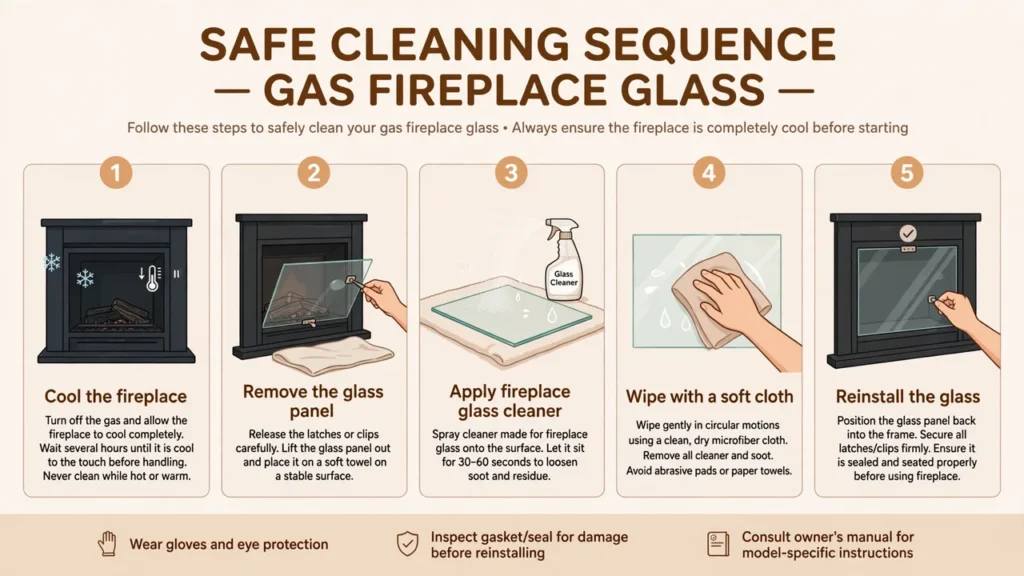
Switch the fireplace off at the wall switch or remote, then turn the gas control knob to off per your manual. Wait at least 45 minutes before you touch the glass. Ceramic glass holds heat far longer than it looks, and a burn from a warm panel is the most common injury in this job.
While you wait, gather your supplies on a towel near the fireplace. Check that your CO alarm shows a green light. If the alarm has sounded or shows an error, leave the house and call for help from outside — do not start cleaning.
Check the Flame Color and Look for Warning Signs
Think back to how the flames looked last time you burned it. Healthy gas flames burn mostly blue with small yellow tips. Yellow, orange, lazy flames that lift off the burner, or flames that touch the logs, point to a combustion problem that cleaning alone will not fix.
Look for soot on the logs, a smell of gas, or a pilot light that keeps going out. Any of these signs means stop and book a service visit. Read our guide to whether gas fireplaces produce carbon monoxide, and our annual gas fireplace maintenance checklist for what a technician checks each year.
Heads Up: A Film That Returns Fast Is a Warning
If the white film comes back within a day or two of a full cleaning, or the glass blackens after one burn, the burner may be starved of air or the vent may be blocked. Do not keep cleaning and relighting. Turn the fireplace off and call a licensed gas professional.
Open the Glass Panel the Safe Way
Find the glass removal steps in your fireplace manual before you touch any clips or latches. Most models use spring clips or latches along the top and bottom edges of the glass frame. Release them in the order the manual gives, and lift the glass out with both hands, keeping it upright.
Set the glass on a thick towel on the floor, inside face up — that is the side with the film. If the glass feels stuck, look for a hidden latch instead of pulling harder. Forcing the frame can crack ceramic glass or tear the gasket.
Wipe Away Loose Soot With a Dry Cloth
Take a dry, soft cloth and wipe the inside of the glass in long, straight strokes. This pass picks up loose soot and dust before any liquid touches the glass. Wet soot turns into a paste that smears, so the dry wipe matters more than it seems.
Use the soft-bristle brush on the corners and along the gasket edge, where soot collects in a thin line. Shake the cloth outside or over a trash can between passes so you are not dragging the same soot back across the glass.
Apply Fireplace Glass Cleaner to the Film
Squeeze a line of fireplace glass cleaner onto a clean cloth, not straight onto the glass. Rub it over the filmed area in small circles, pressing lightly. A pea-sized amount covers roughly a 6-inch square, so add more in small amounts rather than flooding the glass.
Let the cleaner sit 2 to 3 minutes on stubborn patches, so it can loosen the mineral crust. If you have no fireplace glass cleaner, a paste of baking soda and a few drops of water works as a backup — spread it thin, rub gently, and wipe it off fully.
Pro Tip: Clean the Outside Too
Fingerprints and dust on the outside of the glass add to the cloudy look. Wipe the outer face with a damp microfiber cloth while the panel is out, and the difference after refitting will be plain to see.
Buff the Glass Until It Shines
Dampen your second cloth with warm water and wipe the glass clean, rinsing often. Then buff the glass with a dry paper towel in long strokes until no streaks remain. Hold the glass up to a light and look across it at a low angle — that view shows haze a straight-on look hides.
If a faint haze stays, repeat the cleaner step once more. A film baked on over a full season may need 3 rounds to lift. If the haze still will not move, the glass may be etched, and a technician can say whether the panel needs replacing.
Refit the Glass and Test the Fire
Put the glass back the same way it came out, and fasten every clip or latch. A loose panel can let combustion gases leak into the room, so check each latch twice. The gasket should sit flat all the way around, with no gaps or folds.
Light the fireplace and watch it for 10 minutes. Flames should burn mostly blue with small yellow tips, and the glass should stay clear. If you smell gas at any point, turn the fireplace off, leave the house with people and pets, and call your gas utility’s emergency line or 911 from outside.
How Often Should You Clean Gas Fireplace Glass?
How often you clean depends on how much you use the fireplace. A unit that runs every evening in winter needs cleaning more often than one that runs a few times a month. The table below gives a plain starting point, and you can adjust from there based on what your own glass shows.
| How Often You Use the Fireplace | Clean the Glass | Also Check |
|---|---|---|
| Daily in winter | Every 2–3 weeks | Burner ports and log placement |
| A few times a week | Once a month | Pilot light and flame color |
| A few times a month | At the start of each season | CO alarm batteries and vent cap |
| New fireplace, first month | After the first 3–5 burns, then monthly | Curing film is normal — it fades with use |
New fireplaces film up fastest, because the glass and burner coatings are still curing. That early film is normal and fades as the unit settles in. Clean after the first few burns, and the schedule above will keep the glass clear after that. For the full cleaning routine, see our guide on how to clean a gas fireplace.
When to Call a Licensed Gas Professional
Cleaning handles mineral film and light soot. It does not fix burner, venting, or gas supply problems, and those problems can be dangerous. Call a licensed gas professional if you notice any of the signs below, and do not keep running the fireplace while you wait for the visit.
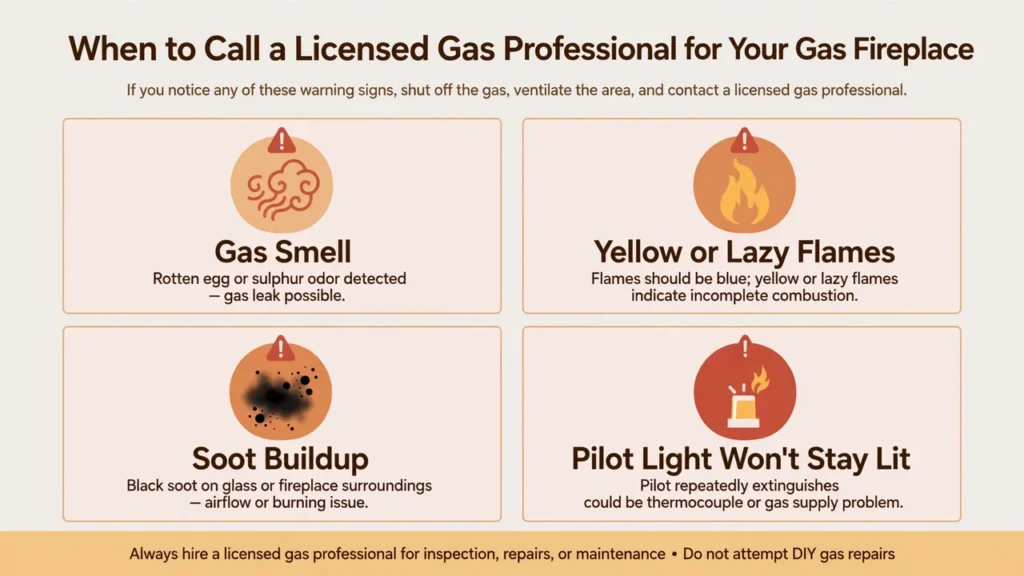
- Gas smell — leave the house at once and call your gas utility or 911 from outside.
- Yellow, lazy, or lifting flames that do not settle into a steady blue burn.
- Heavy soot that returns after one or two burns, or black marks on the logs and firebox.
- A pilot light that will not stay lit, or a burner that will not light at all.
- Headaches, nausea, or dizziness near the fireplace — leave the house and call emergency services from outside.
- A CO alarm sounding — leave the house and call emergency services from outside.
An annual service visit covers burner cleaning, vent checks, and safety device tests that sit outside a homeowner cleaning. If your fireplace is more than a year past its last service, book one — see why a gas fireplace smells like gas for the warning signs that need urgent attention, and vented vs. ventless gas fireplaces if you are unsure which type you own.
Troubleshooting: If This Happens, Try This
| If This Happens | Try This |
|---|---|
| White haze stays after cleaning | Repeat the cleaner step once more, then check for glass etching with a technician |
| Film returns within a day or two | Stop using the fireplace and book a service visit — a burner or venting fault is likely |
| Black soot smears when wiped | Wipe dry first, then clean; check log placement and book service if soot returns fast |
| Glass panel will not come out | Re-read the manual for hidden latches; never force the frame |
| Streaks after buffing | Buff again with a dry paper towel; rinse the cloth first so no cleaner stays on the glass |
Frequently Asked Questions
Is the white film on gas fireplace glass dangerous?
The film itself is usually harmless mineral deposit or light soot. The danger is what the film can hide: a burner or venting problem. If the film returns within a day or two, or comes with yellow flames, soot, or a gas smell, turn the fireplace off and call a licensed gas professional.
Can I use regular glass cleaner on gas fireplace glass?
No. Use a cleaner made for ceramic fireplace glass. Regular glass cleaner, ammonia-based cleaner, and oven cleaner can damage the glass or the gasket seal. A baking soda and water paste works as a backup if you have no fireplace glass cleaner.
Why does my new gas fireplace get white film so fast?
New fireplaces film up fast because the glass and burner coatings are still curing during the first weeks of use. The film is normal at this stage and fades with use. Clean the glass after the first 3 to 5 burns, then follow a monthly schedule.
Can I clean the glass while the fireplace is warm?
No. Wait at least 45 minutes after turning the fireplace off before you touch the glass. Ceramic glass holds heat far longer than it looks like it does, and cleaner on hot glass can bake on and make the haze worse.
Does white film mean my gas fireplace needs service?
Not on its own. A milky film that builds slowly over weeks is normal. A film that returns within a day or two, heavy soot, yellow flames, or a pilot light that will not stay lit all point to a service need — book a visit with a licensed gas professional.
Quick Reference Card — White Film on Gas Fireplace Glass
You need: fireplace glass cleaner, two soft cloths, soft-bristle brush, rubber gloves, warm water, paper towels, your manual.
- Turn off and cool for 45 minutes.
- Check flame color and warning signs.
- Open the glass panel per your manual.
- Wipe loose soot off dry.
- Apply fireplace glass cleaner; wait 2–3 minutes.
- Buff dry until no streaks remain.
- Refit the glass, fasten every latch, test for 10 minutes.
Clean again: every 2–3 weeks with daily use; monthly with lighter use; after the first 3–5 burns on a new unit.
Call a professional: gas smell, yellow flames, fast-returning film, heavy soot, or a pilot light that will not stay lit.
Your glass is clear, your flames are back in view, and you know what the film was. What is the white film on gas fireplace glass? Most of the time, it is mineral deposits from condensation — a normal part of owning a gas fireplace, and a quick clean puts it right.
Keep the monthly cleaning habit, watch the flame color each time you light up, and book your annual service visit. If you want to learn more about your unit, read our guide on how long gas fireplaces last or whether to leave the pilot light on.