How to Clean a Gas Fireplace: A Complete Step-by-Step Guide
A cloudy glass door, dusty logs, and a weak flame are the usual signs that your gas fireplace needs attention. Learning how to clean a gas fireplace takes about an hour, and most of the work is wiping, brushing, and vacuuming. You do not need special tools or training for the basic clean. You need a cool fireplace, the right supplies, and a clear order of steps.
This guide walks you through the full job from shutoff to the final flame check. It covers the glass, the ceramic logs, the burner, the vents, and the outside trim. It also shows you how often each part needs cleaning, which cleaners are safe, and which jobs belong to a licensed gas technician. Follow the steps in order and your fireplace will burn brighter, run better, and look like new again.
⚠️ Read This First: Gas Safety
Gas fireplaces burn fuel inside your home, and that means carbon monoxide (CO) is a real risk. CO is colorless and odorless, so you cannot see or smell it. Make sure working CO alarms are installed on every level of your home and near sleeping areas, and test them every month. Replace alarms when the maker says to.
If you smell gas (a rotten-egg odor): do not touch light switches, flames, or appliances. Leave the home right away with everyone in the house, including pets. Call your gas utility emergency line or 911 from outside. Never try to find or fix a gas leak yourself, and never relight the fireplace after a strong gas smell. That work is for the gas utility or a licensed gas fitter only.
This guide covers cleaning only. Never open a gas line, adjust parts beyond the normal user controls in your manual, bypass a safety device, or block a vent. Gas-line work, repairs, and venting changes belong to a licensed gas professional. Pets, especially birds, are more sensitive to CO and fumes than people, so keep them out of the room while you clean and until the fireplace is running cleanly again.
Total Time
60–75 min
Active Time
45 min
Difficulty
Beginner
What You Need
- 3 soft microfiber cloths
- Spray bottle
- White vinegar
- Warm water
- Mild dish soap (a few drops)
- Soft-bristle brush (old toothbrush works)
- Vacuum with a brush attachment
- Rubber gloves
- Old towel for the hearth
- Flashlight
- Your fireplace owner’s manual
- Small bowl
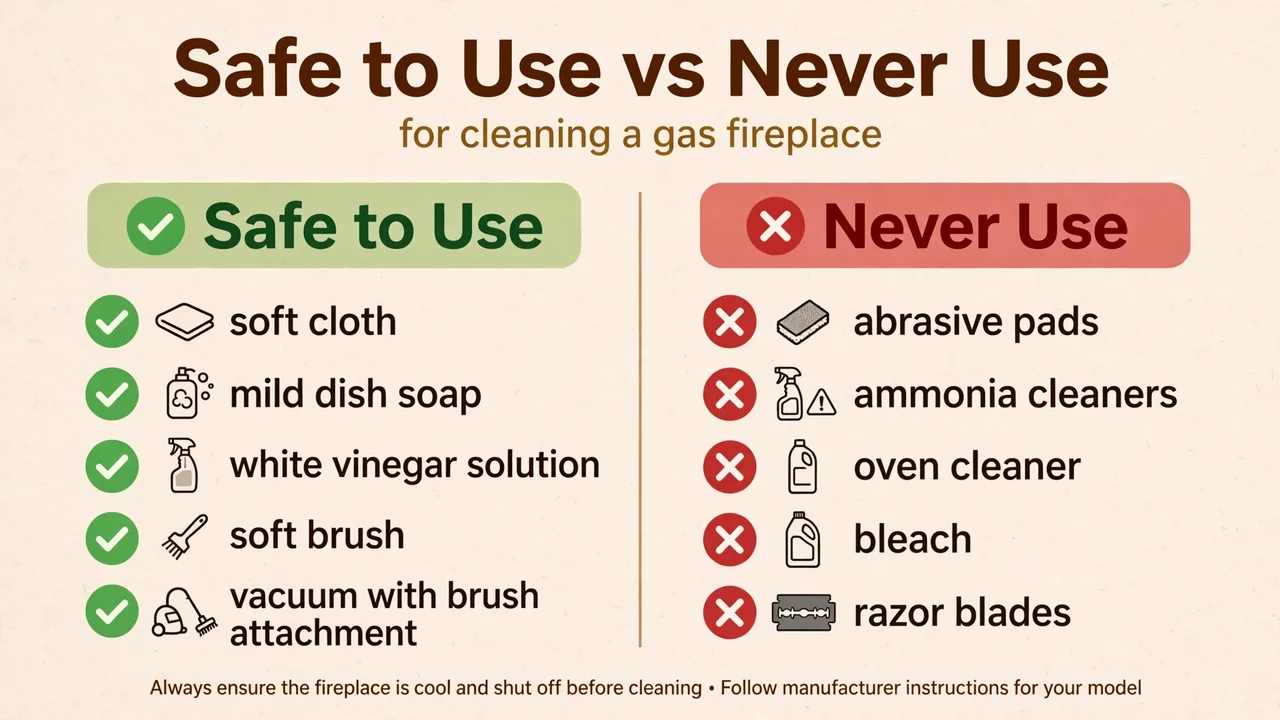
No glass cleaner with ammonia, no abrasive pads, and no oven cleaner. Those damage the glass coating and the log finish.
How Often Should You Clean Each Part?
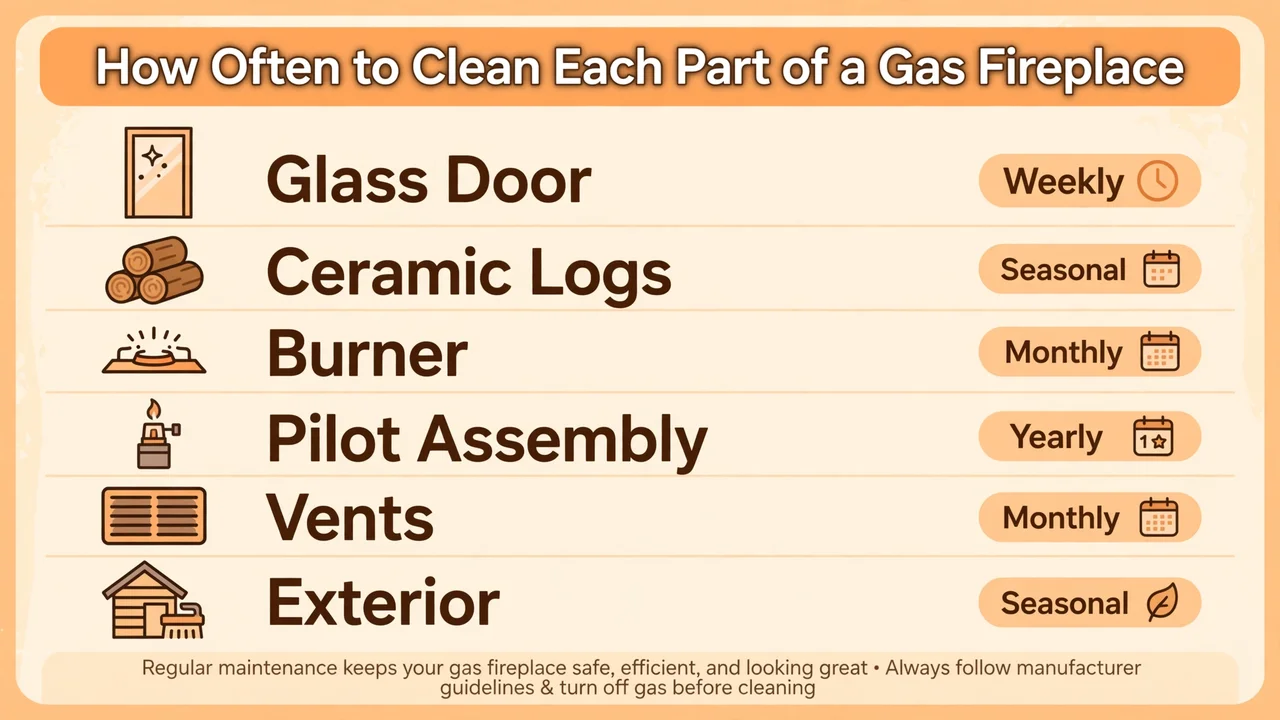
Not every part needs the same attention. The glass clouds up fastest because combustion leaves a white film on the inside. The logs and burner collect dust slowly over a season. The vents need a quick check each month while the fireplace is in use.
A fireplace used four evenings a week through a five-month heating season runs about 80 evenings. Washing the glass every two weeks of use means about 10 washes per season. That sounds like a lot, but each wash takes around 10 minutes once you know the steps.
| Part | How Often | What to Do | Time |
|---|---|---|---|
| Glass door | Every 1–2 months of use | Wipe haze; wash both sides | 10 min |
| Ceramic logs | Once a season | Brush off dust; check placement | 10 min |
| Burner ports | Once a season | Soft brush and vacuum; never poke with metal | 10 min |
| Pilot assembly | Once a year | Dust gently; call a pro if the flame is yellow or lazy | 5 min |
| Vents and air intake | Monthly during use | Vacuum; clear dust and blockages | 5 min |
| Exterior and trim | Monthly | Damp cloth wipe-down | 5 min |
| Full service by a pro | Once a year | Licensed technician inspection and deep clean | 60–90 min |
At a Glance: The 8 Steps
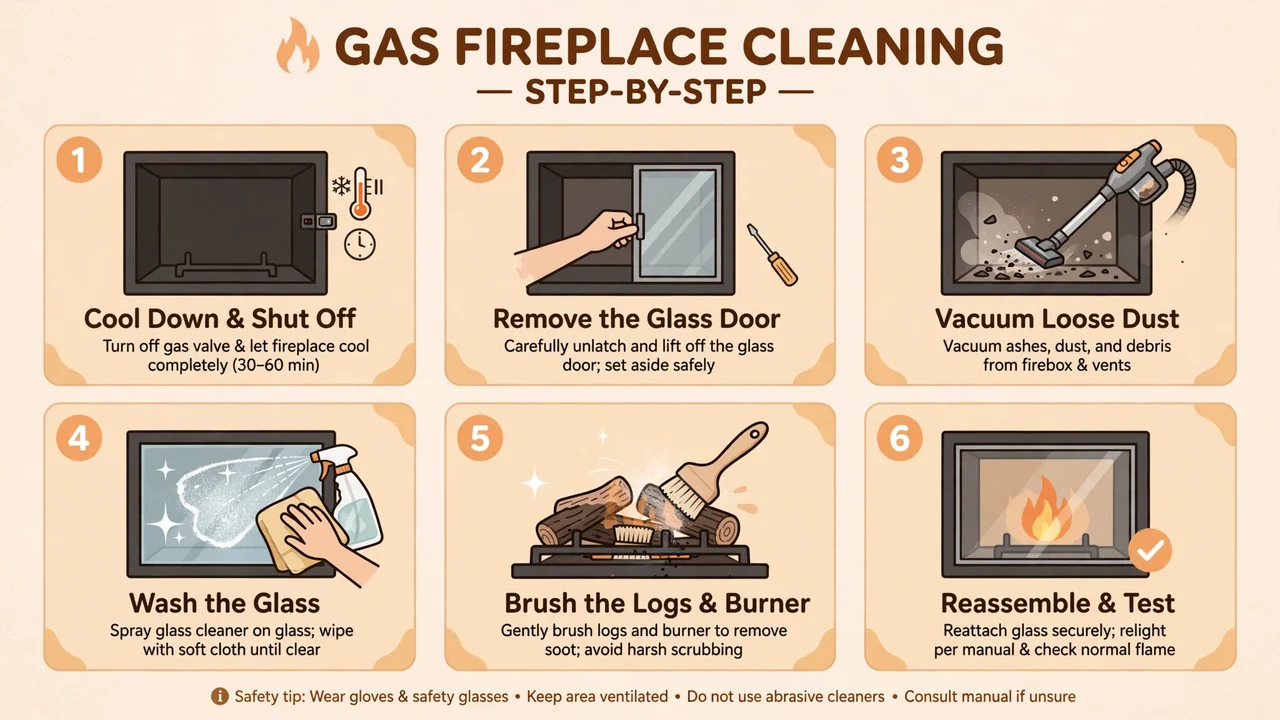
- Turn the fireplace off and let it cool completely
- Shut off the gas at the user control valve
- Remove the glass door or front panel
- Vacuum dust and debris from the firebox
- Wash the glass door with a vinegar solution
- Brush the ceramic logs and burner ports gently
- Wipe the exterior and clear the vents
- Reassemble the fireplace and test the flame
How to Clean a Gas Fireplace in 8 Steps
1. Turn the Fireplace Off and Let It Cool Completely
Switch the fireplace off at the wall switch or remote, then wait at least 2 hours before you touch anything inside. Glass, logs, and metal parts hold heat far longer than they look like they do. A burn from a warm log is the most common injury in this job, and a long cool-down prevents it.
While you wait, lay the old towel across the hearth and set out your supplies. Check that your CO alarm shows a working light or display. If the alarm is silent, beeping, or past its replace-by date, stop and sort that out before you run the fireplace again. Gas fireplaces can produce carbon monoxide, so a working alarm is part of the job, not an extra.
2. Shut Off the Gas at the User Control Valve
Find the gas control knob on the fireplace, usually behind a lower access panel, and turn it to the OFF position. Your owner’s manual shows the exact location and the knob positions for your model. Some units also have a wall shutoff valve nearby; turn that off too if your manual calls for it.
Leave the main house gas supply alone. This step is only about the fireplace’s own user controls, which are designed for owners to use. Anything past those controls, including the gas line itself, belongs to a licensed gas professional. If you cannot find the control valve or the knob will not turn, stop and call a technician.
3. Remove the Glass Door or Front Panel
Most gas fireplaces hold the glass with two spring latches or clips along the top edge. Lift or press them as your manual shows, then tilt the top of the glass toward you and lift it clear of the bottom track. Hold the glass with both hands the whole time. It is heavier than it looks, and a dropped panel can crack or chip.
Set the glass flat on the towel, inside face up. If your model has a mesh screen or decorative front instead of glass, lift it off the same way and set it aside. Take a quick photo of the log layout before you touch anything inside. That photo saves you from guessing where each log goes later.
Pro tip: Wear rubber gloves from this step on. Soot and old dust stain skin and get under nails, and gloves keep your grip on the glass steady.
4. Vacuum Dust and Debris From the Firebox
Fit the brush attachment on your vacuum and run it slowly over the floor of the firebox, the walls, and the edges around the burner. Loose dust, pet hair, and small bits of debris gather here over a season. Work from the top down so dust falls onto areas you have not cleaned yet, then finish with one more pass along the floor.
Keep the nozzle a finger’s width above the burner ports and the pilot area. Pressing hard can bend the thin metal or push dust into the ports. If you spot rust flakes, white powder, or a strong smell while you vacuum, stop and book a professional inspection before you use the fireplace again. Those can be signs of a venting or burner problem.
5. Wash the Glass Door With a Vinegar Solution
Mix equal parts white vinegar and warm water in the spray bottle, about 1 cup of each. Spray the inside face of the glass until it is damp all over, then let it sit for 5 minutes. The mild acid loosens the white haze that gas combustion leaves behind. That haze is mostly silica and mineral deposits, and it will not come off with a dry cloth alone.
Wipe in small circles with a microfiber cloth, then flip to a dry cloth and buff the glass clear. For a stubborn patch, add a few drops of mild dish soap to the mix and repeat. Never use ammonia glass cleaner, abrasive pads, or a razor blade on fireplace glass. Many gas fireplace doors carry a special coating, and those products scratch or strip it.
6. Brush the Ceramic Logs and Burner Ports Gently
Lift each log out one at a time and brush it with the soft-bristle brush over the towel. Dust and light soot come off with a few strokes. Set each log back in its exact spot using your photo as the guide. Log placement shapes the flame pattern, so a log in the wrong spot can cause soot or a weak flame.
Brush the burner ports with light strokes in one direction, then vacuum up what comes loose. Never poke the ports with a pin, wire, or screwdriver. Enlarging a port changes the gas flow and can make the burner unsafe. If a port looks blocked and brushing does not clear it, that is a job for a licensed technician.
Heads up: Ceramic logs are fragile and their coating can contain fibers you should not breathe in. Handle them gently, do not wash them with water, and wash your hands after handling them. If a log is cracked or crumbling, replace it with the maker’s exact part rather than a look-alike.
7. Wipe the Exterior and Clear the Vents
Dampen a microfiber cloth with warm water and a drop of dish soap, then wipe the surround, trim, and mantel. Dry each section right after you wipe it so water does not sit on metal or painted surfaces. For brass or black metal trim, check your manual first, since some finishes need a specific cleaner.
Vacuum the air intake and vent grilles with the brush attachment. Blocked vents cut airflow and can push combustion fumes back into the room. Look outside at the vent cap if you can reach it safely from the ground. Clear away leaves, nests, or cobwebs, and call a pro if the cap is damaged or missing.
8. Reassemble the Fireplace and Test the Flame
Put the glass door back first. Seat the bottom edge in its track, tilt the top into place, and close both latches until they click. Give the glass a gentle tug to confirm it is locked. An unlatched door can let fumes into the room and can rattle or fall when the fireplace runs.
Turn the gas control back on, then light the fireplace following your manual. Watch the flame for 2 to 3 minutes. A healthy gas flame is mostly blue with small yellow tips, steady, and even across the burner. A flame that is mostly yellow, lazy, lifting off the burner, or uneven after a few minutes means something is still wrong. Turn the unit off and call a licensed technician instead of running it.
What a Clean Gas Fireplace Should Look Like
When the job is done, the glass is clear enough to read the logs through it from across the room. The logs sit in their proper places with no thick dust on top. The flame burns blue with small yellow tips and spreads evenly along the burner.
Before cleaning, many owners see a milky film on the glass, gray dust on the logs, and a flame that looks dull or patchy. After cleaning, the fire looks brighter and the room warms faster because heat passes through clean glass and the burner runs as designed. If the flame still looks wrong after a full clean, the cause is usually a burner or venting fault, not dirt, and a technician should check it.
Troubleshooting: Common Problems After Cleaning
| If This Happens | Try This |
|---|---|
| White haze returns within days | Wash again with the vinegar mix and buff dry; a thin film can take two passes. If it keeps coming back fast, ask a technician to check the burner and venting. |
| Flame is mostly yellow or lazy | Turn the unit off. Do not keep running it. Call a licensed gas technician to check the burner and air supply. |
| Pilot will not stay lit | Dust around the pilot may have moved during cleaning. Let the unit cool, check for loose dust, and try once more. If it still fails, call a technician. |
| You smell gas after reassembly | Leave the home at once with everyone, including pets. Call your gas utility or 911 from outside. Do not relight anything or hunt for the leak. |
| Glass rattles when the fireplace runs | Turn the unit off and let it cool. Re-seat the glass and close both latches until they click. Replace worn gasket rope if your manual lists it as a user part. |
| Soot on the logs or glass | Check log placement against your photo; a log sitting on a burner port causes soot. If placement is right and soot returns, book a pro service. |
If your fireplace still smells like gas after cleaning, read our guide on why a gas fireplace smells like gas to tell a normal brief odor from a real leak. When in doubt, treat it as a real leak and leave the house.
Frequently Asked Questions
How often should I clean a gas fireplace?
Wash the glass every 1 to 2 months of regular use, clean the logs and burner once a season, and book a professional service once a year. Monthly vent checks take about 5 minutes.
Can I use Windex or glass cleaner on gas fireplace glass?
No. Ammonia cleaners can damage the coating on fireplace glass. Use a mix of equal parts white vinegar and warm water, then buff dry with a microfiber cloth.
Why is my gas fireplace glass cloudy white?
The white film is mineral and silica residue left by gas combustion. It builds up slowly and needs a vinegar wash to remove. A dry cloth alone will not lift it.
Do I need to turn off the gas before cleaning?
Yes. Switch the fireplace off, let it cool for at least 2 hours, then turn the gas control knob to OFF. Only use the normal user controls in your manual, and leave gas-line work to a licensed professional.
Can I clean ceramic logs with water?
No. Brush ceramic logs dry with a soft brush. Water can damage the finish and the fibers inside the logs. Replace a cracked or crumbling log with the maker’s exact part.
Quick Reference Card: How to Clean a Gas Fireplace
What you need: microfiber cloths, spray bottle, white vinegar, warm water, mild dish soap, soft brush, vacuum with brush attachment, gloves, towel, flashlight, manual.
Steps: 1) Cool 2 hours. 2) Gas control OFF. 3) Remove glass. 4) Vacuum firebox. 5) Wash glass with vinegar mix. 6) Brush logs and burner. 7) Wipe exterior, clear vents. 8) Reassemble, test flame 2–3 minutes.
Safety: CO alarms on every level, tested monthly. Gas smell means leave at once and call from outside. Repairs go to a licensed gas professional.
Keep Your Gas Fireplace Running Clean
You have now cleaned the glass, the logs, the burner, the vents, and the trim, and you have checked the flame. That hour of work pays off every evening you light the fire: a clearer view, a steadier flame, and a fireplace that runs the way it was built to run. Mark your calendar for the next glass wash in about a month, and book the yearly professional service before the heating season starts.
Regular cleaning also helps your fireplace last longer. A unit that gets a seasonal clean and a yearly checkup stays in better shape than one that only gets attention when something goes wrong. If you want to know what to expect over the years, read our guide on how long gas fireplaces last. And if you are still learning the controls, our guide on how to light a gas fireplace walks through the startup steps for common models.