Why Does My Gas Fireplace Whistle? Find the Cause and Quiet It Down
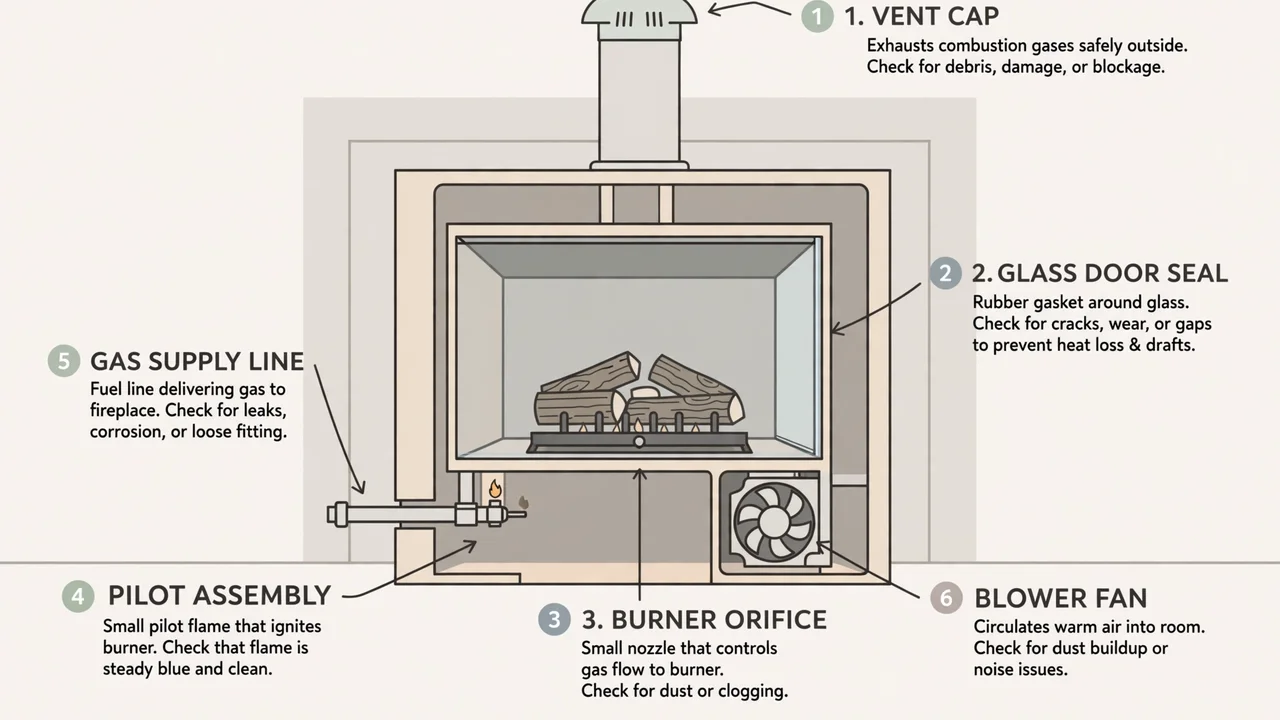
A high-pitched whistle from a gas fireplace can turn a quiet evening into a distraction. If you have asked yourself, “Why does my gas fireplace whistle?” you are hearing a sound that usually points to gas flow, air movement, or a part that needs cleaning. Most whistles come from one of a few places: the burner, the gas supply, the vent, or the blower fan.
This guide walks you through a safe, step-by-step check to find the source of the sound. You will learn what to look at, what to listen for, and which fixes belong to a licensed gas professional. The user-level checks take under an hour, and you need only a flashlight, a soft brush, and your fireplace manual. A popping or crackling sound is a different problem with different causes, so if that is what you hear, read our guide on why a gas fireplace makes a popping noise instead.
⚠️ Safety First: Gas and Carbon Monoxide
Gas fireplaces carry real carbon monoxide (CO) and gas-leak risks. CO is colorless and odorless, so install CO alarms on every level of your home and near sleeping areas, test them monthly, and replace them as the maker directs. CO alarms protect the whole household, and pets, especially birds, react to CO and combustion fumes sooner than people do.
If you smell gas (a rotten-egg odor): do not touch light switches, flames, or appliances. Leave the home right away with everyone and every pet, then call your gas utility’s emergency line or 911 from outside. Never try to find or fix a leak, open a gas line, or relight anything after a strong gas smell. That work belongs to the gas utility or a licensed gas fitter only.
The checks in this guide stay at the user level: looking, listening, and light cleaning only. Never open gas lines, adjust the regulator, bypass a safety device such as a thermocouple or oxygen-depletion sensor, block a vent, or disable a CO alarm. Gas-line, installation, and conversion work goes to a licensed gas professional. Learn more in our guides on whether gas fireplaces produce carbon monoxide and whether gas fireplaces need a carbon monoxide detector.
Total Time
45–60 minutes
Active Time
20–30 minutes
Difficulty
Beginner checks
What You Need
- Flashlight
- Soft-bristle brush (a clean paintbrush works well)
- Vacuum with a brush attachment
- Your fireplace owner’s manual
- Phillips screwdriver, for the access panel screws if your model has them
- Clean, dry cloth
- Notepad and pen, to record when the whistle starts and stops
- A working CO alarm in the room (check it before you start)
At a Glance: The 7 Checks
- Listen closely and pinpoint where the whistle starts
- Turn the fireplace off and let it cool
- Check the gas supply clues without touching gas fittings
- Inspect the burner and orifice for dust and debris
- Check the vent and airflow path
- Test the blower fan
- Call a licensed gas professional
Listen Closely and Pinpoint Where the Whistle Starts
Run the fireplace at its normal setting and stand close to it, then move a few feet back. Note exactly when the whistle begins: at ignition, on low flame, on high flame, or only when the blower kicks in. That timing is the best clue you have, and it shapes every check that follows.
Hold a sheet of paper near the burner area, the glass edge, and the vent opening while the whistle sounds. A paper that flutters or pulls toward one spot points to moving air at that spot. Write down what you find: the flame setting, the blower state, and the spot where the sound seems loudest. A whistle that changes pitch when you change the flame height almost always traces back to gas flow through the burner.
Turn the Fireplace Off and Let It Cool
Switch the fireplace off with its wall switch or remote, then wait at least 30 minutes before you touch anything inside. The glass, logs, and burner stay hot long after the flame goes out, and a burn is the most common injury in this kind of check.
While it cools, confirm your CO alarm shows a green light or a working display. Open the owner’s manual to the cleaning and access sections so you know how your model comes apart. If your manual warns against removing a part, leave that part alone and note it for the technician.
Check the Gas Supply Clues Without Touching Gas Fittings
Look at the flame the next time you run the fireplace. A healthy gas flame burns mostly blue with small yellow tips and sits steady on the burner. A flame that lifts off the burner, floats, or burns mostly yellow signals a combustion problem, and that is a call-a-pro finding, not a do-it-yourself fix.
Check whether other gas appliances in the home act up at the same time. A furnace or water heater that also struggles can point to a supply problem, and only the gas utility or a licensed fitter may work on the supply side. Never adjust the regulator, the gas valve beyond its normal on/off control, or any fitting. Our guide on how to adjust the flame on a gas fireplace covers the user-level flame controls your manual allows.
What the Whistle Timing Tells You
| When It Whistles | Most Likely Source | First Check |
|---|---|---|
| At ignition only, then fades | Air in the gas line or a dirty pilot assembly | Pilot area and burner ports (Step 4) |
| Only on low flame | Gas moving slowly through a partly blocked orifice | Burner and orifice cleaning (Step 4) |
| Only on high flame | High gas flow or pressure pushing through a narrow opening | Flame pattern, then a pro pressure test (Step 7) |
| Only when the blower runs | Dusty blower fan or worn bearings | Blower intake and fan (Step 6) |
| All the time, steady pitch | Vent draft or a gap pulling room air past the glass | Vent path and glass seal (Step 5) |
| Comes and goes with wind | Wind across the vent cap or downdraft | Vent cap outside (Step 5) |
These are the patterns technicians report most often. Your fireplace may differ, so treat the table as a starting point, not a diagnosis.
Inspect the Burner and Orifice for Dust and Debris
Open the access panel or glass front exactly as your manual describes, and lift out the logs or ember media one piece at a time. Set them down in order on a cloth so they go back in the same spots. A log placed over a burner port can change the flame and create a whistle of its own.
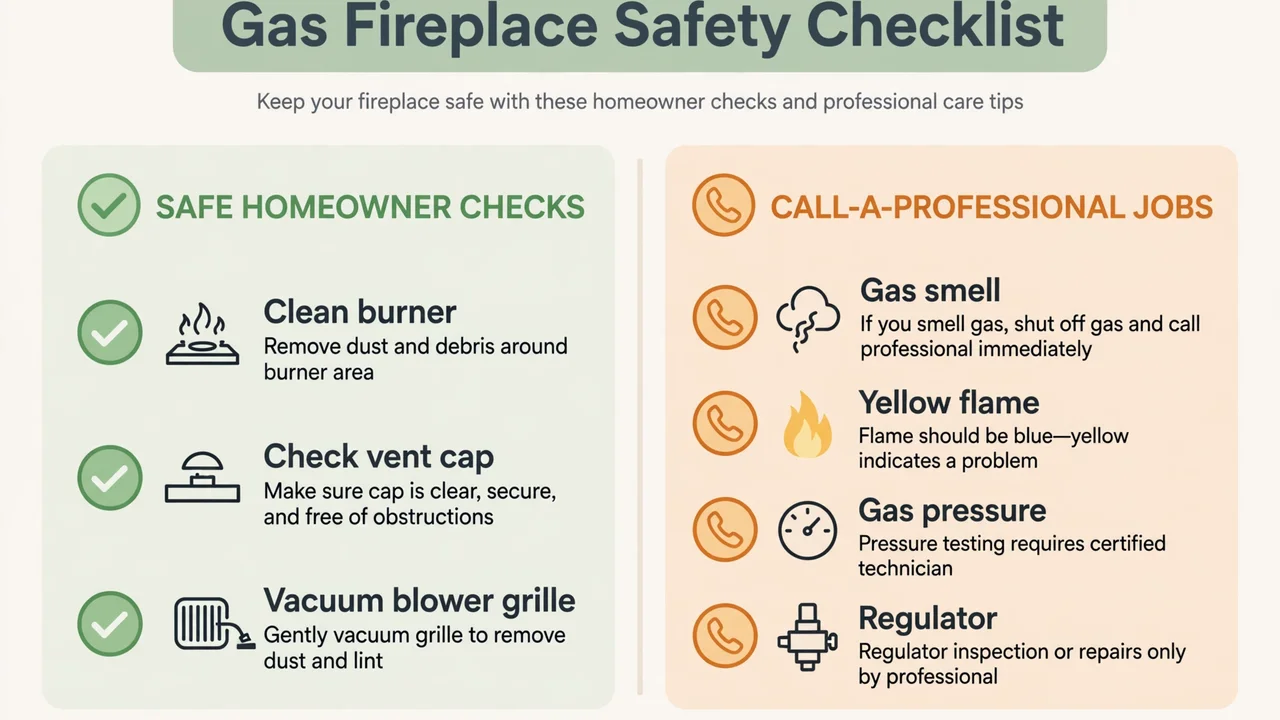
Brush the burner ports gently with the soft brush, then vacuum the loose dust with the brush attachment. Look at the small brass orifice where gas enters the burner and check for dust, lint, or spider webs around it. Never poke the orifice with a pin, wire, or needle: enlarging that hole changes the gas flow and can create a dangerous flame.
⚠️ Heads Up: If you find soot, a melted-looking part, or a strong gas odor while the panel is open, stop. Close the panel, leave the room if the gas smell is strong, and call a licensed gas professional. Soot and warped parts point to a combustion problem that cleaning will not fix.
Put the logs or media back exactly as the manual shows, close the glass or panel, and relight the fireplace. Run it for 10 minutes and listen. In many homes the whistle is gone after this cleaning alone, because a thin layer of dust across a burner port is enough to make gas whistle as it passes through.
Check the Vent and Airflow Path
Step outside and look at the vent cap on the wall or roof. Leaves, nests, and wind-blown debris can narrow the opening and make exhaust air whistle on its way out. Look from the ground or a safe standing spot, and never climb onto a roof or reach into the vent pipe.
Inside, check the glass door seal and the joints where the vent meets the fireplace. A worn gasket or a loose joint lets room air get pulled in, and that thin gap can sing at a high pitch. If your fireplace is vent-free, remember that it releases combustion byproducts, including CO and water vapor, straight into the room, and some areas restrict or ban vent-free units in bedrooms. A working oxygen-depletion sensor and a CO alarm are required, and local codes decide what is allowed. Compare the two designs in our vented vs. ventless gas fireplace guide.
Pro Tip: Run a kitchen or bathroom exhaust fan while the fireplace whistles, then switch the fan off. If the pitch changes with the fan, your home’s air pressure is pulling on the vent, and a technician can check the vent sizing and the makeup-air balance.
Test the Blower Fan
Turn the blower on by itself if your model allows it, or run the fireplace on high until the blower starts. If the whistle appears only with the blower, the fan is the source. Dust on the fan blades, a loose grille, or worn bearings can all make a high-pitched sound.
With the fireplace off and cool, vacuum the blower intake grille and the area around the fan. Tighten any loose grille screws you can reach without removing the fan housing. If the sound stays after cleaning, or if you hear grinding along with the whistle, leave the fan alone. Blower motors and bearings are a technician’s job, and a failing fan can overheat.
Call a Licensed Gas Professional
Book a technician if the whistle survives cleaning, if the flame looks wrong, if you smell gas at any point, or if the sound started after gas work in the home. Tell the technician when the whistle starts, what you cleaned, and what the flame looks like. Those notes save diagnostic time.
A technician can test gas pressure at the fireplace test port, check the regulator, inspect the burner alignment, and confirm the vent draws the way it should. Gas pressure testing needs gauges and training, and it is not a homeowner task. If the technician finds a faulty regulator or valve, that part gets replaced by a licensed professional, not adjusted by hand. Keep the fireplace on a yearly service plan: our gas fireplace maintenance annual checklist shows what a yearly visit should cover.
Troubleshooting: If This Happens, Try This
| If This Happens | Try This |
|---|---|
| Whistle starts right after lighting | Clean the burner ports and pilot area, then relight and listen for 10 minutes. |
| Whistle only on the lowest flame setting | Raise the flame one notch and note the change, then clean the orifice area (brush and vacuum only). |
| Whistle only when the blower runs | Vacuum the blower intake and tighten loose grille screws; call a pro if grinding joins the whistle. |
| Whistle comes and goes on windy days | Look at the vent cap from the ground for debris or damage; ask a technician about a wind-resistant cap. |
| Whistle plus yellow, lazy flame | Turn the fireplace off and call a licensed gas professional. Do not keep running it. |
| Whistle plus any gas smell | Leave the home at once and call the gas utility or 911 from outside. |
Frequently Asked Questions
Is a whistling gas fireplace dangerous?
A whistle by itself is usually a sign of dust, airflow, or gas flow through a narrow opening, and it is often harmless. It becomes a safety concern when it comes with a gas smell, a yellow or lifting flame, soot, or a CO alarm going off. In those cases, turn the fireplace off and call a licensed gas professional, or leave the home and call the gas utility or 911 if you smell gas.
Can I fix a whistling gas fireplace myself?
You can safely do the user-level checks in this guide: listen for the source, clean dust from the burner and blower intake, and check the vent cap from the ground. Gas pressure, regulators, valves, and any gas-line work belong to a licensed gas professional, and you should never poke or enlarge the burner orifice.
Why does my gas fireplace whistle only on low?
On a low setting, gas moves slowly through the burner ports, and a partly blocked port or a dirty orifice can make that slow flow whistle. Cleaning the burner ports and the area around the orifice with a brush and vacuum often stops it. If the whistle stays after cleaning, a technician should check the gas pressure and the burner.
Why does the whistle stop when I turn the blower off?
That points to the blower fan itself. Dust on the blades, a loose grille, or worn bearings can make a high-pitched sound that only appears while the fan spins. Vacuum the intake grille and tighten loose grille screws, and call a technician if the sound stays or turns into grinding.
Should I turn off the gas if my fireplace whistles?
A whistle alone does not call for shutting off the gas supply. Turn the fireplace off with its normal controls, let it cool, and work through the checks in this guide. Shut off the gas and leave the home only if you smell gas, and call the gas utility or 911 from outside.
How often should a gas fireplace be serviced?
Most makers and industry guidance call for a professional service once a year, before the heating season. A yearly visit covers burner cleaning, a flame and vent check, and a look at the safety devices, and it catches small problems before they turn into noises or hazards.
Quick Reference Card
What you need: flashlight, soft brush, vacuum with brush attachment, owner’s manual, screwdriver, cloth, notepad, working CO alarm.
Steps:
- Listen and pinpoint where the whistle starts
- Turn it off and let it cool for 30 minutes
- Check gas supply clues without touching fittings
- Inspect the burner and orifice for dust and debris
- Check the vent and airflow path
- Test the blower fan
- Call a licensed gas professional if the whistle stays
Remember: gas smell means leave at once and call the gas utility or 911 from outside. Never poke the orifice or open a gas line.
A whistling gas fireplace is annoying, and now you know how to track the sound down. The checks in this guide cover the most common causes, from dust on the burner to a tired blower fan, and they tell you clearly where your work ends and a technician’s begins. If you are still asking, “Why does my gas fireplace whistle?” after cleaning and checking the vent, a pressure test from a licensed gas professional is the next step. Put the fireplace on a yearly service visit so the next heating season starts quiet.