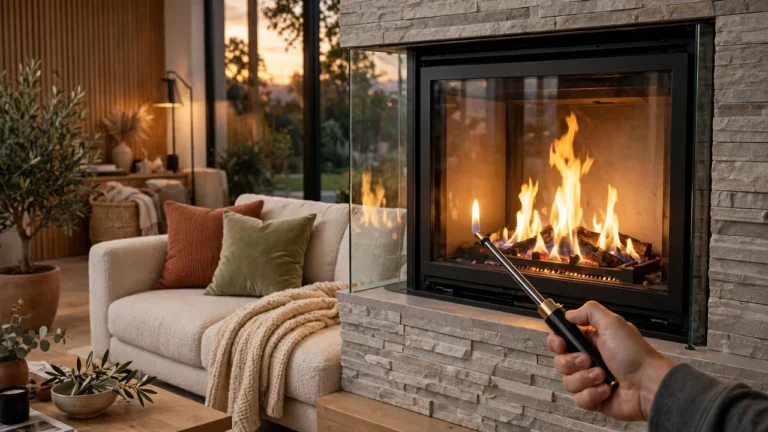
How to Adjust the Flame on a Gas Fireplace: Get a Steady, Warm Flame Every Time
Learning how to adjust the flame on a gas fireplace takes less than five minutes once you know which control your model uses. A flame that runs too high wastes gas and can soot up the glass, while a flame that runs too low gives off little heat and may look weak and thin. This guide walks you through the normal user controls on your fireplace, so you can raise or lower the flame with confidence.
You will use only the controls your manual describes: the flame-height knob, the remote, or the wall switch. Nothing in this guide asks you to open a gas line, touch an internal valve, or change a burner part. Those jobs belong to a licensed gas professional, and this guide says so wherever the line between a user control and a repair comes up.
By the end, you will know how to find your control, light the fireplace, set a steady flame height, and read the flame to tell whether it looks healthy. Keep your manual nearby while you work, because control labels vary from one model to the next.
Safety First: Read This Before You Touch the Controls
Gas fireplaces burn fuel indoors, so carbon monoxide (CO) is a real risk. CO is colorless and odorless, and you cannot see or smell it. Make sure a working CO alarm is installed on every level of your home and near sleeping areas, test it monthly, and replace it as the maker directs. The U.S. Centers for Disease Control and Prevention explains the risks and the warning signs of CO poisoning in its carbon monoxide guidance. Our guide to whether gas fireplaces produce carbon monoxide covers the same ground in fireplace terms.
If you smell gas (a rotten-egg odor): do not touch switches, flames, or appliances. Leave the home at once with everyone in it, including pets, and call your gas utility emergency line or 911 from outside. Never try to find or fix a leak yourself, and never relight the fireplace after a strong gas smell. That work belongs to the gas utility or a licensed gas fitter. Our guide on why a gas fireplace smells like gas explains what to do next.
Pets are part of the household too, and birds in particular are more sensitive to CO and combustion fumes than people are. A working CO alarm protects them as well as you. If anyone in the home feels dizzy, nauseous, or unusually tired while the fireplace runs, turn the fireplace off, get fresh air, and call emergency services.
Total Time
10 minutes
Active Time
5 minutes
Difficulty
Beginner
What You Need
- Your fireplace owner’s manual
- Remote control, if your model came with one
- Fresh batteries for the remote, if it uses them
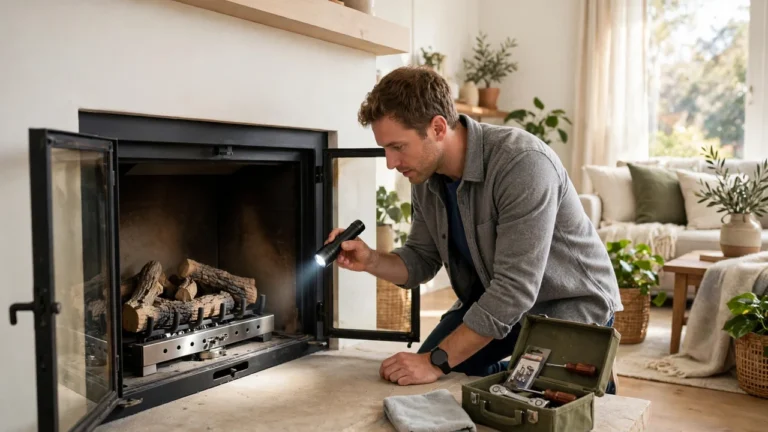
- A flashlight, to read small labels behind the lower panel
- A working CO alarm in the room
- Pen and paper, to note the flame setting you like best
At a Glance: The 7 Steps
- Find your flame control
- Read the manual for your model
- Check the room, the glass, and the CO alarm
- Light the fireplace
- Adjust the flame on a gas fireplace in small moves
- Read the flame and settle on a steady height
- Lower the flame before you leave the room
Find Your Flame Control
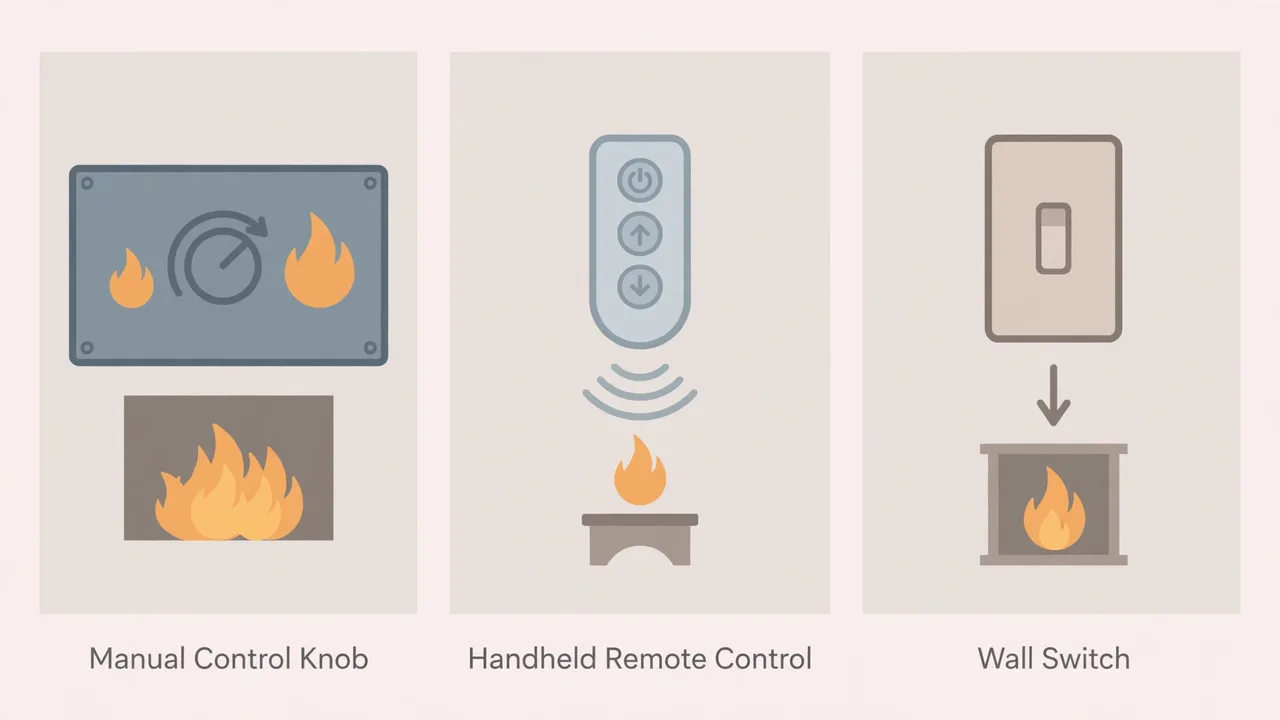
Look below the glass front, behind the lower louver or access panel. Most gas fireplaces hide the controls there, and the panel often lifts or swings open with a gentle pull. The flame-height knob usually sits near the gas valve and carries flame icons or the marks HI and LO.
Some models put the control on a handheld remote instead, with flame-up and flame-down buttons marked by a small flame symbol. Others use a wall switch or a wall dial near the fireplace. Check all three spots before you assume your model lacks a control, because a remote left in a drawer is the most common reason people think their flame cannot change.
Pro tip: Take a phone photo of the control panel before you change anything. The photo shows you the starting position, so you can return the flame to where it was if the new setting does not suit the room.
Read the Manual for Your Model
Open the manual to the section on flame height or flame adjustment. It names your exact control, shows the direction that raises the flame, and states the highest and lowest settings your model allows. Models differ a lot here, and a knob that turns clockwise on one brand may turn the other way on another.
The manual also tells you whether your fireplace has a thermostat mode. In thermostat mode the flame rises and falls on its own to hold a room temperature, so manual changes may not stick. Note the page number of the flame section, and keep the manual open on the table beside you while you work.
Check the Room, the Glass, and the CO Alarm
Press the test button on the CO alarm in the room and listen for the alarm sound. If the alarm stays silent, replace its batteries or the unit itself before you light the fireplace. Check that the room vents and the fireplace air inlets are clear of furniture, blankets, and pet beds.
Look through the glass at the burner and the logs. The glass should be clear enough to see the flame shape, and the logs should sit where the manual shows them. Soot on the glass or logs that have shifted out of place can change how the flame looks, and both are worth fixing before you judge the flame height.
Heads up: If you smell gas at any point, stop what you are doing. Do not light the fireplace, do not flip switches, and do not hunt for the source of the smell. Leave the home with people and pets, and call your gas utility emergency line or 911 from outside.
Light the Fireplace
Light the fireplace with the method your manual describes, and wait until the flame burns in a steady pattern across the burner. A cold fireplace can show a weak or uneven flame for the first minute or two, so give it time to settle before you change anything. Our step-by-step guide to how to light a gas fireplace covers the lighting sequence in detail if your model is new to you.
Keep your hands clear of the glass while the fireplace warms up. The glass heats fast, and a burn is the most common injury during this kind of small adjustment. Stand to one side of the fireplace while you reach for the control, so you can see the flame without leaning over hot glass.
Adjust the Flame on a Gas Fireplace in Small Moves
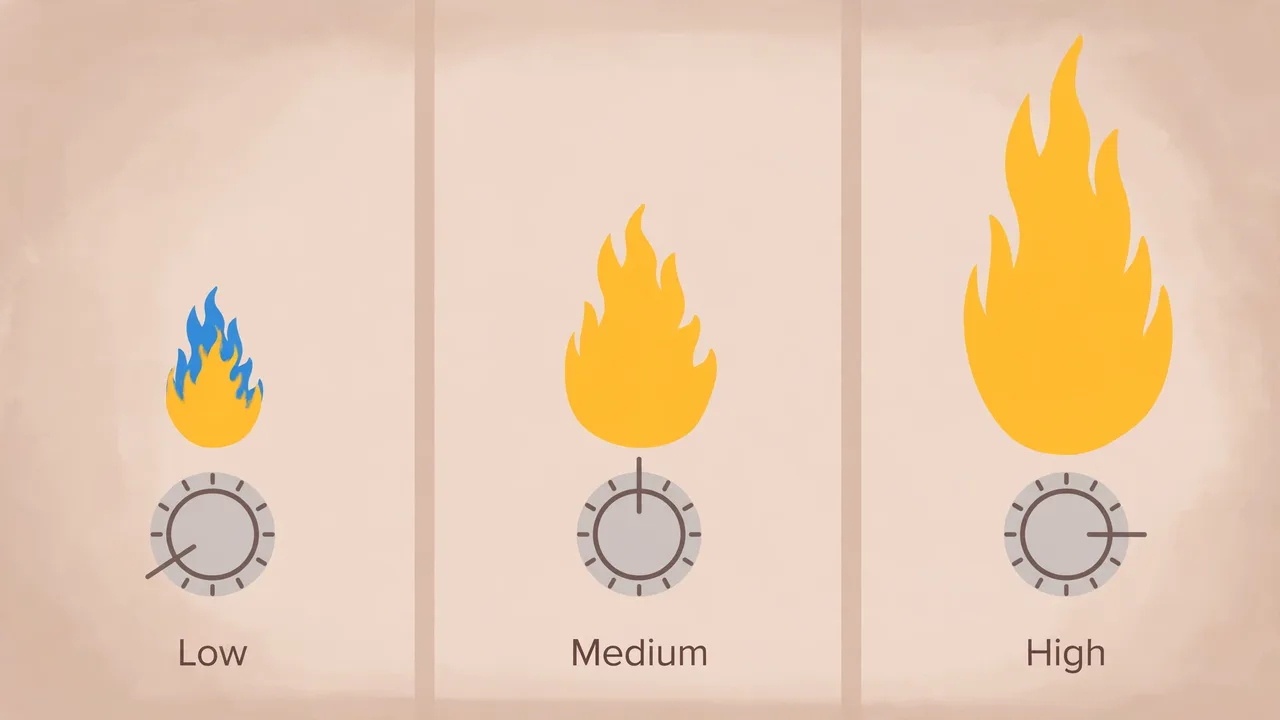
Turn the flame-height knob one quarter turn toward HI, then wait 30 seconds and watch what the flame does. Gas flames respond with a short delay, and a big turn made in a hurry overshoots the height you want. Small moves with a pause between them give you a steady result and a clear sense of how far each move takes you.
With a remote, press the flame-up button in short taps rather than holding it down, and pause for a few seconds after each tap. With a wall dial, turn it a small amount and wait the same 30 seconds before you turn it again. Note the setting on your paper once the room feels right, so you can return to it next time without guessing.
Read the Flame and Settle on a Steady Height
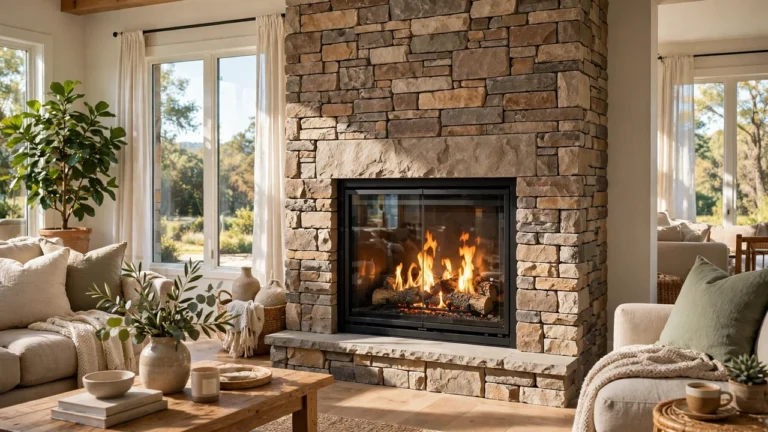
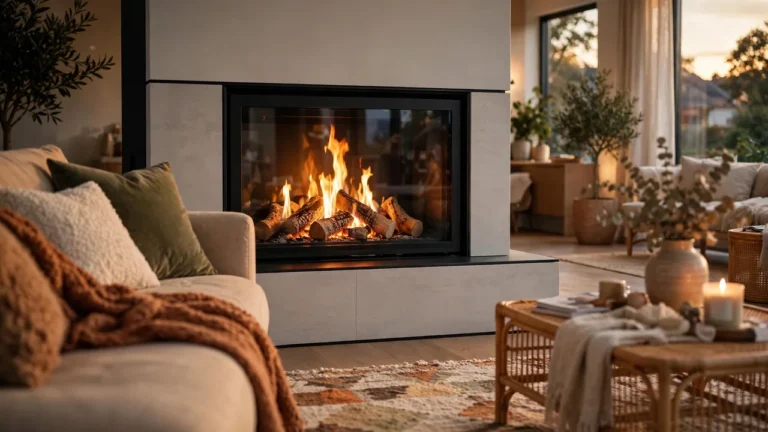
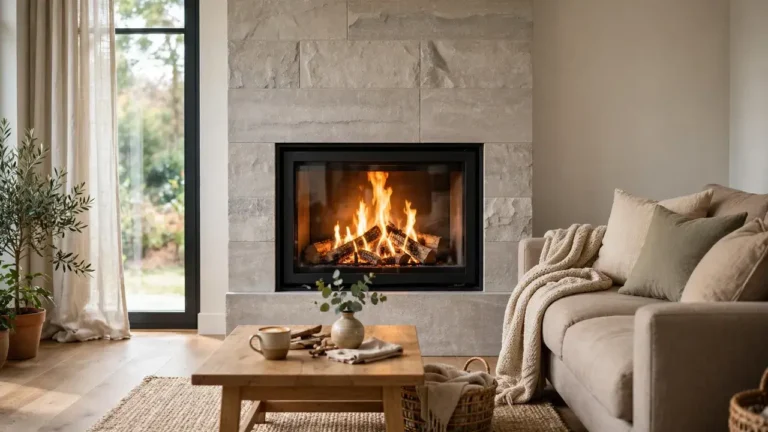
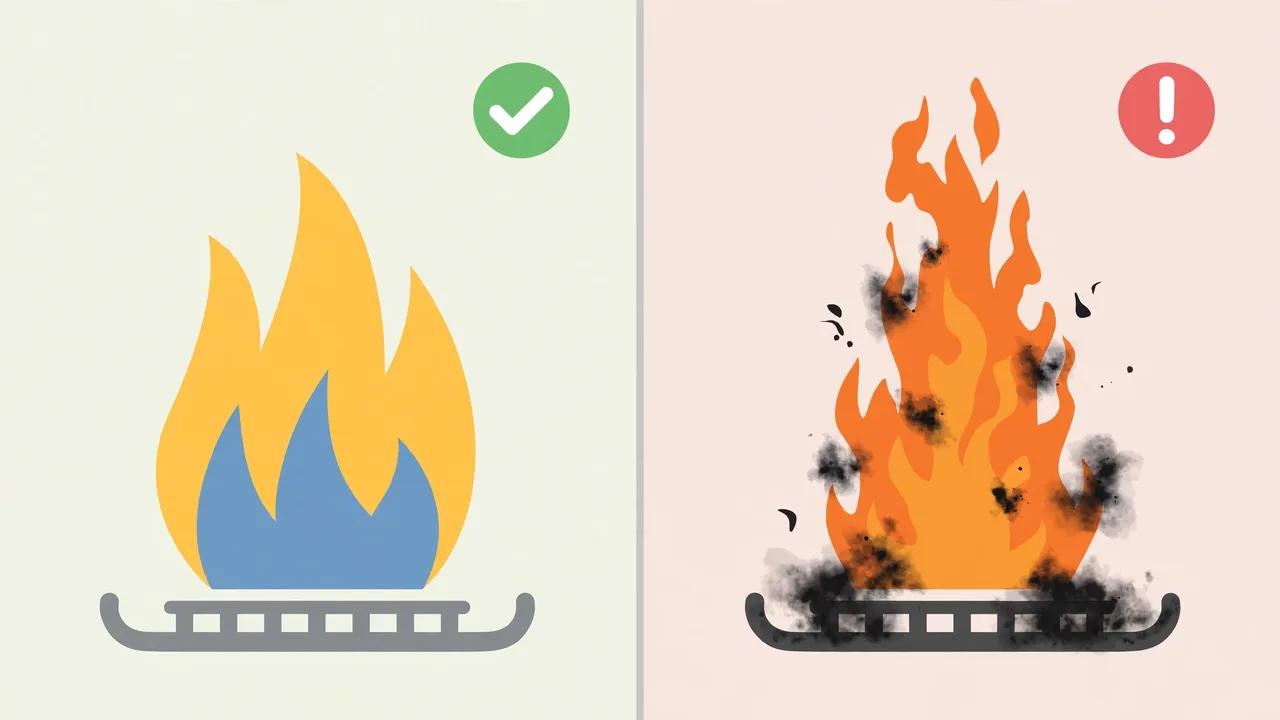
A healthy gas fireplace flame looks steady and even, with a blue base where it leaves the burner and yellow tips that reach the logs without licking far past them. The flame should spread across the burner in an even pattern, with no large gaps and no tall spikes on one side. This is the look to aim for at any height you choose.
A flame that is tall, noisy, and very yellow, or one that leaves black soot on the glass, is running too high or burning poorly. A flame that is thin, pale, and weak even at the highest setting points to a dirty burner, a pilot problem, or a gas supply issue. Stop adjusting in that case, and read the troubleshooting table below before you call a licensed gas professional.
Lower the Flame Before You Leave the Room
Turn the flame down to low, or turn the fireplace off, before you leave the room for a long stretch or go to bed. A low flame keeps a little warmth in the room without running the fireplace hard while no one is watching it. Check your manual for the overnight setting your maker recommends, because some models suggest turning the unit fully off.
Write down the knob position or remote setting that felt best during your test. That note turns a five-minute adjustment into a ten-second job next time, and it helps a technician too if you ever need one to look at the fireplace.
Before and After: What Changes
Before
- Flame stuck too high or too low
- Room too hot or too cold for comfort
- No idea which control changes the flame
- Glass sooting up from a flame set too high
After
- Steady flame at the height you chose
- Even warmth across the room
- You know your knob, remote, or wall switch
- A noted setting you can return to next time
Troubleshooting: If This Happens, Try This
| If This Happens | Try This |
|---|---|
| The flame will not rise when you turn the knob up | Check that the pilot light is lit and steady. Our guide on whether to leave the pilot light on explains pilot behavior. If the pilot is fine, call a licensed gas professional. |
| The flame rises, then drops back down | Your model may be in thermostat mode, or a safety sensor may be cutting the flame. Turn off thermostat mode per the manual. If the drop repeats, stop using the fireplace and call a professional. |
| The remote does nothing | Put in fresh batteries and check that nothing blocks the receiver on the fireplace. Try the manual knob to confirm the fireplace itself still responds. |
| The flame looks yellow and sooty | Lower the flame and check for dust or debris on the burner. Our guide to how to clean a gas fireplace shows the safe cleaning steps. Soot that returns fast means a professional should inspect the burner. |
| The flame flickers a lot or burns unevenly | Check for drafts from open windows or vents near the fireplace, and confirm the logs sit in the positions shown in the manual. Uneven burning that persists needs a professional inspection. |
Frequently Asked Questions
Can I adjust the flame while the fireplace is on?
Yes. The flame-height knob, remote, and wall switch are made for use while the fireplace burns. Move the control in small steps and wait about 30 seconds between moves, so you can see the result of each change before you make the next one.
Why does my gas fireplace flame look too low even on the highest setting?
A weak flame at the top setting often comes from dirty burner ports, a weak pilot, or a gas supply problem. Clean the burner only as your manual allows, then call a licensed gas professional if the flame stays low. Never open a gas line or change an internal valve to raise the flame.
Does a higher flame use more gas?
Yes. A higher flame burns more gas than a low flame, so running the fireplace on high for hours costs more than running it on a medium setting. Our guide to how much it costs to run a gas fireplace breaks down the running costs by setting and fuel type.
What does a healthy gas fireplace flame look like?
A healthy flame is steady and even, blue at the base where it leaves the burner, with yellow tips that touch the logs. Tall, noisy, very yellow flames and black soot on the glass are signs that the flame needs attention from a professional.
Should I leave the flame on high all night?
No. Lower the flame or turn the fireplace off before bed, and follow the overnight guidance in your manual. Our guide on whether to leave the pilot light on also covers safe overnight practice.
Quick Reference Card: Adjust the Flame on a Gas Fireplace
What you need: manual, remote (if supplied), fresh remote batteries, flashlight, working CO alarm, pen and paper.
Steps:
- Find your flame control (knob, remote, or wall switch).
- Read the manual for your model.
- Check the room, the glass, and the CO alarm.
- Light the fireplace and wait for a steady burn.
- Adjust the flame in small moves, waiting 30 seconds between moves.
- Read the flame and settle on a steady height.
- Lower the flame before you leave the room.
Remember: gas smell means leave at once and call for help from outside. Never open a gas line or change an internal valve.
You now know how to adjust the flame on a gas fireplace with the normal controls your maker provides. A steady flame at the height you like means even warmth, less soot, and a fireplace you can set in seconds next time. Keep the CO alarm tested, keep the manual close, and call a licensed gas professional whenever the flame behaves in a way this guide does not cover.
For your next step, run through the annual gas fireplace maintenance checklist so the burner, pilot, and vents stay in good shape for the season ahead.