Basswood Firewood: Burning Guide
You have a pile of pale, feather-light logs, and you want to know if they will keep you warm. Basswood firewood burns hot and fast, splits with very little effort, and lights with almost no fuss. It also burns out quickly, leaves almost no coals, and gives off far less heat per cord than oak or maple. This guide shows you how to season it, split it, and burn it so you get the best of it, and when to reach for a denser wood instead.
By the end, you will know how to spot basswood, how long to dry it, how to build a fire that stays lit, and how to mix it with hardwood so your fire lasts. You will also know the mistakes that turn a good pile of basswood into smoke and ash.
Safety note: Burn only dry, seasoned wood in a vented fireplace or stove. Never burn wood in an unvented indoor space. Keep a working carbon monoxide detector near sleeping areas, and have your chimney inspected and swept once a year by a certified chimney sweep. Never burn treated, painted, or stained wood. Check local burn bans and firewood transport rules before you move wood.
What You Need
- Basswood logs or rounds
- Splitting maul or axe
- Chainsaw or handsaw
- Work gloves
- Eye protection
- Ear protection for saw work
- Moisture meter
- Pallets or rails for stacking
- Tarp or top cover
- Fire starters or newspaper
- Kindling
- Dense hardwood logs to mix in
- Fireplace screen
- Working CO detector
At a Glance: 7 Steps to Burn Basswood Well
- Identify basswood before you cut or buy it
- Split basswood while it is still green
- Stack it where sun and wind can reach it
- Test the moisture before you burn a single log
- Start small and build a hot base
- Burn basswood firewood in small loads with hardwood
- Use up your basswood within a year or two
What Basswood Is and Why It Burns the Way It Does
American basswood, Tilia americana, grows across eastern North America. It is a soft hardwood with pale, creamy wood and smooth gray-brown bark on young trees. The bark turns furrowed with age, and the leaves are wide and heart-shaped in summer. Carvers prize basswood because it is soft and cuts cleanly, and that same softness shapes how it burns.
A cord of seasoned basswood weighs about 2,000 pounds, while a cord of red oak weighs more than 3,700 pounds. That gap in weight is the whole story. A pound of dry wood holds about the same heat no matter the species, but a cord of basswood holds far less wood, so it holds far less heat. The fire flares hot and bright, then fades fast because there is little fuel to keep it going.
Published heat figures for basswood differ by source. The Virginia Tech table lists 13.5 million BTU per cord, ThoughtCo and Utah State University Extension figures put it near 13.8 million BTU per cord, and other guides list up to 15.8 million BTU per cord. Treat the honest range as about 13.5 to 15.8 million BTU per cord, with most tables landing near 14 million. By contrast, red oak gives about 24.6 million BTU per cord, so basswood delivers a little more than half the heat of oak from the same stack size.
Basswood Burn Profile at a Glance
| Trait | Rating | What It Means for You |
|---|---|---|
| Heat per cord | 13.5-15.8 million BTU | Low, about half of red oak |
| Seasoning time | 6-8 months | One of the fastest drying woods |
| Splitting | Very easy | Straight grain, few knots, low sap |
| Smoke | Moderate | Worse when green, mild when seasoned |
| Smell | Neutral | Little to no odor while burning |
| Coals | Very poor | Burns to fine ash, almost no lasting bed |
| Creosote | Low | Little buildup when burned seasoned |
| Sparks | Very few | Low sap means little popping |
| Weight per cord | About 2,000 lb seasoned | Light to carry and stack |
Heat figures vary by source, so the table shows the published range. Weight figures come from Utah State University Extension firewood data.

None of this makes basswood bad firewood. It makes it the wrong wood for one job and the right wood for another. Basswood shines as kindling, as a fire starter, as campfire wood, and as a quick shoulder-season fire when you want warmth for an hour or two. It falls short as a primary winter heat source or an overnight burn, because it cannot hold a coal bed through the night.
Identify Basswood Before You Cut or Buy It
Check the bark first. Young basswood has smooth, gray-brown bark, while older trunks grow shallow furrows. The split faces are pale cream to almost white, with no strong smell when fresh cut. A round of basswood feels light in your hands next to a round of oak or maple the same size, and that light weight is one of the fastest clues.
In summer, look up at the leaves. Basswood leaves are broad, heart-shaped, and lopsided at the base, often with small, pale flower clusters hanging below. If the tree is already down, check the end grain for fine, even texture with no dark heartwood ring. Ask the seller what species the load is if you are buying, and walk away from a load that mixes unknown species at a hardwood price.
Split Basswood While It Is Still Green
Split basswood soon after cutting, while the wood is green. The straight grain and lack of knots let a maul pass through with little resistance, and green wood splits cleaner than wood that has dried and hardened. Cut rounds to 16 inches long for most stoves and fireplaces, then split each round into pieces about 3 to 5 inches across at the wide end.
Thin splits dry faster than thick ones, which matters more with basswood than with dense woods because basswood can start to rot if it sits wet for too long. Wear gloves and eye protection, and set each round on a flat, stable chopping block before you swing. Keep children and pets well clear of the splitting area.
Pro tip: Split basswood on the day you cut it if you can. The grain is at its softest, the maul rarely sticks, and every split face you open gives moisture one more way out of the wood.
Stack It Where Sun and Wind Can Reach It
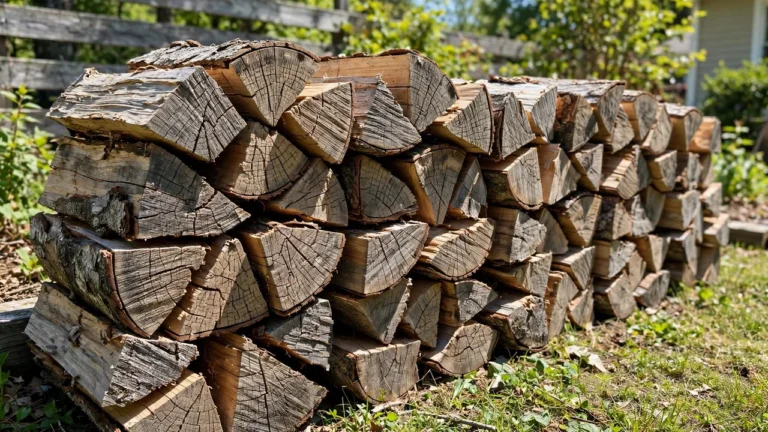
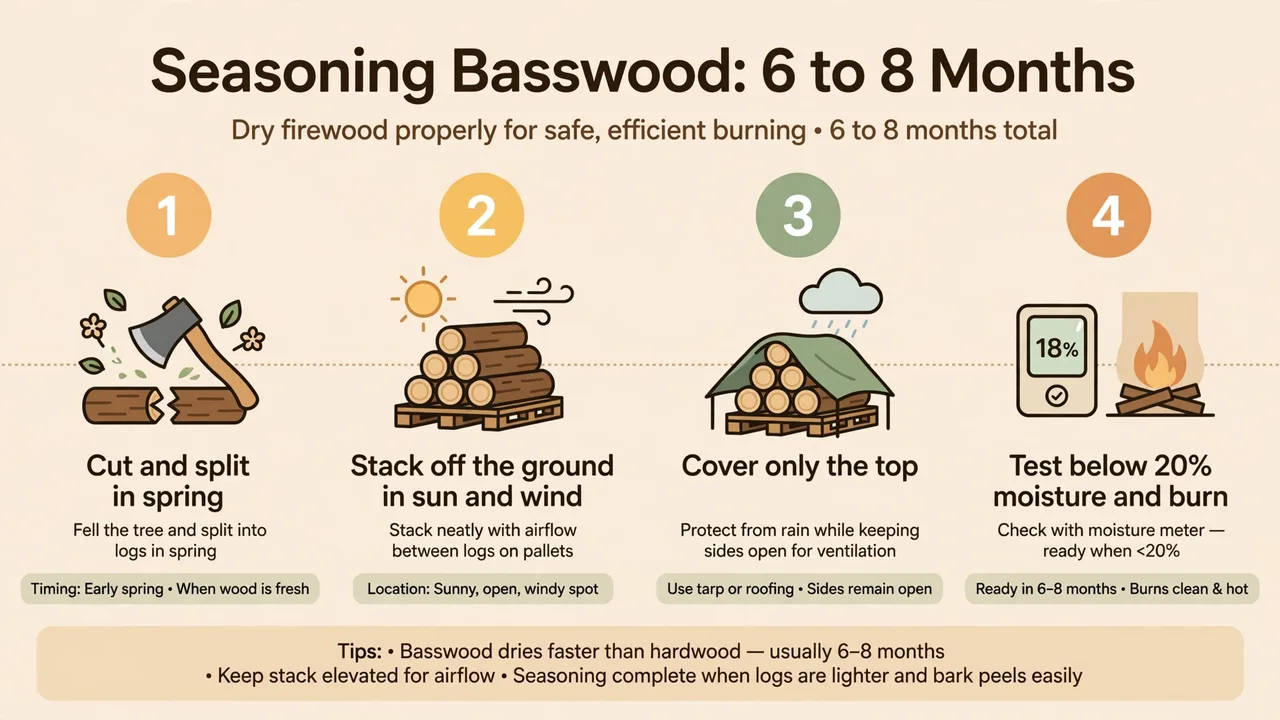
Pick a sunny, open spot and raise the stack off the ground on pallets, rails, or old poles. Air needs to move under the pile as well as through it, so keep the stack no more than one row deep where you can, with a few inches of space between rows. Stack the bark side up on the top row so rain runs off, and cover only the top with a tarp or a sheet of roofing.
Leave the sides open. A tarp wrapped around the whole pile traps moisture and slows drying, which is the opposite of what you want. Basswood dries faster than most hardwoods, and a spring-cut stack is often ready by fall. Give it 6 to 8 months in a sunny spot with good airflow before you test it.
Our full guide to how to season firewood walks through stacking patterns and drying times for every species, and it is worth a read if this is your first woodpile.
Test the Moisture Before You Burn a Single Log
Push the pins of a moisture meter into the center of a freshly split face, not the bark and not the old end grain. The reading you want is below 20 percent. The U.S. EPA Burn Wise guidance gives the same target, and it holds for basswood as well as for oak. Test two or three pieces from different parts of the pile, since the outside of a stack dries faster than the middle.
Without a meter, use the knock test. Bang two splits together and listen for a sharp crack. A dull thud points to wet wood. Seasoned basswood also feels light for its size, shows cracks at the ends, and has bark that peels off with little effort. If you are unsure, learn the full set of signs in our guide on how to tell if firewood is seasoned.
Heads up: Green basswood smokes heavily, gives off little heat, and lays creosote down in your chimney. Creosote is flammable, and a thick layer can catch fire inside the flue. Never try to burn your way through a wet pile. Season it first, and have the chimney swept once a year even when you burn clean wood. Read why you should not burn wet firewood before you light a damp log.
Start Small and Build a Hot Base
Lay two dry basswood splits parallel on the firebox floor with a small gap between them. Set a loose bundle of kindling across the gap, then add one or two fire starters or a twist of newspaper underneath. Light the starter and leave the air control or damper wide open so the fire gets plenty of oxygen.
Basswood catches fast, which is why it works so well as a starter wood. Thin splits take flame in seconds once the kindling is going. Let the kindling burn down into a small bed of flame before you add larger splits, and keep the firebox door cracked for the first few minutes if your stove allows it. A rushed, smoky start wastes the best thing basswood offers, which is a quick, clean light.
Burn Basswood Firewood in Small Loads With Hardwood
Feed the fire two or three splits at a time instead of filling the box. Basswood burns through in well under an hour, so a full load burns down fast and leaves you with fine ash and no coals. Small loads keep the flames hot and steady, and they let you control the pace instead of chasing it.
Mix in a dense hardwood once the fire is hot. Add a split of oak, maple, or ash beside the basswood, and let the hardwood carry the long heat while the basswood keeps the flames lively. This pairing is the best use of basswood indoors. On its own it warms a room for a short spell, and with hardwood beside it the fire lasts for hours.
Do not count on basswood for an overnight burn. With almost no coal bed, the fire will be out long before morning, and the stove will be cold when you wake. For an evening fire that needs to last, load hardwood for the last fill and save the basswood for the morning relight, when its quick catch is exactly what you need.
Use Up Your Basswood Within a Year or Two
Basswood does not store like oak. Left stacked for more than a year or two, it turns soft and punky, and old basswood can develop a sour smell that carries into the fire. Plan to burn each season’s basswood within 12 to 18 months of cutting it, and burn the oldest wood first.
Keep the pile covered on top and off the ground all year, and check it after heavy rain. If a stack starts to feel spongy or smells musty, pull it apart and burn the sound pieces right away. Our guide on how long firewood lasts in storage covers shelf life for every common species if you want to compare.
Where Basswood Shines and Where It Falls Short
Basswood Shines
- Kindling and fire starting
- Relighting a dying fire
- Campfires and outdoor fires
- Quick shoulder-season warmth
- First wood for a new splitter
- Mixing with dense hardwoods
Basswood Falls Short
- Overnight burns
- Primary winter heating
- Long, steady heat
- Holding a coal bed
- Long-term storage past two years
- Smoky rooms when burned green
Basswood Next to Other Light Firewoods
Basswood is not the only light wood that burns fast. Aspen firewood gives about 14.7 million BTU per cord and behaves much the same way, quick to light and quick to fade. Cottonwood firewood sits a touch lower at about 13.5 million BTU per cord, with more smoke and a stronger smell. Poplar firewood is another close cousin, light and fast burning, and it makes a fine starter wood too.
The pattern holds across all four species. Light wood lights fast, burns fast, and needs a denser partner for lasting heat. If you have a free or cheap supply of any of them, take it, and spend your money on a cord of oak or maple to burn beside it. Our roundup of the best firewood to burn ranks the dense hardwoods worth buying when heat is the goal.
Common Mistakes With Basswood Firewood
- Burning it green. Fresh basswood holds a lot of water. It smokes, hisses, and gives off little heat while it coats your chimney with creosote. Season it 6 to 8 months first.
- Saving it for years. Basswood turns punky and sour with age. Burn it within a year or two, and burn the oldest pile first.
- Loading the stove full and walking away. A full load of basswood burns down in under an hour and leaves no coals. Feed small loads, and mix in hardwood for staying power.
- Burning it alone all winter. A cord of basswood holds about half the heat of a cord of oak, so you will burn through your pile twice as fast. Use it as a partner wood, not the main fuel.
- Wrapping the stack in a tarp. Covering the sides traps moisture. Cover only the top and let the wind do the drying.
FAQ: Basswood Firewood
Is basswood good firewood?
Basswood is good firewood for starting fires, campfires, and short burns. It lights fast, splits with little effort, and gives off little smoke or smell when seasoned. It is poor firewood for primary heating or overnight burns because it holds only about 13.5 to 15.8 million BTU per cord and leaves almost no coals.
How long does basswood take to season?
Basswood takes about 6 to 8 months to season when split and stacked in sun and wind. Test it with a moisture meter and burn it only when the reading is below 20 percent.
Does basswood make a lot of smoke?
Seasoned basswood makes a moderate amount of smoke, less than cedar or sugar maple. Green basswood makes far more smoke, so season it fully before you burn it.
Does basswood leave creosote in the chimney?
Seasoned basswood leaves little creosote because it has low sap and burns cleanly when dry. Green basswood lays down much more creosote, so have the chimney inspected and swept once a year no matter what you burn.
Can you burn basswood in a wood stove?
Yes, you can burn seasoned basswood in a wood stove. Feed it in small loads and mix in a dense hardwood such as oak or maple so the fire holds heat. Do not rely on basswood alone for an overnight burn.
How much heat does a cord of basswood give?
A cord of basswood gives about 13.5 to 15.8 million BTU, depending on the source, with most tables listing near 13.8 million BTU. That is a little more than half the heat of a cord of red oak, which gives about 24.6 million BTU.
Quick Reference Card: Basswood Firewood
What you need: basswood logs, maul, saw, gloves, eye protection, moisture meter, pallets, top cover, kindling, hardwood to mix in.
- Identify basswood by pale wood, gray-brown bark, and light weight.
- Split green into 3 to 5 inch pieces.
- Stack off the ground in sun and wind, cover only the top.
- Season 6 to 8 months, test below 20 percent moisture.
- Start small, build a hot base with kindling.
- Burn in small loads mixed with oak, maple, or ash.
- Use within 12 to 18 months, oldest pile first.
Remember: about 13.5 to 15.8 million BTU per cord, very poor coals, low creosote when seasoned, never for overnight burns.
Sources
Heat and weight figures: ThoughtCo, Heating Properties of Firewood by Tree Species; Current Homesteading, Firewood BTU Chart (Virginia Tech table); The Yardable, Is Basswood Good Firewood?. Moisture target below 20 percent: U.S. EPA Burn Wise guidance, as summarized in firewood seasoning guides.
Basswood firewood will not heat your whole winter on its own, and that is fine. It was never meant to. Use it for what it does best, quick light, bright flames, and a fast start, and let a denser wood carry the long, cold hours. Split it green, dry it well, test it before you burn it, and your pile of pale, light logs will earn its place by the fire.