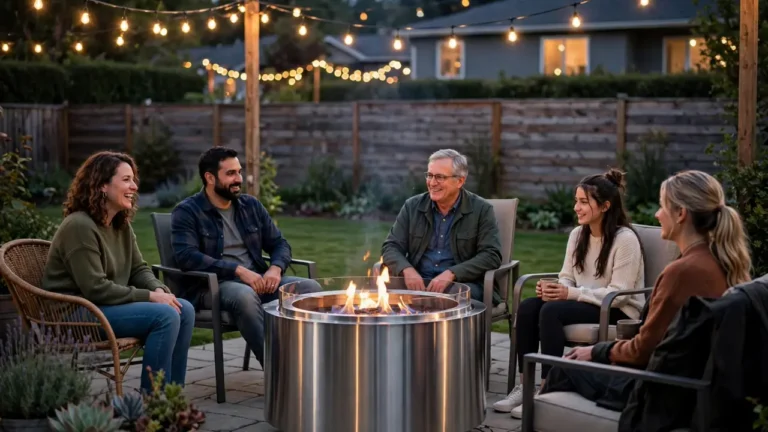
Can You Roast Marshmallows on a Gas Fire Pit? Yes — Here’s How to Do It Safely
Can You Roast Marshmallows on a Gas Fire Pit? Yes, you can, and the marshmallows taste the same as they do over a wood fire. Propane and natural gas burn clean, so the flame adds no flavor of its own.
The catch is not the flame. The catch is what drips off the marshmallow and where it lands.
A gas fire pit hides a burner with small gas ports under a bed of lava rock or fire glass. Melted sugar that falls into that bed can clog a port, stain the media, and leave the flame uneven the next time you light it. This guide shows you how to roast a golden marshmallow, keep the sugar off the burner, and shut the pit down clean. Plan on about 20 minutes from lighting the pit to the last s’more.
You need no special gear beyond long metal skewers and a pack of marshmallows. The method works on propane and natural gas pits, on fire glass and lava rock alike. Read the safety notes first, then roast.
Safety note: gas fire pits are for outdoor use only. Never use one indoors, in a tent, in a garage, or under a low enclosed cover, because carbon monoxide has no smell and can build up fast in closed spaces. If you smell gas, turn the gas off if you can do so safely, leave the area, and call your gas supplier or 911 from outside. Never try to fix a gas line or a leaking connection yourself.
What You Need
- Marshmallows, regular size
- Long metal skewers, 30 inches preferred, at least 18 inches
- Graham crackers
- Chocolate squares
- Heavy-duty aluminum foil
- Metal tongs
- Heat-resistant gloves
- A damp cloth for wiping cooled media
At a Glance: The 7 Steps
- Check your fire pit manual first.
- Inspect the burner and media before lighting.
- Light the fire pit and set a medium flame.
- Load marshmallows onto long metal skewers.
- Hold each marshmallow above the flame, not in it.
- Rotate slowly until the outside turns golden.
- Shut the fire pit down and clean up drips.
Can You Roast Marshmallows on a Gas Fire Pit Safely?
The short answer is yes, with one condition: protect the burner. A clean gas flame leaves nothing on the marshmallow. Propane burns to carbon dioxide and water vapor when combustion is complete, the same fuel that sits under most gas grills. The marshmallow never touches the fuel itself, so the flavor stays the same as over wood.
Most fire pit manuals still say the unit is not a cooking appliance. That wording is about the burner, not the food. Fire pits are tested as heaters and decorative appliances, not as grills, and makers do not want food debris in the burner ports.
A marshmallow on a skewer held above the flame is a different case from cooking a meal over the pit, and the manual’s warning does not change that. Read your manual, respect a direct ban if yours has one, and keep sugar out of the media bed.
Gas Fire Pit vs. Wood Fire: Roasting Compared
| Roasting factor | Gas fire pit | Wood fire |
|---|---|---|
| Flavor added | None — clean burn | Smoky, from wood |
| Flame control | Dial the valve to medium | Shift coals by hand |
| Best roasting distance | 8 to 11 inches above the burner | 6 to 8 inches above the coals |
| Best skewer | Long metal, 30 inches preferred | Wood sticks or metal skewers |
| Drip risk | Sugar can clog burner ports | Drips fall into ash |
| Cleanup | Wipe media, replace stained pieces | Rake out ash once cool |
Distances reflect guidance from several fire pit guides: gas flames run hotter and more direct than a coal bed, so marshmallows need more room.
Check Your Fire Pit Manual First
Open the manual that came with your pit and look for the cooking line. Many manuals state the unit is for decorative use and is not a cooking appliance. That line matters because some makers treat cooking residue as damage outside the warranty.
Check the clearance and ventilation notes too. The pit belongs outdoors on a level, non-combustible surface, with open air above it. A covered patio with a low roof traps heat and fumes, so move the roast to open sky.
Inspect the Burner and Media Before Lighting
Look across the media bed before you light anything. Old sugar, leaves, and debris hide between the pieces, and media piled too deep can smother the burner ports. Brush the lava rock or fire glass level with tongs and pick out anything that does not belong there.
Check the gas connection too. On a propane pit, look at the hose and regulator for cracks or loose fittings, and confirm the tank sits upright and stable. If anything looks damaged or you smell gas, stop. Our guide to connect a propane tank to a fire pit walks through a safe hookup.
Light the Fire Pit and Set a Medium Flame
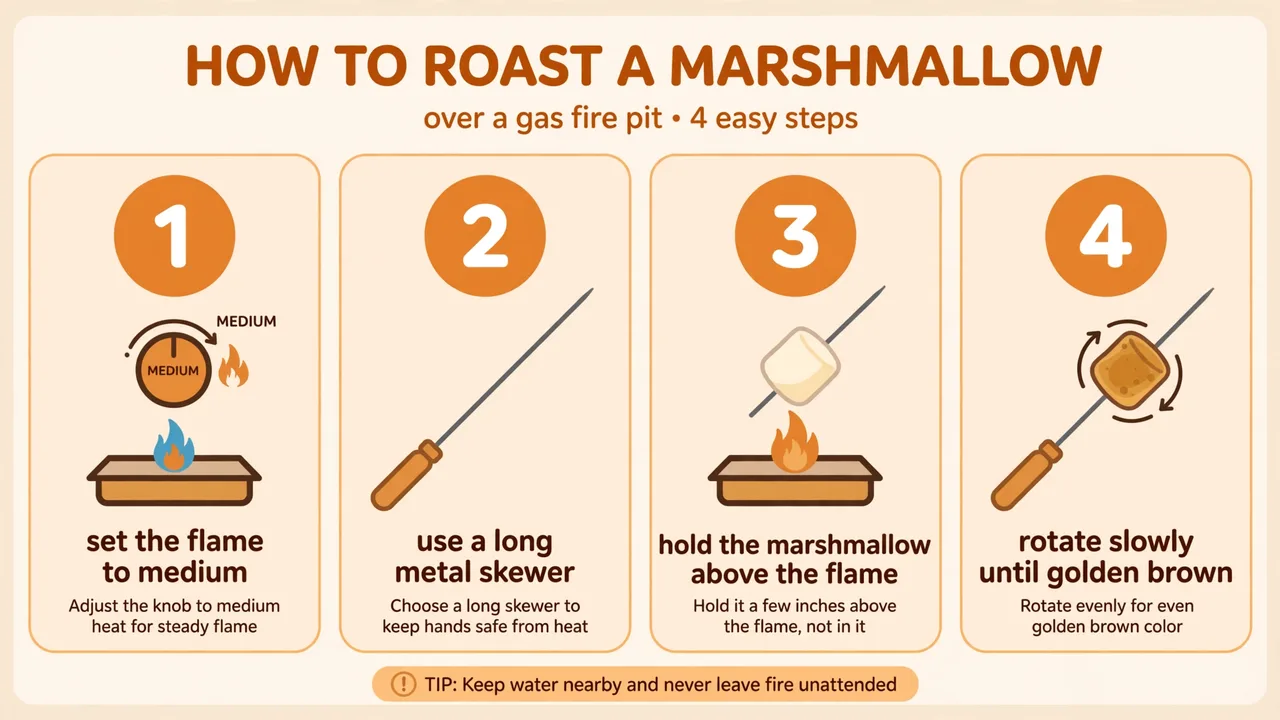
Light the pit the way your manual describes, keeping your face and hands clear of the burner. Turn the control valve to medium once the flame is steady. A wide-open valve chars the outside of a marshmallow before the center softens, while a medium flame gives you a longer window between raw and burnt.
Give the flame a few seconds to settle into an even ring. An uneven flame with tall jets on one side points to a blocked port or wind. If you need a refresher, see how to light a gas fire pit.
Heads up — gas smell means stop. If you smell gas at any point, do not light the pit and do not hunt for the leak yourself. Turn the gas off if you can do so safely, leave the area, and call your gas supplier or 911 from outside. Gas suppliers add a rotten-egg odorant to propane and natural gas so a leak can be noticed early, and the standard advice from gas utilities is the same every time: no flames, no switches, get out, then call.
Load Marshmallows onto Long Metal Skewers
Slide one marshmallow onto the prongs until about a quarter inch of skewer tip shows through the other side. That small bit of exposed tip is what keeps the marshmallow from sliding off. Two-prong skewers hold far better than single-prong ones, because a single prong lets the marshmallow spin loose and drop.
Give every person their own skewer and keep it to one marshmallow at a time. Two marshmallows on one skewer cook unevenly. Children get the longest skewers in the set, so their hands stay well clear of the flame.
Hold Each Marshmallow Above the Flame, Not in It
Hold the marshmallow 8 to 11 inches above the burner, off to the side of the flame column. The core of a gas flame is far hotter than the edges, and a marshmallow dipped into the core chars in seconds. The outer heat zone is where even browning happens.
Keep the skewer level and never rest it on the media bed. A skewer laid across hot fire glass heats the handle fast, and a marshmallow that sags onto the media leaves melted sugar behind. If a marshmallow starts to droop, lift it clear of the pit.
Pro tip — the foil landing pad. Before you light the pit, lay a doubled sheet of heavy-duty aluminum foil flat on top of the media on the side where people will roast, covering about a quarter of the bed. Every drip and dropped marshmallow lands on foil instead of in the burner, and you lift the whole sheet away when the night ends.
Rotate Slowly Until the Outside Turns Golden
Turn the skewer in a slow, steady roll so every side meets the same heat. The outside should deepen to an even gold while the center turns soft. A marshmallow that smokes on one side sat still too long, so pull it back and turn it.
Watch the color, not the clock. Roasting time shifts with wind, flame height, and marshmallow size, so no fixed number of seconds works every night. Golden and soft is done. Dark brown and smoking is past done, so pull it off and start a fresh one rather than scraping off the char.
Shut the Fire Pit Down and Clean Up Drips
Turn the burner control to off, then shut the gas off at the source — the tank valve on propane, or the shutoff valve on a natural gas line. Let the media cool fully before touching it. Fire glass holds heat far longer than lava rock does.
Lift out any foil pad and pick off cooled sugar. Rinse stained fire glass in warm water and let every piece dry fully before the next lighting, because trapped moisture can crack glass or porous rock when heated. For the full shutdown sequence, see how to put out a fire pit safely.
Lava Rock or Fire Glass: Which Handles Drips Better?
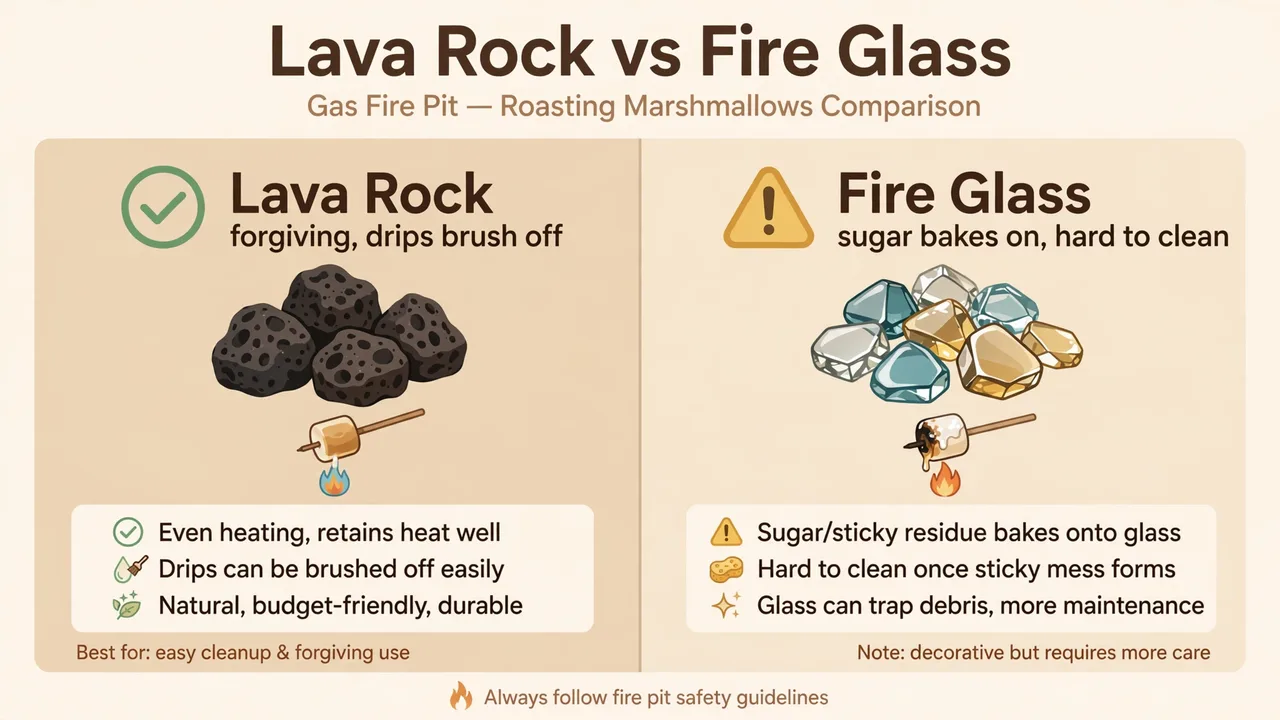
Lava rock is the forgiving choice for a roasting night. It is dark, so soot barely shows, and it costs little enough to replace by the bag. Sugar soaks into the pores of a stained rock and that piece is finished, but you pull out three or four rocks and move on. Nobody notices.
Fire glass is the harder case. Melted sugar welds to the smooth surface and cools into a hard amber crust. A long soak in warm water lifts some of it, and often it does not, leaving the piece cloudy.
Fire glass also costs several times more than lava rock, so replacing a scorched handful stings. If your pit runs fire glass and s’mores are a regular event, swap in a small bag of black lava rock for roasting nights. Our lava rock vs fire glass for fire pits guide compares the two media in full.
Troubleshooting: If This Happens, Try This
| If this happens | Try this |
|---|---|
| Marshmallow chars in seconds | Turn the valve to medium and hold the marshmallow farther back, 8 to 11 inches above the burner. |
| Marshmallow slides off the skewer | Switch to a two-prong skewer and leave a quarter inch of tip showing through the marshmallow. |
| Flame sputters or burns unevenly | Shut the pit down, let it cool, and clear debris from the media. If the uneven flame persists, call a qualified service person. |
| Black film on fire glass | That is normal soot from a gas burn. Rinse the media once cool and let it dry fully before relighting. |
| Gas smell while roasting | Shut the gas off if you can do so safely, leave the area, and call your gas supplier or 911 from outside. |
Frequently Asked Questions
Can you roast marshmallows on a gas fire pit?
Yes. Propane and natural gas burn clean and add no flavor, so the marshmallows taste the same as over wood. Roast with a medium flame, long metal skewers, and a foil pad under the roasting side to catch drips before they reach the burner.
Do marshmallows taste different over gas than over wood?
No. A clean gas flame adds no smoky flavor, and a marshmallow roasted to gold over gas tastes the same as one roasted over wood coals. The difference is in the method, not the flavor: gas runs hotter, so you hold the marshmallow farther back.
Will a dropped marshmallow damage my fire pit?
One dropped marshmallow rarely ruins a pit, but melted sugar can clog a burner port and stain the media. Lava rock forgives a drip, while fire glass holds a hard amber crust that is tough to remove. Deal with a drop the same evening, once the media is cool.
Is lava rock or fire glass better for roasting nights?
Lava rock is better for roasting nights. It hides soot, costs little to replace, and a stained piece can be pulled out and swapped. Fire glass looks sharper but shows every drip, so many owners swap in lava rock for s’mores nights and switch back after.
Can kids roast marshmallows on a gas fire pit?
Yes, with an adult beside them and the longest skewers in the set. Children should sit or stand at arm’s length from the pit, never lean over the flame, and hand the skewer to an adult if the marshmallow starts to slip. Keep the area around the pit clear so nobody trips toward the burner.
Can you cook hot dogs or other food on a gas fire pit?
Marshmallows are the exception, not the start of a menu. Most gas fire pits are sold as decorative appliances, not cooking appliances, and drippy or fatty food risks the burner far more than a marshmallow does. If you want to cook outdoors, use a grill. For what belongs in a fire pit at all, see what you can burn in a fire pit.
Quick Reference Card: Roasting Marshmallows on a Gas Fire Pit
What you need: marshmallows, long metal skewers (30 inches preferred), graham crackers, chocolate, heavy-duty foil, tongs.
- Check the manual for cooking limits.
- Inspect the burner and media; lay a foil pad on the roasting side.
- Light the pit and set a medium flame.
- Load one marshmallow per skewer, tip showing through.
- Hold 8 to 11 inches above the burner, off the flame center.
- Rotate slowly until golden on all sides.
- Shut the burner off, then the gas at the source; clean drips once cool.
Remember: gas smell means stop, leave the area, and call for help from outside.
Can You Roast Marshmallows on a Gas Fire Pit? The answer is yes, and the method is short: medium flame, long skewers, and a foil pad under the roasting side. Keep the sugar out of the burner and the marshmallows come out golden every time.
Roast a batch tonight and see how the timing feels on your own pit. Once the marshmallows are dialed in, a s’mores night needs nothing more than a pack of graham crackers and a clear sky. For your next patio evening, learn how to convert a propane fire pit to natural gas if a fixed gas line sounds better than swapping tanks.