Lava Rock vs Fire Glass for Fire Pits: Which One Fits Your Fire Pit Best?
Your gas fire pit is built, the burner is in place, and now you face one last choice: lava rock or fire glass? Both hide the burner ring, spread the flame, and give your fire pit a finished look. They do it in very different ways, though, and the wrong pick can leave you with a flame that looks thin, a filler that cracks, or a bill that is twice what you planned. This guide on lava rock vs fire glass for fire pits walks you through the choice step by step, so you buy once and buy right.
By the end of this guide, you will know which filler suits your fire pit, how much of it to buy, and how to lay it down so the flame burns even and full. The whole job takes about an hour, and most of that is measuring and shopping. No special tools are needed, and the work is well within reach of a first-time fire pit owner.
Quick note on safety: this guide covers gas fire pits only. Lava rock and fire glass are made for gas burners, not for wood fires. Never use them in a wood-burning fire pit, and never burn treated wood, painted wood, or household trash in any fire pit.
If you smell gas at any point, turn off the gas supply, leave the area, and call your gas company or fire department from a safe distance. Check your local burn rules before you light up.
What You Need
- Tape measure
- Work gloves
- Lava rock or fire glass (amount worked out in Step 4)
- A bucket or scoop for pouring
- A small brush or old towel for dust
- Your fire pit manual, for burner clearance rules
- A fire pit cover, for rain protection after the job
At a Glance
- Measure your fire pit bowl and burner
- Compare lava rock and fire glass side by side
- Pick the filler that fits your fire pit and budget
- Work out how much filler you need
- Lay a lava rock base layer first
- Pour and spread the top layer
- Light the fire and check the flame pattern
Measure Your Fire Pit Bowl and Burner
Grab your tape measure before you buy anything. Measure the inside width of the bowl across the middle, then measure from the burner ring up to the rim. Write both numbers down, because the amount of filler you need comes straight from them. A bowl that is wider or deeper than you guessed will eat through bags fast, and guessing is how most people end up making a second trip to the store.
While you are there, check the burner itself. Note whether the burner is a ring, a straight bar, or a pan, and read the fire pit manual for any filler depth limits. Some burners need the filler to sit at least 1 inch above the ring, while others warn against burying the burner too deep. If your manual is missing, look up the model number on the maker’s site before you move on.
Compare Lava Rock and Fire Glass Side by Side
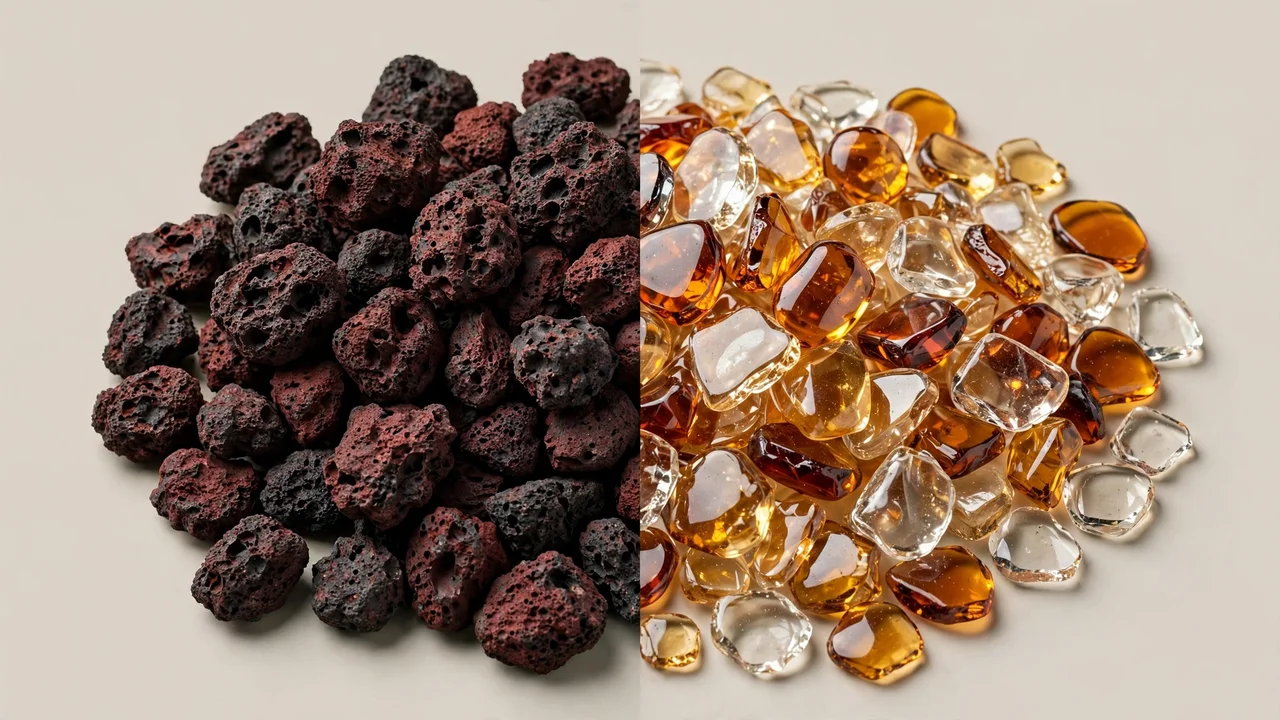
Lava rock is real volcanic stone. It is rough, light, and full of tiny holes. It comes in dark red, black, and gray, and it looks right at home in a rustic or stone fire pit.
Fire glass is tempered glass that has been tumbled smooth. It comes in clear, amber, blue, green, and many other colors, and it catches the flame light and throws it back in bright sparkles.
The table below puts the two head to head on the points that matter most. Read it with your own fire pit in mind: a small patio pit and a large built-in pit will point you to different answers.
| Feature | Lava Rock | Fire Glass |
|---|---|---|
| Look | Rough, natural stone; dark red, black, or gray | Smooth, glossy pieces; many colors, sparkles in flame light |
| Flame glow | Warm, low-key glow; flame sits above the stone | Bright, reflective glow; light bounces between pieces |
| Heat feel | Holds heat in its pores and gives it back slowly | Heats fast and cools fast; reflects heat upward |
| Weight | Light for its size; light to carry and pour | Heavy; a full bowl can weigh two to three times more than lava rock |
| Cleaning | Rinse and dry; dust and ash hide in the pores | Rinse and dry; soot shows up fast on light colors |
| Breakage risk | Can crack or crumble over years of heating and cooling | Tempered to resist heat, but sharp chips can form if pieces crack |
| Typical cost | Lower cost per bag than fire glass | Higher cost per bag; large bowls get pricey fast |
| Best for | Rustic pits, large bowls, tight budgets | Modern pits, small bowls, showpiece flames |
One fact trips up a lot of first-time buyers: neither filler makes your fire pit put out more heat. The burner and the gas supply set the heat output, and the filler only shapes how the flame looks and how the heat spreads. If you want more warmth, look at the burner size and the fuel type first. Our guide to propane vs natural gas fire pits explains how fuel choice affects heat and running cost.
Pick the Filler That Fits Your Fire Pit and Budget
Match the filler to the pit you already own. A stone or brick pit with a wide bowl looks best with lava rock, and the lower cost keeps a big fill affordable. A sleek metal or concrete pit with a narrow bowl shows off fire glass well, and the small size keeps the higher price in check. Style is a real factor here, since you will look at this filler every time you sit down outside.
Budget is the second filter. Fire glass costs more per bag than lava rock, and a wide bowl needs many bags. If the price of a full glass fill makes you wince, the base-layer trick in Step 5 cuts the cost a lot.
It lets you get the glass look on top while lava rock does the quiet work underneath. There is no rule that says you must pick one filler and use it alone.
Think about who uses the pit, too. Lava rock is light to lift and move, which helps if you clean the pit often. Fire glass is heavy and its pieces can be sharp if they chip, so wear gloves when you handle it and keep small children from digging through it. If you are still choosing the pit itself, our best type of fire pit buying guide can help you weigh the options before you spend.
Work Out How Much Filler You Need
This is a math step, and it saves real money. For a round bowl, the volume you need is the bowl area times the fill depth. Measure the bowl diameter in feet, halve it for the radius, and multiply 3.14 × radius × radius × depth in feet. A depth of 2 inches is a good starting point for most gas fire pits, since it covers the burner ring without burying it.
Take a 24-inch round bowl as a worked example. The radius is 1 foot, so the area is 3.14 square feet. At 2 inches deep (about 0.17 feet), the volume is 3.14 × 0.17 = 0.52 cubic feet.
That is roughly half a cubic foot of filler. Check the bag label for how many cubic feet each bag covers, since bag sizes vary by brand, and round up to the next whole bag.
| Round Bowl Diameter | Filler at 2 Inches Deep | Filler at 3 Inches Deep |
|---|---|---|
| 18 inches | 0.29 cubic feet | 0.44 cubic feet |
| 24 inches | 0.52 cubic feet | 0.79 cubic feet |
| 30 inches | 0.82 cubic feet | 1.23 cubic feet |
| 36 inches | 1.18 cubic feet | 1.77 cubic feet |
Volumes are worked out from the bowl area times the fill depth, rounded to two decimal places. Square or rectangular bowls need a different sum: length × width × depth, all in feet.
Buy one extra bag beyond your sum. A little spare filler lets you top up the bowl after the first few fires settle the pieces, and it covers the odd broken piece without another store trip. Store the spare bag somewhere dry, since wet lava rock can pop and crackle when it heats up fast.
Lay a Lava Rock Base Layer First
Even if you chose fire glass for the top, start with lava rock underneath. Pour lava rock into the bowl until it sits about 1 inch below the top of the burner ring. Spread it with your gloved hands until the ring is half buried and the layer looks even all the way around. This base lifts the burner, lets gas flow freely, and cuts the amount of pricey fire glass you need by a third or more.
If you chose lava rock for the whole fill, this step is the whole fill: keep pouring until the rock sits about 1 inch above the burner ring, then move on to Step 7. Either way, keep the rock clear of the burner holes. Gas needs open holes to flow, and a blocked hole gives you a weak or lopsided flame. Shake the bowl gently and look for any holes that are packed shut.
Heads Up: Lava rock holds water in its tiny holes. If your rock got rained on, let it dry in the sun for a full day before you light the pit. Wet rock can crack or pop when it heats fast, and a flying chip can sting or startle anyone sitting close.
Pour and Spread the Top Layer
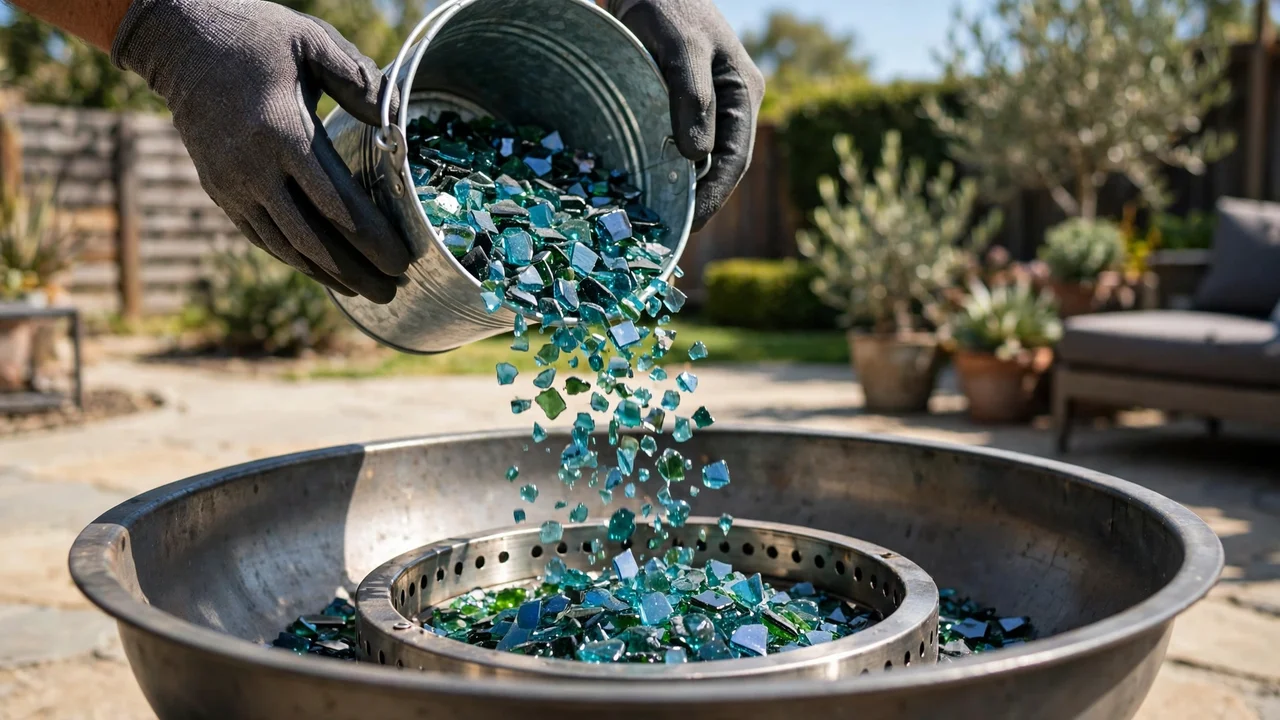
Pour your top layer slowly, a scoop at a time, starting at the far edge of the bowl and working toward you. Aim for a layer about 1 to 2 inches thick over the base. With fire glass, pour from low down so the pieces land softly instead of chipping each other. With lava rock, shake the bowl now and then to settle the pieces into the gaps.
Spread the top layer with your gloved hands until it looks level from every seat around the pit. Leave the burner ring covered by about 1 inch of filler, no more. A layer that is too thick smothers the flame, while a layer that is too thin leaves bare metal showing through. Step back and check the bowl from two or three angles before you call it done.
Light the Fire and Check the Flame Pattern
Light the pit the way your manual tells you to, then stand back and watch the flame for a full minute. A good fill gives you an even ring of flame with no tall jets and no dead spots. If one side burns high and the other side barely flickers, the filler is thicker on the weak side, or a burner hole is blocked. Turn the gas off, let the pit cool, and shift the filler until the flame evens out.
Listen as well as look. A little crackle from lava rock on the first burn is normal as trapped moisture escapes. Loud pops, a strong gas smell, or a flame that keeps going out are not normal.
If you smell gas, turn off the supply at once, move away, and call your gas company or fire department from a safe spot. Our guide on how to light a gas fire pit covers the lighting steps and shut-off checks in more detail.
Heads Up: The filler, the rim, and the metal around the pit stay hot long after the flame goes out. Treat every surface as hot for at least 30 minutes after shut-off. Keep children and pets back, and never touch the glass or rock with bare hands until the pit is fully cool.
What to Expect: Before and After
Before: Bare Burner
- Metal ring and gas holes on show
- Thin, sharp jets of flame
- Heat rises straight up in a narrow column
- Pit looks unfinished
After: Filled Bowl
- Burner hidden under a neat layer
- Full, even ring of flame
- Heat spreads wider across the seating area
- Pit looks finished and inviting
Common Mistakes to Avoid
A few errors show up again and again with new fire pit owners. Dodge these five and your first fill will look like your fifth.
5 Mistakes That Spoil a Fire Pit Fill
- Burying the burner too deep. More than 2 inches of filler over the ring starves the flame and can cause yellow, sooty burning. Keep the top layer near 1 inch above the ring.
- Using regular glass or river rock. Only tempered fire glass belongs in a fire pit. Regular glass shatters in heat, and smooth river rock can trap water and burst. Buy filler made for fire pits.
- Skipping the measuring step. Eyeballing the amount leads to a half-filled bowl or three spare bags. A two-minute measure with the table in Step 4 gets it right the first time.
- Filling a wood-burning pit with glass or lava rock. These fillers are for gas burners only. Wood fires burn hotter and unevenly, and they will crack glass and scatter rock.
- Leaving the pit uncovered in rain. Standing water soaks lava rock and dulls fire glass with mineral marks. A cover after every use keeps the filler clean and dry. For more on upkeep, see our guide on how to clean a fire pit.
Frequently Asked Questions
Lava Rock vs Fire Glass: Your Questions Answered
Can I mix lava rock and fire glass in the same fire pit?
Yes. Many owners use lava rock as a base layer and fire glass on top. The rock lifts the burner and cuts cost, while the glass gives the bright finish. Keep the glass layer at least 1 inch thick so the rock does not show through.
Does fire glass give off more heat than lava rock?
No. The burner and gas supply set the heat output, not the filler. Fire glass reflects heat upward and feels warmer right above the pit, while lava rock stores heat and gives it back slowly after shut-off. The total heat is about the same.
How deep should fire glass or lava rock sit in a fire pit?
Aim for about 1 inch of filler above the burner ring, with a total depth of around 2 inches in most bowls. Check your fire pit manual first, since some burners have their own depth limits. Going deeper than 2 inches over the ring can smother the flame.
Will fire glass crack or pop in a gas fire pit?
Fire glass is tempered to handle fire pit heat, so cracking is rare when it is used as directed. Chips can form if pieces are dropped hard or struck, so pour gently and wear gloves. Replace any piece that looks cracked or has a sharp edge.
How do I clean lava rock or fire glass?
Let the pit cool fully, scoop the filler into a bucket, and rinse it with water. A mild soap wash helps fire glass that has gone dull with soot. Dry the pieces fully in the sun before you put them back, since wet filler can pop when it heats up.
Quick Reference Card: Lava Rock vs Fire Glass for Fire Pits
What you need: tape measure, work gloves, lava rock or fire glass, bucket or scoop, brush or towel, fire pit manual, fire pit cover.
Steps:
- Measure the bowl and burner.
- Compare lava rock and fire glass side by side.
- Pick the filler that fits your fire pit and budget.
- Work out how much filler you need.
- Lay a lava rock base layer first.
- Pour and spread the top layer.
- Light the fire and check the flame pattern.
Remember: gas fire pits only; 1 inch of filler above the burner ring; dry filler fully before lighting; treat all surfaces as hot for 30 minutes after shut-off.
Light It Up and Enjoy the Glow
You now know how lava rock vs fire glass for fire pits stacks up: lava rock for a natural look and a kind price on big bowls, fire glass for a bright modern flame on smaller pits, and a lava rock base under glass when you want both. Measure once, pour with care, and check the flame on the first burn.
Your fire pit is ready for its first evening. Pull up a chair, keep the cover handy for rain, and check your clearance and safety spacing with our guide on fire pit clearance from houses, trees, and fences before your next gathering. Enjoy the fire.