What Size Fire Pit Do I Need? A BTU Sizing Guide for Patios, Yards, and Gatherings
A fire pit that is too small leaves half your group cold. A fire pit that is too big eats your whole patio and burns through fuel. What size fire pit do I need is the question to answer before you spend a dollar, and the answer comes down to three numbers: how many people sit around it, how much space you have, and how many BTUs the burner or fire can put out.
This guide walks you through those three numbers in order. You will measure your space, match a diameter to your group, pick a BTU range that keeps everyone warm, and check clearance and local rules before you buy or build. The whole process takes about 30 minutes of measuring and reading, and it saves you from the most common fire pit regret: buying a pretty pit that never warms the far side of the circle.
Safety First: Read This Before You Size or Light Anything
Fire pits involve open flame, hot metal, and (for gas models) pressurized fuel. Keep chairs and flammable items at least 30 inches from the flames, and keep the pit at least 10 feet from your house, fences, trees, and sheds unless your local code or the product manual calls for more. Never use a fire pit indoors or in a garage, and never burn treated, painted, or stained wood, plywood, MDF, or household trash. The fumes are toxic.
For gas fire pits, check connections for leaks with soapy water before each season, and shut off the fuel at the tank or valve when you are done. If you smell gas, leave the area and call your gas utility or emergency services from outside. Never try to find or fix a gas leak yourself.
Respect local burn bans and air quality rules. Some towns ban open burning on dry or windy days, and some require a permit. Check your city or county rules before your first fire. When in doubt, call a licensed professional.
Total Time
About 30 min
Active Time
15 min measuring
Difficulty
Beginner
What You Need
- Tape measure (25 ft or longer)
- Chalk or painter’s tape
- Four to six patio chairs (to test spacing)
- Pen and paper, or a phone notes app
- Your patio or yard dimensions
- The product manual for any gas model you are considering
- Your local fire code or burn rules (city or county website)
At a Glance: The 7 Steps
- Count your usual group
- Measure your patio or yard space
- Pick a diameter that fits your group
- Match BTUs to your group and climate
- Choose wood or gas for your size
- Check clearance and local rules
- Test the seating ring before you buy or build
Step 1: Count Your Usual Group
Start with people, not products. Think about the group that gathers around the fire most often, not the biggest party you might host once a year. A pit sized for your regular group of four will feel right every weekend, while a pit sized for a rare party of twelve will feel oversized and hungry for fuel on a normal night.
Write down your usual number. Then write down your maximum number. If the two numbers are close, size for the maximum.
If they are far apart, size for the usual group and add a couple of extra chairs for the rare big night. Extra chairs cost far less than an oversized pit.
Step 2: Measure Your Patio or Yard Space
Grab the tape measure and chalk. Measure the length and width of the area where the fire pit will sit. Write both numbers down. Now mark the outline of the pit you are considering with chalk or painter’s tape on the ground, and walk around it.
Leave at least 24 to 36 inches of open walkway between the pit edge and any chair, wall, or planter. This is the ring people use to walk, carry drinks, and pull their chairs back from the heat. If the chalk outline leaves less than that, the pit is too big for the space, no matter how good it looks in the store.
Pro Tip: Tape the outline on the ground and leave it there for a full day. Walk past it, set chairs around it, and eat a meal near it. A pit that looks fine on paper can feel like it blocks the whole patio once you live with the outline for a day.
Step 3: Pick a Diameter That Fits Your Group
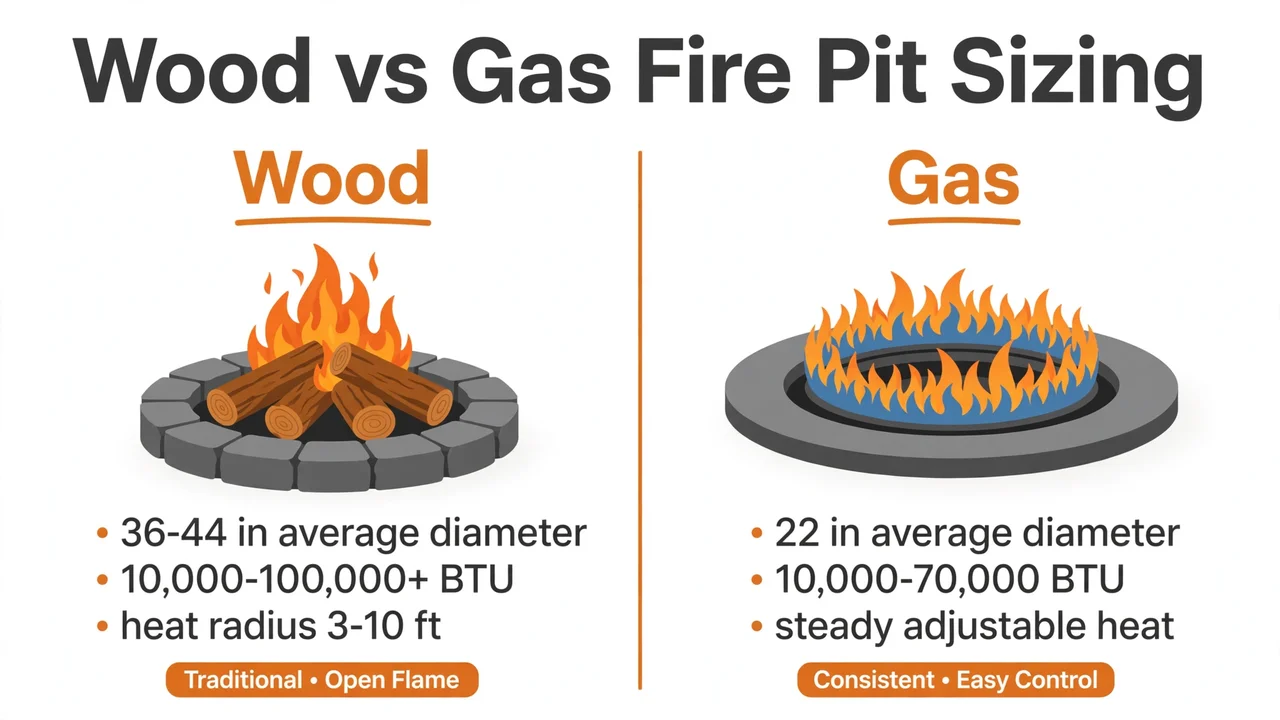
Diameter is the single most useful size number for a fire pit. For wood-burning pits, the common guide is 30 to 36 inches for 2 to 3 people, 36 to 44 inches for 4 to 6 people, and 44 to 60 inches for 6 or more people. Gas fire pits run smaller because the flame is contained and steady: the average gas fire pit is about 22 inches across, and many gas fire pit tables run 40 to 54 inches wide.
Do not go below 30 inches inside diameter for a wood fire pit. Smaller pits choke the fire, smoke more, and hold too little wood to keep a steady flame. On the other end, most guides cap a backyard wood pit at about 5 feet across. Bigger than that and the fire becomes hard to feed, hard to control, and hard to put out safely.
Square pits follow the same logic with side length instead of diameter. A small square pit runs about 27 to 32 inches per side, a medium one 32 to 39 inches, and a large one up to about 53 inches. Square pits pack seating more neatly into a corner or against a wall, which helps on a narrow patio.
Step 4: Match BTUs to Your Group and Climate
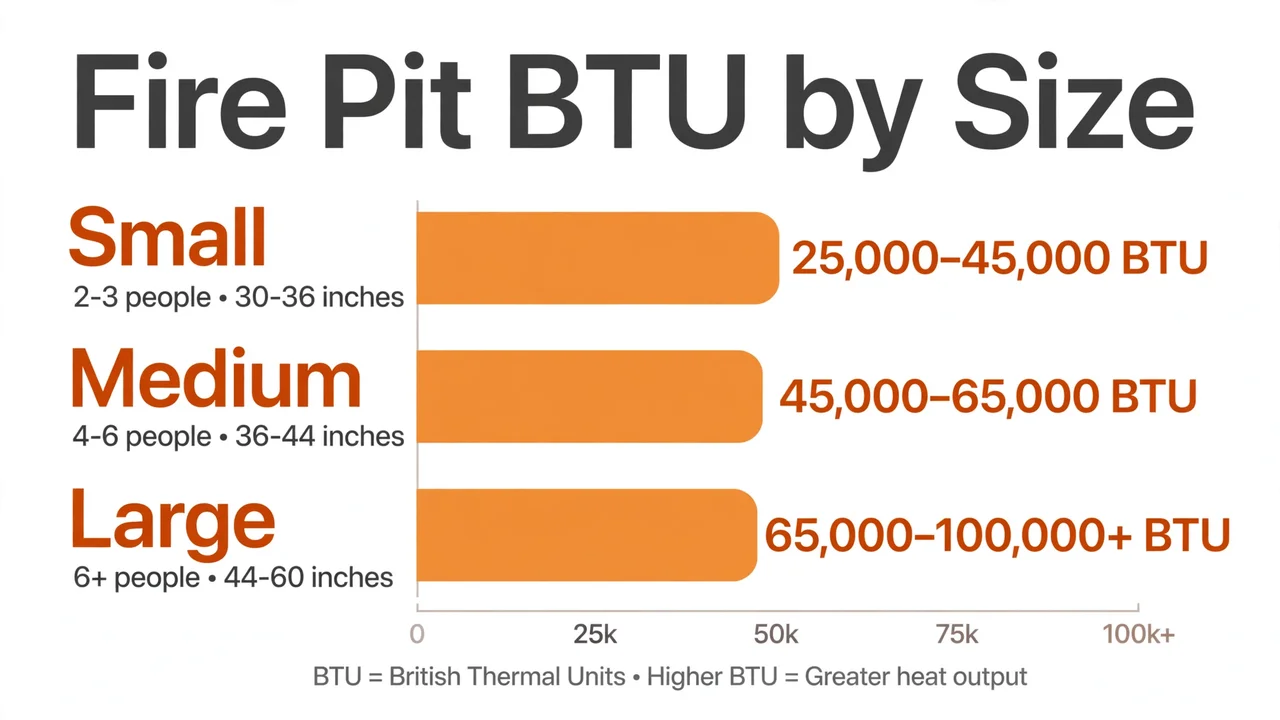
BTU stands for British thermal unit, and it measures how much heat a burner puts out per hour. More BTUs means more heat, but only up to a point. Wind, cold air, and open sky steal heat fast outdoors, so a high BTU number on a calm summer night can still feel weak on a windy October evening.
Use the table below as a starting point. These are common manufacturer and industry guide ranges, not lab-tested guarantees. Actual heat depends on wind, air temperature, fuel quality, and whether the pit has a wind guard or glass surround.
| Group Size | Pit Diameter | BTU Range (Guide) | Heat Radius (Estimate) |
|---|---|---|---|
| 2 to 3 people | 30 to 36 in | 25,000 to 45,000 | About 3 to 5 ft |
| 4 to 6 people | 36 to 44 in | 45,000 to 65,000 | About 5 to 8 ft |
| 6 to 8 people | 44 to 60 in | 65,000 to 85,000 | About 8 to 10 ft |
| 8 or more people | 60 in and up | 85,000 to 120,000+ | About 10 ft and up |
BTU figures are common manufacturer guide ranges. Heat radius is an estimate. Wind, cold, and an open sky reduce real-world warmth, so size up one step if your yard is windy or you plan to use the pit in cold weather.
Most propane fire pit tables fall in the 40,000 to 60,000 BTU band, which suits 2 to 6 people on a normal patio. A 50,000 BTU burner warms a standard conversation set. Step up to 60,000 BTU or more for a long table or a sectional. If your dealer quotes a BTU number far above these bands for a small table, ask how it was measured, because burner size and gas line size both cap real output.
Climate matters as much as group size. A pit that warms four people on a mild evening in the South can feel weak on a cool night in the North. If you plan to use the pit in spring and fall, pick the top of the BTU band for your group size. A wind guard or glass surround can also help, and some guides credit it with saving about 10 percent of heat loss.
Step 5: Choose Wood or Gas for Your Size
Wood and gas size differently, and the fuel you pick changes the pit you need. Wood pits are bigger on average because the fire needs room to breathe. Gas pits are smaller because the burner does the work and the flame stays controlled.
Wood fire pits put out roughly 10,000 to 100,000 BTUs and up, depending on wood type, dryness, wind, and how the fire is built. The heat radius of a wood fire pit is generally around 3 to 10 feet. Gas fire pits usually run about 10,000 to 70,000 BTUs, with a steadier, more even flame. That steadiness is why a smaller gas pit can feel warmer than a bigger wood pit on a breezy night.
Think about fuel supply too. A large wood pit eats a lot of firewood, and you need dry storage for it.
A large gas pit eats propane fast: a standard 20-pound propane tank on a 50,000 BTU burner lasts roughly 8 to 9 hours at full flame, so a big gas pit can drain a tank in a single long evening. Our guide to how long a propane tank lasts on a fire pit breaks down the math by BTU level. If you want a big gas pit, a fixed natural gas line is often the better call, and our propane vs natural gas fire pits comparison covers that choice.
If you are still deciding between fuel types, our best type of fire pit buying guide walks through wood, propane, and natural gas side by side. Pick the fuel first, then size the pit for that fuel, not the other way around.
Step 6: Check Clearance and Local Rules
Before you buy, check the clearance numbers in the product manual and your local fire code. The manual wins if it calls for more space than the general rules below. Keep the pit at least 10 feet from the house, fences, sheds, and overhanging trees, and keep chairs at least 30 inches from the flames.
Some towns set a minimum distance from property lines or ban open wood fires in city limits. Others require a permit for a permanent pit or a gas line. Our guide to fire pit clearance from houses, trees, and fences covers the distances in detail, and our backyard fire pit legality guide explains the permits and bans to check. A quick call to your local fire department answers most of these questions in five minutes.
Heads Up: Never place a wood-burning fire pit on a wood deck, and never use a fire pit indoors, in a garage, or under a low roof. Hot embers and carbon monoxide do not care how careful you are. If your only outdoor space is a deck, look at a gas model rated for deck use and follow its manual exactly.
Step 7: Test the Seating Ring Before You Buy or Build
Set your chairs around the chalk outline from Step 2. Sit in each one.
Can you reach the fire to warm your hands without leaning forward? Can you stretch your legs without touching the pit? Can everyone see and hear each other across the circle?
A good seating ring puts chair fronts about 24 to 30 inches from the pit edge for a wood pit, close enough to feel heat and far enough to stay safe. If you are building a permanent seating wall, place it 24 to 30 inches from the pit edge too, and test it with movable chairs at full heat before you pour concrete or lay stone. For a full walkthrough of the build, see our guide on how to build a fire pit.

Fire Pit Size by Patio: A Quick Match
Small patios under about 10 by 10 feet suit a compact pit or a tabletop model. A 30 to 36 inch pit or a 40 to 42 inch fire pit table leaves room for two to four chairs and a walkway. Anything bigger crowds the space and pushes chairs against the house wall.
Mid-size patios around 12 by 16 feet take a 36 to 44 inch pit with four to six chairs. This is the most common backyard setup, and it matches the 45,000 to 65,000 BTU band for gas models. Large yards and open lawns can take a 44 to 60 inch pit with six or more chairs, plus a seating wall or a second ring of chairs behind the first.
Height matters as well. Above-ground fire pit walls work best at about 18 inches tall, with a usable range of 12 to 20 inches. Taller walls block heat from reaching seated guests.
Lower walls let embers escape more easily. If you plan to rest your feet on the edge, keep the wall at the lower end of that range and test it with chairs first.
Common Mistakes When Sizing a Fire Pit
5 Mistakes to Avoid
1. Buying for the biggest party, not the usual group. An oversized pit burns more fuel every single night, not only on party nights. Size for the group you host most weeks.
2. Ignoring the walkway ring. A pit that fits the patio but leaves no room to walk around it turns every evening into a squeeze. Keep 24 to 36 inches clear all the way around.
3. Trusting the BTU number alone. A big BTU rating on a small burner or a thin gas line will not deliver what the box promises. Check burner size and fuel supply, not the headline number alone.
4. Placing chairs too close. Chairs closer than 30 inches from the flames get hot fast, and fabric or cushions can scorch. Measure the gap, do not guess it.
5. Skipping the local rules check. A pit that breaks a burn ban or a setback rule can draw a fine or a visit from the fire department. Five minutes on your city website prevents that.
FAQ: What Size Fire Pit Do I Need?
What size fire pit do I need for 4 people?
A 36 to 44 inch wood fire pit or a 40 to 54 inch gas fire pit table suits four people. For gas, look for 45,000 to 65,000 BTU so everyone in the circle feels the heat.
How many BTUs do I need for a fire pit?
Most patios need 25,000 to 65,000 BTU. Small groups of 2 to 3 people do well with 25,000 to 45,000 BTU, groups of 4 to 6 need 45,000 to 65,000 BTU, and groups of 6 or more need 65,000 BTU and up. Size up one step if your yard is windy or you use the pit in cold weather.
What is the best fire pit diameter for a small patio?
A 30 to 36 inch pit or a 40 to 42 inch fire pit table fits a small patio under about 10 by 10 feet. It seats 2 to 4 people and still leaves a 24 to 36 inch walkway around the pit.
How far should chairs sit from a fire pit?
Keep chairs at least 30 inches from the flames. For comfort, most people sit with chair fronts about 24 to 30 inches from the pit edge, which puts them inside the warm zone without crowding the fire.
Is a bigger fire pit always warmer?
Not always. A bigger pit holds a bigger fire, but wind, cold air, and fuel quality matter as much. A well-placed 50,000 BTU gas pit with a wind guard can feel warmer than a large open wood pit on a windy night.
How much space do I need around a fire pit?
Leave 24 to 36 inches of open walkway around the pit edge, and keep the pit at least 10 feet from your house, fences, trees, and sheds. Check your local code and the product manual, because some areas require more.
What size gas fire pit do I need?
Gas fire pits run smaller than wood pits. The average gas fire pit is about 22 inches across, and most propane fire pit tables are 40 to 60 inches wide with 40,000 to 60,000 BTU. Match the table width to your seating: about 40 inches for up to four chairs, about 54 inches for a sofa set, and about 72 inches for a sectional.
Can a fire pit be too big for my yard?
Yes. A pit wider than about 5 feet is hard to feed, hard to control, and hard to put out. It also eats patio space and fuel. If your chalk outline leaves less than 24 inches of walkway, pick a smaller pit.
Quick Reference Card: Fire Pit Sizing at a Glance
You need: tape measure, chalk or tape, chairs to test spacing, local fire rules.
Size by group: 2 to 3 people, 30 to 36 in, 25,000 to 45,000 BTU. 4 to 6 people, 36 to 44 in, 45,000 to 65,000 BTU. 6 or more, 44 to 60 in, 65,000 BTU and up.
Clearance: 30 in from flames to chairs, 24 to 36 in walkway, 10 ft from house and trees.
Steps 1 to 3: Count your group. Measure the space. Pick a diameter.
Steps 4 to 7: Match BTUs. Choose wood or gas. Check clearance and rules. Test the seating ring.
That is the whole method. Count the people, measure the space, match the diameter and BTUs, and check the rules before you buy. What size fire pit do I need stops being a guess once those three numbers are on paper.
Your next step is a fun one: tape the outline on the ground and sit in the circle. If it feels right with chairs in place, you have your size. When the fire is lit, our guide to how to put out a fire pit safely covers the end of the evening, and our lava rock vs fire glass for fire pits comparison helps you pick the burner fill that fits your new pit.
Sources: FireplaceTips fire pit size and dimensions guide (fireplacetips.com); Starfire Direct, How Big Should My Fire Pit Be (starfiredirect.com); Elementi fire pit size guide (elementishop.com). BTU figures in this article are common manufacturer and industry guide ranges, labeled as estimates where they appear.