Can Patio Heaters Get Wet? How Rain, Covers and Storage Affect Your Heater
Can patio heaters get wet? Rain, covers and storage decide how long your heater lasts. A short shower will not ruin most patio heaters, but rain left sitting on metal parts, burners, and plugs causes rust, clogs, and faults over time. This guide shows you what to do before rain, during rain, and after rain, so your heater stays safe to light next time you need it.
You will learn which heater types cope best with rain, how to dry and cover a heater the right way, and how to store it for winter. The steps take about 20 minutes of active work, and most of them need no tools at all. Read the safety note first, then work through the steps in order.
Rain is the main cause of early wear on patio heaters. Water creeps into joints, sits in the burner tray, and soaks into ignition parts. A cover helps, but only when the heater is cool and dry underneath. The steps below keep water out and keep you safe.
Heads Up: Read This Before Rain Hits
Never use a gas patio heater indoors, in a garage, or under a low roof where fumes can build up. Gas heaters give off carbon monoxide, a gas you cannot see or smell.
Never run an electric heater with a cut cord, a cracked plug, or in standing water. Turn the gas off at the tank or valve before you cover or move the heater, and let it cool fully first.
If you smell gas, feel unsure, or see damage, step away and call a licensed pro. This guide is general advice, not a fix for a broken heater.
Total Time
20 minutes
plus drying time
Active Time
20 minutes
no tools needed
Difficulty
Beginner
7 short steps
What You Need
- Fitted waterproof cover, sized for your heater
- Soft cloths or old towels
- Mild soap and a bucket of warm water
- Soft brush for burner holes
- Gloves
- Silicone spray or rust guard (optional)
- Dry storage space, such as a shed or garage
- Your heater manual
Can Patio Heaters Get Wet in the Rain?
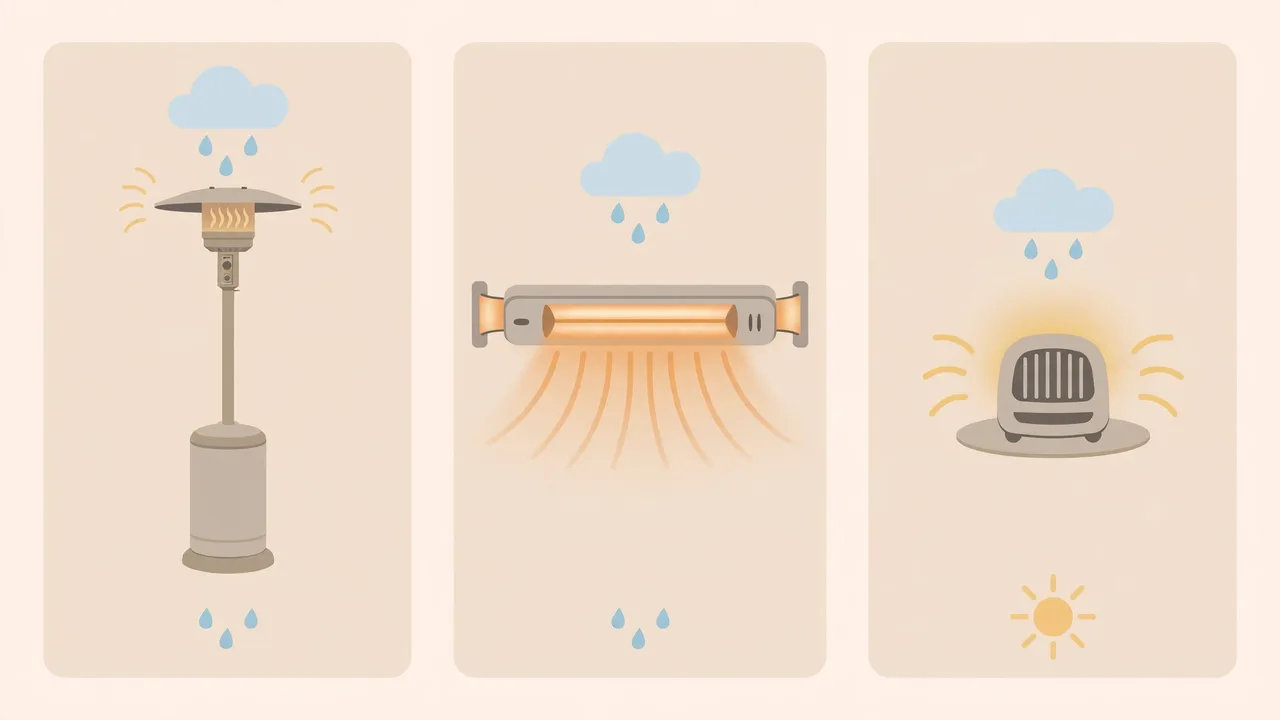
Most patio heaters can take a light shower, but none of them like standing water. Propane heaters have open burners and pilot parts that clog when wet. Electric heaters have plugs, cords, and heating parts that must stay dry. A tabletop heater is small, so it is the one to bring inside first.
Some heaters carry an IP rating, a two digit code that shows how well a product resists dust and water. A higher second digit means better water protection. Ratings differ by model, so check the label on your heater or the manual. Never guess a rating from the shape of the heater.
| Heater type | Rain risk | What gets wet first | What to do |
|---|---|---|---|
| Propane tower heater | High | Burner, pilot light, gas valve | Cover it or move it under a roof |
| Electric infrared heater | High | Plug, cord, heating element | Unplug it and keep it dry |
| Natural gas heater | Medium | Burner and gas line joints | Cover it, check joints after rain |
| Tabletop heater | Medium | Burner and fuel canister | Bring it inside |
| Fire pit table | Low to medium | Burner ring and ignition | Use a fitted cover |
Rain also shortens a heater’s life in a slow way. Rust starts where water sits, and a rusty base or pole is weaker than a clean one. That is why drying matters as much as covering. If you want a sense of how long a heater should serve you, read our guide on how long patio heaters last before you buy a cover.
At a Glance
- Check the forecast and your heater type
- Turn the heater off and let it cool
- Shut off the gas or unplug the power
- Dry every wet part with a soft cloth
- Fit a cover that leaves room to breathe
- Move a small heater under cover
- Store the heater for the off season
Check the Forecast and Your Heater Type
Look at the rain forecast before you plan an evening outside. A short light shower is one thing. Hours of heavy rain call for a cover or a move indoors.
Find your heater type first, since propane, electric, and natural gas heaters need different care. The label on the base or the manual tells you the fuel type and any rain rating.
If you are still choosing between fuel types, our guide to an electric or propane patio heater lays out how each one copes with outdoor weather. Pick the type that fits your patio, then plan your rain routine around it.
Turn the Heater Off and Let It Cool
Switch the heater off at its own control knob. A hot emitter or burner can melt a cover and burn skin, so wait at least 30 minutes before you touch the top parts. Hold your hand near the dome, not on it, to test for heat. Cool metal feels the same as the air around it.
Shut Off the Gas or Unplug the Power
For a gas heater, close the valve on the tank or the gas line. For an electric heater, pull the plug from the socket and coil the cord loosely. Water and live power never mix, so this step comes before any drying or covering. A dry plug is a safe plug, and a closed valve stops leaks while the heater sits unused.
Heads Up: Never Cover a Live Heater
Never cover a heater while the gas is still on. Gas can build up under a cover and light with a spark. Keep the cover clear of the burner and emitter until the heater is cold and the gas is off.
Dry Every Wet Part With a Soft Cloth
Wipe the dome, pole, burner tray, and base with a soft cloth or an old towel. Pay extra care to the burner holes and the pilot area, where water hides and blocks gas flow. A soft brush clears grit from small holes without scratching the metal. Leave the heater open to the air for 10 minutes so the last damp spots dry.
Fit a Cover That Leaves Room to Breathe
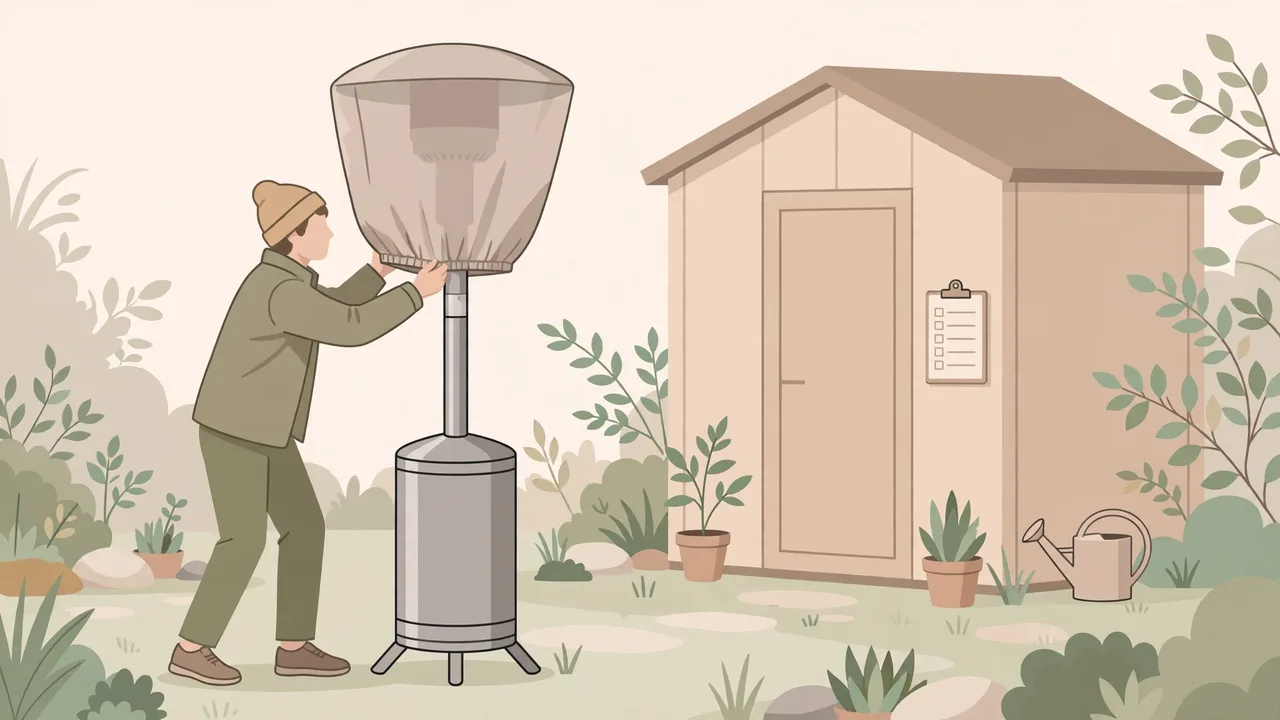
Pull a fitted waterproof cover over the cool, dry heater. Pick a cover made for your heater size, since a loose cover flaps in wind and lets rain in at the edges. Leave the bottom edge a little open so air can move and damp air can escape. A cover that traps damp air rusts the metal it was meant to guard.
Pro Tip: Slow Rust Before It Starts
Spray a light coat of silicone spray on metal joints twice a year to slow rust. Wipe off any extra spray so it never drips near the burner.
Move a Small Heater Under Cover
Tabletop heaters and small electric heaters are light enough to carry inside. Lift with both hands and keep the heater upright so fuel stays where it belongs. Set it on a dry shelf in a garage or shed, away from damp floors. A heater stored inside lasts longer than one left out in rain all season.
Think about where the heater stands, too. A heater on a wood deck needs a dry, level spot and a clear zone around it. Our guide to a patio heater on a wood deck covers safe placement in full.
Store the Heater for the Off Season
Give the heater a full clean before winter storage. Wash the outside with warm soapy water, rinse, and dry each part. Our guide on how to clean a patio heater walks through each part in order. Take the gas tank off a propane heater and store the tank upright outside, never in a closed room.
Cover the heater, stand it upright, and check it once a month for damp or rust. A quick monthly check catches small rust spots while they are still small. When spring comes, the heater will be clean, dry, and ready to light.
| If This Happens | Try This |
|---|---|
| Heater will not light after rain | Dry the pilot area and burner holes, then try again. If it still fails, see our guide on a patio heater that will not stay lit. |
| Rust spots on the pole or base | Scrub with a soft brush, dry fully, and add a light coat of rust guard. |
| Cover smells damp or musty | Air the heater in the sun, wash the cover, and dry both fully before covering again. |
| Water pools on top of the cover | Tighten the cover straps and tilt the heater dome so water runs off. |
| Electric heater trips the breaker | Unplug it, dry the plug and socket, and call an electrician if it trips again. |
Frequently Asked Questions
Can patio heaters get wet in light rain?
Yes, most patio heaters can take a light shower, but you should dry them and cover them after. Standing water and heavy rain cause rust and clogged burners over time.
Can I leave my patio heater outside in the rain?
You can leave it outside with a fitted waterproof cover, but it will last longer under a roof or in a shed. Unplug electric heaters and shut off gas before you cover them.
Should I cover a patio heater while it is still hot?
No. Let the heater cool fully, at least 30 minutes, before you put a cover on. A hot heater can melt a cover and trap heat inside.
What should I do if my patio heater gets soaked?
Turn it off, shut off the gas or unplug it, and dry every part with a soft cloth. Let it air dry, then check the burner and pilot before you light it again.
Can I use a patio heater in the rain?
It is best not to run a patio heater in rain. Water can damage burners and plugs, and wet surfaces raise the risk of slips and shocks. Wait for dry weather.
Quick Reference Card
What You Need: fitted cover, soft cloths, mild soap, soft brush, gloves, dry storage space.
Before Rain: check the forecast and your heater type.
After Use: turn it off, wait 30 minutes, shut off gas or unplug power.
After Rain: dry every part, air dry 10 minutes, then cover.
Storage: clean it, cover it, stand it upright, check monthly.
Never: use a gas heater indoors, run an electric heater in standing water, or cover a hot heater.
So, can patio heaters get wet? A little rain is fine when you dry and cover the heater after.
Rain does not have to end your heater’s life. Dry it, cover it, and store it with care, and it will be ready for the next warm evening.
Check the forecast, grab your cover, and enjoy your patio with peace of mind.