Can a Fire Pit Go on Grass? How to Do It Without Killing Your Lawn
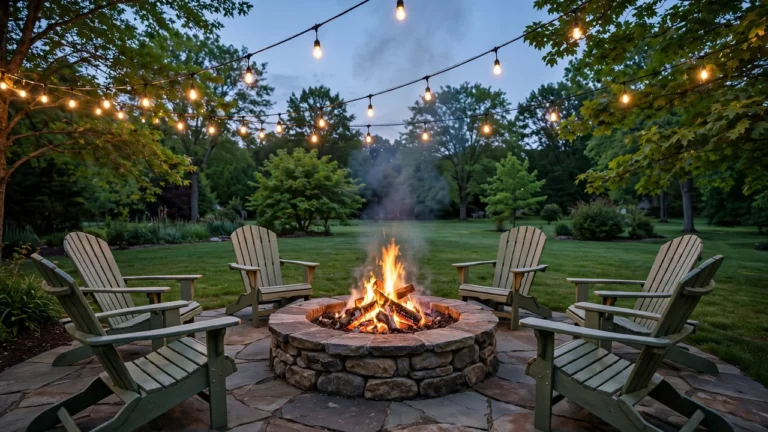
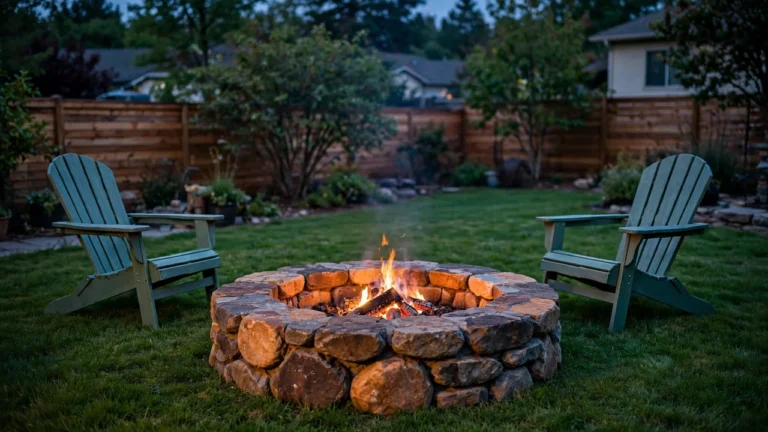
You have a lawn, a fire pit, and no patio. The question is whether the pit can sit on the grass tonight, or whether you will wake up to a dead brown circle and a visit from a neighbor about the smoke. Here is the short version: can a fire pit go on grass? Yes, it can, as long as you shield the lawn from the heat and follow your local rules.
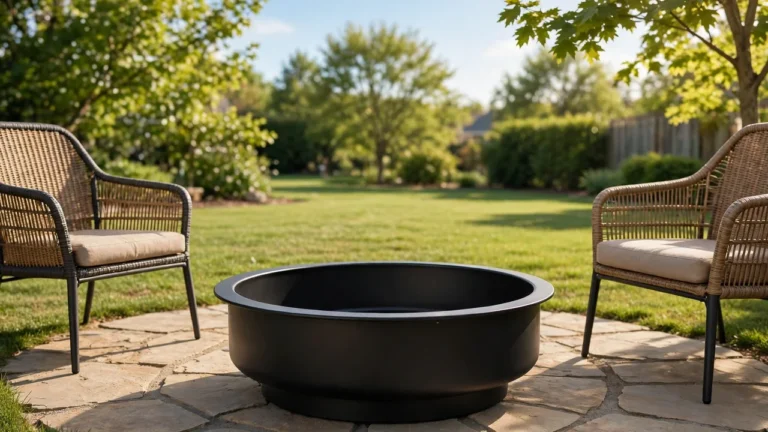
Put a bare metal bowl straight on the lawn and the grass under it will scorch. Give it a heat shield or a ring of pavers, keep the fire small, and the lawn stays safe.
This guide walks you through the whole setup in about an hour. You will pick a safe spot, protect the grass, light the fire, and put it out cold when the night ends. You will also learn what to do if the grass turns brown anyway. No patio needed, no tools beyond a shovel and a hose.
Safety note: open fire can hurt people, pets, and property. Check your city, county, and HOA rules and any burn bans before you light anything. Never leave a fire unattended, never burn treated wood, painted wood, trash, or yard waste, and keep water or a hose within reach at all times.
If wind picks up or embers start to drift, put the fire out. When in doubt, call your local fire department for guidance.
What You Need
- A portable fire pit with legs or a stand (wood-burning or gas)
- A heat shield, fire pit mat, or a ring of concrete pavers
- A tape measure
- A lawn mower
- A garden hose or a full bucket of water
- A metal bucket with a lid, for ash
- A shovel
- Dry, seasoned firewood (for a wood fire pit)
- A lighter or long matches
- A spark screen, if your fire pit came with one
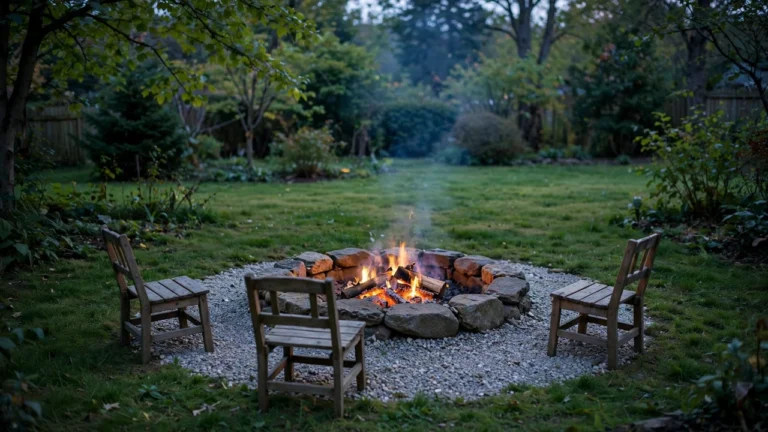
No heat shield on hand? A ring of flat concrete pavers from a home store works in its place. Sand or gravel spread in a shallow ring also helps, but pavers block heat better than loose fill.
At a Glance: The 7 Steps
- Check local rules and burn bans
- Pick a flat spot clear of the house and trees
- Mow and water the grass
- Lay a heat shield or paver ring
- Set the fire pit on the shield
- Light a small fire and watch the edges
- Put the fire out cold and move the pit
Can a Fire Pit Go on Grass? The Short Answer
Yes. A fire pit can go on grass. The catch is heat.
The bottom of a wood-burning fire pit gets hot enough to dry out and kill the grass right under it, and stray embers can land on dry blades around the edges. That is why the setup matters more than the fire pit itself.
A gas fire pit runs cooler at the base than a wood fire pit, so it is kinder to the lawn. A wood fire pit with legs holds the hot bowl off the ground, which helps, but the legs alone do not protect the grass. A heat shield, a fire pit mat, or a ring of pavers between the pit and the lawn is what keeps the grass alive.
Think of it this way: the grass is safe when heat cannot reach it. Your whole job is to put a barrier in the way and keep the fire small and watched. Do that, and you can enjoy a fire on the lawn all season.
What Heat Does to Grass Under a Fire Pit
Grass blades hold water. Heat drives that water out. A short burst of warmth may leave the blades pale for a day.
Heat held in place for an hour or more cooks the crown of the plant, which is the growing point at soil level. Once the crown dies, that patch of grass does not green up again.
That is why a fire pit left in one spot all summer leaves a round dead patch even if the fire itself never touched the grass. The damage comes from the hot metal sitting over the same blades for hours, fire after fire. Move the pit, shield the ground, and the problem mostly goes away.

Fire Pit Surfaces Compared: Grass vs Pavers vs Gravel vs Concrete
Grass is the softest and cheapest place to put a fire pit, and the one that needs the most protection. Pavers and concrete handle heat with no damage at all. Gravel drains well and blocks heat, but it can scatter underfoot. The table below shows how the four common surfaces stack up.
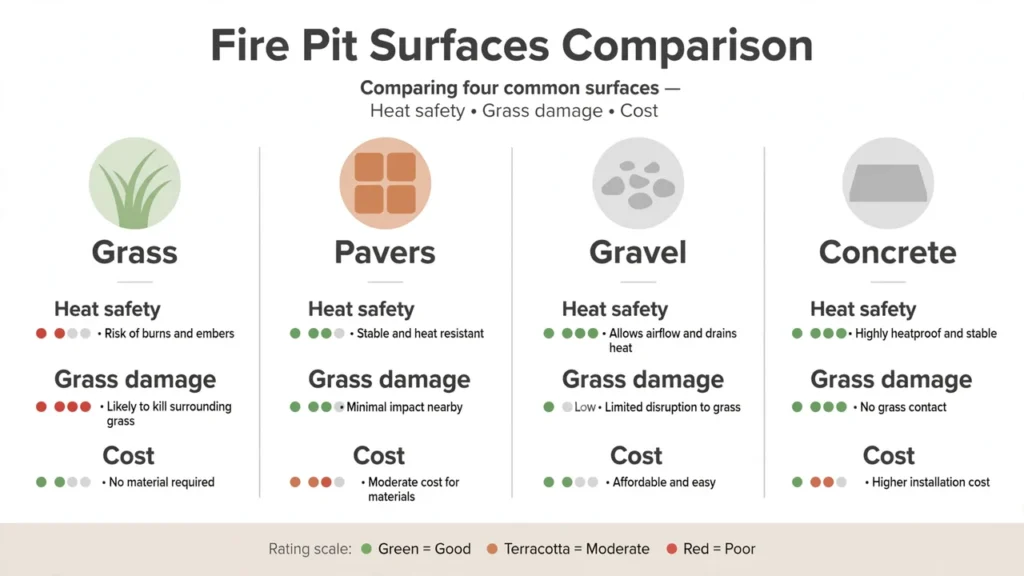
For most people, grass plus a shield is the right call. It costs little, it moves with you, and it keeps the lawn in one piece. Pavers earn their place when you light fires in the same spot week after week.
Check Local Rules and Burn Bans
Open the website of your city or county fire department and search for open burning rules. Some towns allow small recreational fires with no permit. Others limit fire pit size, ban wood fires in dry months, or require a set distance from lot lines. Your HOA may have its own rules on top of the city ones.
Check the burn ban status on the day of your fire, not the week before. A ban can start with one dry, windy afternoon. Your local fire department or air quality agency usually posts the current status online.
If a ban is in force, skip the fire. For the full picture on permits, distances, and fines, read our guide on whether backyard fire pits are legal in your area.
Pick a Flat Spot Clear of the House and Trees
Walk the yard and look for level ground at least 10 feet from the house, shed, fence, and any low tree branches. Many fire pit manuals list 10 feet as the minimum clear space, and your own manual may ask for more, so check it first. Stay clear of dry leaves, wood piles, and the edge of a deck.
Flat ground matters more than it looks. A pit that tilts can spill embers or roll a log out of the bowl. Press the ground with your foot.
If it gives or slopes, pick another spot. For exact distances to houses, trees, and fences, see our fire pit clearance guide.
Mow and Water the Grass
Mow the grass in your chosen spot to its normal height, then rake up the clippings. Long, dry blades catch embers faster than short green ones. A quick pass with the mower takes five minutes and cuts the risk.
Water the grass around the spot until the soil is damp a few inches down. Damp grass resists embers far better than dry grass. Do this an hour or two before the fire so the surface is damp but not muddy. Water the ring around the pit again after the fire, once the coals are cold.
Lay a Heat Shield or Paver Ring
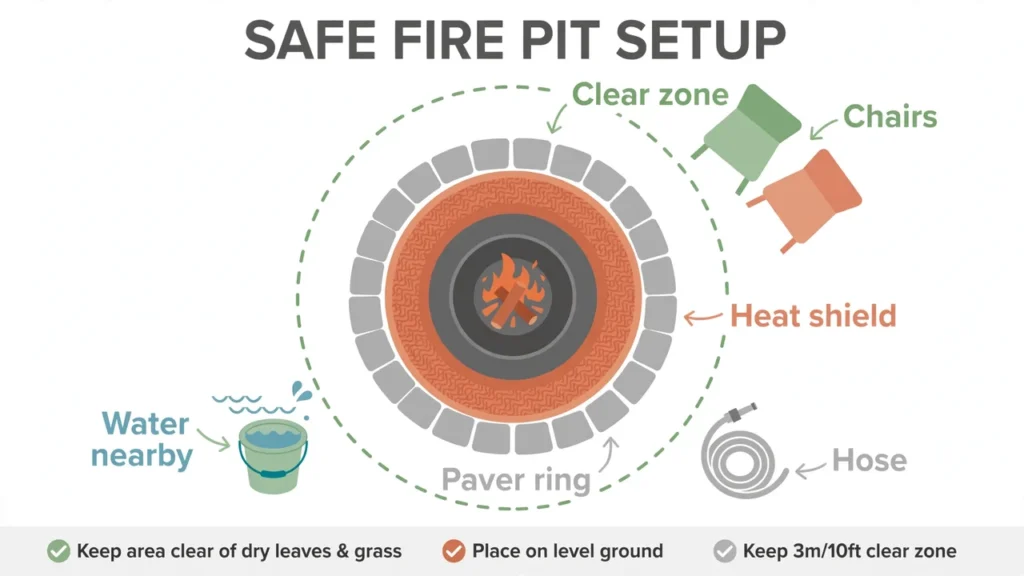
Set your heat shield or fire pit mat on the grass where the pit will sit. The shield should stick out at least 6 inches past the edge of the bowl on every side, so heat and falling embers land on the shield, not on grass. If you are using pavers, lay them flat and tight, with no gaps, in a circle at least 6 inches wider than the pit on all sides.
Pro tip: a round paver ring looks neat and stays put. Lay the pavers on the grass, step on each one to seat it, and check the ring with a level. A ring that rocks will wobble under the pit.
Press the shield or pavers down so they sit flat on the soil. A shield that lifts at the corners can catch wind and flap. On soft ground after rain, a thin bed of sand under the pavers keeps them level.
Set the Fire Pit on the Shield
Place the fire pit in the center of the shield or paver ring. Check that all four legs sit on the shield, not half on and half off. A leg on bare grass can sink as the ground warms and softens, which tips the bowl.
Give the pit a firm push from each side. It should not rock. If it does, lift it, level the pavers under the short leg, and test again. A steady pit is a safe pit, and this check takes less than a minute.
Light a Small Fire and Watch the Edges
Build a small fire with dry, seasoned wood and kindling. Keep the flames below the rim of the bowl. A fire that roars over the rim throws embers and heat far past the shield. Add wood one piece at a time and let each piece catch before you add the next.
Heads up: wind is the main cause of escaped embers. If gusts start to carry sparks past the shield, put the spark screen on or put the fire out. Never leave the fire while it is still burning, and keep children and pets outside the clear zone.
Burn only dry wood and fire starters made for fire pits. Never burn treated, painted, or stained wood, plywood, trash, or glossy paper, because the smoke can carry harmful fumes. Our list of what you can burn in a fire pit covers the safe choices and the ones to avoid.
Put the Fire Out Cold and Move the Pit
Let the fire burn down to coals, then spread the coals out with the shovel. Pour water over them slowly and listen. When the hissing stops, stir the ash and pour again. The coals are out only when you can hold your hand near the ash without feeling heat.
Our full walkthrough of how to put out a fire pit safely covers the drown, stir, and feel test in detail. Once the pit is cool to the touch, lift it off the shield and move it to a new patch of grass next time. Rotating the spot is the single best way to keep the lawn green all season.
How Much Clearance Does a Fire Pit on Grass Need?
Clearance is the empty space around the fire pit, and it is what stops a small fire from becoming a big problem. The house, fence, trees, and seating all sit outside it. The numbers below are common guidance from fire pit manuals and local codes, but your manual and your local rules win over any general figure.
How to Fix a Brown Patch After a Fire
A brown patch is not the end of the lawn. Rake the dead blades out and look at the soil. If the roots are still alive, the patch may green up on its own with steady watering over the next few weeks. Water deeply in the morning so the soil stays moist through the day.
If the patch stays brown and the soil is bare, reseed it. Scratch the top inch of soil with a rake, spread grass seed made for your region, press it into the soil, and keep it damp until the new blades are a few inches tall. This is also the time to move the fire pit to a fresh spot, so the new seed gets a chance.
Before and After: Your Lawn With a Fire Pit
- Brown ring after the first fire
- Dead patch by the end of summer
- Embers landing on dry blades
- One worn spot, season after season
- Grass stays green under the shield
- No dead patch to reseed
- Embers land on pavers, not lawn
- Fresh spot each time you light up
Troubleshooting: Fire Pit on Grass Problems
Frequently Asked Questions
Can a Fire Pit Go on Grass? FAQ
Can a fire pit go directly on grass with no protection?
It can sit there, but the heat will scorch and kill the grass under it. Always place a heat shield, fire pit mat, or paver ring between the pit and the lawn.
Will a fire pit kill the grass underneath it?
A bare metal bowl left on grass will kill the grass under it over time, because the heat dries out the crown of the plant. A shield and rotating the spot prevent most damage.
What should I put under a fire pit on grass?
A fire pit heat shield, a fire-resistant mat, or a ring of flat concrete pavers works well. The barrier should extend at least 6 inches past the edge of the bowl on every side.
Can I use a gas fire pit on grass?
Yes. Gas fire pits run cooler at the base than wood fire pits, so they are gentler on grass. You should still use a heat shield or paver ring and follow the same clearance rules.
How do I fix grass after a fire pit scorched it?
Rake out the dead blades, water deeply, and give it a few weeks. If the patch stays brown, scratch the soil, reseed with grass seed suited to your region, and keep it damp until it grows in.
Is it legal to have a fire pit on grass in my backyard?
It depends on your city, county, and HOA rules. Many places allow small recreational fires, while others set size limits or ban open burning during dry periods. Check your local rules and any burn ban before you light a fire.
Quick Reference Card: Fire Pit on Grass
You need: fire pit with legs, heat shield or paver ring, tape measure, mower, hose or bucket, metal ash bucket, shovel, dry seasoned wood, lighter, spark screen.
- Check local rules and burn bans.
- Pick a flat spot at least 10 feet from the house, fence, and trees.
- Mow and water the grass.
- Lay a heat shield or paver ring, 6 inches wider than the pit.
- Set the fire pit in the center of the shield.
- Light a small fire and watch the edges.
- Put the fire out cold, then move the pit.
Remember: never leave a fire unattended, keep water within reach, and rotate the spot each time.
A fire pit on grass is one of the best ways to enjoy a backyard evening, and your lawn can survive it. Shield the ground, keep the fire small, watch the wind, and put it out cold. Move the pit to a fresh patch next time, and the grass will stay green all season.
When your setup is in place, a good next step is to learn how to start a fire in a fire pit with a clean, low-smoke lay. Light it right, and the evening takes care of itself.