Can You Use a Space Heater Outside? What Works, What Doesn’t, and How to Stay Safe
You step onto the patio on a cool evening, pull your chair closer to the table, and wonder if the space heater from the living room could warm this spot too. Can you use a space heater outside? The short answer is yes, but only if the heater is rated for outdoor use and you set it up the right way. A heater built for a dry living room can fail, trip a breaker, or start a fire when it meets rain, damp air, and wind.
This guide walks you through the whole setup in order. You will learn how to read the label on your heater, pick a sheltered spot, plug it in safely, and keep it running without trouble. By the end, you will know whether your current heater can go outside at all, and what to buy if it cannot.
⚠️ Safety First — Read This Before You Plug In
Electric heaters and water do not mix. Never run an indoor-rated electric heater outside, never use it in rain, and always plug it into a GFCI-protected outdoor outlet. Never use an extension cord or a power strip with a space heater. Keep the heater at least 3 feet from anything that can burn, including furniture, cushions, curtains, and dry leaves.
Fuel-burning heaters (propane, kerosene, natural gas) give off carbon monoxide. Never use them indoors or in an enclosed space such as a closed garage, tent, or screened porch with the windows shut. If you feel dizzy, sick, or get a sudden headache near a fuel heater, move to fresh air at once and call emergency services. This article is general guidance, not a substitute for your heater’s manual or local fire codes. When in doubt, call a licensed electrician or your local fire department.
Total Time
20–30 minutes
Active Time
15 minutes
Difficulty
Beginner
What You Need
- Your space heater, with its manual and rating label
- A GFCI-protected outdoor outlet (the kind with Test and Reset buttons)
- A flat, level, non-flammable surface, such as concrete or stone pavers
- A tape measure or a yardstick for the 3-foot clearance check
- A dry storage spot, such as a garage shelf or a sealed bin
- A working carbon monoxide alarm, if you use any fuel-burning heater
- A flashlight, if you will check the label or outlet after dark
The Short Answer: Can You Use a Space Heater Outside?
Yes, you can use a space heater outside if it is built for outdoor use. Look for a heater labeled outdoor-rated, weather-resistant, or rated IPX4 or higher on its label or in its manual. These models have sealed parts and tip-over protection that stand up to damp air and light splashes.
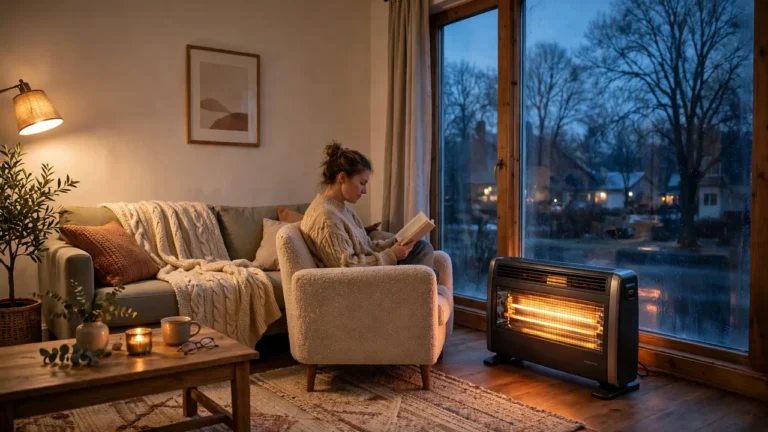
Most indoor space heaters should stay indoors. They have open vents, exposed heating elements, and cords that were never meant to get wet. Take one outside and a sudden shower can short it out, trip your breaker, or start a fire. If the label says indoor use only, believe it.
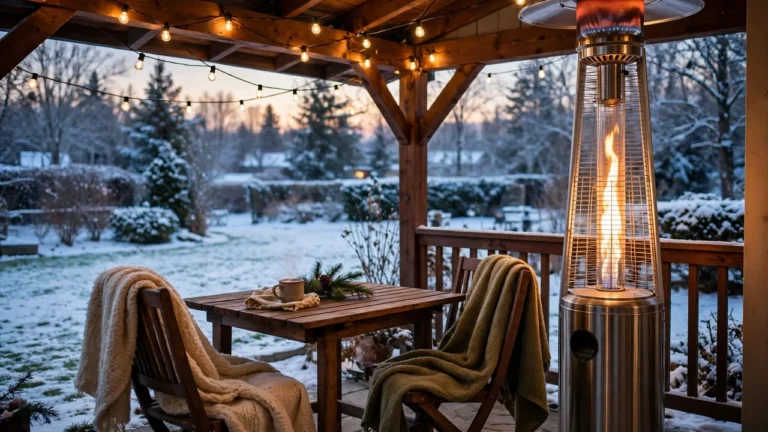
Fuel-burning patio heaters are a different case. Propane and natural gas patio heaters are made for outdoor use, but they must stay outdoors. Burning fuel in a closed room builds up carbon monoxide, a gas you cannot see or smell. That is why the same heater that warms a patio can turn deadly inside a garage.
Which Space Heaters Can Go Outside?
Not all heaters handle the outdoors the same way. The table below compares the common types, so you can see at a glance which ones belong on a patio and which ones belong in a closet until winter.
| Heater Type | Outdoor Use | Power Source | Main Risk Outdoors |
|---|---|---|---|
| Outdoor-rated electric radiant | Yes — made for patios | Plug-in, GFCI outlet | Rain on an unprotected plug |
| Indoor electric (ceramic, fan-forced) | No — indoor use only | Plug-in | Moisture damage, short circuit, fire |
| Oil-filled radiator | No — indoor use only | Plug-in | Slow heat lost to open air; moisture risk |
| Propane patio heater | Yes — outdoor only | Propane tank | Carbon monoxide; tipping in wind |
| Kerosene heater | Outdoors only, with ventilation | Kerosene fuel | Carbon monoxide; fuel spills and fumes |
Radiant electric heaters work best outside because they warm people and objects in front of them instead of trying to heat the air. Open air carries warm air away in seconds, so a fan-forced heater that works well in a bedroom feels weak on a patio. If you want real warmth outdoors, a radiant model aimed at your seating area gives you the most heat for the power you use.
Oil-filled radiators deserve a special note. They are safe, quiet heaters indoors, and many owners wonder if they can move one to a porch. The answer is no.
They heat slowly by warming the air around them, and outdoors that warm air drifts away before it reaches you. They also carry the same moisture risk as other indoor electric heaters. If you want to know more about how they work, read our guide on whether oil heaters emit carbon monoxide.
How to Use a Space Heater Outside in 6 Steps
Follow these steps in order. Each one takes a few minutes, and skipping one can leave you with a heater that trips, underperforms, or becomes a hazard.
Step 1: Check the Label for an Outdoor Rating
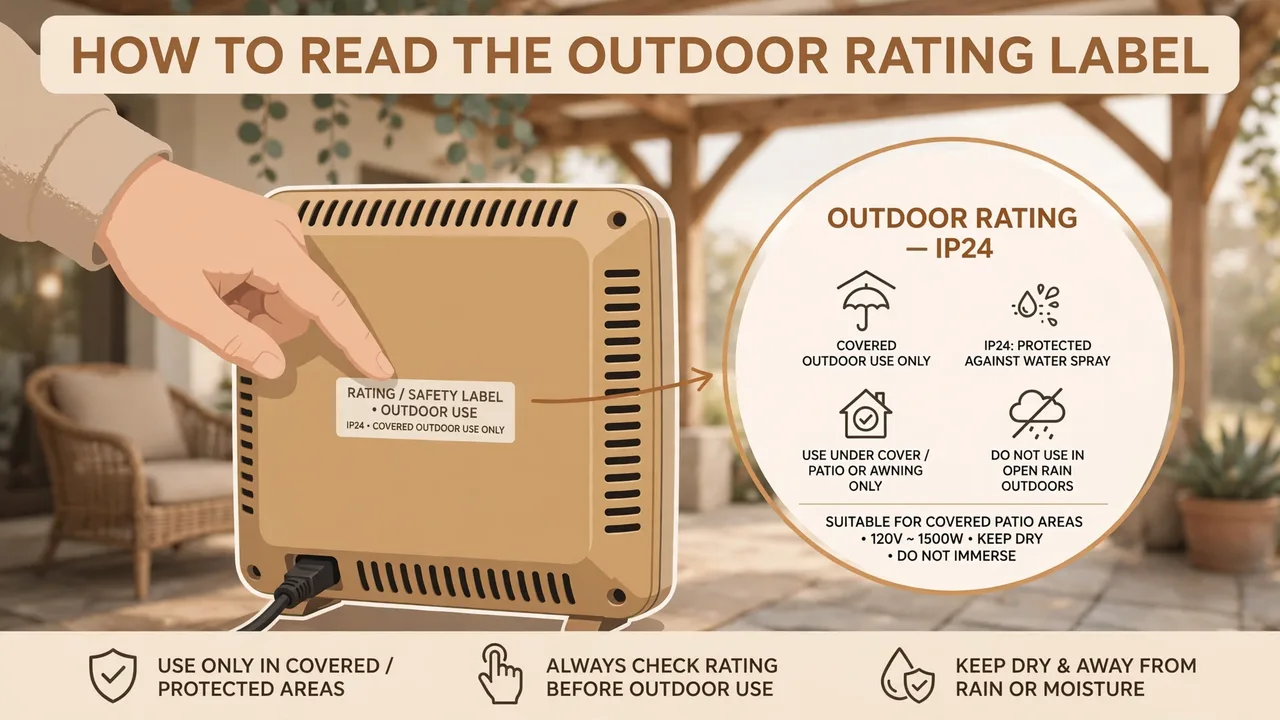
Turn the heater around and read the label on the back or bottom. Look for the words “outdoor use,” “weather-resistant,” or an IP rating such as IPX4. That code tells you the heater resists splashing water. If the label says “indoor use only,” stop here and do not take it outside.
If the label is worn off or hard to read, check the manual or search the model number on the maker’s website. No rating listed anywhere means the heater is not rated for outdoor use. Never guess, and never assume a sturdy-looking heater is weatherproof. For help picking a model that fits your space, see our guide to the best type of space heater for different rooms and uses.
Step 2: Pick a Sheltered, Level Spot
Set the heater on flat, level ground under a roof, awning, or pergola. Concrete, stone, or brick pavers work well. Never set a heater on grass, gravel, a rug, or a wooden deck that slopes, because an uneven base makes tipping more likely and a soft surface can block airflow underneath.
Wind matters more than most people expect. A gust can topple a tall, light heater or blow a flame sideways on a fuel model. Place the heater where a wall, fence, or windbreak blocks the strongest wind, and keep it away from the edge of the patio. Our guide on how to keep a patio heater from tipping over in wind covers anchoring tricks that work for electric models too.
Pro Tip: Aim a radiant heater at the seats, not at the open yard. Radiant heat travels in a straight line, so pointing it at people warms them fast. Pointing it at empty space wastes the heat.
Step 3: Plug Into a GFCI Outlet — Never an Extension Cord
Find an outdoor outlet with Test and Reset buttons on its face. That is a GFCI outlet, and it cuts power in a fraction of a second if current leaks through water or a damaged cord. Press Test, then Reset, before you plug the heater in. If the buttons do not click or the outlet feels loose, use a different outlet and call an electrician.
Plug the heater straight into the outlet. Most plug-in space heaters draw up to 1,500 watts, which is close to what a standard household circuit can carry. An extension cord or power strip adds resistance, heats up, and can melt or catch fire under that load.
If the heater’s own cord cannot reach the outlet, move the heater closer or have an electrician add an outlet. Do not solve the gap with a cord.
Heads Up: A warm plug, a buzzing outlet, or a cord that smells hot means something is wrong. Switch the heater off, unplug it by the plug (never yank the cord), and do not use that outlet again until an electrician checks it.
Step 4: Clear 3 Feet of Space Around the Heater
Measure 3 feet in every direction from the heater and move anything that can burn out of that circle. That includes cushions, blankets, curtains, paper decorations, firewood, and dry leaves. Keep pets and children outside the circle too, and teach them not to touch the heater while it runs.
Check above the heater as well. Low-hanging fabric, an umbrella canopy, or a dry branch can catch heat rising from the unit. A quick look up takes five seconds and prevents a scare later. If you cannot clear 3 feet on all sides, the spot is too tight, and you need a different place for the heater.
Step 5: Switch the Heater On and Watch the First 15 Minutes
Turn the heater to its lowest heat setting first, then raise it step by step until the seating area feels warm. Starting low lets you confirm the heater runs steady, the outlet stays cool, and the breaker holds. A heater that trips the breaker on low has a problem that a higher setting will only make worse.
Stay nearby for the first 15 minutes. Listen for odd buzzing or clicking, watch for smoke or a burning smell, and check that the heater sits steady on its base. Most faults show up in this window.
If anything seems off, switch the heater off and unplug it. Never leave a space heater running while you go inside or fall asleep outside.
Step 6: Store the Heater Dry When You Are Done
Switch the heater off and let it cool for at least 30 minutes before you move it. Hot parts can burn skin and melt a storage bag. Once it is cool to the touch, unplug it, coil the cord loosely, and carry it by its handle or base, not by the cord.
Store the heater indoors in a dry place, such as a garage shelf or a closet, with its cord wrapped and its vents clear of dust. Outdoor-rated does not mean weatherproof enough to live outside all winter.
Rain, snow, and damp air wear down seals and wiring over time. A heater that spends the season under cover will start next autumn without a fuss. To understand what is happening inside the unit while it runs, read how a space heater works.
Safe vs Unsafe: A Quick Outdoor Setup Check
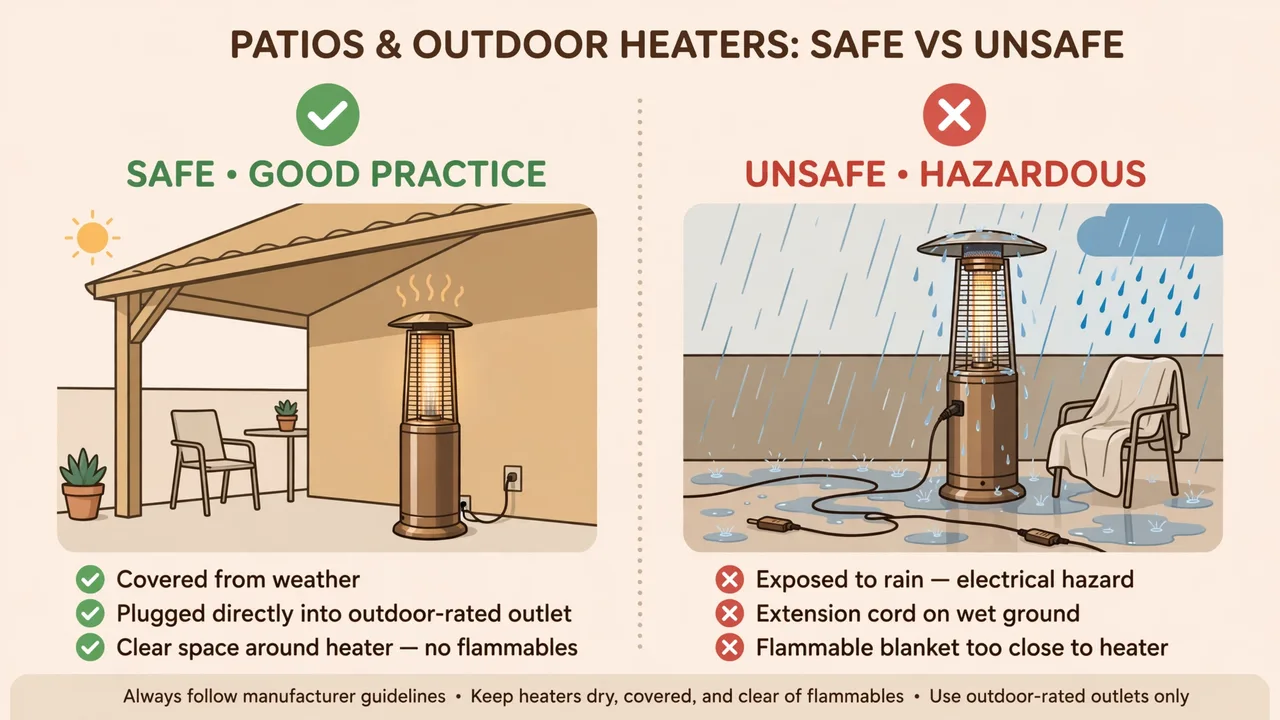
Before every outdoor session, run through this checklist. If any row lands in the unsafe column, fix it before you switch the heater on.
| Check | ✅ Safe | ❌ Unsafe |
|---|---|---|
| Rating | Outdoor-rated or IPX4+ | Indoor use only |
| Weather | Dry, under a roof or cover | Rain, snow, or standing water |
| Power | GFCI outlet, direct plug-in | Extension cord or power strip |
| Clearance | 3 feet clear on all sides | Blankets or cushions nearby |
| Surface | Flat concrete or stone pavers | Grass, gravel, or a slope |
| Supervision | Someone nearby while it runs | Left running unattended |
| Fuel heaters | Open-air patio, ventilated | Enclosed porch, garage, or tent |
Common Mistakes to Avoid
1. Using an indoor heater “for one night only”
One dry night feels harmless, but a surprise shower or morning dew can damage the heater or trip your power. Indoor-rated means indoor, every time.
2. Running the cord through a doorway or window
A pinched cord under a door or window frame frays fast and overheats. If the cord does not reach, move the heater or add an outlet.
3. Placing the heater on a wooden deck without checking the manual
Some outdoor-rated models are fine on decks, and some are not. Check the manual for surface rules before you set it down.
4. Leaving a fuel heater burning in a screened porch
Screens do not count as ventilation. A screened porch with the windows shut traps carbon monoxide. Fuel heaters belong in open air. For the reverse question, see can you use a patio heater indoors.
5. Storing the heater outside all winter
Outdoor-rated is not the same as weatherproof. Months of rain and damp wear out seals and wiring. Bring it inside between uses.
Frequently Asked Questions
Can you use a regular indoor space heater outside?
No. Indoor space heaters are not sealed against moisture, and rain or damp air can short them out or start a fire. Use only a heater rated for outdoor use.
Can an outdoor-rated space heater get wet?
Light splashes are fine for a heater rated IPX4 or higher, but no electric heater should sit in rain or standing water. Keep it under a roof or cover, and bring it inside if heavy rain starts. Our guide on whether patio heaters can get wet covers the same rules for larger patio models.
Can you use a space heater on a covered porch?
Yes, if the heater is outdoor-rated and the porch is open enough for air to move. A covered porch is a good spot because the roof blocks rain. A fully enclosed porch with shut windows is not the same thing, especially for fuel-burning heaters.
Can you use an extension cord with a space heater outside?
No. Space heaters draw up to 1,500 watts, and extension cords and power strips can overheat under that load. Plug the heater directly into a GFCI-protected outdoor outlet.
Is it safe to leave a space heater outside overnight?
No. Never leave a space heater running unattended, indoors or outdoors. Switch it off, let it cool for 30 minutes, and store it inside.
Quick Reference Card
Can You Use a Space Heater Outside? — Quick Reference
What You Need:
Outdoor-rated heater (IPX4+) • GFCI outdoor outlet • Flat, level surface • 3-foot clearance • Dry storage spot • CO alarm for fuel heaters
Steps:
- Check the label for an outdoor rating
- Pick a sheltered, level spot
- Plug into a GFCI outlet, never an extension cord
- Clear 3 feet of space around the heater
- Switch on low and watch the first 15 minutes
- Store the heater dry when done
Remember: Indoor-rated heaters stay inside. Fuel heaters stay outdoors in open air. Never leave a heater running unattended.
Warm Evenings, Done Right
You now know how to answer the question “can you use a space heater outside” with confidence. Check the label, pick a sheltered spot, plug into a GFCI outlet, clear 3 feet of space, and stay nearby while it runs. Those five habits cover almost every risk an outdoor heater can bring.
If your current heater is indoor-only, do not force it onto the patio. An outdoor-rated radiant heater costs less than a repair bill or a fire, and it will warm your seating area far better than a fan heater ever could. If you are weighing electric heat against a fireplace, our comparison of whether electric fireplaces are safer than space heaters is a good next read.
Set it up once, run through the checklist each time, and enjoy the patio a little longer into the cold season.