How to Heat a Garage in Winter: Heater Options Compared
Learning how to heat a garage in winter starts with one honest look at the space. A garage loses heat through thin walls, a big door, a concrete floor, and gaps around windows. The heater that works in a small insulated garage will fall short in a large drafty one, and the heater that warms a workshop fast may cost too much to run all day. This guide compares the main heater options side by side, so you can pick the one that fits your garage, your power supply, and your budget.
You will measure the garage, work out how much heat it needs, and compare electric and fuel heaters on heat output, running cost, and safety. You will also learn how to seal drafts and place the heater in a safe spot. By the end, you will know which heater to buy and how to run it with care.
Heads Up: Carbon Monoxide and Fire Danger
Never burn wood, propane, natural gas, kerosene, or any other fuel in an unvented indoor space. Burning fuel makes carbon monoxide, a gas you cannot see or smell. It can build up fast in a closed garage and cause headache, dizziness, weakness, upset stomach, vomiting, chest pain, and confusion.
Fit carbon monoxide alarms in your home and near the garage, test them each month, and change the batteries on the schedule the maker gives. If an alarm sounds, or if anyone feels ill while a heater runs, move to fresh air at once and call emergency services.
If you smell gas, leave the building at once and call your gas utility or 911 from outside. Do not flip light switches, do not light a match, and do not try to find or fix a leak. Leave that work to trained staff.
Keep every electric heater at least 3 feet from anything that can burn. Plug it straight into a wall outlet. Never use an extension cord or a power strip, and never leave a heater running with no one there.
Disclaimer: This guide gives general information only. It is not a substitute for local building codes, the heater manual, or advice from a licensed electrician or gas fitter. Check your local rules before you install a fixed heater, and follow the manual that came with your heater at all times.
Time and Difficulty Strip
Time to choose: 1 to 2 hours of measuring
Time to set up a portable heater: 30 minutes to 1 hour
Difficulty: Low for a portable electric heater. Medium for a wall mounted electric heater. High for a vented gas heater, which needs a pro.
Best for: Anyone who works or parks in a cold garage
What You Need
- A tape measure and a notepad
- A thermometer for the garage, so you can track the real temperature
- A carbon monoxide alarm and a smoke alarm, both tested and working
- Weatherstripping, caulk, and a draft stopper for the garage door
- A heater that matches the size and power supply of your garage
- A wall outlet on its own circuit for a portable heater, or a 240 volt circuit fitted by an electrician for a larger one
- A fire extinguisher rated for home use, kept near the garage door
- Work gloves and eye protection for sealing gaps or mounting a heater
At a Glance: The 10 Steps
- Measure your garage and check the insulation
- Pick a target temperature and work out the size you need
- Compare the main heater options
- Choose electric or fuel for your garage
- Check power, gas supply, and venting before you buy
- Seal drafts and add insulation where it counts
- Place the heater in a safe spot
- Run the heater and tune the thermostat
- Keep the garage warm for less
- Maintain the heater through winter
Measure Your Garage and Check the Insulation
Start with a tape measure. Measure the length and width of the floor, then multiply the two numbers to get the floor area in square feet. Measure the ceiling height too. A garage with a 10 foot ceiling holds far more cold air than one with an 8 foot ceiling, and the heater must warm all of it.
Next, check what keeps heat in. Look at the walls, the ceiling, and the garage door. Check if the door has insulation panels or if it is a single thin sheet of metal.
Write down the floor area, the ceiling height, and the state of the insulation. Mark the garage as insulated, partly insulated, or uninsulated. This one label shapes every choice that follows, from heater size to running cost.
Pick a Target Temperature and Work Out the Size You Need
Most people heat a working garage to about 55 degrees Fahrenheit, not to living room warmth. That target keeps pipes from freezing and keeps paint and glue usable. A garage kept at 65 degrees needs far more heat. Pick 55 degrees as your aim unless you have a clear reason to go higher.
Heater size is rated in BTU per hour for fuel heaters and in watts for electric heaters. One watt of electric heat gives about 3.41 BTU per hour. A plug in 1,500 watt heater makes about 5,100 BTU per hour. That warms one corner of a small insulated garage, but it will not heat a two car space in deep winter.
Use this planning rule to size the heater. For an insulated garage with 8 to 10 foot ceilings, allow about 10 watts per square foot, or about 34 BTU per hour per square foot. For walls that are insulated but a door that is not, allow 12 to 15 watts per square foot. For an uninsulated garage, allow 20 watts or more per square foot. These are planning estimates, not an engineered heat loss calculation.
| Garage size | Insulated | Partly insulated | Uninsulated |
|---|---|---|---|
| One car, 12 by 22 feet | 10,600 BTU per hour | 14,000 BTU per hour | 21,100 BTU per hour |
| Two car, 24 by 24 feet | 25,900 BTU per hour | 34,500 BTU per hour | 51,800 BTU per hour |
Planning estimates for a 50 degree rise. A 30 degree rise needs about 60 percent of these figures.
For a second view on size, read our guide on what size space heater you need. The same logic applies to a garage, with the higher per square foot figures used here.
Compare the Main Heater Options
Five heater types cover most garages. Each one heats in a different way, and each one suits a different garage. The table below puts the facts side by side, so you can compare heat output, power needs, and best use at a glance.
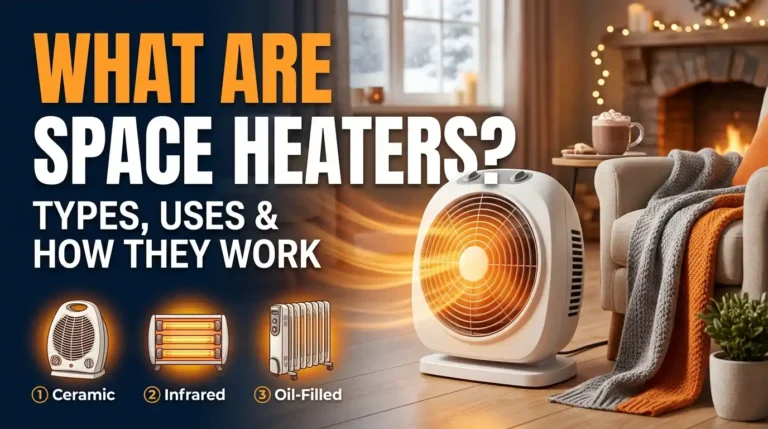
A 120 volt portable electric heater is the quickest way to start. It plugs into a wall outlet, it moves from bench to car, and it needs no install. Its limit is power. Most models top out near 1,500 watts, about 5,100 BTU per hour, so it suits a small insulated garage or spot heat at a workbench.
A 240 volt electric wall or ceiling heater is the workhorse for an insulated two car garage. Models near 7,500 watts give about 25,600 BTU per hour, which lines up with the insulated two car row in the table above. It needs its own circuit fitted by an electrician, and it heats the whole room with a fan and a thermostat.
A vented gas unit heater hangs from the ceiling and burns natural gas or propane. It vents fumes outside through a flue, and it gives high heat for a large or uninsulated garage. A 45,000 to 50,000 BTU model is a common pick for a two or three car garage, and it needs a gas line, venting, and a licensed fitter.
An infrared heater warms people and objects first, and the air second. That makes it a strong pick for a drafty or uninsulated garage, where warm air would drift out through gaps. It runs quiet and gives heat at once when aimed at a workbench, though it does not warm far corners as well as a fan heater.
An oil filled radiator gives slow, steady heat with no fan and no open flame in the room. It suits a small insulated garage or a corner that needs gentle background warmth, though it is slow to react when you walk in from the cold and want heat at once.
| Heater type | Heat output | Power or fuel | Best for |
|---|---|---|---|
| 120 volt portable electric | Up to 1,500 watts, about 5,100 BTU per hour | Wall outlet | Small insulated garage, spot heat |
| 240 volt electric wall or ceiling | 5,000 to 10,000 watts, 17,000 to 34,000 BTU per hour | 240 volt circuit, fitted by an electrician | Insulated two car garage |
| Vented gas unit heater | 30,000 to 50,000 BTU per hour | Natural gas or propane, flue outside | Large or uninsulated garage |
| Infrared radiant heater | Varies, often 1,500 to 5,000 watts or gas fired | Electric or gas | Drafty garage, workbench heat |
| Oil filled radiator | Up to about 1,500 watts, about 5,100 BTU per hour | Wall outlet, own circuit advised | Small insulated space |
Outputs are common ratings. Read the rating plate on the heater you buy.
Never use an outdoor only heater, a camp stove, a grill, or a generator inside a garage. Never use a gas oven to heat a room. The US Consumer Product Safety Commission warns that unvented gas heaters pose the greatest threat of carbon monoxide poisoning, because they need a constant supply of fresh air.
For a closer look, read our guides to infrared space heaters and what an oil filled space heater is.
Choose Electric or Fuel for Your Garage
The choice comes down to three facts: how big the garage is, what supply you have, and how often you heat it. An insulated one or two car garage with a 240 volt supply suits an electric heater well. It is clean, it needs no vent, and a thermostat holds the temperature with no fumes in the room.
A large or uninsulated garage in a cold climate often suits a vented gas heater better. Gas gives high heat for less money per hour in many areas, and a 45,000 BTU unit warms a big space that would need a very large electric circuit. The trade off is install cost: a gas line, a flue, and a licensed fitter add to the bill, and the heater needs a yearly check by a pro.
Portable fuel heaters need care. Some small propane heaters are rated for indoor use, with an oxygen depletion sensor that shuts the heater off when oxygen falls. Others are outdoor only, and the label makes that clear. Read the label and the manual before you buy. Even an indoor rated fuel heater needs fresh air and a working carbon monoxide alarm. Never run any fuel heater while you sleep.
Think about how you use the garage too. If you work there for an hour at a time, an infrared heater aimed at your bench gives warmth at once. If you want the space held at 55 degrees all winter, a fixed electric or vented gas heater with a thermostat does that work with less fuss. If you rent, a portable electric heater is often the sole choice that needs no changes to the building.
Our guides to the best type of space heater and which space heaters use the least electricity help you weigh the choice before you commit.
Check Power, Gas Supply, and Venting Before You Buy
Check the power first for an electric heater. A 1,500 watt portable heater draws about 12.5 amps on a 120 volt circuit, so it needs a wall outlet on a circuit that can carry it with room to spare. A 7,500 watt heater at 240 volts draws about 31 amps, so it needs a 40 amp circuit fitted by an electrician. Never guess the circuit size. Ask an electrician to check it.
Plug a portable electric heater straight into a wall outlet. Never use an extension cord or a power strip. The US Consumer Product Safety Commission and the National Fire Protection Association both give this warning. Read can you plug a space heater into an extension cord or power strip before you set the heater up.
Check the gas supply for a gas heater. A vented unit heater needs a gas line of the right size, a shut off valve, and a flue that vents fumes outside. A licensed gas fitter should size the line, fit the heater, and test for leaks.
Check venting and fresh air for any fuel heater. A vented heater sends fumes outside through its flue, and the flue must stay clear of snow, leaves, and nests. An indoor rated unvented heater needs fresh air from a vent or an open window, as the manual states.
Seal Drafts and Add Insulation Where It Counts
Sealing drafts is the cheapest heat you will ever buy. A heater in a drafty garage works hard all day, and much of the warm air slips out under the door and around the windows. An hour with weatherstripping and caulk can cut that loss.
Start at the garage door. Fit a new bottom seal if the old one is cracked or flat. Add weatherstripping to the sides and top of the door frame. On a cold day, hold a thin strip of tissue near the edges and watch for movement. Air that moves the tissue is air you pay to heat.
Seal the small gaps next. Caulk around window frames, pipe holes, and wire holes. Fit foam gaskets behind outlet covers on outside walls. These small fixes add up, and they cost far less than a larger heater.
Add insulation where it pays back fastest. An insulated garage door kit, fitted to the inside of a metal door, cuts heat loss through the largest cold surface in the room. Insulation in the ceiling matters next, since warm air rises and a bare ceiling lets it out. Wall insulation is a bigger job, so weigh it against the cost of a larger heater.
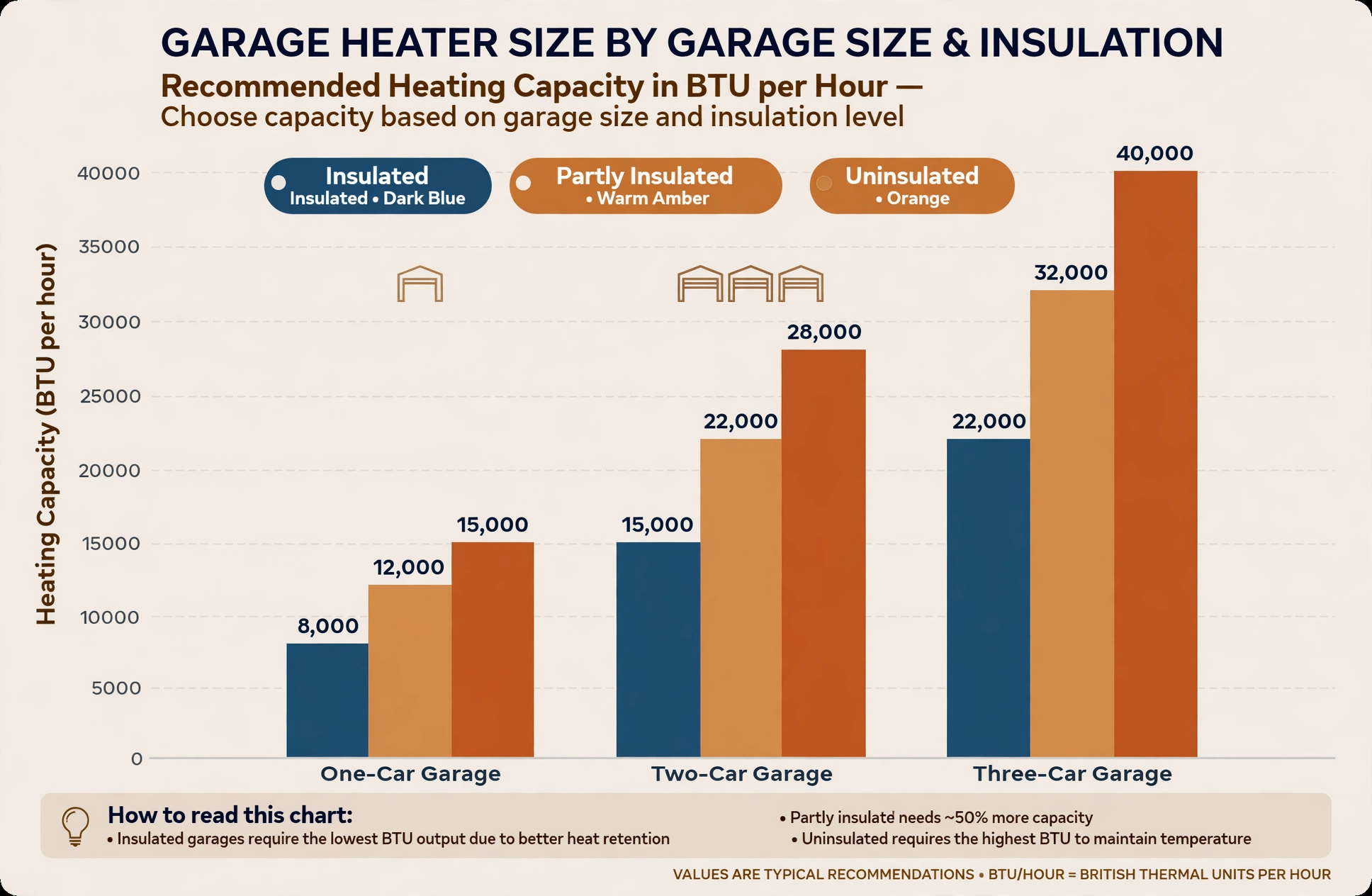
An uninsulated two car garage can need twice the heat of an insulated one.
Place the Heater in a Safe Spot
Place the heater on a flat, stable surface where it cannot tip over. Keep it at least 3 feet from paint cans, rags, cardboard boxes, wood, and anything else that can burn. Keep the path in front of it clear, so warm air can move into the room. Never place a heater where a car door or a person walking past can knock it over.
Mount a fixed heater where the manual tells you to. A wall heater needs clear space above and below it, and a ceiling heater needs clear space under it. Do not mount a heater above a workbench that holds solvents or paint, or where the garage door will hit it.
Keep the cord safe on a portable heater. Run the cord where no one walks on it and no car tyre rolls over it. Do not run it under a rug or through a doorway that closes on it. If the plug or cord feels hot, switch the heater off and have it checked before you use it again.
Fit the alarms before the first run. Place a carbon monoxide alarm near the garage and near sleeping areas in the house. Place a smoke alarm in the garage if local code calls for one. Test both alarms before you switch the heater on.

Alarms, clear space, a wall outlet, and a fire extinguisher.
Run the Heater and Tune the Thermostat
Start the heater with the garage door closed and the thermostat set to your target, about 55 degrees for most garages. A cold concrete floor and cold walls soak up heat at first, so the air may warm up long before the room feels warm. Check the thermometer after two or three hours.
Watch how the heater cycles. A heater that runs without a break on a mild day is too small, or the garage leaks too much heat. A heater that warms the room fast and then rests is well matched. If the room overshoots the target, turn the thermostat down a notch and check again the next day.
Use the thermostat, not the on and off switch, to hold the temperature. A thermostat keeps the room steady and saves power by resting the heater when the room is warm enough. If your heater has a timer, set it to warm the garage an hour before you plan to work there, then hold a lower temperature the rest of the time.
Keep the Garage Warm for Less
Work out the running cost with a short sum, not a guess. Take the heater watts, divide by 1,000 to get kilowatts, then multiply by the hours it runs and by your power rate per kilowatt hour. A 1,500 watt heater running for 4 hours uses 6 kilowatt hours. Multiply 6 by your rate to find the cost for those 4 hours.
Heat the space you use, not the whole garage, when you work for a short time. Aim an infrared heater at your bench and wear a warm layer. A fan heater that warms the whole room for a one hour job costs more than spot heat for the same hour.
Hold a lower temperature when no one uses the garage. A garage held at 45 degrees uses far less heat than one held at 65 degrees, and it still keeps pipes and stored paint safe from a hard freeze. Raise the heat an hour before you work, then drop it back when you leave.
Maintain the Heater Through Winter
Clean the heater on a regular schedule. Switch it off, unplug it, and let it cool. Wipe dust from the case and the vents with a dry cloth. Vacuum the air intake with a soft brush head. Dust on a heater cuts heat output and can smell when it burns off.
Check the safety parts each month. Test the tip over switch as the manual directs, and check that it shuts off. Test the carbon monoxide alarm and the smoke alarm. Look at the cord and plug for cracks or heat marks. If any part looks worn, stop using the heater and have it checked or replaced.
Book a yearly check for a fixed gas heater. A licensed fitter should clean the burner, check the flue, and test for leaks. Keep the service record with the manual.
At the end of winter, clean the heater, coil the cord with care, and store a portable heater in a dry spot. Drain fuel from a portable fuel heater as the manual directs, and store fuel outside the house in a marked can, away from heat.
Troubleshooting: When the Garage Stays Cold
| Problem | Likely cause | What to do |
|---|---|---|
| Heater runs but the garage stays cold | Heater too small, or drafts leak heat out | Rework the size sum in Step 2, seal the door and gaps, and check again after 3 hours |
| Heater trips the breaker | Circuit shared with other loads | Unplug other loads, plug straight into a wall outlet, and ask an electrician to check the circuit |
| Heater shuts off on its own | Tip over switch tripped, or thermostat reached its setting | Set it upright on a flat floor, clear dust from the vents, and check the thermostat |
| CO alarm sounds | Fuel burning with poor venting | Move to fresh air at once, call emergency services, and do not use it again until a pro clears it |
How to Heat a Garage in Winter: Frequently Asked Questions
What is the cheapest way to heat a garage in winter?
Sealing drafts and adding door insulation cost the least and cut heat loss at once. After that, the cheapest heater depends on your garage. A small insulated garage often runs well on a portable electric heater. A large or uninsulated garage often costs less per hour with a vented gas heater, though the install costs more.
Can I use a space heater in my garage?
Yes, if the heater suits the space and you follow the safety rules. Plug it straight into a wall outlet, keep it 3 feet from anything that can burn, and never leave it running with no one there. A 1,500 watt space heater gives about 5,100 BTU per hour, so it warms a small insulated garage or one work area, not a full two car garage.
Is it safe to use a propane heater in a garage?
Only use a propane heater that is rated for indoor use, and follow its manual on fresh air and clear space. Never use an outdoor only propane heater inside. Fit a carbon monoxide alarm, never run the heater while you sleep, and leave at once and call emergency services if the alarm sounds or anyone feels ill.
What size heater do I need for a two car garage?
For a 24 by 24 foot two car garage held at 55 degrees when it is 5 degrees outside, plan on about 25,900 BTU per hour if it is insulated, about 34,500 BTU per hour if it is partly insulated, and about 51,800 BTU per hour if it is uninsulated. Measure your own garage and check the insulation before you buy.
Should I leave my garage heater on all night?
Do not leave a portable space heater or any fuel burning heater running overnight or with no one at home. A fixed electric or vented gas heater with a thermostat can hold a low temperature overnight if the manual and local code allow it, and if working alarms are in place. Check the manual first.
Does insulating a garage door really help?
Yes. The garage door is often the largest cold surface in the room, and a bare metal door loses heat fast. An insulation kit on the inside of the door, plus a new bottom seal and weatherstripping, cuts that loss by a clear margin. Many owners find that their heater keeps up far better after this one fix.
Quick Reference Card: Heat a Garage in Winter
Target temperature: About 55 degrees Fahrenheit for a working garage
Size rule: 10 watts per square foot insulated, 12 to 15 partly insulated, 20 or more uninsulated
Two car insulated garage: About 25,900 BTU per hour
Small garage or spot heat: 1,500 watt portable electric, about 5,100 BTU per hour
Large or uninsulated garage: Vented gas heater, 45,000 to 50,000 BTU per hour
Clear space: At least 3 feet from anything that can burn
Power rule: Plug straight into a wall outlet, never an extension cord or power strip
Alarms: Carbon monoxide alarm and smoke alarm, tested each month
Gas smell: Leave at once and call your gas utility or 911 from outside
A Warm Garage All Winter
A warm garage is not about the biggest heater on the shelf. It is about a heater that matches the size and insulation of your garage, and a few small fixes that keep the heat inside. Measure first and seal the drafts before you blame the heater.
Start this week with the tape measure and the draft check. Those two steps cost nothing, and they tell you more than any sales page can. Then pick the heater that fits the numbers you found, place it with clear space around it, and test the alarms.
Stay warm, stay safe, and enjoy your garage this winter.
Sources and Further Reading
Heater sizing rules in this guide follow published garage heater sizing guides, which use the volume, temperature rise, and insulation factor method. Safety guidance follows the US Consumer Product Safety Commission and the US Centers for Disease Control and Prevention, including the 3 foot clear space rule and the wall outlet rule. Always follow your heater manual and local codes.