How to Keep a Patio Heater From Tipping Over in Wind and Stay Safe
A gust catches the tall reflector top of your patio heater, and the whole unit starts to rock. You reach for it, but a heater full of hot metal and a gas tank is not something you want to catch mid-fall. Learning how to keep a patio heater from tipping over in wind takes about half an hour of setup, and it protects your patio, your guests, and the heater itself.
Patio heaters tip over because they are tall, top heavy, and built on a narrow base. Wind pushes on the wide reflector at the top, and the base acts like a pivot point. A weighted base, a sheltered spot, and a wind guard change that balance in your favor.
This guide walks you through each fix in order, from reading the wind to shutting the heater down safely when gusts build. You will finish with a heater that stands steady on a breezy evening and a clear plan for when to turn it off. Read the safety note below first, since it covers gas and carbon monoxide risks that apply to every step.
Heads Up: Gas and Carbon Monoxide Safety
Never use a patio heater indoors, in a garage, or on an enclosed porch. Burning gas without fresh air can build up carbon monoxide, a gas you cannot see or smell.
If you smell gas, turn the heater off at the tank, move away from the area, and call your gas supplier or emergency services from outside. Do not relight the heater until the smell is gone and the connections have been checked.
If anyone near a heater feels dizzy, sick, or short of breath, move them to fresh air at once and call emergency services. When in doubt, call a licensed gas professional.
Total Time
30 to 45 minutes
Active Time
About 20 minutes
Difficulty
Beginner friendly
What You Need
- Sand or water for the base, as your manual directs
- Two sandbags or patio weights
- A folding wind screen or wind guard
- A wrench or screwdriver for the base bolts
- A small level
- Work gloves
- A funnel and a bucket
- A patio heater cover for storage
- A helper for moving the heater
Check your heater manual before you buy anything. Some models take sand only, some take water only, and some ship with a bolt-down kit in the box.
At a Glance: The 7 Steps
- Check the wind before you light the heater
- Pick a sheltered spot on flat ground
- Fill the base with weight
- Anchor the base to the patio
- Add a wind guard or screen
- Lower the flame and watch the heater
- Shut the heater down when gusts build
Check the wind before you light the heater
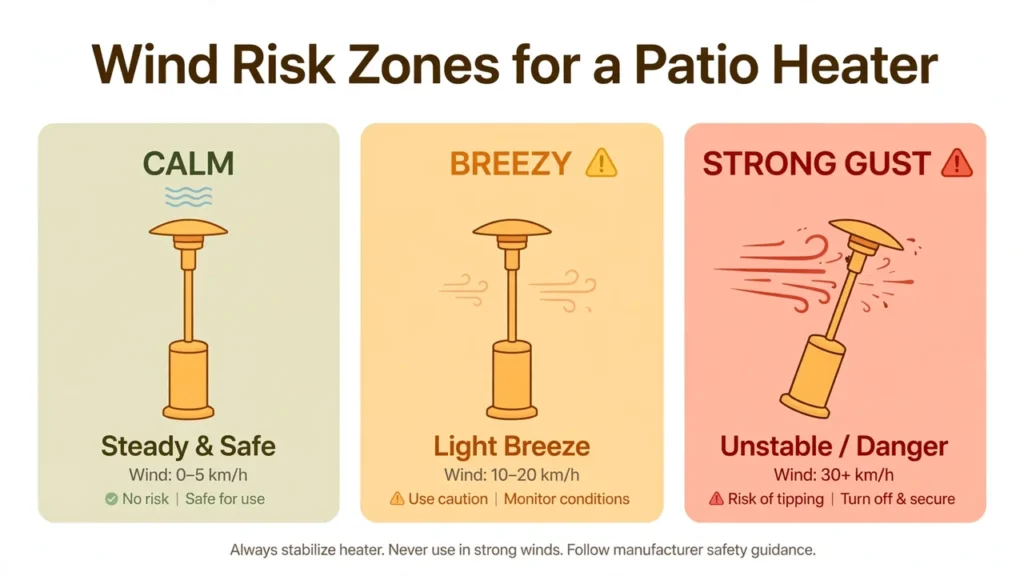
Open your weather app and look at the gust forecast, not the average wind speed. Gusts are the short bursts that knock a tall heater over. Note the wind direction too, since it tells you which side of the patio needs shelter.
Step outside and watch the trees and flags for a few minutes. Leaves that rustle gently point to a light breeze, while small branches that sway and bend point to a stronger wind. If gusts push against you as you walk, do not light the heater.
Pro Tip: Check the forecast again an hour before guests arrive. Evening wind often picks up as the sun drops, and a calm afternoon can turn gusty by dinner time.
Pick a sheltered spot on flat ground
Place the heater on the leeward side of a wall, fence, or dense hedge, so the windbreak takes the force before the heater does. Leave the clearance your manual calls for between the heater and walls, furniture, and overhead cover.
Set the heater on flat, level ground and test it with the small level. A base that rocks on uneven pavers will tip far sooner than one that sits flat. A patio heater on a wood deck needs the same flat footing, plus the clearances your manual lists for wood surfaces.
Fill the base with weight
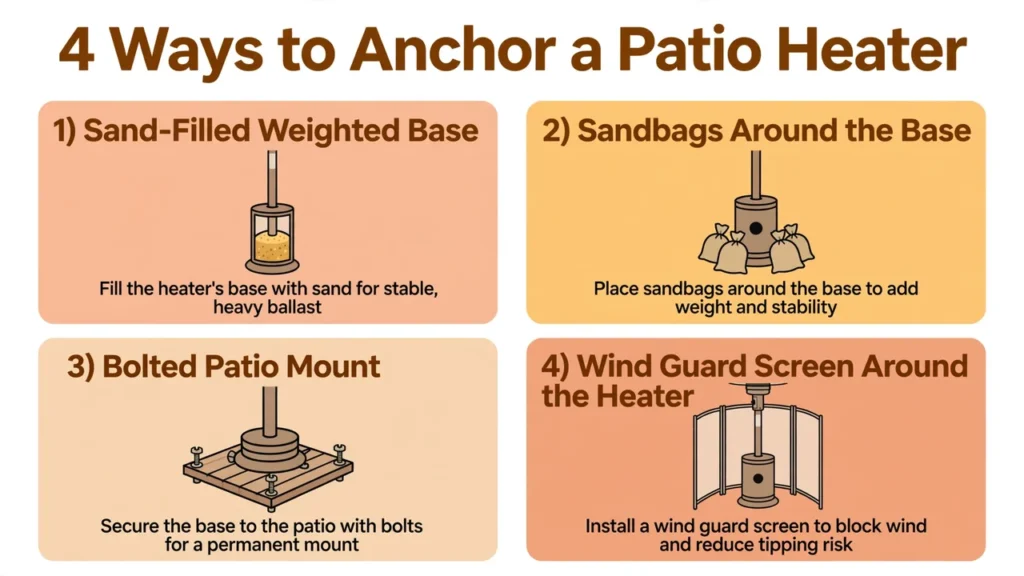
Most freestanding patio heaters ship with a hollow base that you fill yourself. Open the base cap and pour in sand or water, whichever your manual names. Sand stays put all season and will not freeze and crack the base, while water is easier to empty when you move the heater.
Fill the base on the patio and wipe up any spill right away. A full base lowers the center of gravity and makes the heater far harder to push over. Press the heater firmly from the side after filling it. It should resist your push without rocking.
Heads Up: Never fill the base with anything your manual does not name. Concrete, gravel, and scrap metal can damage the base, block the drain plug, or make the heater too heavy to move safely.
Anchor the base to the patio
Set two sandbags tight against opposite sides of the base, so the heater cannot slide or pivot in either direction. Sandbags work on any patio surface and need no tools. Push each bag flush against the base shell and check that neither bag covers the gas valve, the tank door, or the ignition controls.
For a heater that stays in one place all season, use a bolt-down kit if your model offers one. Mark the bolt holes, drill to the depth the kit calls for, and tighten each bolt in turn until the base sits firm. Ask your landlord before drilling into a rented patio.
Anchoring Methods Compared
| Method | Stability gain | Cost | Effort | Best for |
|---|---|---|---|---|
| Filled base | Moderate | Low | Low | Every heater, every patio |
| Sandbags | Moderate | Low | Low | Renters and quick setup |
| Bolt-down kit | High | Moderate | Moderate | Heaters that stay put all season |
| Wind guard or screen | Moderate | Moderate | Low | Open patios with steady wind |
| Filled base plus sandbags | High | Low | Low | Gusty evenings with guests |
Ratings are general guidance for comparing methods, not measured test results. Your heater manual is the final word on which methods fit your model.
Add a wind guard or screen
Set a folding wind screen on the upwind side of the heater, about an arm’s length away. The screen breaks the wind before it hits the reflector and steadies the flame. Angle the panels slightly instead of standing them flat, since a flat panel catches the full force and can blow over itself.
Leave a gap for air to flow around the heater, and never cover it with a blanket while it burns. A screen also gives some shelter from light rain, though rain can still damage a patio heater when water reaches the burner.
Lower the flame and watch the heater
Turn the flame down when gusts pick up. A lower flame sits closer to the burner and blows out less often. Watch the reflector and the flame, since both warn you before the heater starts to rock.
Stay with a lit heater while the wind blows, and keep children and pets clear of the base. Many newer heaters carry a tip-over shutoff that cuts the gas if the unit falls, but that switch is a backup, not a plan. A clean burner and tight fittings help too: see how to clean a patio heater and how long patio heaters last.
Shut the heater down when gusts build
Turn the heater off at the controls, then close the gas valve at the tank. Let the heater cool fully before you move it or fit the cover. Move it against a wall or into storage if a storm is on the way.
If the heater falls over, close the gas valve first and leave the area until you are sure there is no gas smell. Check the hose, the regulator, and the burner for cracks or loose fittings before you light it again. If you smell gas or see damage, call a licensed gas professional and do not relight it.
Wind Conditions and What To Do
| What you see outside | Wind level | What to do |
|---|---|---|
| Smoke rises straight up, leaves still | Calm | Use the heater as normal |
| Leaves rustle, smoke drifts sideways | Light breeze | Fill the base and place the heater in shelter |
| Small branches sway, loose paper blows | Steady wind | Add sandbags and a wind screen, lower the flame |
| Whole trees sway, walking takes effort | Strong gusts | Turn the heater off and store it |
These are observable signs to read on your own patio, not wind speed readings. When in doubt, turn the heater off.
Troubleshooting: When the Heater Still Will Not Stay Put
| If This Happens | Try This |
|---|---|
| The heater rocks in a light breeze | Check that the base is full, then move the heater to flatter ground and add sandbags |
| The flame keeps blowing out | Lower the flame, set up a wind screen on the upwind side, and check the burner for dirt |
| The base feels light when you lift it | Open the base cap and refill it, since sand settles and water can leak out over time |
| The wind screen blows over | Angle the panels, weight the screen feet, and move it closer to the windbreak wall |
| The heater fell over once already | Shut off the gas, inspect the hose and burner, and do not relight it until a pro clears any damage |
Frequently Asked Questions
Can a patio heater tip over in wind?
Yes. A tall freestanding heater is top heavy, so a strong gust can push the reflector and pivot the unit over its base. A filled base, a sheltered spot, and sandbags cut that risk a lot.
How much weight should I add to the base?
Check your heater manual first, since each model lists the fill type and amount it was built for. Most freestanding bases take sand or water, and a full base resists tipping far better than an empty one. If your manual lists no amount, fill the chamber as full as the design allows and test the heater with a firm push before lighting it.
Should I turn my patio heater off in high wind?
Yes. When gusts sway whole trees or push against you as you walk, turn the heater off at the controls, close the gas valve, and let it cool. No anchor replaces turning the heater off in a storm.
Do wind guards really help?
Yes, when they are placed on the upwind side with a gap for airflow. A screen breaks the wind before it hits the reflector and steadies the flame. A screen alone will not hold a heater with an empty base, so use it with a filled base and sandbags.
What should I do if my patio heater falls over?
Close the gas valve first and move away until you are sure there is no gas smell. Check the hose, regulator, and burner for cracks or loose fittings before you light the heater again. If you smell gas or see damage, call a licensed gas professional and do not relight it.
Can I leave my patio heater outside in a storm?
No. Move it against a wall or into storage and fit the cover once it has cooled. Standing water and driving rain can reach the burner and controls, and high wind can tip even a weighted heater.
Quick Reference Card
What You Need: Sand or water for the base, two sandbags, a folding wind screen, a wrench or screwdriver, a small level, work gloves, a funnel and bucket, a heater cover.
Steps:
- Check the wind forecast and watch the trees
- Pick a sheltered spot on flat ground
- Fill the base with sand or water
- Anchor the base with sandbags or a bolt-down kit
- Add a wind guard on the upwind side
- Lower the flame and stay with the heater
- Shut it down when gusts build
Remember: Never use a patio heater indoors, and turn it off in strong gusts.
Your heater now stands on a filled base, in a sheltered spot, with sandbags and a screen working for you. That is how to keep a patio heater from tipping over in wind on an ordinary breezy evening. The habit that matters most is the last step: when gusts build, turn the heater off and enjoy the evening from inside.
If you are still weighing whether a heater fits your patio at all, read our guide on whether a patio heater is worth it before you buy. A heater that fits your space and your weather is one you will use for years.