How to Keep a Fire Going in a Fire Pit All Night Long
You light the fire, everyone settles in with a drink, and twenty minutes later the flames shrink to a sad orange glow. Someone pokes at it. Someone else tosses on a damp log. Smoke rolls across the chairs, and the night ends early. Learning how to keep a fire going in a fire pit is not about luck or a secret trick. It is about giving the fire three things in the right balance: dry fuel, heat, and air.
This guide walks you through a full evening at the pit, from the first coal bed to the last log. You will learn when to add wood, how to place each log so air can reach it, and how to read the fire and fix it before it dies. The method works for wood-burning pits of any size, and there is a short section at the end for gas fire pits too.
Safety first: check local burn bans and fire rules before you light anything, and never burn treated, painted, or stained wood, plywood, or household trash. The fumes are toxic. Keep a bucket of water or a hose within reach, keep children and pets at a safe distance, and never leave a burning fire pit unattended. When the night is over, follow our guide on how to put out a fire pit safely before you walk away.
What You Need
- Dry, seasoned firewood, split to wrist-to-forearm thickness
- Kindling: small dry sticks and a few fire starters
- A long-handled fire poker (at least 24 inches)
- Heat-resistant gloves for handling logs near the flames
- A metal ash shovel for clearing vents
- A bucket of water or a garden hose, kept close by
- A spark screen that fits your pit
- A wind guard, or a sheet of plywood to block gusts
- A metal ash bucket with a lid for the end of the night
At a Glance: The 7 Steps
- Let the first logs burn down to a coal bed
- Add one log at a time, never a pile
- Lean each new log against the coals
- Clear ash from the air vents
- Push the coals together with a poker
- Block the wind on the upwind side
- Feed the fire before it fades
Step 1: Let the first logs burn down to a coal bed
A strong coal bed is the engine of the whole evening. Flames look impressive, but coals hold the heat that lights the next log. If you keep piling wood on top of tall flames, the new logs smother the fire instead of feeding it. Give the first load time to burn down until you see a deep bed of glowing orange and red coals across the bottom of the pit.
This takes patience. A fresh fire needs roughly 20 to 30 minutes of open burning before the coal bed is ready. Watch for the logs to collapse into chunks and the flames to settle lower. When the coals glow bright and the smoke thins to a pale wisp, the bed is ready for its first new log.
Heads up: never use gasoline, lighter fluid, or any liquid fuel to revive a fire pit. The vapors can flash back and cause severe burns. If the fire is struggling, use dry kindling and airflow, not chemicals. Check your local burn ban status before lighting up, since a ban makes any open fire illegal even in a backyard pit.
Step 2: Add one log at a time, never a pile
One log catches fast. Three logs stacked at once trap smoke, block air, and cool the coals. Place a single dry log on the coal bed, then step back and give it a minute to catch. You should see flames licking up the sides of the log within a minute or two.
The log you choose matters. Pick a piece about as thick as your wrist or forearm, and check that it feels light for its size. Heavy, damp wood hisses and steams instead of burning. If you are unsure whether your wood is dry enough, read our guide to burning wet firewood and why it causes so much smoke.
Step 3: Lean each new log against the coals
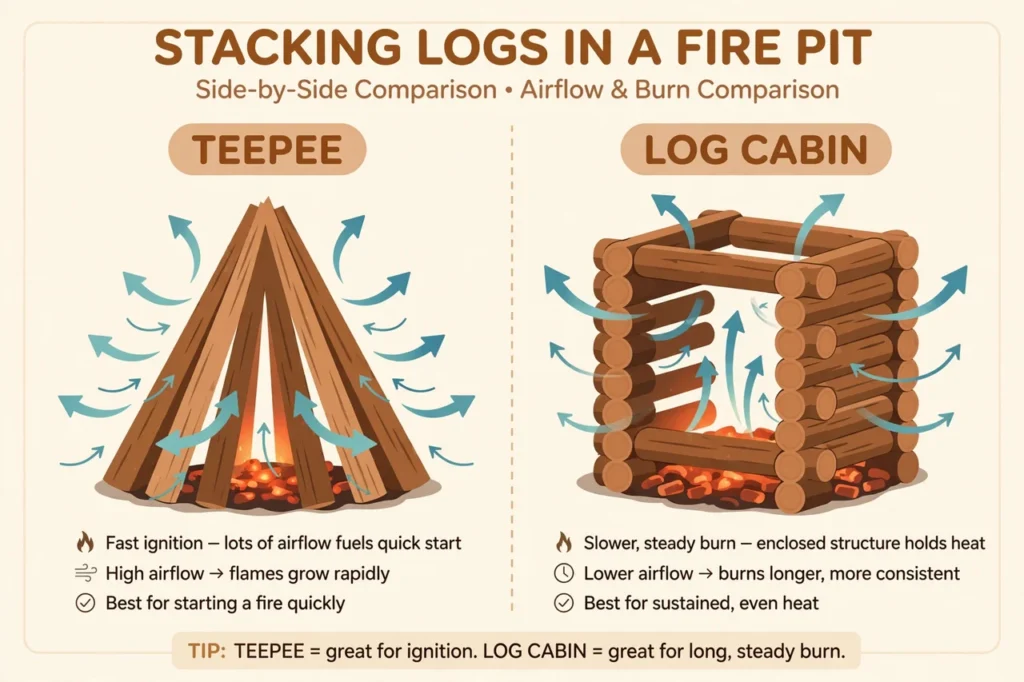
How you place the log matters as much as when you place it. Lean it at an angle against the coal bed or against a log that is already burning, like a teepee pole. This shape leaves gaps underneath for air to flow and lets the flames climb along the wood.
A log laid flat on the coals seals off the air below it and burns slowly from the top only. A log dropped across the pit with both ends resting on the rim never touches the heat at all. Angle is everything: the bottom end sits in the coals, the top end rests high, and air moves freely through the gaps.
Pro tip: knock two logs together before you add one. Dry, seasoned wood makes a sharp hollow knock. Wet or green wood makes a dull thud. That five-second test saves you from adding a log that will smoke out the whole evening.
Step 4: Clear ash from the air vents
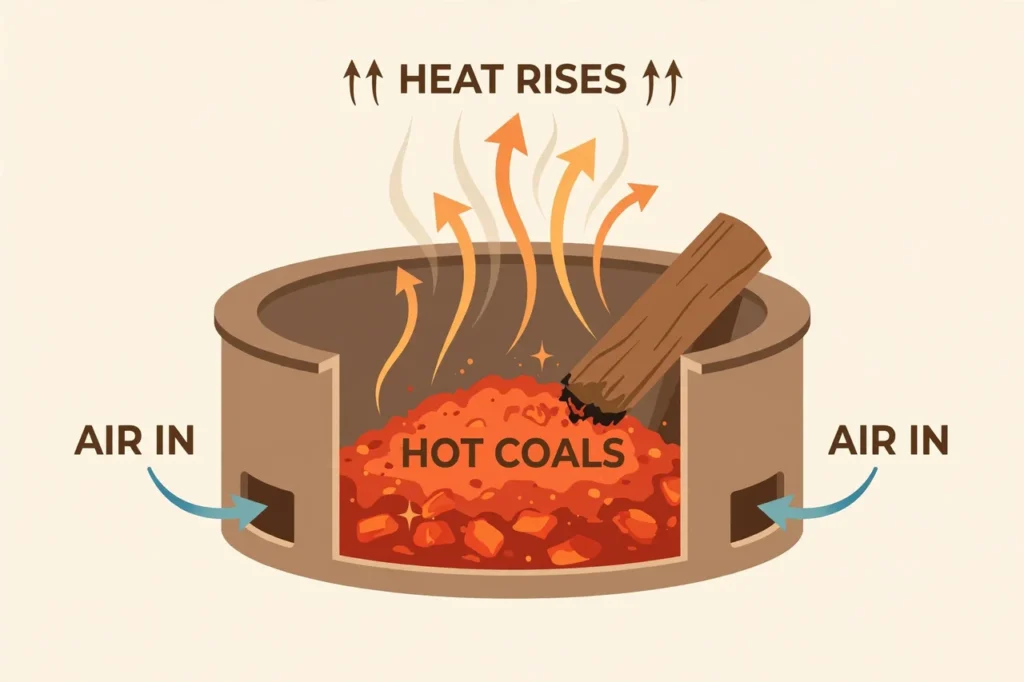
Fire needs oxygen, and ash is the quiet killer of airflow. In most pits, air enters through vents or gaps near the bottom, and a thick layer of fine ash slowly chokes them off. When the flames look lazy even though the coals are hot, blocked vents are often the cause.
Use the metal ash shovel to pull ash away from the vent openings while the fire is burning low, and do it gently so you do not kick up a cloud of ash over the chairs. Wear your heat-resistant gloves. In a pit with no vents, the same fix applies: scrape a clear channel through the ash bed so air can reach the coals from the side.
Step 5: Push the coals together with a poker
Coals that touch each other share heat and stay hot. Coals spread thin across the pit cool down and go dark one by one. Every half hour or so, take the poker and nudge the glowing coals into a tight mound in the center of the pit.
Work slowly and keep your face back from the smoke. Lift a log that has burned through in the middle and set its two halves onto the mound so the fresh broken ends face the heat. The new surfaces catch fast and throw off more flame than the old bark-covered outside ever did.
Pro tip: stir the coals from the side, not from above. Pushing from above drops ash onto the hottest coals and can smother them. Sliding the poker in low and pulling the coals toward the center keeps the heat where it belongs.
Step 6: Block the wind on the upwind side
A light breeze feeds a fire. A strong gust tears the heat away faster than the wood can make it, and the flames flatten and gutter. If the wind picks up, find which side it comes from and put a barrier there: a wind guard, a sheet of plywood, or even a stack of chairs on the upwind side.
Leave the other sides open so air can still flow in low and smoke can escape. A full ring of barriers turns the pit into a chimney that smokes everyone out. One solid block on the windward side is enough to calm the flames without starving them.
Step 7: Feed the fire before it fades
The most common mistake is waiting too long. People wait until the flames are gone, then try to light a fresh log on cooling coals. The right moment to add wood is while the fire still looks strong: tall flames, bright coals, and the last log burning down to half its size.
Add one log, let it catch fully, and then relax. This rhythm, one log every 30 to 45 minutes in a typical backyard pit, keeps the evening steady with almost no effort. Smaller, drier logs burn faster and need feeding more often; thick logs burn slower and hold the fire longer.
What a Healthy Fire Looks Like
- Flames: tall, yellow-orange, and moving freely, not flattened by wind
- Coals: glowing orange-red across the center of the pit
- Smoke: thin and pale, rising straight up instead of billowing
- Sound: a steady crackle, not a hiss (hissing means wet wood)
- Heat: steady warmth you can feel from a few feet away
What to do when the fire starts to die
Even a well-tended fire sags sometimes. The fix depends on what you see. If the coals are still glowing, the fire is alive and only needs air and fuel: clear the ash, push the coals together, and add a small dry log leaned against the mound. If the coals have gone dark gray, add kindling first, because a full-size log will not catch on cold ash.
Blowing gently across the coals from a safe distance can help, and a leaf blower on its lowest setting, used in short bursts from several feet away, can revive a weak coal bed fast. Stand to the side, never lean over the pit, and stop as soon as the coals glow bright again. If the fire will not come back after kindling and air, let it go out and relight it properly. Our guide on how to start a fire in a fire pit covers a clean relight from scratch.
How to keep a gas fire pit going
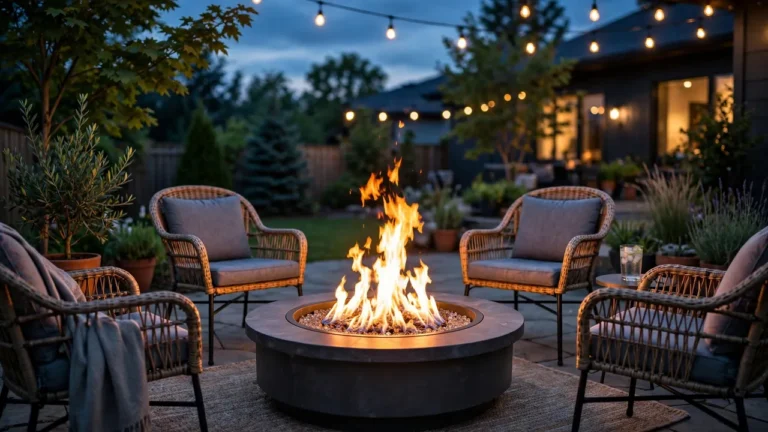
Gas fire pits follow different rules. If the flames shrink or sputter, check the propane tank first: a tank that feels light or frosty on the outside is likely low. Make sure the valve is fully open and the burner holes are clear of ash, leaves, and lava rock dust, since a blocked burner starves the flame.
Wind is the main enemy of a gas fire pit, because the flame sits low and has no coal bed to hold heat. A glass wind guard around the burner makes a real difference on breezy nights. If the flame keeps going out even with a full tank and a clean burner, turn the gas off and have a professional look at the regulator and gas line. Never try to adjust gas fittings yourself. For tank life, see how long a propane tank lasts on a fire pit.
What never to burn to keep a fire going
When a fire fades, the temptation is to toss in whatever is nearby. Resist it. Treated lumber, painted or stained wood, plywood, particle board, and glossy paper release toxic fumes. Household trash, plastic, and rubber do the same and leave residue that is hard to clean out of the pit.
Green or freshly cut wood is also a poor choice. It holds too much water, so it steams, smokes, and cools the coals. Stick to dry, seasoned hardwood, and check what you can burn in a fire pit before you add anything unusual. Store your wood under cover so it stays dry between fires: our guide to how to store firewood outside shows a setup that keeps the pile dry through rain.
Troubleshooting: If This Happens, Try This
| If This Happens | Try This |
|---|---|
| Flames shrink within minutes of adding a log | The log is wet or the coal bed is too thin. Swap in a dry log and let the coals rebuild first. |
| Thick white smoke rolls over the chairs | Wet wood or smothered coals. Clear ash from the vents and add dry kindling, not another big log. |
| Coals glow but flames will not rise | Push the coals into a tight mound and lean a small dry log against them so air can move underneath. |
| Wind keeps flattening the flames | Block the upwind side with a wind guard or plywood sheet, and leave the other sides open. |
| Fire dies every time you step away | Add a thick dry log before you leave the pit, and check that the vents are clear of ash. |
| Gas fire pit flame sputters and fades | Check the tank level, open the valve fully, and clear debris from the burner holes. |
Frequently Asked Questions
Why does my fire pit fire keep going out?
The most common causes are wet wood, a thin coal bed, and blocked airflow. Wet wood cools the coals, a weak coal bed cannot light the next log, and ash clogging the vents starves the fire of oxygen. Fix all three: use dry seasoned wood, build a deep coal bed first, and keep the vents clear.
How often should I add wood to a fire pit?
Add one log every 30 to 45 minutes in a typical backyard pit, and add it while the fire still looks strong. Smaller, drier logs burn faster and need feeding more often, while thick logs burn slower and hold the fire longer.
Can I use a leaf blower to revive a fire pit fire?
Yes, on the lowest setting and in short bursts from several feet away, standing to the side and never leaning over the pit. It works well on a weak coal bed. Stop as soon as the coals glow bright, and never use a blower on a gas fire pit.
Does a spark screen help a fire stay lit?
A spark screen keeps embers in the pit, but a fine mesh screen can cut airflow and cool the fire. Use a screen with a wide mesh, and lift it briefly when you add wood or stir the coals so air can reach the fire.
How do I keep a fire going in the rain?
Keep a supply of dry wood under cover near the pit, and feed the fire with small dry pieces so the coals stay hot enough to dry out any dampness. A wind guard or a canopy set well above the pit helps, but never put a cover directly over open flames.
Quick Reference Card: Keep the Fire Going
You need: dry seasoned wood, kindling, a long poker, gloves, an ash shovel, water nearby, a spark screen, a wind guard.
- Build a deep coal bed before adding more wood.
- Add one dry log at a time.
- Lean each log against the coals for airflow.
- Clear ash from the vents when flames go lazy.
- Push coals into a tight mound with the poker.
- Block wind on the upwind side only.
- Feed the fire while it still looks strong.
Remember: dry fuel, hot coals, open air. Lose one of the three and the fire fades.
That is the whole method: a deep coal bed, one dry log at a time, and steady air. Once you get the rhythm, keeping a fire going in a fire pit stops feeling like a chore and starts feeling like part of the evening.
When the night winds down, give the fire a proper send-off. Stop adding wood, let the flames die back, and follow the steps to put out a fire pit safely before anyone heads inside. A fire that is fully out is the only kind you can walk away from.
Sources
Fire safety guidance in this article follows the advice of Smokey Bear and the U.S. Forest Service on campfire safety, and Ready.gov on wildfire prevention. See Smokey Bear campfire safety and Ready.gov wildfire prevention for the official guidance.