Why Is My Electric Fireplace Not Turning On? 10 Checks to Try Before You Call for Help
You press the power button, and nothing happens. No glow, no flame effect, no heat, no sound. It worked last week, and now your electric fireplace sits there dark and cold. That moment is annoying, especially on a chilly evening when you were counting on the warmth.
Why is my electric fireplace not turning on? In most cases, the cause is small: a tripped breaker, a loose plug, dead remote batteries, or a safety shutoff that needs a reset. This guide walks you through 10 checks in order, from the fastest to the more involved. By the end, you will either have your fireplace running again or know exactly what to tell a professional.
Most of these checks take less than 30 minutes in total, and you need no special tools. Work through them one at a time, and test the fireplace after each check so you know which fix did the trick.
⚠ Heads Up: Stay Safe Around Electricity
Unplug the fireplace before you inspect the cord, plug, or vents. Never open sealed electrical panels or bypass a safety device, thermal cutoff, or tip-over switch. If you smell burning, see scorch marks, or the breaker keeps tripping, stop and call a licensed electrician. This guide covers safe homeowner checks only, not wiring repairs.
What You Need
- A phone charger or small lamp (to test the outlet)
- Fresh batteries for the remote (check the manual for the size)
- A flashlight
- A dry cloth
- Your fireplace manual, if you still have it
At a Glance: The 10 Checks
- Press the power switch on the unit itself
- Test the outlet with another device
- Inspect the power cord and plug
- Check the breaker and GFCI
- Replace the remote batteries
- Reset the unit by unplugging it
- Check the thermostat and heat setting
- Let an overheated unit cool down
- Separate a flame problem from a heat problem
- Decide when to call a licensed electrician
1. Press the Power Switch on the Unit Itself
Many electric fireplaces have two power controls: the remote and a physical switch on the unit. That switch often sits on the side, underneath, or behind a lower panel, and it can get bumped off during cleaning or by a curious pet. Find the manual switch and press it firmly to the on position, then try the remote again.
If you are unsure which button does what, our guide on how to turn on an electric fireplace walks through the usual control layouts. Some models also have a separate master power rocker that must be on before the remote can do anything at all.
2. Test the Outlet With Another Device
Plug a phone charger or a small lamp into the same outlet and see if it works. This one test tells you whether the problem is the fireplace or the power supply, and it takes under a minute. If the lamp stays dark too, the outlet or circuit is the issue, not your fireplace.
Try a different outlet on another circuit if you can reach one safely with the cord, without stretching it across a walkway. Electric fireplaces draw a fair amount of power on their heat setting, so they should run on a circuit that is not already loaded with space heaters or large appliances.
3. Inspect the Power Cord and Plug
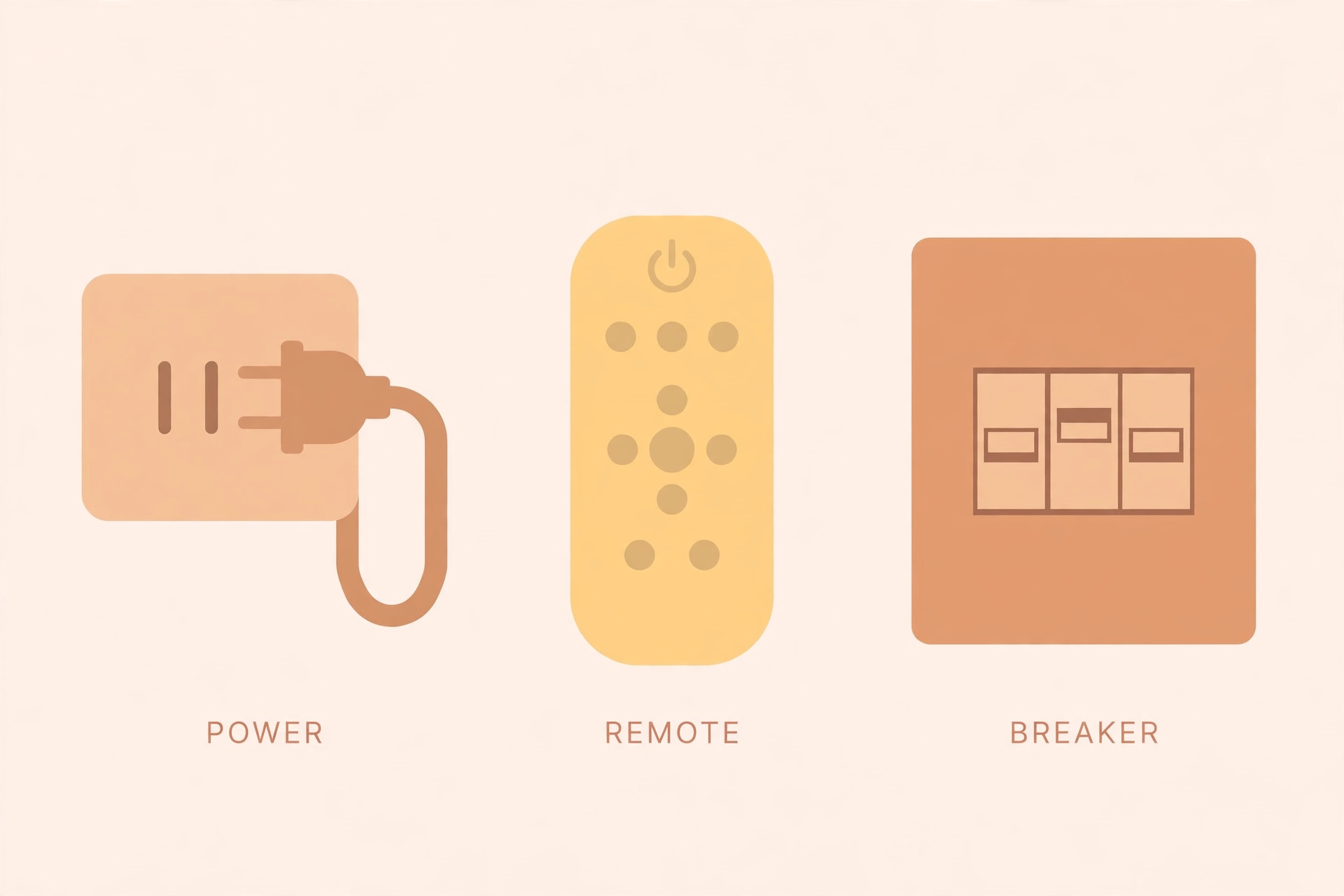
Unplug the fireplace first. Then run your eyes along the full length of the cord, looking for cuts, kinks, flattened spots, or melted areas near the plug. Check that the plug sits fully in the outlet and is not loose or wobbly, since a half-seated plug can cut power without warning.
Also check that the cord is plugged straight into the wall outlet. Power strips and extension cords can overheat under a fireplace’s heat load, and many manufacturers warn against them. If you find cord damage of any kind, do not use the fireplace until a professional has looked at it.
4. Check the Breaker and GFCI
Head to your breaker panel and look for a breaker that sits between on and off, or one that has clearly tripped. Flip it fully to off, then firmly back to on. A single trip after a power surge is common, but a breaker that trips again right away is a warning sign, not a nuisance.
Also check any GFCI outlet or GFCI breaker on that circuit. Press the reset button and see if power returns. If the breaker trips repeatedly, or you see scorch marks around the panel, leave the breaker off and call a licensed electrician rather than forcing it back on.
Pro Tip: Label the fireplace breaker with a piece of tape once you find it. Next winter, you will spot it in seconds instead of hunting through an unmarked panel in the dark.
5. Replace the Remote Batteries
Dead remote batteries are one of the most common reasons a fireplace “stops working” overnight. Swap in a fresh set, matching the size printed inside the battery compartment, and point the remote straight at the receiver on the unit. Stand within a few feet for the first test, since weak batteries and long distances fail together.
While the cover is off, check for corrosion on the battery contacts. A white or green crust can block the signal even with new batteries. Wipe the contacts gently with a dry cloth. If the remote still does nothing, try the manual controls on the unit to rule the remote out entirely.
6. Reset the Unit by Unplugging It
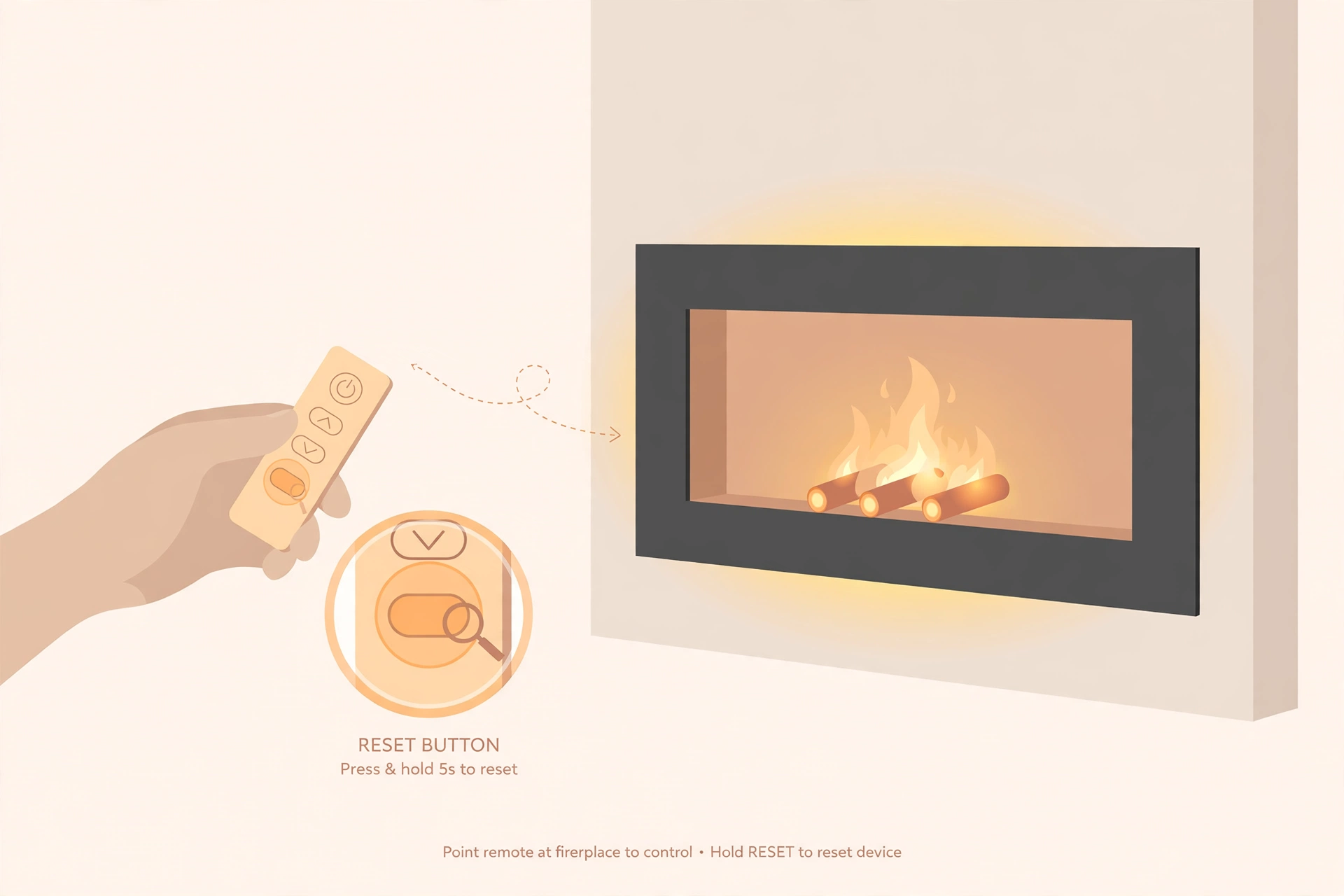
Unplug the fireplace from the wall and wait a full 5 minutes. This lets the internal controls fully power down and clear a fault state, which a quick off-and-on press does not always do. Plug it back in firmly, switch the manual power on, and test the remote.
Some models have a small reset button near the controls or on the back. If yours does, press it once after plugging back in, following the manual. If the unit powers up and then dies again within minutes, note exactly what happens, since that detail helps a technician diagnose the fault.
7. Check the Thermostat and Heat Setting
Your fireplace may be on but set to a temperature below the current room temperature. In that case, the heater stays off while the flame effect may still run. Turn the thermostat up a few degrees above the room temperature and wait a minute to see if the heater kicks in.
Also confirm the unit is set to heat mode rather than flame-only mode. Many models let you run the flame effect without heat, which is pleasant in summer but confusing in winter. Check the display or indicator lights against the manual so you know which mode is active.
8. Let an Overheated Unit Cool Down
Electric fireplaces have a thermal safety cutoff that shuts the heater off if the unit gets too hot. Blocked air vents are the usual trigger. Dust, blankets, furniture, or pet hair pressed against the intake or outlet vents can trap heat and trip the cutoff.
Unplug the unit and give it at least 30 minutes to cool. Clear anything blocking the vents and vacuum loose dust from the vent openings with a brush attachment. Plug it back in and test. If it overheats again with clear vents, the cutoff itself may be faulty, and that is a repair job, not a cleaning job.
9. Separate a Flame Problem From a Heat Problem
Pay close attention to what still works. Flames but no heat points to the heater, thermostat, or heating element. Heat but no flames points to the flame mechanism or its light source. Nothing at all points to power, controls, or a safety cutoff. This split narrows the fault fast.
Understanding the parts helps here. Our guide on how does an electric fireplace work explains the heater, flame effect, and controls in plain terms. If only one function is dead, mention that split when you contact support or a technician, since it saves diagnostic time.
10. Decide When to Call a Licensed Electrician
Stop troubleshooting and call a professional if you notice a burning smell, scorch marks, a hot plug or outlet, a breaker that trips repeatedly, or any wiring damage. These signs point to faults that homeowner checks cannot safely fix. Keep the fireplace unplugged until it has been inspected.
Not sure who handles this kind of repair? See who can fix an electric fireplace for the difference between a manufacturer technician and a licensed electrician. Also note that electric fireplace code requirements in many areas call for a dedicated circuit, so an electrician may need to check whether your setup meets local rules.
Troubleshooting Table: Match the Symptom to the Fix
| If This Happens | Try This |
|---|---|
| Nothing at all, no lights or sound | Check the manual switch, outlet, cord, breaker, and GFCI (steps 1–4) |
| Remote does nothing but manual buttons work | Replace remote batteries and clean the contacts (step 5) |
| Unit starts, then shuts off quickly | Clear blocked vents, let it cool 30 minutes, then reset (steps 6 and 8) |
| Flames run but no heat comes out | Raise the thermostat above room temperature and confirm heat mode (step 7) |
| Breaker trips every time you switch it on | Leave the breaker off and call a licensed electrician (step 10) |
| Burning smell or scorch marks | Unplug at once and call a licensed electrician (step 10) |
Frequently Asked Questions
Why does my electric fireplace have power but no flames?
If the display lights up but no flame effect appears, the flame mechanism or its light source is the likely fault. Try the full unplug reset first, then check the flame brightness setting. If the flames stay dead while the heater works, the flame assembly usually needs a technician.
Can a tripped breaker stop an electric fireplace from turning on?
Yes. A tripped breaker cuts power to the whole circuit, so the fireplace shows no signs of life at all. Reset the breaker fully to off and then back to on. If it trips again right away, leave it off and call a licensed electrician.
Why does my electric fireplace turn on and then shut off right away?
Blocked vents are the most common cause, since the thermal safety cutoff trips when heat builds up inside the unit. Clear the vents, let the unit cool for at least 30 minutes, and try again. Repeated shutoffs with clear vents point to a faulty cutoff or sensor.
Should I open the back panel to check the wiring?
No. Sealed electrical panels are not homeowner service areas, and opening them can void the warranty and expose live parts. Stick to the outside checks in this guide. Wiring problems belong to a licensed electrician or the manufacturer’s service team.
When should I call a licensed electrician?
Call one for burning smells, scorch marks, a hot plug or outlet, repeated breaker trips, or any visible wiring or cord damage. These are electrical faults, not settings problems. Keep the fireplace unplugged until it has been checked.
Quick Reference Card
You need: a lamp or charger, fresh remote batteries, a flashlight, a dry cloth.
- Press the manual power switch on the unit.
- Test the outlet with a lamp or charger.
- Inspect the cord and plug (unplugged).
- Reset the breaker and GFCI.
- Replace the remote batteries.
- Unplug for 5 minutes, then plug back in.
- Raise the thermostat and confirm heat mode.
- Clear vents and cool down for 30 minutes.
- Note whether flames, heat, or both are dead.
- Call a licensed electrician for smells, scorch marks, or repeat trips.
If your fireplace is running again, you now know exactly which check fixed it, and that knowledge will save you time next winter. Keep the vents clear and the remote batteries fresh, and give the unit a wipe-down now and then. Regular care prevents many of these faults before they start.
If it is still dark after all 10 checks, you have ruled out every safe homeowner fix, and a professional diagnosis is the right next step. For ongoing care, read our guide on how to clean an electric fireplace so dust and blocked vents never cause this problem again. Why is my electric fireplace not turning on? Most of the time, the answer is one of these 10 checks, and the fix takes minutes.