Do you need a fireplace screen? The Truthful, Evidence-Based Solution.
Do You Need a Fireplace Screen? The Honest, Evidence-Based Answer
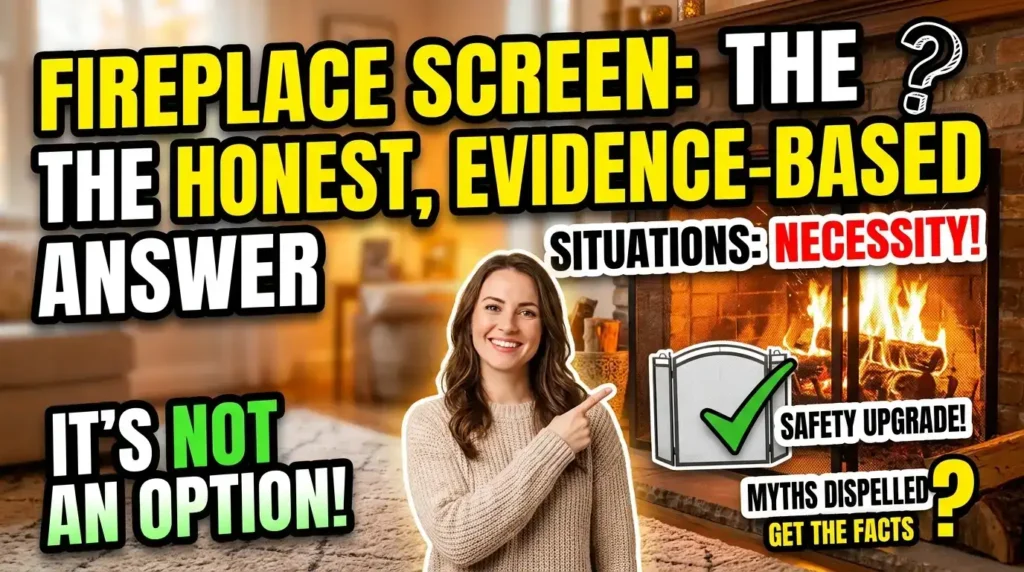
One of the most inexpensive home safety upgrades that you can purchase, but one of the easiest to omit is a fireplace screen. It is not heating your house, it is not a better way of burning logs, and during a quiet night it may be as nothing but an attractive-looking accessory. And that is why so many homeowners pose the same question each winter: do you really require one or is it an upsell?
The answer to this question is yes, nearly all woodburning or gas fireplaces will be improved with a screen, and in most situations, it is not an option but a necessity. But there isn’t almost every, but every, and the actual solution will be provided by your type of fireplace, your home, and how you utilize it. This guide dissects precisely what a fireplace screen is, when it is not negotiable, when you have more wiggle room, and how you can select one that will actually fit your hearth.
What Is a Fireplace Screen, exactly?
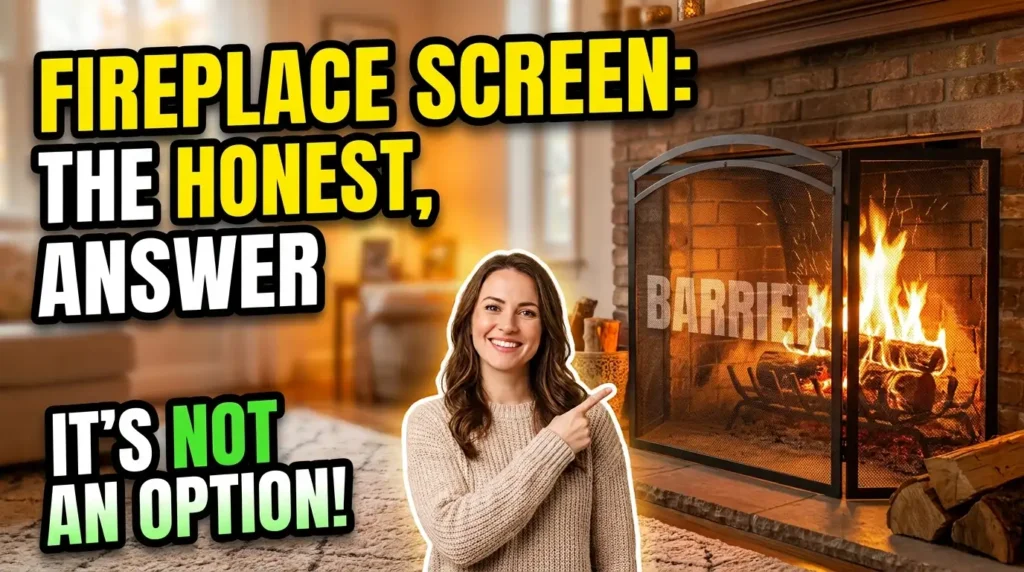
A fireplace screen is an opaque shield, typically metal mesh, wrought iron, or tempered glass, which hangs between an open fire and the surrounding room. It may be free-standing (a folding or flat panel screen which you place in front of the aperture) or door-mounted (glass or mesh panels directly attached to the frame of the fireplace).
It has an easy task; to allow the heat and light to enter, but not sparks, embers, ash, or curious hands. It is that one and only purpose that has made fireplace screens remain, virtually the same in intent, over hundreds of years.
Important lesson learned: Fireplace screen is not a decoration, but a barrier. Its style function followed its safety function and that sequence still counts when it comes to your decision of whether you need it.
Various factors determine whether you should have a fireplace screen or not, but the answer is yes.
Yes, in case any of the following applies to you:
- You have a wood-burning, open-hearth fireplace (with or without glass doors)
- You are a parent with children (under 10) or a pet owner.
- You do not already have solid glass doors in your fireplace which remain closed in the time of a fire.
- You would like to minimize the ash and soot dispersing in the room.
- You have a gas fireplace, open flame or a glass front that is open and heats up.
You have more flexibility, but a screen is still recommended, if:
- You already have sealed, code-compliant glass doors on your fireplace, which are closed when burning.
- You do not have any children or pets who may get access to the fireplace.
- You watch the fire and put it out completely before you leave the room.
You cannot find a situation in which the presence of a fireplace screen will render your home less safe. Aesthetic preference or cost is the only actual trade-off, but it is trivial in comparison to the risk that a screen eliminates.
Why Fireplace Screens Exist in the First Place
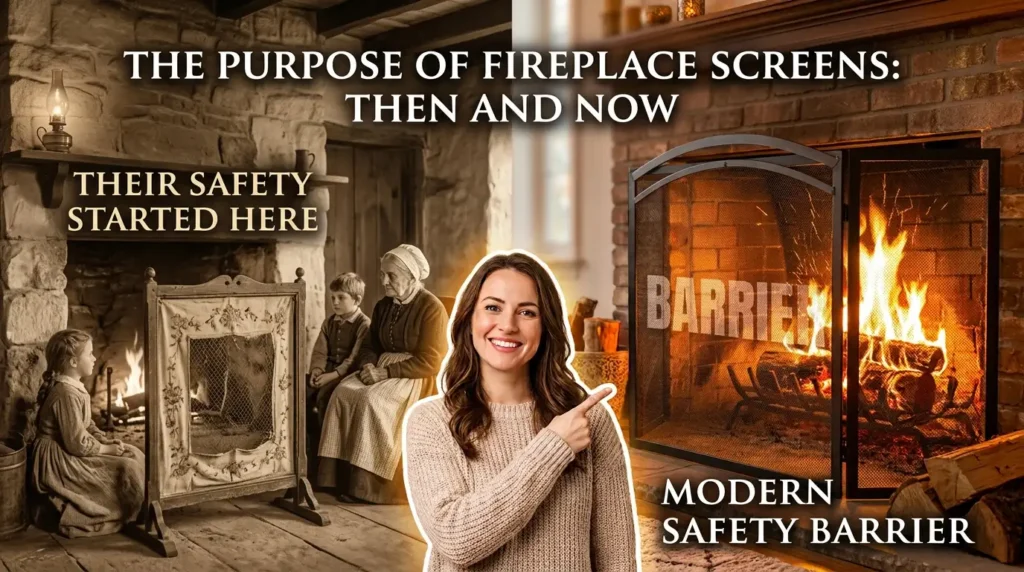
Fireplace screens are not new to the safety-industry. Even prior to central heating, houses were heated virtually all by open fire, and individuals required a means to sit close to the fire without being burnt by the fire or having a spark hit them. The early screens were frequently of wood covered with cloth or needlework, as metal got too hot to be placed anywhere near the fire.
With the rise of wood-burning stoves in the late 1800s, screen materials changed to sheet metal, wire mesh and glass, and the fancy stained-glass and wrought-iron fire screens began to be sold as antiques. The essence remained the same: covered embers, cover the room, and allow the fire to be seen. The difference is that the screens of today are constructed and tested with regard to the current safety standards and not with trial and error.
The 5 Real Reasons a Fireplace Screen Matters
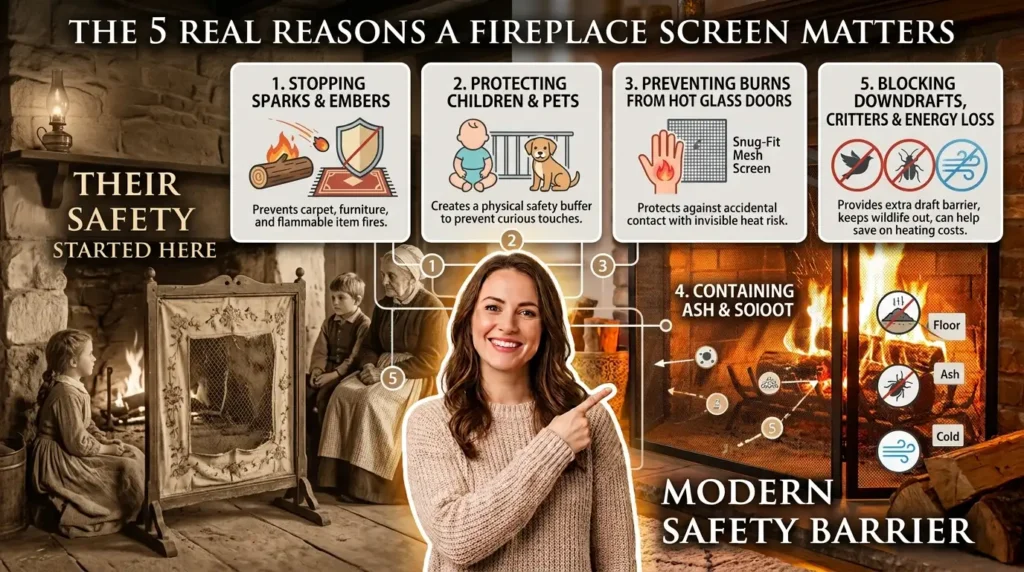
1. Stopping Sparks and Embers from Starting a Fire
Burning logs don’t sit still. They will be able to project embers several feet out of the firebox, as they change, rest, and burst. It can be similarly done by a sudden rushing out of the chimney, and can then squeeze a puff of sparks into the room. These embers may burn the rugs, burn furniture or burn anything flammable in the vicinity of the fire, such as curtains, newspapers or holiday decorations around the fire. The physically blocking of such a path is done by a correctly sized display.
2. Protecting Children and Pets
Little children who are just learning to walk will be attracted to bright moving light and they have not yet understood that fire burns so they touch it and get burnt. Something that is near an open flame is much less predictable and just as curious as pets. A screen provides a real world buffer so an accident, a race to the other side of the living room or a moment of unsupervised curiosity does not result in a burn. Safety agencies advise that a three-foot (kid-free) zone should be maintained around any open fire or heating device, and a screen will help to enforce that distance automatically, even when a parent is not paying full attention.
3. Preventing Burns from Hot Glass Doors
Glass door fireplace, more so gas units, becomes much hotter than most individuals anticipate. It is not uncommon to have glasses fronts that are more than 300-400oF only a few minutes after the fire has broken out, and the glass may remain hot and dangerous up to 45 minutes after the fire goes out. Since the burn risk cannot be seen at a glance, glass-front damages more often affect the youngest children in a home, especially those who are just beginning to move around and who instinctively reach out to balance themselves against furniture.
A mesh screen that fits snugly in front of glass doors provides an added protection that can be given by visual caution only to a limited degree.
4. Keeping Ash, Soot, and Debris Contained
Ash and fine soot particles drift even in the absence of a spark ever coming out of the firebox. That translates to increased dusting, cleaning, and staining of the surrounding floors, furniture, and walls with soot over a season of frequent fires. A screen holds the debris in place, in the firebox, which is a lesser win than fire prevention but a real win when you use your fireplace frequently.
5. Blocking Downdrafts, Critters, and Energy Loss
When the fireplace isn’t in use, an open flue is essentially a hole to the outside. Birds, rodents, and insects can and do find their way in through an uncapped or unscreened chimney. A screen or glass door is supplemented with a decent chimney top to provide an extra barrier to undesirable wildlife, and restrict drafts. Glass door systems especially can decrease the quantity of hot indoor air pulled up and out of the chimney, which some homeowners believe will modestly decrease heating expenditure during the colder months, however the precise saving will rely on your fireplace, insulation and climate.
Fireplace Screens by the Numbers
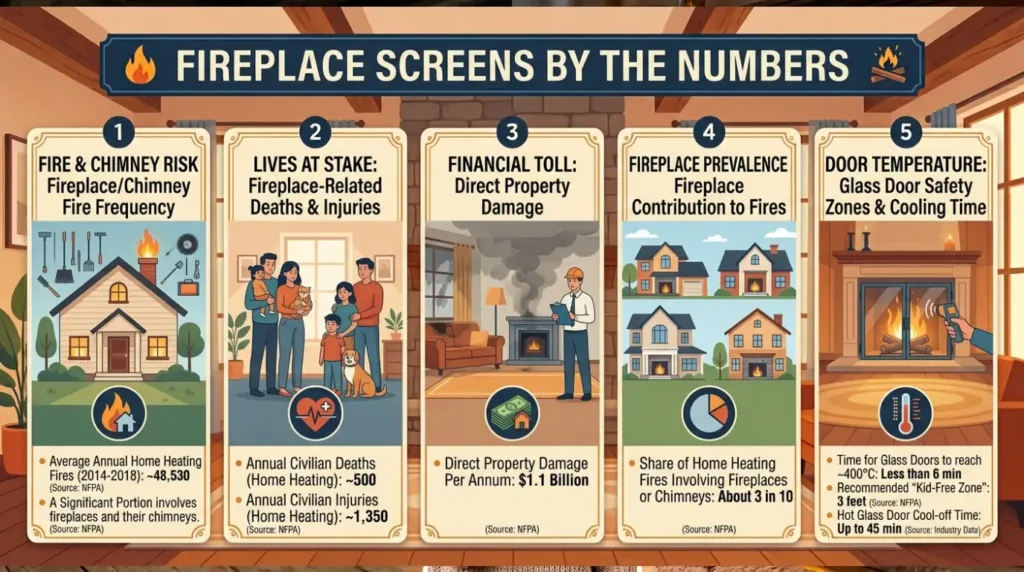
Fireplace and chimney fires are not an uncommon or hypothetical danger. The National Fire Protection Association reported that in 2014-2018, U.S. fire departments responded to an average of 48,530 home heating fires every year, leading to the estimated deaths of 500 civilians, 1350 injuries to civilians, and 1.1 billion direct property damage. A significant portion of that total is contributed by fireplaces and their chimneys: about 3 out of 10 home fires in that same time period involved fireplaces or chimneys.
| Statistic | Figure | Source |
| Average annual home heating fires (2014–2018) | 48,530 | NFPA |
| Annual civilian deaths due to home heating fires | ~500 | NFPA |
| Annual civilian injuries from home heating fires | ~1,350 | NFPA |
| Direct property damage per annum | $1.1 billion | NFPA |
| Share of home heating fires involving fireplaces or chimneys | About 3 in 10 | NFPA |
| Recommended “kid-free zone” around an active fire | 3 feet | NFPA |
| Time for glass fireplace doors to reach ~400°C | Less than 6 minutes | Industry safety data |
| Hot glass door cool-off time | Up to 45 minutes | Industry safety data |
Such statistics do not imply that all fireplaces are time bombs. They imply that the risk is ubiquitous, and the remedy is inexpensive, that a compromise of a single screen is hardly ever worth it.
When You Can Skip a Fireplace Screen (and When You Can’t)
| Situation | Screen Needed? | Why |
| Open wood-burning fireplace, any household | Yes | Sparks and embers are unpredictable; no glass barrier exists. |
| Wood fireplace with glass doors, doors open while burning | Yes | Doors must stay open for airflow during a wood fire, so sparks can still escape. |
| Gas fireplace with sealed glass front, doors always closed | Optional but recommended | Glass blocks embers, but the hot surface itself is a burn risk for kids and pets. |
| Gas fireplace, decorative screen for style only | Optional | Purely aesthetic use case; safety risk is low if the unit is sealed and code-compliant. |
| Household with children under 10 or pets | Yes, regardless of fireplace type | Behavioral risk outweighs equipment type. |
| Fireplace never used, purely decorative | Optional | Consider a summer/decorative screen to block drafts and pests instead. |
Mesh Screens vs. Glass Doors vs. Combination Units
| Feature / Aspect | Mesh Screen | Glass Doors | Combination (Doors + Mesh) |
| Blocks sparks/embers | Yes | Yes, when closed | Yes |
| Safe to use while burning wood | Yes (allows airflow) | No (doors must be open while burning wood) | Yes (keep doors open, mesh closed) |
| Minimizes heat loss (when not in use) | No | Yes | Yes |
| Visible flame / ambiance | Full view | Full view | Full view |
| Typical price range | $$ | $$$ | $$$ |
| Best suited for | Frequently used wood-burning fireplaces | Gas fireplaces, energy-savvy homes | Homes desiring energy efficiency and spark protection |
| Maintenance level | Low | Moderate (glass cleaning required) | Moderate |
Quick decision guide:
- Live by burning wood and desiring simplicity → mesh screen.
- Own a gas fireplace and are concerned with heating bills → glass doors.
- Prefer maximum protection and would not mind paying a high price → combination unit.
How to Choose the Right Size and Style?
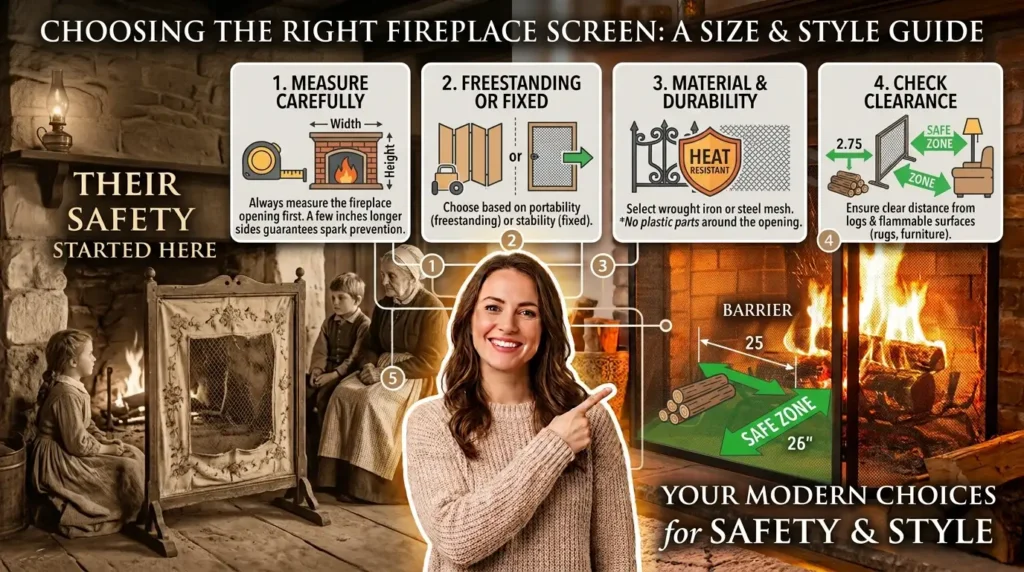
- Shopping: Before shopping, measure the fireplace opening (width and height). A screen is required to be a few inches longer than the gap on each side to be certain to prevent errant sparks.
- Adjust the screen height to at least the height of the opening, and have any overage of the top, should you have an oversized firebox.
- Choose freestanding or fixed. Freestanding folding screens are portable and easy to clean; fixed mesh screens or screen doors are fixed and not knocked down.
- Think material. Wrought iron and steel mesh withstand heat, and can last years, but anything with plastic parts should not be anywhere around the firebox opening.
- Check clearance. The screen must not be in direct contact with logs or embers and must be located well away (following the instructions of your fireplace manufacturer) of flammable surfaces (rugs, furniture).
What a Fireplace Screen Costs
| Screen Type | Typical Cost Range | Notes |
| Basic single-panel mesh screen | $30–$80 | Entry-level, good for occasional use |
| 3-panel folding screen | $60–$200 | Most common style, adjustable width |
| Decorative wrought-iron screen | $150–$500 | Style-focused, still functional |
| Tempered glass fireplace doors | $200–$800 | Better efficiency, professional install often recommended |
| Custom or designer screens | $500–$2,000+ | Premium materials, made-to-measure |
The cost depends on the retailer, materials and location, and does not include professional installation when you use glass doors. A simple mesh screen is much cheaper even at the low end than a single urgent care visit to a burn, or even the price of a new scalded rug.
How to Use a Fireplace Screen Correctly?
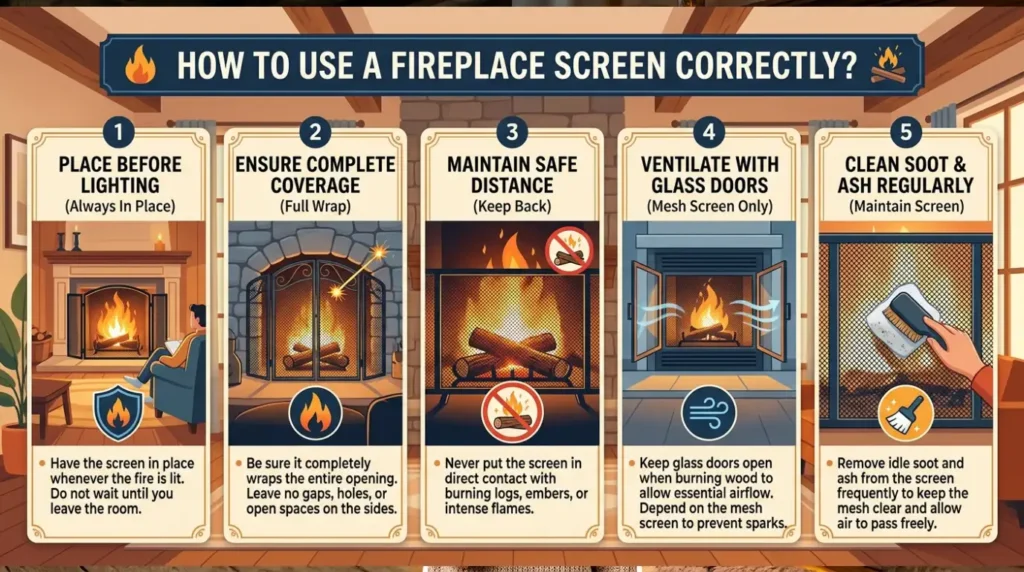
- Have the screen in place whenever the fire is lit and not only when you leave the room.
- Be sure that it completely wraps the opening, leaving no holes on the sides.
- Never put the screen in direct contact with the burning logs or hot embers.
- With glass doors, keep them open when a fire is in wood (to allow the air to pass) and depend on the mesh screen to prevent sparks.
- Have idle soot and ash removed off the screen every now and then to keep mesh clear and able to pass air freely.
Common Mistakes Homeowners Make
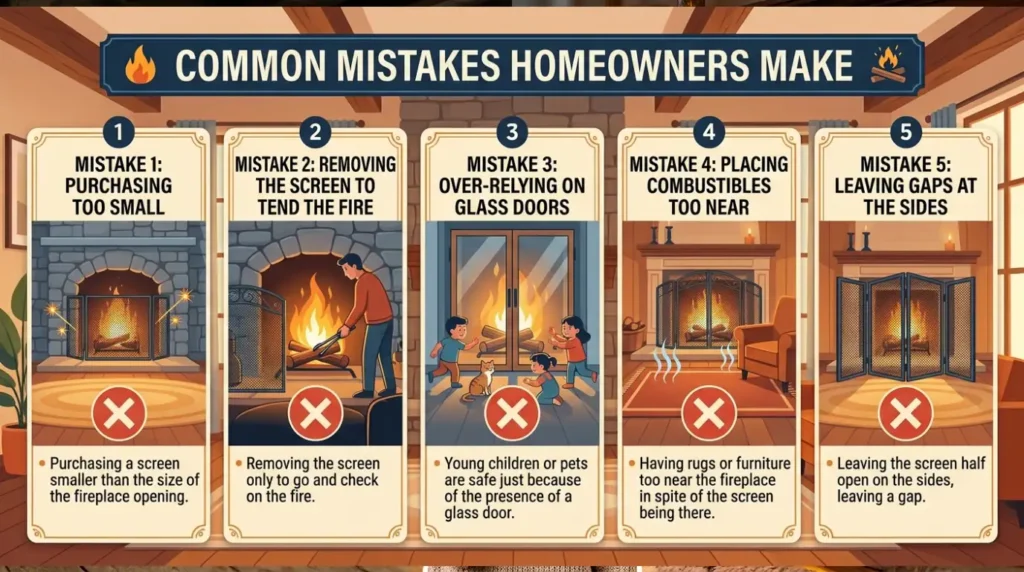
- Purchasing a screen smaller than the size of the fireplace opening.
- Turning off the screen only to go and check on the fire.
- Young children or pets are safe just because of the presence of a glass door.
- Having rugs or furniture too near the fireplace in spite of the screen being there.
- Leaving the screen half open on the sides, leaving a gap.
Key Takeaways
- Fireplace screens are required in almost all wood-burning fireplaces, and highly recommended in gas fireplaces with hot glass fronts.
- It does not add style, but primarily serves to block sparks, embers and direct contact.
- Families with pets and children are to consider a screen as a necessity, not an option.
- Mesh screens are appropriate with wood fires; glass doors are appropriate with efficiency-oriented gas systems; both are available in a combination.
- The expense of a screen is insignificant in relation to the harm, clean-up or fire-damage exposure avoided.
You May Also Read:
- 3 Best Electric Fireplace Trim Kits?
- Can You Paint an Electric Fireplace? 7 Easy Tips for a Stunning Finish
FAQs:
Should you have a fireplace screen on a gas fireplace?
It depends on the unit. Yes, a screen would provide a valuable protection should the glass front become hot and should be accessible to children or pets. When the fireplace is completely closed with code-compliant glass that never opens, a screen is more of a style, although still suggested to have an added sense of safety.
Do we need fireplace screens to be safe or merely to decorate?
Safety first both, but safety first. Fireplace screens were originally created to keep sparks and heat out and that is their main task even today although modern screens are also created to be attractive.
What would become of you in case you do not use a fireplace screen?
The absence of a screen means that embers and sparks can find an easy entrance into the room, and more frequently, the furniture and flooring will have burn marks, and more infrequently, a burning fire. It also eliminates a physical obstacle in between an open fire or hot glass and a child or pets around it.
What size fireplace screen?
A screen must be a few inches broader than the opening of the fireplace, and no less tall than this opening itself, that there may be no openings at the sides or at the top, through which the embers may escape.
May I have a screen and glass doors simultaneously?
Yes, Mesh screens are commonly used in front of glass doors in many households where they are typically used during wood fires because the doors must remain open to allow the wind to pass through and the mesh screen is used to contain the sparks.
Do fireplace screens lower the amount of heat?
Mesh screens do not have much effect on radiant heat. Glass doors can diminish the amount of heat reaching the room when there is a fire but also diminish amount of heat loss when the fire is extinguished.
Do chimney fire screens prevent chimney fires?
No. A fireplace screen keeps the room safe to what gets out of the firebox; it does not stop the creosote that gets into the chimney, which is the main cause of chimney fires. The appropriate preventive action in regard to that other risk is annual professional chimney inspection and cleaning.
Is the code requirement to have a fireplace screen?
Different jurisdictions and fireplace types have different requirements. Several local codes and insurance policies will require some kind of spark guard on wood-burning fireplaces, but you should be sure to consult your local building code or the requirements of your insurer.
The question is, how long is the life of fireplace screens?
Due to simple maintenance, like cleaning and checking against warping or rust, quality metal screens can last 15-25 years.
And should I have a larger firebox screen?
Yes. The screen must never be of the same width and height as the opening, but a larger firebox must have a larger or wider-folding screen.
What will make the most effective fireplace screen material?
Mesh screens are most commonly made of steel and wrought iron, which are the most durable. They do not heat easily, do not warp, and stand up through years of frequent use.
Do ornamental fireplace screens prove as effective as plain fireplace screens?
Yes, so far as the decorative screen is composed of solid metal mesh or panels that do not have holes that are large enough to allow members to pass through. Style and functionality do not go hand in hand.