Does an Electric Fireplace Have a Real Flame? The Honest Answer
Does an electric fireplace have a real flame? No. What you see is light — cleverly shaped light that copies the look of fire without any burning at all. No logs catch fire, no gas burns, and nothing inside the glass gets hot enough to burn you.
That is good news if you want the cozy look of a fire with none of the work. But it raises fair questions: what exactly are you looking at, can you touch it, and why do some electric flames look real while others look fake? This guide answers all of it in plain words.
The Short Answer: No Real Fire
A real flame needs three things: fuel, oxygen, and heat. An electric fireplace has none of the three in its flame display. The “flames” are LED lights bounced off moving mirrors, hologram-style projections, or glowing water mist.
The heater inside the unit is a completely separate part. It warms the room with electricity, much like a space heater. The flames are decoration — they exist only for your eyes.
How the Flame Effect Actually Works
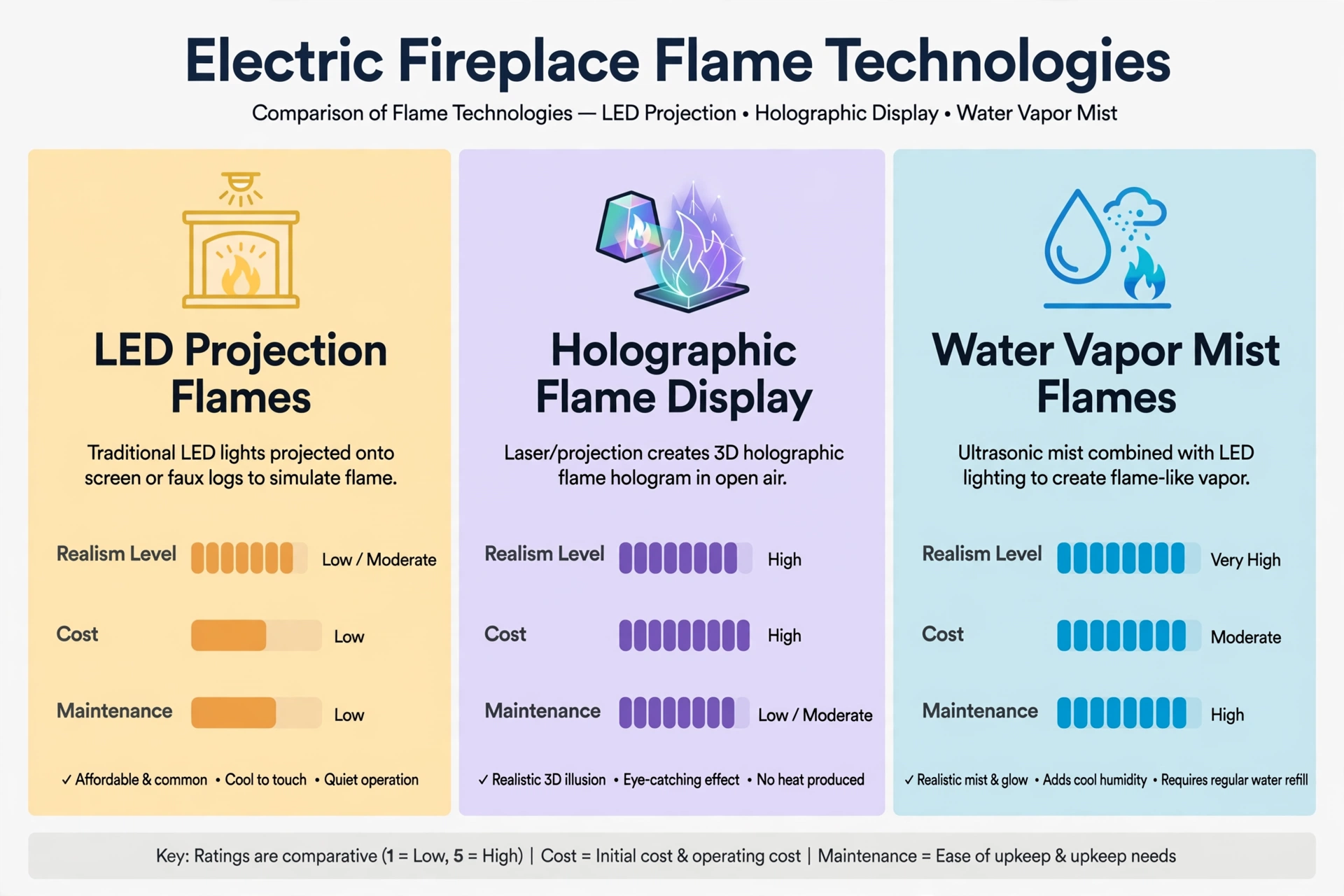
Three main technologies create electric fireplace flames. Most units use the first one. The other two cost more and look more lifelike.
1. LED Projection: The Flame in Most Fireplaces
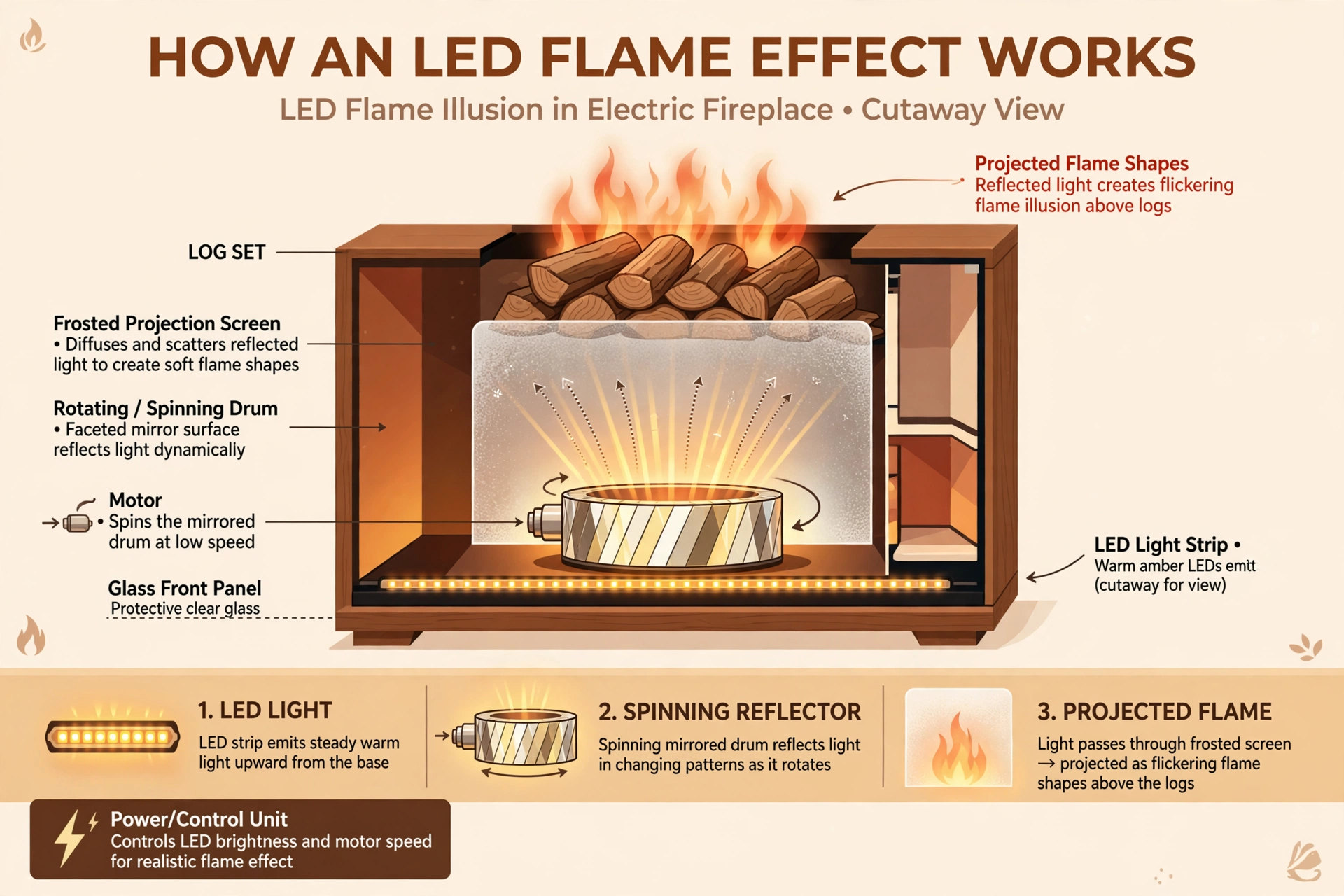
LED lights shine onto a spinning cylinder covered in small mirrors. The mirrors bounce the light onto a screen behind the log set, and the spinning makes the light dance like flames. Many models also project light directly onto molded logs for extra depth.
Color settings let you switch between orange, blue, or mixed flames on most models. It is the cheapest flame technology, and it needs no refills or upkeep beyond an occasional dusting.
2. Holographic Flames: Fire on Glass
Some high-end models play flame footage on a screen. The image reflects off angled glass to give it depth — a second screen behind the first makes the flames look three-dimensional instead of flat.
This method uses projection and optics, not mirrors or mist. It looks sharp and bright, and manufacturers can update the flame patterns with software. The trade-off is price: holographic models cost noticeably more than basic LED ones.
3. Water Vapor Flames: Glowing Mist
Water vapor fireplaces turn water into a fine, cool mist using ultrasonic vibration. LED lights shine up through the mist, and the lit vapor looks like rising flames. The only byproduct is harmless water vapor — no smoke and no fumes (Art Fireplace’s water vapor guide describes the same process).
You refill a small water tank, or some units connect to a water line. Because the “flames” are physical mist, they drift and flicker in a way flat light cannot copy — many people find this the most convincing effect of all.
Real Flame vs Electric Flame: What’s Actually Different
Can You Touch the Flames?
Yes — touching the glass or the flame area will not burn you on most models. There is no combustion, so the flame display itself produces no heat. Kids and pets are far safer around it than around a real fire.
One caution: the heater vent, usually near the top or bottom of the unit, does get hot while the heater runs. Keep hands, curtains, and furniture away from the vents. For the full rundown, see our guide on are electric fireplaces safe.
Flame and Heat Are Two Separate Jobs
The flames and the heater are independent systems. Most electric fireplaces let you run the flames with the heater switched off — called flame-only mode. You get the cozy look on a summer evening without warming the room a single degree.
When you do want warmth, a fan-forced or infrared heating element kicks in while the flames keep dancing. Learn exactly how the heating side works in our article on do electric fireplaces give off heat.
How to Tell Which Flame Technology You Have
Not sure what is behind your glass? Work through these five checks.
- Look for a water tank. Open the front panel or check the manual. A refillable reservoir means you have water vapor technology — the only type that uses water.
- Watch the flames in a dark room. Flat, screen-like flames point to LED projection. Deep flames that seem to float in the air point to holographic or water vapor models.
- Check your remote or control panel. Flame color and brightness settings are typical of LED units. Mist or vapor controls point to a water vapor model.
- Read the model label. The sticker on the back or bottom usually names the series or technology. Search the model name online if the label is unclear.
- Listen while it runs. A faint hum from a spinning reflector means LED projection. A soft bubbling or fan sound points to a water vapor unit.
When the Flames Look Wrong
Electric flames are reliable, but they can act up. Here are the most common symptoms and the first thing to check for each.
| If this happens | Try this first |
|---|---|
| Flames look dim or faded | Dust the glass and screen, then check the LED brightness setting |
| Flames freeze or stop moving | The reflector motor may be stuck — unplug the unit, wait a minute, restart |
| No flames, but heat still works | The LED flame lights may have failed — check the manual for the bulb or strip |
| Water vapor flames look weak | Refill the tank and clean the ultrasonic plate as the manual directs |
For step-by-step fixes, see our guide on why electric fireplace flames are not working.
Do the Flames Ever Burn Out?
LEDs last a very long time — usually years of regular use. In fact, the flame lights are often the longest-lasting part of the whole unit. See our breakdown of what electric fireplace lifespan looks like part by part.
When flames do fail, the fix is usually a replacement LED strip or reflector motor — both inexpensive parts. If only the backlights quit while the flames keep going, that is a separate issue covered in our guide to background lights that stop working.
Frequently Asked Questions
What the “flame” is: LED light, holographic projection, or lit water mist
Touch safe: Yes, the flame display stays cool
Heat: Separate heater; flame-only mode available on most models
Most realistic: Water vapor or holographic technology
Emissions: No smoke, no soot, no carbon monoxide, no vent needed
So, does an electric fireplace have a real flame? No — and that is exactly the point. You get dancing light that looks like fire, with no smoke, no ash, and no fire risk.
Pick the flame technology that fits your budget and your room, run it in flame-only mode on warm nights, and enjoy the glow. If you want the full safety picture before you buy, read our electric fireplace safety guide.