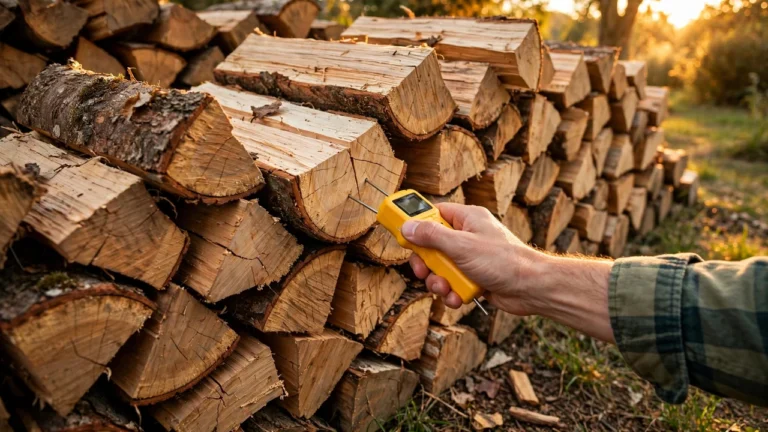
Storing Firewood in the Garage: Dos and Don’ts for Dry Wood and a Safe Home
Storing Firewood in the Garage sounds like the easiest winter chore there is. You carry the wood inside, stack it against the wall, and forget about it until the first cold night. The trouble starts when that wood stays damp, draws insects, or sits too close to the furnace. A garage protects firewood from rain and snow, and that protection helps a lot. It also traps moisture, blocks airflow, and puts fuel near cars, paint cans, and heaters. This guide walks you through a garage setup that keeps wood dry and your home safe.
By the end, you will have a tidy stack on a raised rack, with air moving around every log and clear space between the wood and anything that can spark. The work takes about an hour for a small load and an afternoon for a full cord. Most of the effort is carrying and stacking. The planning takes ten minutes, and it saves you from damp wood, mold, and pests all winter.
⚠️ Safety first — read this before you stack a single log
Firewood belongs in the garage. Fire never does. Never burn wood, charcoal, or any fuel inside a garage, even with the door open. Unvented burning fills an enclosed space with carbon monoxide, a gas you cannot see or smell. Keep a working CO detector in the garage and one on each floor of your home, and test them monthly.
Keep the stack away from furnaces, water heaters, and any appliance with a pilot light or open flame. Store gasoline, solvents, and paint far from the wood pile. Never burn treated, painted, or stained wood, plywood, or household trash. The fumes are toxic. Check your local fire code and any firewood transport rules in your area before you move wood across county or state lines.
Total Time
1–4 hours
depends on load size
Active Time
45–60 min
for a face cord
Difficulty
Beginner
no power tools needed
What You Need
- Firewood rack, pallets, or cinder blocks
- Two 2×4 boards per row, 8 feet long
- Tape measure
- Work gloves
- Broom and dustpan
- Moisture meter (pin type)
- Tarp or old sheet (top cover only)
- Chalk or painter’s tape (for marking gaps)
- Wheelbarrow or log carrier
- Flashlight
No rack at home? Two pallets laid flat work well, and so do four cinder blocks with 2×4 boards across them. A log carrier saves your back on repeat trips from the driveway.
At a Glance
- Pick the driest wall in the garage
- Sweep the floor and clear the spot
- Raise the wood off the concrete floor
- Stack in short rows with air gaps
- Leave a gap between the wood and the wall
- Keep the pile clear of ignition sources
- Inspect each load for pests before it goes inside
- Rotate the oldest wood to the front
Pick the Driest Wall in the Garage
Walk the garage after rain and look for damp patches on the floor and walls. The best wall is the one that stays dry, sits farthest from the furnace and water heater, and leaves room for the car door to open. A wall near the garage door gets fresh air each time the door opens, and that airflow helps wood dry.
Mark the spot with chalk or painter’s tape. Measure the length of the wall you plan to use and compare it with the size of your load. A 4-foot run holds about one face cord when stacked 4 feet high. If the wall is shorter than your load, plan a second row with a walkway between the rows.
Skip any wall with signs of leaks, stains, or peeling paint. Water dripping on a wood pile undoes weeks of drying in a single storm. Fix the leak first, or pick a different wall.
Sweep the Floor and Clear the Spot
Clear everything out of the marked area before the wood arrives. Old boxes, rags, and paint cans trap moisture under a stack and give insects a place to hide. Move them to a shelf or another corner.
Sweep the concrete clean, then check the floor for cracks and low spots where water pools. A puddle under a wood pile soaks the bottom row from below, and that row turns soft and moldy. Fill small cracks with concrete patch, or lay a sheet of plywood over a low spot to level it.
Give the floor a day to dry if you washed it. Concrete holds moisture longer than it looks. A dry floor is the first layer of protection for your wood.
Raise the Wood Off the Concrete Floor
Concrete pulls moisture up from the ground, even in a garage that looks dry. Wood that sits flat on concrete absorbs that moisture through the bark and end grain. The bottom row rots first, and the rot spreads upward.
Set down your rack, pallets, or cinder blocks with 2×4 boards across them. The platform should lift the wood at least 3 inches off the floor. Check that it sits level and does not rock. A wobbly base makes a wobbly stack, and a tall stack that leans is a hazard.
Pro tip: Lay the boards with the wide face up and space them about 12 inches apart. Air flows up through the gaps and dries the bottom row from below. Solid plywood blocks that airflow, so use slats instead.
Stack in Short Rows With Air Gaps
Place the logs bark-side down on the platform, with the cut ends facing out. Bark on the bottom sheds water and slows rot. Cut ends facing out let you see cracks and color, which tell you how dry each piece is.
Build rows no longer than 4 feet and no higher than 4 feet. Short rows stay stable, and a short row is easier to restack when you pull wood from the middle. Leave a 2-inch gap between rows so air moves through the pile. Tight packing traps damp air, and damp air grows mold.
Alternate the direction of each layer if the pieces are uneven. One layer runs left to right, the next runs front to back on the ends only, like Lincoln Logs. The crisscrossed ends act as bookends and stop the row from spreading. Keep the top layer flat so a tarp sits evenly if you cover it.
Garage Stacking: Do This, Not That
Small choices in how you stack decide whether the wood burns clean or smolders. Here is the side-by-side version.
✓ Do
- Raise wood 3+ inches off concrete
- Leave 2–3 inches from the wall
- Leave 2-inch gaps between rows
- Cover the top only, never the sides
- Stack bark-side down
- Keep rows 4 feet high or less
✕ Don’t
- Stack flat on the concrete floor
- Push the pile tight to the wall
- Pack rows with no air space
- Wrap the pile in plastic sheeting
- Stack higher than 4 feet
- Store wood against the furnace
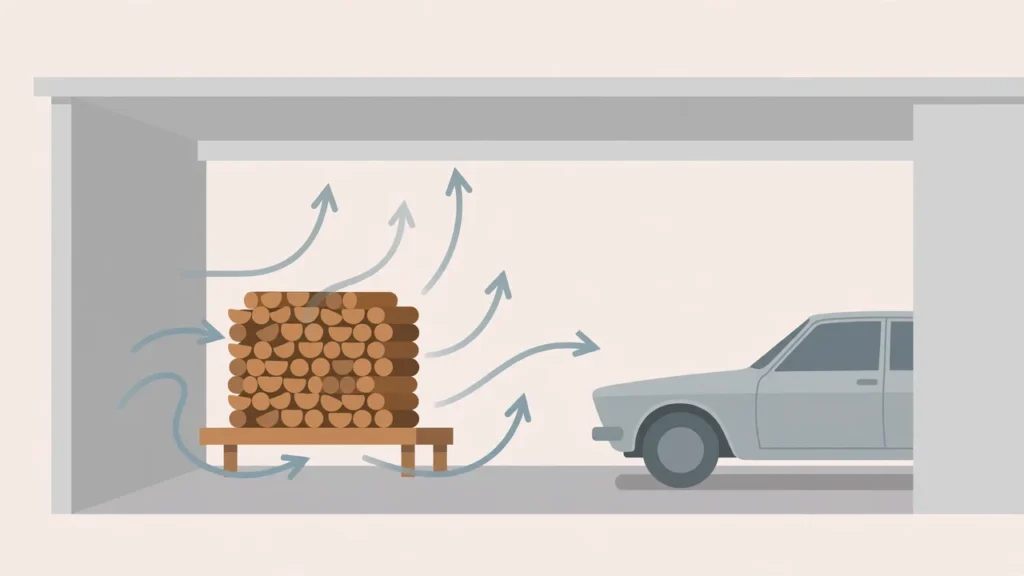
Leave a Gap Between the Wood and the Wall
Pushing a stack tight against the wall feels tidy, and it causes two problems. Air cannot move behind the pile, so the back row stays damp. Insects and mice travel along walls, so a tight stack gives them a covered highway straight into your wood.
Leave at least 2 to 3 inches between the back of the stack and the wall. Slide your hand behind the pile to check the gap. If your hand does not fit, pull the row forward. Mark the gap line on the floor with tape so future loads keep the same space.
The same rule applies to the sides. Leave a few inches between the end of the stack and any shelving or stored boxes. Air needs a path around the whole pile, not only across the front.
Keep the Pile Clear of Ignition Sources
Walk the garage and list every heat source: furnace, water heater, boiler, space heater, and any appliance with a pilot light. Measure the distance from each one to your stack. Keep the wood several feet from all of them, and farther still from a furnace or water heater with an open flame.
Move gasoline cans, solvents, paint thinner, and oily rags to a separate area, away from the wood and away from heat. Rags soaked with oil or stain can heat up on their own and catch fire, even without a flame nearby. Store them in a sealed metal container outside the garage if you can.
Check that the garage door opener, light fixtures, and outlets near the stack are in good shape. Frayed cords and sparking outlets do not belong near dry fuel. Replace damaged wiring before you stack, and call an electrician if you are unsure about any of it.
⚠️ Heads up: A garage full of dry wood, gasoline, and paint is a fire load. Keep a fire extinguisher rated for wood and flammable liquids within reach of the garage door, and check its pressure gauge each season. If a fire starts in the pile, leave the garage and call emergency services. Never try to drag a burning stack outside.
Inspect Each Load for Pests Before It Goes Inside
Firewood carries insects, spiders, and sometimes mice nests from the yard into your home. A garage is warmer than the woodpile outside, so pests that ride in tend to wake up and spread. Inspect every armload at the door before it crosses the threshold.
Look for small round holes in the bark, fine sawdust on the ends, and soft or crumbly spots. Knock two logs together and listen for hollow sounds. Split a suspicious piece open and check the inside. Set aside any log with live insects, heavy boring damage, or a nest, and burn it first or leave it outside.
Bring in only what you will burn in the next week or two for the indoor rack by the fireplace, and keep the main supply in the garage. The less time wood spends inside the heated part of the house, the less chance pests have to spread. Sweep up bark and debris after each trip, since it hides insects and feeds mold.
Rotate the Oldest Wood to the Front
Wood does not improve forever in storage. Well-seasoned wood burns best in its first year or two, and it slowly loses quality after that as it picks up moisture and pests. Burning the oldest wood first keeps the pile fresh and stops the back row from sitting for years.
Stack new deliveries behind or beside the old wood, never on top of it. When you fetch wood for a fire, take from the front of the oldest row. Mark the delivery date on a piece of tape stuck to the end of the row, so you always know which row came first.
Check the pile once a month through the heating season. Look for mold spots, damp ends, and insect dust on the floor. Pull out any piece that feels soft, smells musty, or shows heavy mold, and burn the rest of that row soon. A monthly check takes five minutes and catches problems while they are still small.
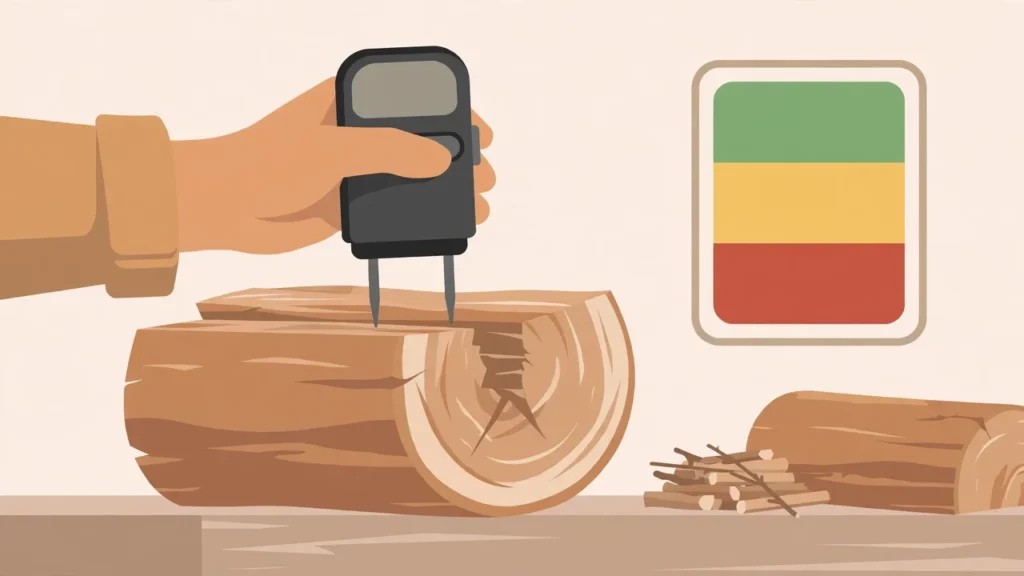
Read Your Moisture Meter Before You Burn
Split a log open and press the meter pins into the fresh face, not the bark. The reading tells you whether the wood is ready or needs more time.
| Moisture Reading | What It Means | What To Do |
|---|---|---|
| Under 20% | Seasoned and ready to burn | Burn it. This is the target range. |
| 20% to 25% | Still drying, will smoke and hiss | Give it more weeks on the rack with airflow. |
| Over 25% | Too wet to burn well | Do not burn it. Let it season longer. |
The under-20% target comes from the U.S. EPA Burn Wise program, which recommends burning only dry wood with a moisture content below 20 percent. Test three or four pieces from different parts of the pile, since one dry log does not speak for the whole stack. For more on seasoning and testing, see our guide on how to season firewood and our guide on how to tell if firewood is seasoned.
How Much Wood Fits in a Garage?
A full cord measures 128 cubic feet, usually stacked 4 feet high, 4 feet deep, and 8 feet long. Most garages hold a face cord or two with ease, and a two-car garage can hold a full cord along one wall with room left for a car. Measure your wall before you order, so the delivery matches the space.
A face cord is a single row 4 feet high and 8 feet long, with logs cut to about 16 inches. That works out to roughly one-third of a full cord. If you burn a few fires a week, a face cord lasts a good stretch of winter for most households. Heavy daily burners need more, and our guide on how long firewood lasts in storage covers shelf life in detail.
Keep a clear path at least 3 feet wide between the stack and the car. You need room to carry armloads without brushing the car or tripping over the rack. Mark the path with tape on the floor if the household shares the garage.
Garage vs. Outdoor Storage at a Glance
A garage wins on weather protection. Outdoor storage wins on airflow and pest separation. Many households use both: season wood outside, then move a working supply into the garage.
| Garage | Outdoors | |
|---|---|---|
| Rain and snow | Fully sheltered | Needs a top cover |
| Airflow | Limited, needs gaps | Open, dries faster |
| Pest risk | Higher, inspect each load | Lower, pests stay outside |
| Convenience | Dry trips in bad weather | Muddy trips in bad weather |
| Fire risk | Needs clearances from heat | Minimal |
If you season wood outside first, our guide on how to store firewood outside covers covers, airflow, and ground clearance. For stacking technique, see how to stack firewood.
Troubleshooting: When Garage Storage Goes Wrong
Most garage storage problems show up as smell, mold, or insects, and each one points to a fixable cause. Work through the table below before you tear the stack down and start over.
| If This Happens | Try This |
|---|---|
| Wood smells musty or moldy | Open the gaps between rows, pull the stack off the wall, and let air move through it. Burn the worst pieces first and check the floor for standing water. |
| White or green mold on the ends | Brush mold off outside while wearing gloves and a mask. Move the stack to a drier wall and improve airflow. Do not burn heavily molded wood indoors. |
| Sawdust piles under the stack | Look for boring insects. Split open a few pieces. Burn affected logs soon and sweep the floor clean so you can spot fresh dust. |
| Wood hisses and smokes in the fire | The wood is still wet. Test it with a moisture meter and give it more weeks on the rack. See our guide on why you should not burn wet firewood. |
| Stack leans or topples | Restack in shorter rows, no higher than 4 feet. Crisscross the ends and level the base. Never let children climb a wood pile. |
| Mice or droppings near the pile | Clear clutter around the stack, seal garage gaps, and set traps per local rules. Keep the floor swept so new signs show up fast. |
Frequently Asked Questions
Is it safe to store firewood in the garage?
Yes, when the pile sits on a raised rack, keeps clear of furnaces and fuel, and gets inspected for pests. Keep a working CO detector in the garage and never burn any fuel inside it.
How much firewood can I store in a garage?
A two-car garage holds a full cord along one wall with room for a car, and most garages hold one or two face cords with ease. Measure your wall before you order.
Does firewood dry in a garage?
It dries slowly in a garage because airflow is limited. Season green wood outside first, then move dry wood into the garage for storage and handy access.
How far should firewood be from the wall?
Leave at least 2 to 3 inches between the stack and the wall. The gap lets air flow behind the pile and blocks a covered path for insects.
Will firewood in the garage attract termites?
It can. Termites and wood-boring insects travel in firewood, so inspect each load, keep the pile off the ground and off the wall, and sweep the floor often. If you see termite signs, call a pest professional.
Can I store firewood in the garage all year?
Yes. Dry, seasoned wood keeps well in a garage year-round. Check the pile monthly for mold, dampness, and pests, and burn the oldest wood first.
📋 Quick Reference Card
What You Need
Rack or pallets · 2×4 boards · tape measure · gloves · broom · moisture meter · top cover · wheelbarrow
Steps
- Pick the driest wall, far from heat sources
- Sweep and clear the floor
- Raise wood 3+ inches off concrete
- Stack short rows, 4 feet max, with 2-inch air gaps
- Leave 2–3 inches from the wall
- Keep clear of furnaces, fuel, and paint
- Inspect each load for pests
- Burn the oldest wood first
Target moisture: under 20%. Cover the top only. Check monthly. Never burn fuel in the garage.
Your Garage Is Ready for Winter
You now have a dry wall picked, a level rack in place, and a stack with air on every side. The wood will stay dry, the pests will stay outside, and the pile will stay clear of anything that can spark. That is the whole job, and it holds up all winter with a five-minute check each month.
Next, test a few pieces with your moisture meter and burn a small load to see how it performs. If the wood burns hot with little smoke, your setup works. For more on seasoning and storage, read our guide on can firewood be too dry — and enjoy the first fire of the season.
Disclaimer: This article is general guidance, not professional advice. Firewood storage rules, fire codes, and pest quarantines vary by location. Check your local rules, keep CO detectors working, and call a licensed chimney sweep or pest professional when you are unsure. Never burn fuel in an unvented indoor space.