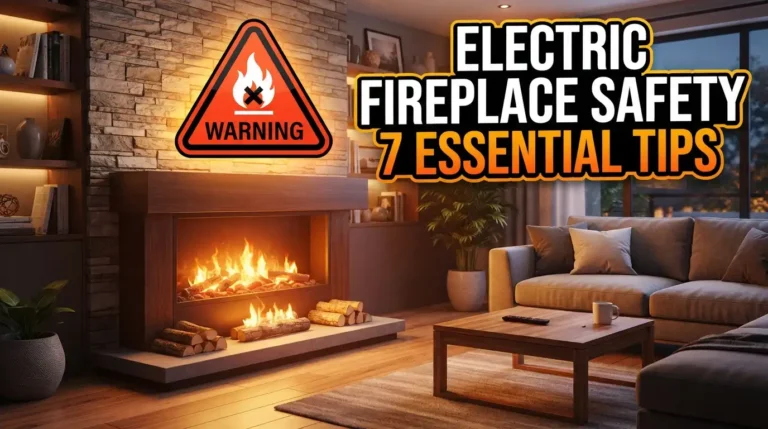
Can You Put an Electric Fireplace in a Bedroom? Yes, With the Right Setup
Yes, you can put an electric fireplace in a bedroom. These units burn no fuel, make no smoke, and need no chimney, so a bedroom is one of the most common rooms for them. The flame effect runs on light and mirrors, while a small fan heater warms the room.
That short answer comes with a few real conditions. You need a dedicated wall outlet, clear space around the heater, and a unit with a thermostat, a timer, and overheat shutoff. Pick the wrong size or plug it into a power strip and you invite tripped breakers, scorched outlets, or a heater that never warms the room.
Heads up: read this before you plug anything in
Electric fireplaces are heaters, not lamps. Plug yours straight into a wall outlet, never into an extension cord or power strip. Keep bedding, curtains, and clothes at least 3 feet from the front of the unit. Never leave a heater running in a room with small children or pets unless the unit has a cool-touch front, tip-over shutoff, and a timer. Check your local electrical codes, and call a licensed electrician if your outlets feel warm, spark, or trip often. This guide gives general advice, not medical or electrical advice.
Total time
1 to 2 hours
Active time
30 to 45 minutes
Difficulty
Beginner friendly
What you need
- Tape measure
- Electric fireplace sized for your room (most bedrooms need 750 to 1,500 watts)
- A free wall outlet on its own circuit, if possible
- Surge-free direct wall plug (no extension cord, no power strip)
- Painter’s tape or masking tape for marking the floor
- Level (a phone level app works)
- Stud finder and wall anchors, for wall-mounted units only
- Smoke alarm and carbon monoxide alarm already fitted in or near the bedroom
- Your unit’s manual, kept within reach
At a glance: the six steps
- Measure your room and pick the best wall
- Check the outlet and the circuit it shares
- Mark the clearance zone around the unit
- Set the fireplace in place and plug it in
- Set the thermostat, timer, and flame for sleep
- Run a test night before you rely on it
The Short Answer, With the Numbers Behind It
An electric fireplace belongs in a bedroom when three things are true. The unit is the right size for the room, it plugs straight into a sound wall outlet, and it has at least 3 feet of clear space in front of it. When those three things hold, the unit heats the room the way any small space heater would, and the flame effect adds light and mood without any flame at all.
Most plug-in bedroom models draw 750 to 1,500 watts. A 1,500-watt heater on a standard United States 120-volt outlet draws about 12.5 amps, which is close to the 15-amp limit of a normal bedroom circuit. That is why the outlet and circuit check matters more than the fireplace itself.
Heat output is modest, and that is fine for a bedroom. A 1,500-watt heater gives off about 5,100 BTU per hour, enough to take the chill off a room of about 150 square feet and hold it warm with the door closed. If your bedroom is very large or poorly insulated, plan to use the fireplace as extra heat beside your main heating system, not as a replacement for it.
Pick the Right Type for a Bedroom
Four types of electric fireplace show up in bedrooms most often. Each one suits a different room layout and a different level of work.
| Type | Best bedroom size | Typical watts | Install work |
|---|---|---|---|
| Freestanding stove | Small to medium | 750 to 1,500 | Set down, plug in |
| Wall-mounted | Small to large | 1,000 to 1,500 | Bracket into studs |
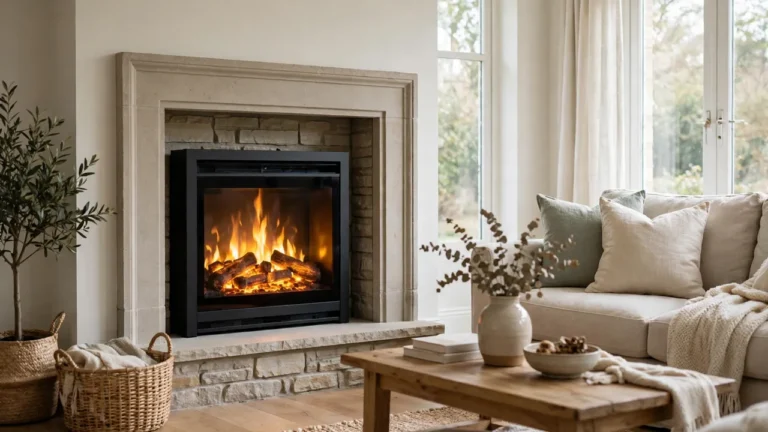
| Fireplace insert | Medium to large | 750 to 1,500 | Fits an old firebox |
| TV stand with fireplace | Medium to large | 1,000 to 1,500 | Assemble, plug in |
Wattage ranges are typical for plug-in models sold in the United States. Check the label on your own unit, since some models differ.
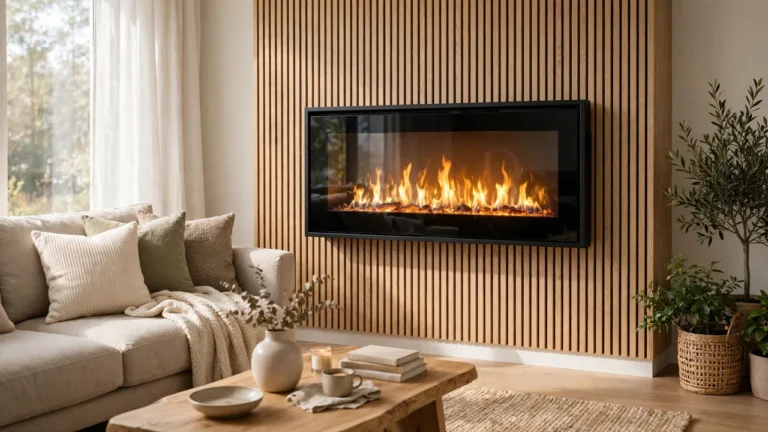
A freestanding stove is the safest first pick for a renter or a first-time buyer. It needs no holes in the wall, it moves with you, and it sits low, which keeps the heat near the floor where you feel it. A wall-mounted unit is the best pick for a small bedroom, because it frees the floor and keeps the hot front out of reach of feet, bedding, and pets.
A TV stand with a built-in fireplace works well in a larger bedroom where the television already faces the bed. It gives you storage and heat in one piece of furniture, but it is heavy and hard to move later. An insert only makes sense if your bedroom already has an old firebox or a built-in cavity.
If you want a deeper check on safety features before you buy, our guide to are electric fireplaces safe covers cool-touch glass, tip-over shutoff, and overheat protection in detail.
Measure Your Room and Pick the Best Wall
Measure the length and width of the bedroom in feet, then multiply the two numbers to get the square footage. A room that is 10 feet by 12 feet is 120 square feet. Write the number down, because it decides the wattage you need and it stops you from buying a unit that is too weak or too strong for the space.
Match the wattage to the room with the sizing chart below. A common rule of thumb for extra heat is about 10 watts per square foot, so a 150-square-foot room needs about 1,500 watts at full power. Smaller rooms can use a lower setting, which also keeps the circuit load down and the room from overheating while you sleep. Our guide to what size electric fireplace you need covers room-by-room sizing in more detail.
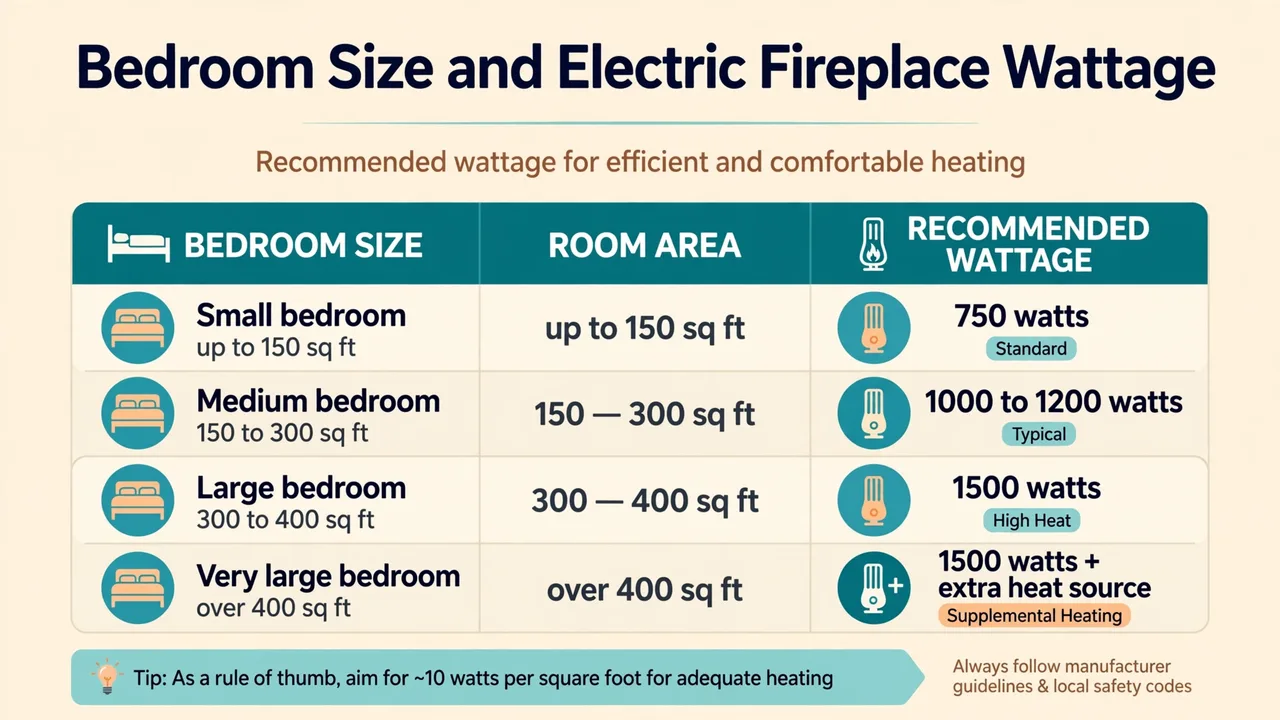
Pick the wall by walking the room and watching where people move in the dark. The best wall faces the bed from across the room, keeps the cord short, and sits near a wall outlet. Avoid the wall behind the headboard, because heat rises straight into pillows and bedding, and avoid any wall where the unit would block a door, a closet, or the path to the bathroom.
Check the window situation on that wall too. A unit under a window fights cold drafts all night and runs longer than it should. A unit on an inside wall, away from drafts, holds heat far better.
Check the Outlet and the Circuit It Shares
Find the outlet you plan to use and look at it closely. The faceplate should sit flat, the plug should fit snug with no wobble, and there should be no brown marks, cracks, or warm spots. An outlet that is loose, stained, or warm to the touch needs an electrician before any heater goes near it, so do not work around it.
Open your breaker panel and find which breaker feeds that outlet, then list what else is on the same circuit. A bedroom circuit often feeds the lights, the phone chargers, and a second outlet or two. Add up the load: a 1,500-watt fireplace plus a 1,800-watt hair dryer on the same 15-amp circuit will trip the breaker. Move other heavy items to a different circuit, or run the fireplace on its lower 750-watt setting.
Heads up: the outlet rule is not optional
Plug the fireplace straight into the wall outlet. Extension cords and power strips are not rated for the steady high draw of a heater, and they can overheat, melt, or catch fire even when they feel fine at first. If the cord cannot reach the outlet, move the fireplace closer or choose a different wall. Never use a cord to fix a placement problem. For more on this, see our guide to space heaters and extension cords.
If your bedroom has only one circuit and it already carries a lot, ask an electrician about a dedicated circuit for the fireplace. That is a small job for a pro and it removes the most common cause of tripped breakers and warm outlets.
Mark the Clearance Zone Around the Unit
Read the clearance numbers in your unit’s manual first, because they vary by model. As a starting point, most makers ask for at least 3 feet of open space in front of the heater outlet and about 1 foot on each side. Mark those lines on the floor with painter’s tape so you can see the zone before the fireplace arrives.
Walk the taped zone and look for trouble. Bedding that hangs off the side of the bed, a laundry pile, a curtain hem, or a stack of books can drift into the zone during the night. Move anything that could fall or blow toward the heater. Curtains deserve special care: a curtain that hangs within a foot of a wall-mounted unit can sway in a draft and touch the hot front.
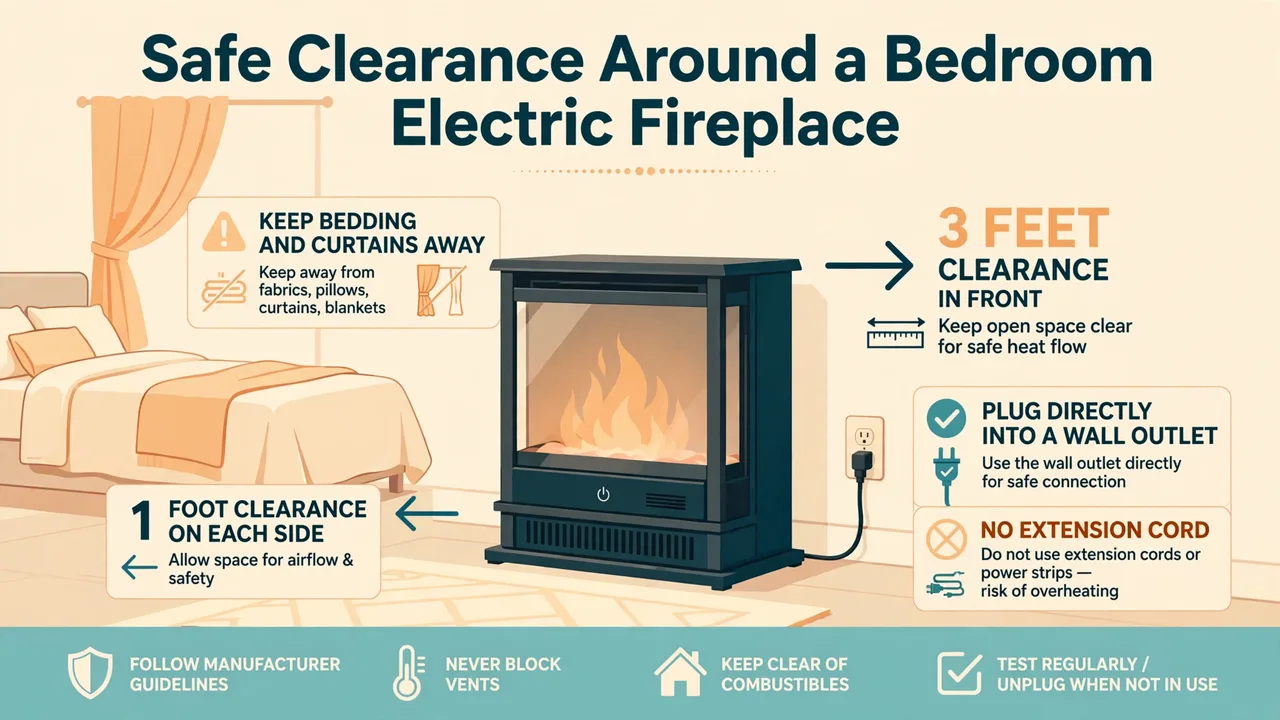
Check the floor under the spot as well. A hard floor is ideal. Thick carpet is fine for many freestanding models, but the unit must sit level and stable, with its air intake and outlet vents clear of rug fibers. Our guide to putting an electric fireplace on carpet walks through the stability and vent checks in full.
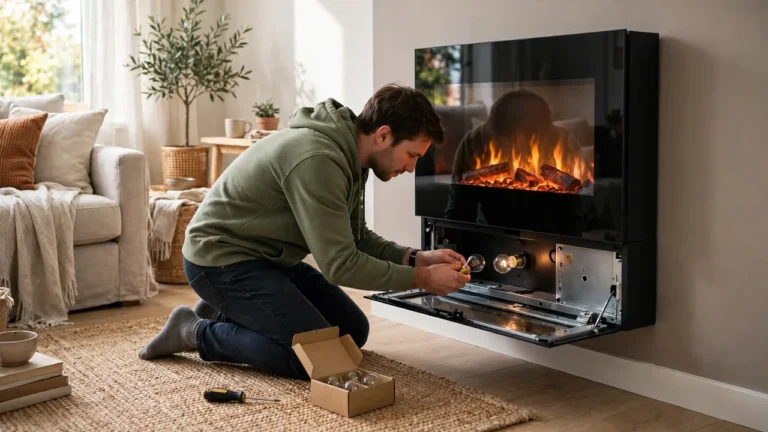
For a wall-mounted unit, mark the stud positions and the bracket holes on the wall before you lift anything. A bracket screwed into drywall alone will pull out under the weight of the unit, so every screw must hit a stud or a rated wall anchor.
Set the Fireplace in Place and Plug It In
Set the unit down in its marked spot and check that it sits level and does not rock. A rocking freestanding unit can tip if a child or pet bumps it, so shim the feet or move it to a flatter patch of floor. For a wall-mounted unit, hang it on the bracket, lock it in place, and tug it gently to confirm it is secure before you let go.
Push the plug fully into the wall outlet until it sits flush. The cord should hang loose with no pull, no kink, and no run under a rug or across a walkway. A cord under a rug traps heat and wears through, and a cord across a walkway is a trip hazard in a dark room. If the cord is too short for a safe run, move the unit, not the outlet.
Switch the unit on with the heat off first and test the flame effect, the remote, and the display. Then turn the heat to its low setting and let it run for ten minutes while you watch and listen. A strong burning smell, smoke, or sparking means you should switch it off, unplug it, and contact the maker or a pro.
Set the Thermostat, Timer, and Flame for Sleep
Set the thermostat to the temperature you want the room to hold, not the highest number on the dial. Sleep groups often point to 60 to 67 degrees Fahrenheit as a good range for sleep, and many people find the low end of that range with a blanket works best. A thermostat lets the heater cycle off once the room is warm, which saves power and keeps the room from drying out overnight.
Set the sleep timer for the hours you actually need heat, not for the whole night by default. Many people set two to four hours, which warms the room for falling asleep and then lets the room cool as the body cools during sleep. If your unit has no timer, use the thermostat instead and never rely on memory to switch it off. Our guide to night heater temperature settings explains how to balance warmth and sleep in more detail.
Pro tip: use the flame without the heat
Most electric fireplaces let you run the flame effect with the heater off. That gives you the glow for reading or winding down without adding heat to a room that is already warm. See our guide to using an electric fireplace without heat for the settings to check.
Dim the flame before bed if your unit allows it. A bright flame can keep light sleepers awake, and a dim setting uses less power. If your unit has no dimmer, try the lowest flame setting or switch the flame off and keep the heat on.
Run a Test Night Before You Rely on It
Pick a normal night and run the fireplace on the exact settings you plan to use. Set the thermostat, set the timer, and go to bed as usual. Keep a small thermometer on the nightstand so you can check the room temperature when you wake, because feeling warm under a blanket is not the same as the room being warm.
In the morning, check three things: the room temperature, the outlet, and the breaker. The outlet faceplate should feel cool to the touch, the plug should pull out cleanly, and the breaker should still be on. A warm outlet or a tripped breaker is a warning, not a one-off event, so stop using that outlet for the heater and call an electrician.
Note what worked and what did not, then change one thing at a time. If the room felt stuffy, lower the thermostat by two degrees. If you woke cold at 3 a.m., extend the timer by one hour.
What About Leaving It On All Night?
Leaving an electric fireplace on all night is common, and makers build many models for it, but only some units are meant for that use. Check your manual for the words “unattended operation” or an overnight rating. If the manual says never to leave it running while you sleep, follow the manual, not this guide.
Overnight use also raises two habits worth keeping. First, keep the bedroom door closed so the heat stays in the room and the thermostat can cycle the heater off. Second, keep a working smoke alarm in the bedroom and test it once a month. Smoke alarms are cheap, they take minutes to test, and they are the single best backup for any heater that runs while you sleep.
Dry air is the most common overnight complaint, not danger. A heater running all night can drop the room humidity and leave you with a dry throat in the morning. A small room humidifier, or running the fireplace on its lower setting, helps.
What About a Child’s Bedroom?
A child’s bedroom needs stricter rules than an adult’s room. Choose a wall-mounted unit or a freestanding unit with a cool-touch front, a tip-over shutoff, and a child lock on the controls. Mount it high enough that small hands cannot reach the hot front or the controls, and keep the cord fully out of reach and out of sight behind furniture.
Never run a heater in a nursery or a toddler’s room while the child sleeps alone unless the unit is rated for overnight use and has a thermostat and timer. A baby cannot move away from heat, report discomfort, or switch a unit off, so the margin for error is far smaller. Many parents run the fireplace to warm the room before bedtime, then switch it off and rely on warm sleep clothes instead.
Teach older children the same rule adults follow: nothing goes on top of the fireplace, nothing gets pushed against it, and the unit is never a shelf for toys, books, or clothes. If your child shares the room with a pet, the same clearance rule protects the pet too.
Small Bedrooms: What Changes?
Small bedrooms change the math in two ways. First, the room heats faster, so a 750-watt setting is often enough and a 1,500-watt unit may overshoot and cycle on and off all night. Second, the clearance zone eats a bigger share of the floor, so placement matters more. A wall-mounted unit is usually the best answer in a room under 120 square feet, because it keeps the floor free and the hot front away from the bed.
Measure the gap between the bed and the wall where the unit will sit. If the gap is under 3 feet, that wall is not a good home for a freestanding unit, and you should look for a wall-mounted spot or a smaller model. A freestanding unit squeezed into a tight gap blocks airflow and becomes a shin hazard at night.
Ventilation matters more in a small room too. If you sleep with the door closed, the room can overshoot, so set the thermostat two degrees lower than you would in a larger room and check the morning temperature for a few nights until the setting feels right.
What It Costs to Run Each Night
Running cost depends on watts, hours, and your local electricity rate, so there is no single true number. The table below shows worked examples at 16 cents per kilowatt-hour, a rate many households pay. Find your own rate on your electricity bill and swap it into the same math.
| Heater setting | 8-hour night | Cost per night | Cost for 30 nights |
|---|---|---|---|
| 750 watts | 6 kWh | $0.96 | $28.80 |
| 1,000 watts | 8 kWh | $1.28 | $38.40 |
| 1,500 watts | 12 kWh | $1.92 | $57.60 |
Worked examples at 16 cents per kWh with the heater running at full power for 8 hours. A thermostat cuts real cost because the heater cycles off once the room is warm, so most nights cost less than these figures.
The thermostat is what keeps the real bill below these numbers. A heater with a thermostat does not run at full power all night: it heats the room, switches off, and switches back on only when the temperature falls. If running costs worry you, start with the 750-watt setting and a timer, then check your bill after a month.
For a fuller breakdown of purchase and running costs, see our guide to how much an electric fireplace costs. It covers the running-cost math and the features that move the price up or down.
Troubleshooting: If This Happens, Try This
| If this happens | Try this |
|---|---|
| Breaker trips when the heat turns on | Switch the fireplace to the 750-watt setting and unplug other heavy items on the same circuit. If it still trips, call an electrician. |
| Room stays cold after an hour | Close the door, check for drafts at the window, and confirm the unit is the right wattage for the room size. |
| Outlet or plug feels warm | Switch the unit off and unplug it. Do not use that outlet for the heater again until an electrician checks it. |
| Burning smell on first use | A faint smell for the first hour can be normal for a new unit. A strong smell, smoke, or sparking is not normal: switch off and unplug. |
| Room gets too hot overnight | Lower the thermostat by two degrees and shorten the timer by one hour. Check the morning temperature for two more nights. |
| Flame looks fine but no heat comes out | Check that the heat switch is on, the thermostat is set above the room temperature, and the timer has not ended. |
Frequently Asked Questions
Can you leave an electric fireplace on while you sleep?
Yes, if your manual allows overnight use and the unit has a thermostat, a timer, and overheat shutoff. Set the timer for the hours you need heat, keep 3 feet of clear space in front of the unit, and keep a working smoke alarm in the bedroom. If the manual says never to run it while you sleep, follow the manual.
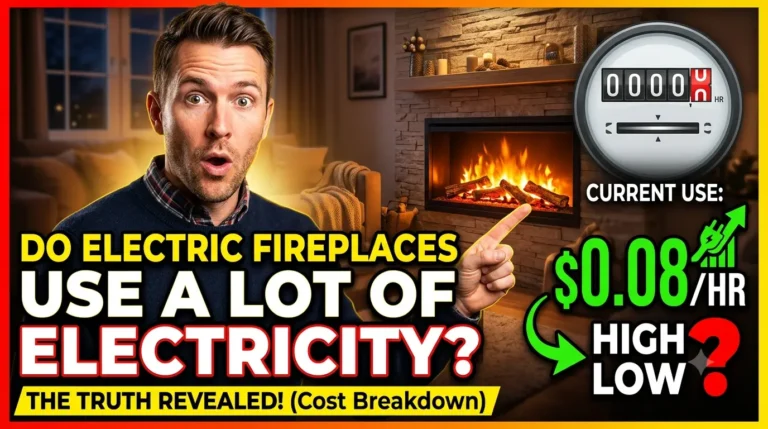
Do electric fireplaces use a lot of electricity in a bedroom?
A 1,500-watt unit running at full power for 8 hours uses 12 kWh. At 16 cents per kWh, that is about $1.92 per night. A thermostat cuts that cost because the heater cycles off once the room is warm, so most nights cost less.
Is an electric fireplace safe in a child’s bedroom?
It can be, with a wall-mounted unit or a model with a cool-touch front, tip-over shutoff, and a child lock. Mount it out of reach, keep the cord hidden, and keep the clearance zone clear. Many parents warm the room before bedtime and switch the heater off for the night.
Can I plug an electric fireplace into a power strip in my bedroom?
No. Plug it straight into a wall outlet. Power strips and extension cords are not rated for the steady high draw of a heater and can overheat. If the cord cannot reach, move the fireplace closer to the outlet.
What size electric fireplace do I need for a bedroom?
Use about 10 watts per square foot as a rule of thumb. A room up to 150 square feet needs about 750 watts, a room of 150 to 300 square feet needs 1,000 to 1,200 watts, and a room of 300 to 400 square feet needs about 1,500 watts.
Does an electric fireplace dry out bedroom air?
It can lower room humidity over a long night, which may leave you with a dry throat in the morning. Running the heater on its lower setting and using a small room humidifier helps more than a bowl of water near the unit.
Quick reference card: electric fireplace in a bedroom
What you need: tape measure, right-size unit (750 to 1,500 watts), free wall outlet, painter’s tape, level, stud finder for wall mounts, working smoke alarm.
Steps: 1. Measure the room and pick the best wall. 2. Check the outlet and its circuit. 3. Mark the clearance zone. 4. Set the unit in place and plug it straight into the wall. 5. Set the thermostat, timer, and flame for sleep. 6. Run a test night before you rely on it.
Remember: 3 feet clear in front, 1 foot on each side, no extension cords, no power strips, and a thermostat plus a timer for overnight use.
You now have a bedroom fireplace set up the right way. The room is measured, the outlet is checked, the clearance zone is clear, and the thermostat and timer are set for the way you sleep. That is the whole job, and it holds up night after night.
For your next step, read the sizing guide again with your own room numbers in hand, or check the safety guide before you buy a second unit for another room.