How to Replace the Light Bulb in an Electric Fireplace
When the flames on your electric fireplace fade, flicker, or go dark, the cause is often a burned-out bulb. The flame effect in most electric fireplaces comes from a light source that shines through a moving screen or a set of mirrors. When that light source fails, the heater may still warm the room, but the fire look is gone. A bulb swap is one of the smallest repairs you can make on an electric fireplace.
This guide walks you through the whole swap, from finding the right bulb to testing the flame before you close the panel. The work is a bulb change, not wiring work. You unplug the unit, open one access panel, swap the bulb, and test the result. The exact panel spot and bulb type change from model to model, so your manual and the panel label are your best guides.
Safety First: Read Before You Open Anything
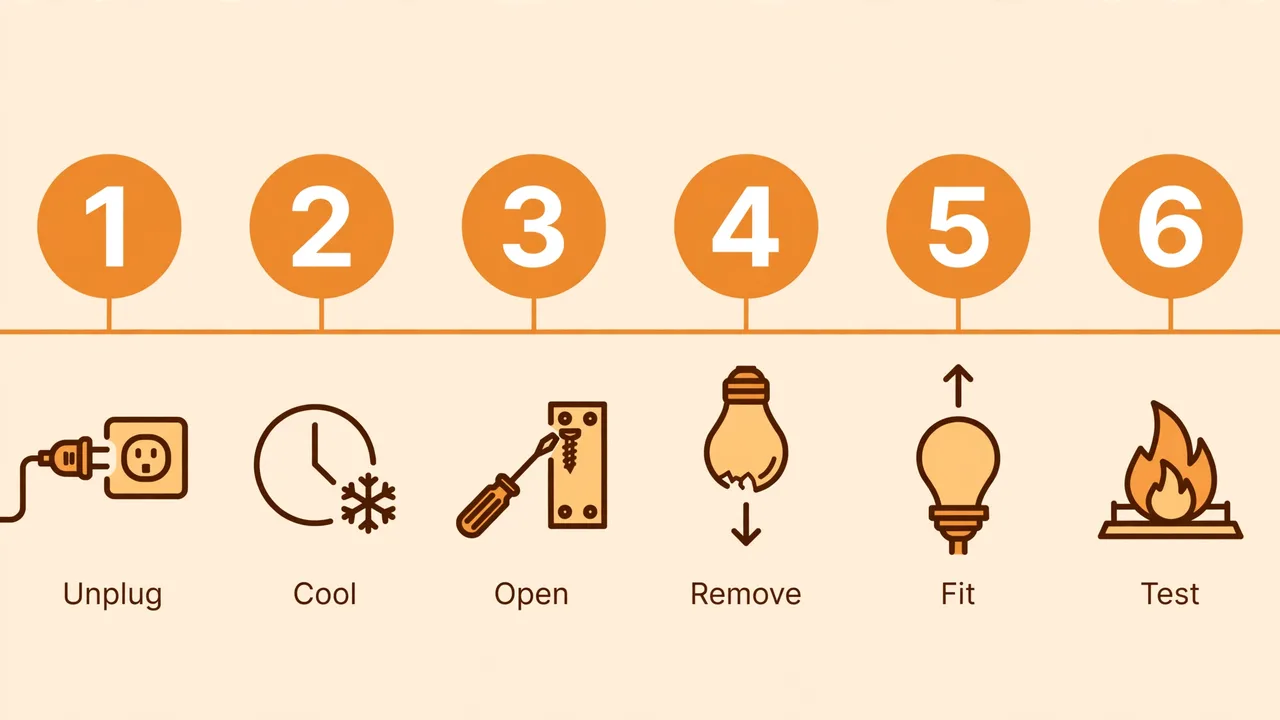
Unplug the fireplace before you open it. Let the bulb cool for 10 to 15 minutes. Never touch hot parts or bare wires. If you see burned marks, melted plastic, or a cracked socket, stop and call a qualified technician.
Time Needed
20 to 30 minutes
Difficulty
Beginner
Tools
Screwdriver, gloves
Parts
1 replacement bulb
What You Need
- The correct replacement bulb. Match the type, base, and wattage limit in your manual or on the panel label.
- A Phillips screwdriver. Most access panels use Phillips screws.
- A flat-head screwdriver. A few panels use slotted screws or small clips.
- Clean gloves or a soft cloth. Wear gloves for a halogen bulb, since skin oils can shorten its life.
- A small tray. Keep the panel screws in one place.
- A flashlight. The compartment sits deep inside the unit.
- Your manual. Keep it open to the bulb section while you work.
At a Glance: The Swap in 7 Steps
- Find the right bulb from your manual or the panel label.
- Unplug the fireplace and let the bulb cool for 10 to 15 minutes.
- Open the access panel at the rear, or at the front on some models.
- Remove the old bulb with a counter-clockwise turn, wearing gloves for halogen bulbs.
- Fit the new bulb with a clockwise turn until snug. Do not over-tighten it.
- Test the flame effect before you put the panel back on.
- Close the panel and put the fireplace back in place.
Find the Right Replacement Bulb First
Buy the bulb before you open the fireplace. That way the unit is open for a few minutes, not a few days, while you wait for a part. The bulb type, base size, and wattage limit are printed in your manual, and often on a label inside the access panel. If you lost the paper manual, look up the model number on the maker web site for a free PDF copy.
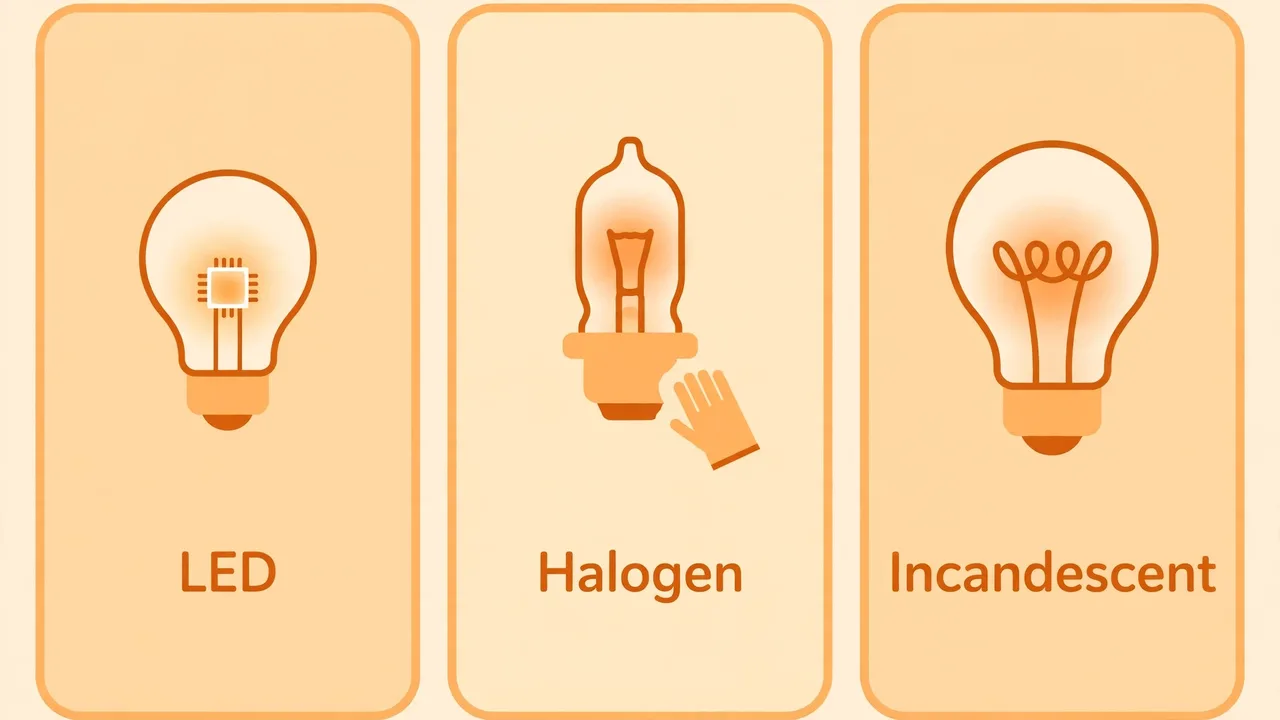
Electric fireplaces use two main kinds of light source. Older and mid-range models often use halogen bulbs, and a common base size reported for these units is the small E12 candelabra base. Some models use a G9 halogen capsule or a standard E26 household base, so check your own label rather than guessing.
Newer models often use built-in LED strips or boards instead of screw-in bulbs. If your manual says the LED module is sealed or must be changed by a service technician, do not force it open. Match three details on the new bulb: the base type, the bulb shape, and the wattage limit. A bulb with the wrong base will not fit the socket, and a bulb above the wattage limit can overheat the socket.
Pro Tip: If your fireplace takes halogen bulbs, check whether an LED bulb with the same base and flame-effect rating is approved for your model. A plain LED room bulb will not make the moving flame effect, so use the flame-effect bulb your manual calls for.
Turn Off the Power and Let the Bulb Cool
Switch the fireplace off at its own controls first, then pull the plug from the wall outlet. If your fireplace is hard-wired into the house wiring, switch it off at the breaker and tag the breaker so no one turns it back on while you work. Never trust the remote or the front switch alone. A unit that is still plugged in can start its heater or fan while your hands are inside.
Give the bulb 10 to 15 minutes to cool. Halogen bulbs run hot, and a hot bulb can burn your fingers and crack if it touches a cold surface. If the fireplace is wall-mounted, ask a second person to help you lift it down, since many units are heavy and awkward to hold alone.
Open the Access Panel
The bulb sits in the center of the unit, near the mirrors or the flame-effect screen that makes the fire look. On most models you reach it through an access panel at the rear of the unit. A few models put the panel at the front, behind the glass or the log set, so check your manual first. The panel is often held by four to eight small screws, and some models add clips at the edges.
Remove the screws one at a time and drop each one in your tray. Lift the panel straight off and set it flat on a soft surface where it cannot fall. Shine your flashlight inside and find the bulb socket near the flame-effect plate.
If you cannot see a bulb, your model may use a rear panel instead of a front one, or the light may come from a sealed LED board. Check the manual diagram before you remove any other part.
While the panel is off, look at the inside with care. A light layer of dust on the mirrors or the flame screen can dim the fire look. Our guide on how to clean an electric fireplace shows the safe way to dust these parts without scratching them. Do not spray cleaner inside the unit, and do not touch the heater element or any bare wire.
Heads Up: If a panel screw will not turn, stop and check for a hidden clip or a second set of screws near the base. Forcing a stuck panel can crack the housing or strip the screw head.
Remove the Old Bulb
Put on clean gloves before you touch the old bulb. This matters most for halogen bulbs, since the oils on your skin can leave a hot spot on the glass and shorten the life of the bulb. Grip the bulb near its base, not at the tip of the glass, so you do not snap it in the socket.
Turn the bulb counter-clockwise until it comes free from the socket. Support the socket with your other hand so the socket does not twist or pull loose from its mount. If the bulb feels stuck, do not force it.
A stuck bulb can break and leave glass in the socket. Rock it a tiny amount back and forth while you turn. If the bulb does break, wear gloves and eye protection, and lift the glass out with pliers.
Look at the old bulb and the socket before you fit the new one. A blackened bulb tip is a normal sign of a burned-out bulb.
A blackened socket, a melted holder, or a bent contact is not normal. If you see any of those, stop the swap and call a qualified technician. Fitting a new bulb into a damaged socket will not fix the fault.
Fit the New Bulb
Take the new bulb out of its box and check the base against the old bulb. The two bases should match in size and shape. Hold the new bulb by its base or with gloves, and line it up straight with the socket. Keep it straight so it does not cross-thread and damage the socket.
Turn the bulb clockwise until it feels snug. Stop as soon as it seats. Over-tightening can crack the glass or damage the socket threads, and it makes the next swap harder.
Give the bulb a light tug to confirm it sits firm in the socket. If it wobbles, back it out and seat it again, straight this time. Wipe away any fingerprints on a halogen bulb with a clean, dry cloth before you test it.
Test the Flame Effect Before You Close Up
Testing before you close the panel saves you from opening the unit twice. Plug the fireplace back in, switch it on, and watch the flame effect for a full minute. The flames should look bright and move in the usual pattern.
If the new bulb lights and the flames look right, switch the unit off and unplug it again before you refit the panel. If the bulb does not light, do not close the panel yet. Work through the checks below first, while the panel is still off.
Close the Panel and Put the Fireplace Back
Set the access panel back in place and line up the screw holes before you drive any screw. Start each screw by hand so you can feel it catch the thread, then tighten it with the screwdriver.
Tighten the screws in a cross pattern, a little at a time on each one, so the panel sits flat and does not warp. Snug is enough. Screws driven too hard can crack the panel or strip the holes.
Put the fireplace back in place if you moved it, and plug it in. Switch it on and check the flame effect, the heater, and the remote one more time.
What to Do When the New Bulb Still Does Not Light
A new bulb that stays dark does not always mean the bulb is bad. The fault can sit in the socket, the fuse, the switch, or the flame-effect motor. Work through the checks in order, and unplug the unit before you touch any part inside.
| Problem | Likely Cause | What to Try |
|---|---|---|
| New bulb does not light | Bulb not seated, wrong bulb, or no power | Re-seat the bulb straight, and check the outlet with another device |
| Flames look dim or uneven | Dust on mirrors or screen, or a second bulb is out | Dust the mirrors and screen, and check every bulb in the unit |
| Flames do not move, but the bulb glows | Flame-effect motor or screen is stuck | Look for a jammed screen, and read our guide on why electric fireplace flames stop working |
| Background lights stay dark | A separate background bulb or LED strip has failed | Follow our guide on background lights that stop working on an electric fireplace |
| Whole unit is dead after the swap | Blown fuse, tripped breaker, or loose plug | Check the breaker and outlet, and read our guide on where the fuse is on an electric fireplace |
| Unit still acts odd after the bulb works | Control board needs a reset | Try the steps in our guide on how to reset an electric fireplace |
If none of these checks brings the light back, the fault may sit in the wiring, the control board, or a sealed LED module. Those parts are not a home bulb swap. Unplug the unit and book a qualified repair.
How to Make the New Bulb Last Longer
Heat is the main enemy of a fireplace bulb. Let the unit cool fully before you move it or cover it, and keep the vents clear of dust, drapes, and furniture. A blocked vent traps heat inside the unit, and that heat shortens bulb life. Vacuum the vents with a brush head every month or two.
Switch the flame effect off when the room is empty for a long stretch. Bulbs wear out by hours of use, so the flame setting you run each evening adds up over a season. Keep a spare bulb on hand, and write the bulb type on the box.
Frequently Asked Questions
How do I know the bulb is burned out and not something else?
If the heater and the fan still run but the flames are dark or very dim, the bulb is the likely cause. If the whole unit is dead, check the power, the breaker, and the fuse first, since a bulb cannot fix a power fault. A bulb with a blackened tip or a broken filament is a clear sign it has burned out.
Can I use any bulb that fits the socket?
No. Match the base type, the bulb shape, and the wattage limit shown in your manual or on the label inside the panel. A bulb above the wattage limit can overheat the socket. A plain room bulb may fit the socket but will not make the moving flame effect your fireplace needs.
How long does it take to change the bulb?
Most swaps take 20 to 30 minutes, and most of that time is the 10 to 15 minute cool-down wait. The hands-on part takes about 10 minutes once you have the right bulb and the panel screws are out.
My fireplace uses LEDs. Can I still change the bulb myself?
It depends on your model. Some LED fireplaces use screw-in LED bulbs that swap the same way as halogen bulbs. Others use sealed LED strips or boards that the manual says must be changed by a service technician. Check the manual first, and do not force open a sealed LED module.
Is it safe to change the bulb while the fireplace is plugged in?
No. Always unplug the fireplace before you open it, and let the bulb cool for 10 to 15 minutes. A unit that is still plugged in can start its heater or fan while your hands are inside. If your fireplace is hard-wired, switch it off at the breaker before you start.
Quick Reference Card
- Cool down: 10 to 15 minutes after the unit was last on.
- Power: Unplug first, or switch off at the breaker.
- Access: Rear panel on most models, front glass or log set on some.
- Old bulb out: Turn counter-clockwise, wear gloves for halogen.
- New bulb in: Turn clockwise until snug, do not over-tighten.
- Test: Check the flame before you refit the panel.
- Stop and call a pro: Burned marks, melted plastic, or a cracked socket.
Changing the bulb in an electric fireplace is a small repair with a big payoff. The flames come back, and the unit looks the way it should. Take your time with the cool-down, match the bulb to your manual, and test the flame before you close the panel.
Keep a spare bulb and a note of the bulb type with your manual. The next swap will take half the time. If anything inside looks burned, melted, or cracked, leave it to a qualified technician. A safe fireplace is worth more than a quick fix.