Do Electric Fireplaces Dry Out the Air? What Really Happens to Humidity
If you run your electric fireplace on cold nights and wake up with a dry throat, you may wonder: do electric fireplaces dry out the air? The short answer is no, not in the way most people mean it. An electric fireplace does not pull water out of the air in your room.
That does not mean the dry feeling is in your head. Warm air can feel dry even when the amount of water in the room has not changed at all. This article explains why that happens, how electric fireplaces differ from gas and wood fires, how to measure the humidity in your room, and what to do when the air feels dry.
Electrical Safety Note
An electric fireplace is an electrical heating appliance. Plug it directly into a wall outlet, never into an extension cord or power strip. Keep paper, fabric, and other flammable items away from the heat outlet. If the cord, plug, or outlet feels hot, smells scorched, or shows scorch marks, switch the unit off, unplug it, and call a licensed electrician. Never open the unit or attempt a repair while it is plugged in.
At a Glance: The Answer in 30 Seconds
- No, electric fireplaces do not remove moisture from the air. They heat with an electric element and a fan. There is no flame and no combustion, so no water vapor is burned away or vented out.
- Warm air still feels drier. Heating a room lowers relative humidity because warm air can hold more water vapor than cool air. The water stays in the room, but the percentage drops.
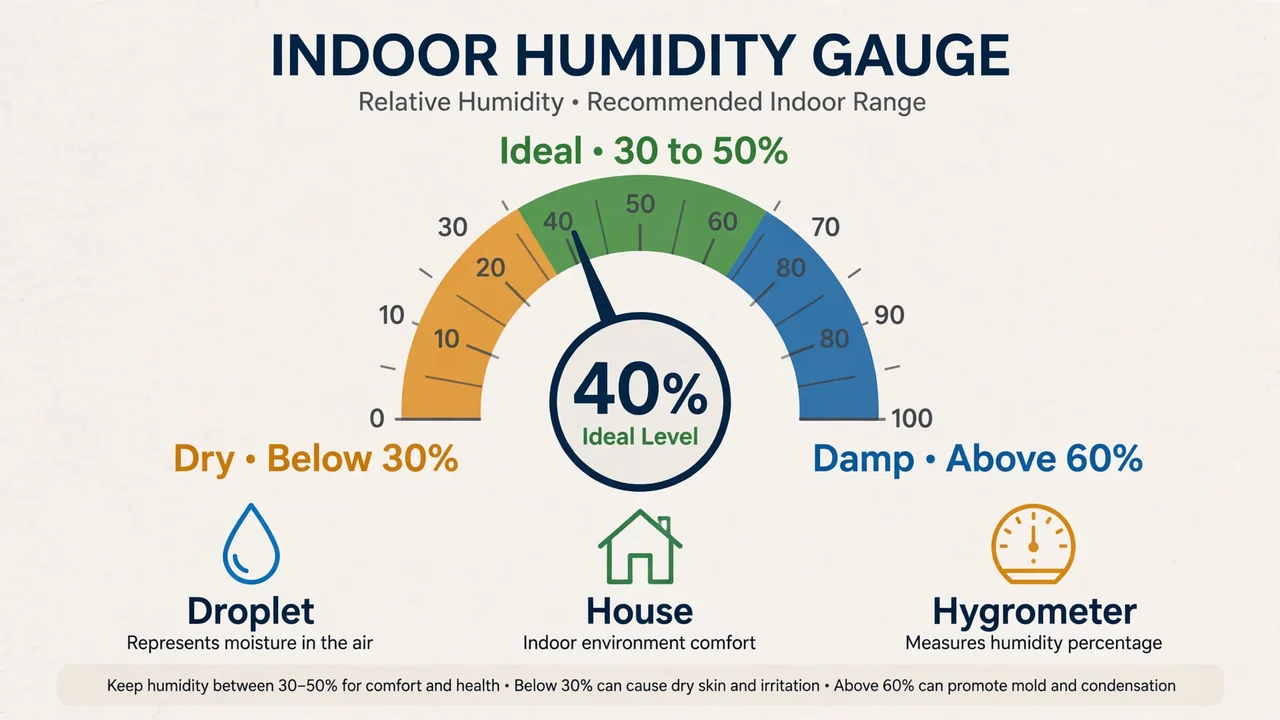
- The fix is to measure first. A small hygrometer tells you the real number. The U.S. Environmental Protection Agency (EPA) recommends keeping indoor relative humidity between 30% and 50%, and always below 60%.
- If the reading is below 30%, add moisture. A humidifier, a lower thermostat setting, or running the flame effect without heat can all help.
The Short Answer: No, But the Air Can Still Feel Dry
Do electric fireplaces dry out the air? In the strict sense, no. An electric fireplace does not take water out of your room. It adds heat and nothing else. The total amount of water vapor in the room stays the same while the heater runs.
So why does your skin feel tight and your throat feel scratchy after a long evening by the fire? The answer sits in the difference between two ways of measuring moisture in air. One number stays the same when you heat a room. The other number falls. Your body notices the one that falls.
That difference explains most of the confusion around heaters and dry air. It also explains why the fix is rarely to get rid of the fireplace. The fix is to check the real humidity level and add moisture only when the reading shows you need it.
Relative Humidity vs Absolute Humidity: The Key Difference
Two terms describe moisture in air, and they behave in different ways when a room warms up. Absolute humidity is the actual amount of water vapor in a given volume of air. Relative humidity is that amount shown as a percentage of the most water the air could hold at its current temperature.
Warm air can hold far more water vapor than cool air. When your electric fireplace raises the room temperature, the air gains room for more water, but no new water arrives to fill it. The percentage falls even though the water itself never left. That is why a room can feel dry while its absolute humidity is unchanged.
Think of a glass that grows taller as it warms. Pour the same amount of water into a taller glass and the water line sits lower, even though you removed nothing. Heating a room works the same way. The air can hold more, so the same moisture fills a smaller share of its capacity.
How Much Does Relative Humidity Fall When Air Warms Up?
The drop is larger than most people expect. A modest rise in temperature can push relative humidity down by a wide margin. The table below shows an illustration of the principle: the same air, with the same amount of water vapor, warmed from 50°F to 70°F.
That table shows why winter feels so dry indoors. Cold outdoor air already holds little moisture. Bring it inside and heat it to 70°F, and the relative humidity can land well below the comfort range. Your fireplace is not the cause of the missing moisture. Winter air and heating together create the dry feeling.
The fan in many electric fireplaces adds a second effect. Moving warm air across your skin speeds up evaporation from skin and eyes. That can make the room feel drier than the humidity reading alone would suggest. A heater without a fan can feel gentler for that reason, even at the same temperature.
How an Electric Fireplace Heats Your Room
An electric fireplace heats with a metal heating element and a fan, much like a hair dryer on a larger scale. Electricity passes through the element, the element gets hot, and the fan pushes room air across it and back into the room. The flame effect is separate. It is light and moving images, not fire.
Nothing burns inside the unit. No fuel is consumed, no smoke is produced, and no air leaves the room through a chimney or vent. Because there is no combustion, the heater cannot burn oxygen or consume water vapor. It changes the temperature of the air and leaves the moisture content alone.
That design is also why an electric fireplace needs no vent. A gas or wood fire must send exhaust gases outside, and that airflow carries moisture with it. An electric fireplace recirculates the same room air. To learn more about how the parts work together, read our guide on how an electric fireplace works.
Electric vs Gas vs Wood: Which Fireplace Dries the Air Most?
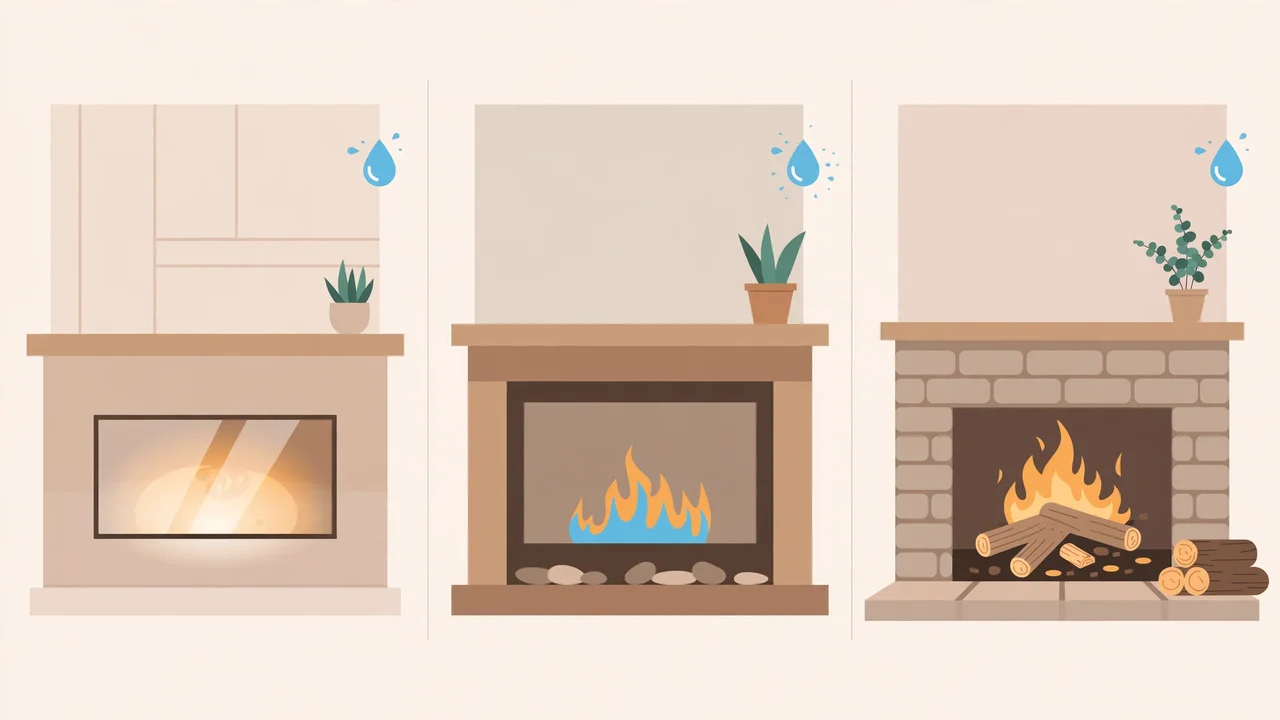
All fireplaces warm a room, but they treat moisture in very different ways. Electric models leave moisture alone. Gas models add some water vapor as a byproduct of burning gas, yet still vent air outside. Wood fires move the most air out of the house through the chimney, and that draft pulls dry outdoor air in through gaps around doors and windows.
The table below compares the three types on the points that matter for indoor air moisture. Use it to see why an electric fireplace is the gentlest choice of the three when dry air is your concern.
Gas fireplaces deserve a closer look because their effect on air quality is often misunderstood. Burning gas creates water vapor, so a ventless gas unit can raise humidity while it runs. A vented gas unit sends much of that vapor outside. Gas units also produce combustion byproducts that affect indoor air, which is a separate concern from humidity. Our article on whether gas fireplaces are bad for indoor air quality covers that side in detail.
Wood fires sit at the far end of the scale. A burning wood fire sends a large volume of warm air up the chimney, and replacement air leaks in from outside. In winter that replacement air is cold and dry, so the room ends up drier than it started. An electric fireplace has no chimney draft, so it avoids that whole cycle.
How to Measure Humidity in Your Room
Guessing leads to the wrong fix. A room can feel dry at 40% humidity because of the fan, and it can feel fine at 28% if you have been drinking water and using moisturizer. A hygrometer removes the guesswork and gives you a number you can act on.
A hygrometer is a small device that measures relative humidity. Digital models cost little, run on a battery, and show the reading on a small screen. Many also show temperature. Place one on a shelf at about chest height, away from the fireplace outlet, windows, and doors, and leave it there for a few hours before trusting the reading.
Take readings at different times of day. Humidity shifts with outdoor weather, cooking, showers, and how long the heater has been running. A single reading on a cold morning tells you less than a pattern across a week. Note the morning and evening numbers for a few days and look for the trend.
In cold climates, aim for the lower end of the ideal range in deep winter. Indoor humidity that is fine in mild weather can condense on cold windows and walls when outdoor temperatures drop hard. If you see fog or water on the inside of your windows, bring the humidity down even if the reading still sits inside the 30% to 50% band.
Signs the Air in Your Room Is Too Dry
Your body and your home both report dry air, and the signs are clear once you know them. A dry throat in the morning, chapped lips, and itchy skin are the most common complaints. Dry eyes, a stuffy nose, and more frequent nosebleeds can follow in very dry rooms.
Static shocks are another clear signal. If you get a zap every time you touch a doorknob or pull off a sweater, the air is likely below 30%. Wooden furniture and floors can also show it. Gaps open between floorboards, wooden instruments go out of tune faster, and paint or wallpaper can crack at the edges.
One sign people often miss is the fireplace itself getting blamed for a cold or allergy flare. Dry air irritates nasal passages, and irritated passages feel much like a cold coming on. If symptoms ease when you leave the heated room or run a humidifier for a few days, low humidity is a likely cause. See a doctor if symptoms persist or get worse, since dry air is only one of many possible causes.
What to Do If the Air Feels Dry
Start with the reading, then pick the fix that matches it. If your hygrometer shows 30% to 50%, the air is fine and the dry feeling likely comes from the fan blowing warm air across your skin. Move your chair out of the direct airflow, or switch the fan to a lower speed if your model allows it.
If the reading sits below 30%, add moisture to the room. A humidifier is the most reliable tool for the job. Choose one sized for the room, fill it with clean water as the manual directs, and clean it on the schedule the manual gives. A dirty humidifier can spread bacteria and mold, so cleaning is not optional.
Set the humidifier to hold the room near 40% and let the hygrometer confirm the result. Do not push past 50%. Over-humidifying trades dry skin for damp walls and mold risk, and mold is a harder problem to fix than dry air.
Lower the Thermostat a Little
Every degree you add to the room pushes relative humidity lower. Dropping the thermostat by two or three degrees can lift the reading enough to feel the difference. Wear a sweater and keep the room near 68°F instead of 72°F, and the air will feel less harsh on skin and throat.
Run the Flame Effect Without Heat
Most electric fireplaces let you run the flame display with the heater switched off. The glow gives the room the same cozy look without warming the air or dropping the humidity further. On mild evenings this is often enough. Our guide to using an electric fireplace without heat explains which settings to use.
Small Habits That Add Moisture
Everyday habits add small amounts of water to room air. Leave the bathroom door open after a shower so the steam drifts into nearby rooms. Dry laundry on a rack inside the house in winter. Keep a few houseplants in the room, since plants release water vapor through their leaves. A bowl of water near the heat outlet helps a little, though far less than a humidifier.
Ventilation matters too. A tightly sealed room with the heater running for hours will feel stale as well as dry. Crack a window for a few minutes each day to bring in fresh air, even in winter. Short bursts of fresh air do more good than leaving a window open all day, which lets the room cool down and wastes heat.
Pro Tip: Check the Reading Before Buying Anything
Buy the hygrometer first and the humidifier second. Many people buy a humidifier for a room that already sits at 42%, then wonder why the windows fog up. A ten-dollar hygrometer can save you from solving a problem you never had.
Do Electric Fireplaces Dry Out the Air More Than Other Heaters?
Compared with other electric heaters, an electric fireplace sits in the middle of the range. A fan-forced model moves warm air around the room, so it can feel drier than a radiant panel or oil-filled radiator that warms without a fan. The moisture math is the same for all of them, though. None of them removes water from the air.
Central heating dries the whole house in the same way, by warming large volumes of cold winter air. A room heater warms one room, so its effect stays local. If the rest of the house feels fine and only the fireplace room feels dry, the cause is likely the fan and the higher temperature in that one room, not the fireplace type.
Infrared electric fireplaces deserve a note here. Infrared models warm people and objects directly rather than heating all the room air first. Because the air itself warms more slowly, the relative humidity can fall more slowly too. If dry air bothers you and you are shopping for a new unit, an infrared model or a flame-only mode is worth a look. For a wider view of running costs and heat output, see our article on whether electric fireplaces give off heat.
Myth vs Fact: Electric Fireplaces and Dry Air
Heaters collect a lot of folklore. The table below sorts the common claims about electric fireplaces and dry air into myth and fact, so you can tell which worries to keep and which to drop.
Common Mistakes to Avoid
A few habits make dry air worse or create a new problem while trying to fix the first one. The most common is running a humidifier without a hygrometer. Without a reading you cannot tell when to stop, and rooms can drift past 60% before anyone notices the damp smell or the fogged windows.
Another mistake is blaming the fireplace for a different fault. If your unit blows cold air, smells odd, or shuts off on its own, the cause may be a setting, a dirty filter, or a failing part rather than dry air. Our guide on why an electric fireplace blows cold air walks through the checks. Fix the fault first, then judge the humidity.
Do not cover the heat outlet or place a bowl of water on top of the unit to add moisture. Blocking airflow can overheat the heater and trip its safety shutoff, or worse. Keep water away from the unit entirely. A humidifier belongs across the room, not on the fireplace.
Finally, do not ignore the rest of the house. If every room feels dry, the cause is winter air and whole-house heating, not one fireplace. A whole-house humidifier on the central system, or a portable unit moved between rooms, will do more than any change to the fireplace alone.
Heads Up: When Dry Air Needs a Doctor, Not a Humidifier
Frequent nosebleeds, cracked skin that will not heal, wheezing, or a cough that lingers for weeks can have causes beyond dry air. A humidifier may ease the symptoms, but it will not treat the cause. See a doctor if symptoms persist, get worse, or come with fever, chest pain, or trouble breathing. If you use a humidifier for a child or someone with asthma, ask a doctor about safe humidity levels first.
Frequently Asked Questions
Do electric fireplaces dry out the air?
No. An electric fireplace does not remove moisture from the air because it heats with an electric element and a fan, with no combustion. Warm air feels dry because heating lowers relative humidity, even though the amount of water vapor in the room stays the same.
Why does my throat feel dry when the electric fireplace is on?
Heating the room lowers relative humidity, and the fan blows warm air across your skin and airways, which speeds up evaporation. A hygrometer reading below 30% confirms the air is too dry, and a humidifier can bring it back into the 30% to 50% range.
What is the ideal indoor humidity level in winter?
The EPA recommends keeping indoor relative humidity between 30% and 50%, and always below 60%. In cold weather, aim for the lower end of that range so moisture does not condense on windows and walls.
Do I need a humidifier with an electric fireplace?
Only if your hygrometer shows the room is below 30% relative humidity. Many rooms sit inside the ideal range already. Measure first, then buy a humidifier sized for the room if the reading says you need one.
Can I run my electric fireplace flame without heat?
Yes, most models have a flame-only mode that runs the light display with the heater off. It gives you the look of a fire without warming the room or lowering relative humidity further.
Are electric fireplaces safe for indoor air quality?
Yes. Electric fireplaces produce no smoke, soot, or carbon monoxide, and they need no vent. Keep the heat outlet clear, plug the unit directly into a wall outlet, and follow the manual for cleaning and care. For more detail, read our guide on whether electric fireplaces are safe.
Quick Reference Card: Dry Air and Your Electric Fireplace
The facts
- Electric fireplaces do not remove moisture. No combustion, no vent, no water lost.
- Warm air feels dry because relative humidity falls as temperature rises.
- Ideal indoor humidity: 30% to 50%, always below 60% (EPA).
Your five-point check
- Place a hygrometer at chest height, away from the heat outlet.
- Note morning and evening readings for a few days.
- Below 30%: run a humidifier and aim for about 40%.
- Turn the thermostat down two or three degrees.
- Use flame-only mode on mild evenings.
Bottom Line
Do electric fireplaces dry out the air? No, they do not take water out of your room. They warm the air, and warm air holds its moisture at a lower percentage, which is why the room can feel dry. A hygrometer tells you the truth in seconds, and the fix is usually small: a lower thermostat setting, a humidifier when the reading calls for one, or flame-only mode on a mild night.
Keep the reading between 30% and 50%, keep the heat outlet clear, and enjoy the fire without worrying about the air. If you want to dig into how the unit itself works, start with our guide on how an electric fireplace works, and check the safety tips in our article on whether electric fireplaces are safe.
Sources
Humidity guidance in this article follows the U.S. Environmental Protection Agency (EPA) guidance on mold and moisture, which advises keeping indoor relative humidity below 60%, ideally between 30% and 50%. The explanation of relative humidity and heater effects is consistent with standard heating and air-conditioning references on how warming air lowers relative humidity without changing absolute humidity. Further reading: Ideal Indoor Humidity Level (EPA range explained) and Do Electric Heaters Dry Out the Air?