Do Gas Fireplaces Add Value to Your Home? What Buyers Really Pay For
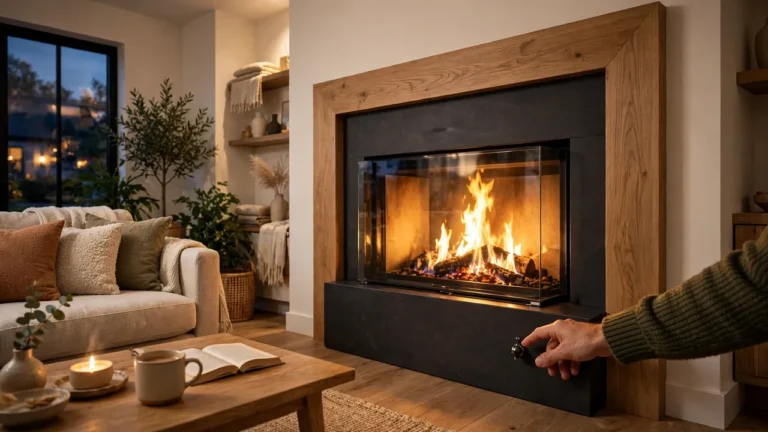
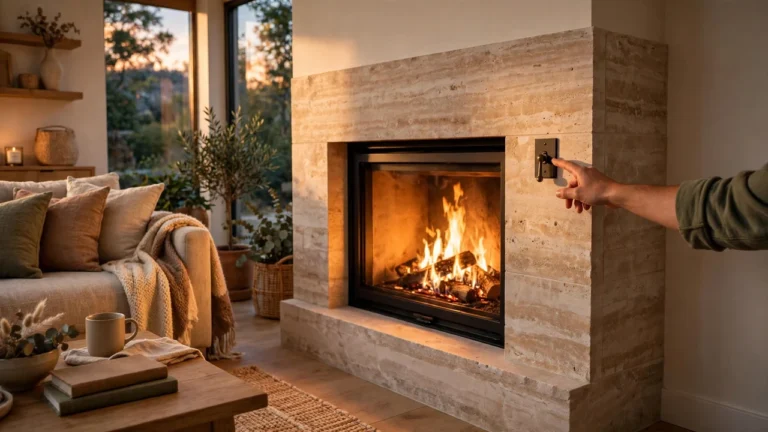
Do Gas Fireplaces Add Value to Your Home? The short answer is yes, in many cases, but the size of the gain depends on the type of unit, its condition, and what buyers in your area want. A clean, working, direct vent gas fireplace in a main living room can help a home stand out. A neglected unit with a stained surround and a dead remote can do the opposite.
This guide walks you through the same check a buyer would make. You will learn how to size up your own fireplace, what adds value, what takes value away, and when an upgrade is worth the money. You will also learn the safety checks that matter before you show the home to anyone.
One honest note up front. No single published figure tells you how much value a gas fireplace adds in dollars. The effect changes with the local market, the climate, the age of the unit, and how the fireplace looks in the room. This article gives you a clear way to judge your own case instead of a made up number.
Heads Up: Read This Safety Note Before You Show or Sell Your Home
Gas fireplaces carry carbon monoxide (CO) and gas leak risks. CO is colorless and odorless, so you cannot see or smell it. Install CO alarms on every level of your home and near sleeping areas, test them monthly, and replace them when the maker says to. CO alarms protect the whole household, and pets, especially birds, are more sensitive to CO and combustion fumes than people are.
If you smell gas, act at once. The smell is often described as rotten eggs. Do not touch light switches, flames, or appliances. Leave the home right away with everyone and all pets. Call the gas utility emergency line or 911 from outside the home. Never try to find or fix a gas leak, open a gas line, or relight anything after a strong gas smell. That work belongs to the gas utility or a licensed gas fitter only.
Never open a gas line, bypass a safety device such as a thermocouple or oxygen depletion sensor, block a vent, or disable a CO alarm. Gas line work, venting changes, and repairs beyond basic cleaning and normal user controls go to a licensed gas professional. For trusted CO guidance, see the CDC carbon monoxide page and the CPSC carbon monoxide information center.
Time to Evaluate
About 1 hour
Active Time
30 minutes
Difficulty
Beginner
What You Need
- Your fireplace manual and any service records
- A phone camera for photos of the unit, glass, and surround
- A tape measure for the firebox and the hearth
- A flashlight to check inside the firebox and around the vent
- Fresh batteries for the remote and the CO alarm
- A notepad to list faults a buyer would spot
- The phone number of a licensed gas technician
- A local real estate agent to ask about buyer demand
At a Glance: Your 7 Step Value Check
- Identify the type of gas fireplace you own
- Inspect the condition buyers will notice
- Compare gas with the other fireplace types
- Weigh running costs against the heat you get
- Ask a local agent what buyers in your area pay for
- Fix the small faults that drag value down
- Decide whether an upgrade pays off before you sell
Step 1: Identify the Type of Gas Fireplace You Own
Start by naming what you have. The type shapes both the value and the safety story.
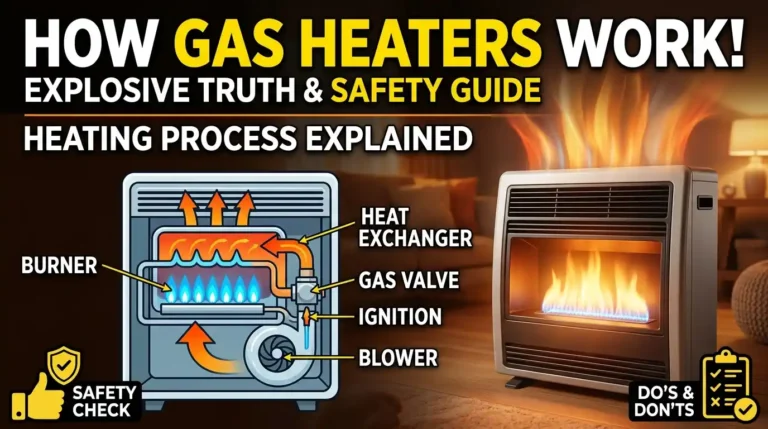
A direct vent unit pulls outside air in and sends exhaust out through a sealed vent. A ventless unit, also called vent free, burns room air and sends combustion byproducts into the room. An insert sits inside an old wood firebox. A log set sits in an open firebox with the damper held open.
Check the rating plate inside the firebox or behind the lower panel. It lists the model, the fuel type, and the rated heat input. Write the model down and keep it with the manual. Buyers and home inspectors ask for it, and a missing model number slows the sale.
If you own a ventless unit, be ready for questions. Vent free appliances release combustion byproducts, including CO and water vapor, into the room. They are restricted or banned in some places and in bedrooms, and they need a working oxygen depletion sensor and a CO alarm. Check your local code before you list the home, and say so plainly in your listing notes.
Learn the differences in detail in our guide to vented vs ventless gas fireplaces. The venting choice is one of the first things a buyer and an inspector will check.
Step 2: Inspect the Condition Buyers Will Notice
Turn the fireplace on and watch it the way a buyer would. Does it light on the first try. Does the flame look steady and blue at the base with warm yellow tips.
Does the glass stay clear or fog up fast. Does the remote work from across the room. Each small fault tells a buyer the unit may need money spent on it soon.
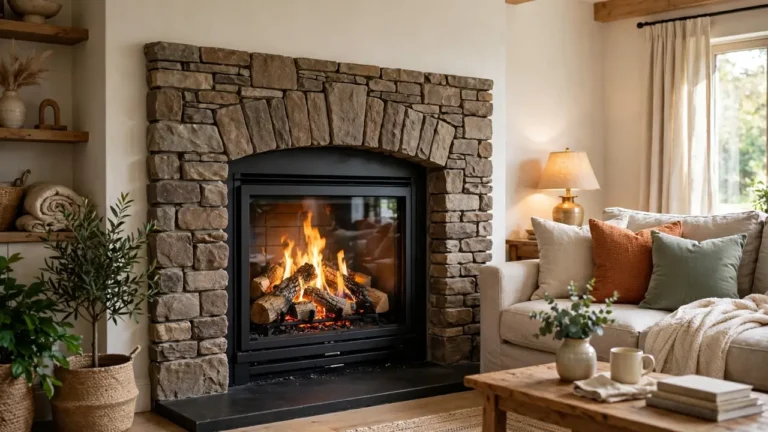
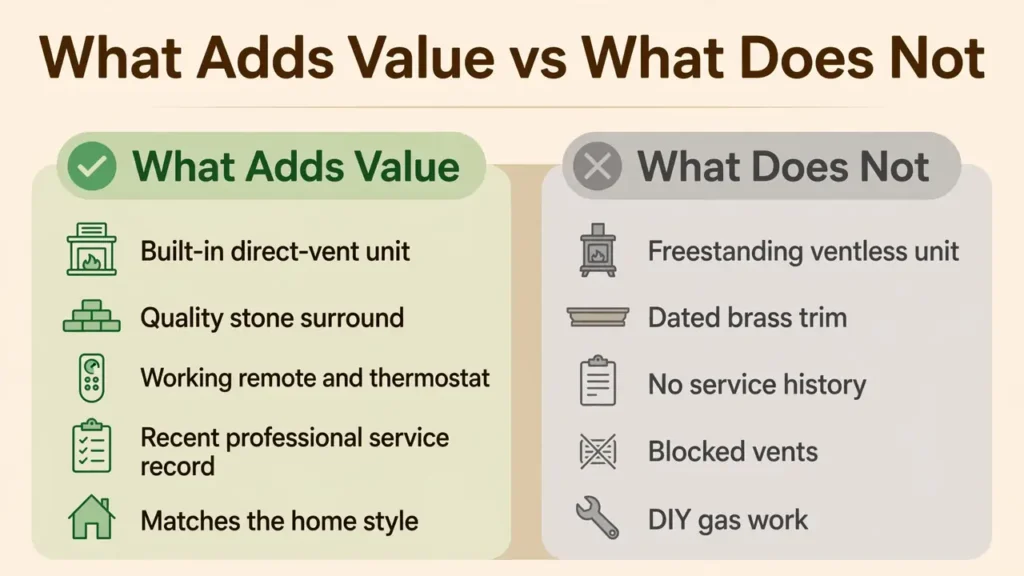
Look at the surround with fresh eyes. Cracked tile, scorched paint, a dated brass trim, and a dusty log set all read as deferred care. A clean glass front, neat logs, and a tidy hearth read as a cared for home. Most of the fixes here cost little and take an afternoon.
Check the service history next. A unit with a dated service sticker and a folder of receipts feels safe to a buyer. A unit with no record at all raises questions, even when it runs well.
If you have no records, book a licensed gas technician for a service visit before you list. A fresh service record is one of the cheapest value builders in this whole guide.
Follow our gas fireplace maintenance annual checklist so nothing on the yearly list gets missed before showings begin.
Step 3: Compare Gas With the Other Fireplace Types
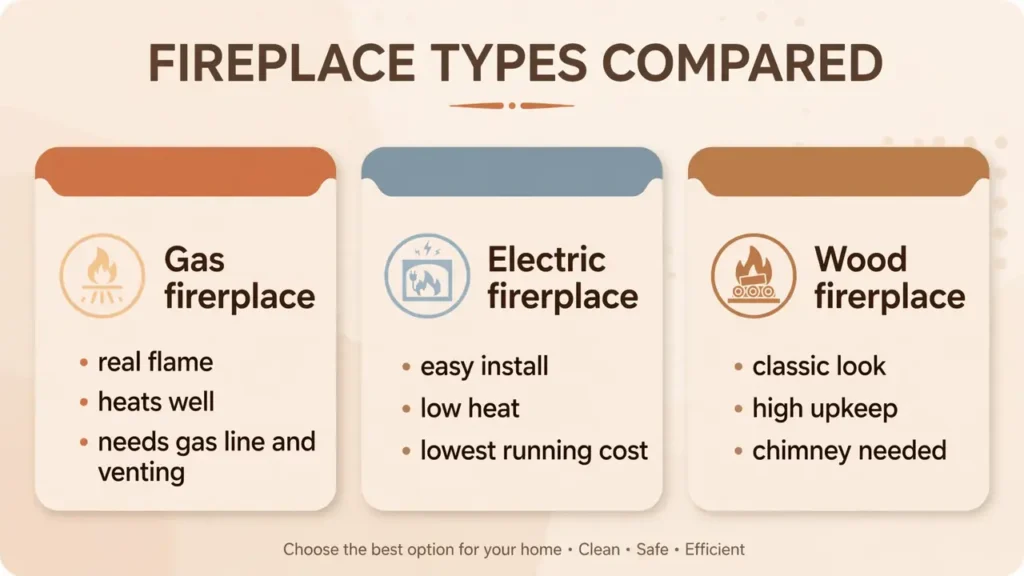
Buyers weigh your gas fireplace against the other options they know. Gas gives a real flame and real heat at the push of a button, with no wood to haul and no ash to clean. That mix of comfort and low daily effort is the main selling point. It suits buyers who want heat on cold evenings without a chore list.
Electric fireplaces win on install cost and ease, but they give less heat and the flame is a light effect, not a real fire. Wood fireplaces give a classic look and strong heat, but they need a chimney, regular sweeping, and wood storage. Many buyers see wood as work, while gas sits in the middle as heat with little daily effort.
Read our head to head gas vs electric fireplace comparison for the full side by side. If you want the electric side of the value question, see our guide on whether an electric fireplace adds value to your home.
Step 4: Weigh Running Costs Against the Heat You Get
A buyer will ask what the fireplace costs to run. Answer with your own numbers, not a guess. Check the rated heat input on the rating plate, then look at your gas bill for the local rate per unit of gas.
Your use pattern matters too. A fireplace run for two hours on winter evenings costs far less than one left on all day.
Zone heating is where gas fireplaces earn their keep. Warming one lived in room lets the main thermostat sit lower, which can trim the heating bill in cold months. The saving depends on your home layout, your insulation, and how often you use the fireplace, so treat any claim of a fixed saving with care.
Be honest about the limits. A single gas fireplace will not heat a large open plan home on its own, and an oversized unit can short cycle and waste gas. If you are unsure how much heat your unit puts out, check the manual for the rated input and the stated efficiency, and ask your technician at the next service visit.
See our breakdown of how much it costs to run a gas fireplace and how much it costs to install a gas fireplace so you can talk real numbers with a buyer instead of vague claims.
Pro Tip: Keep One Page of Real Numbers Ready
Print one page with the model number, the rated heat input, the install date, the last service date, and your last winter gas bill with the fireplace hours noted. Leave it on the mantel during showings. Buyers trust a seller who can show numbers, and agents pass that page on to the next buyer in line.
Step 5: Ask a Local Agent What Buyers in Your Area Pay For
Value is local. In a cold climate, a working gas fireplace can be a real draw because buyers picture winter evenings by the fire. In a warm climate, the same fireplace may count as a nice extra and little more. A local agent who has sold homes on your street knows which case fits you.
Ask three direct questions. Do buyers in this area ask for a fireplace. Do gas fireplaces help homes sell faster here.
Does a dated or ventless unit ever hurt an offer. The answers shape whether you spend money on an upgrade or leave the unit as it is.
Ask the agent about the room too. A gas fireplace in the main living room or a family room adds more than one tucked into a spare bedroom. A fireplace that faces the seating and anchors the room reads as a feature. One hidden behind a door reads as an afterthought.
Step 6: Fix the Small Faults That Drag Value Down
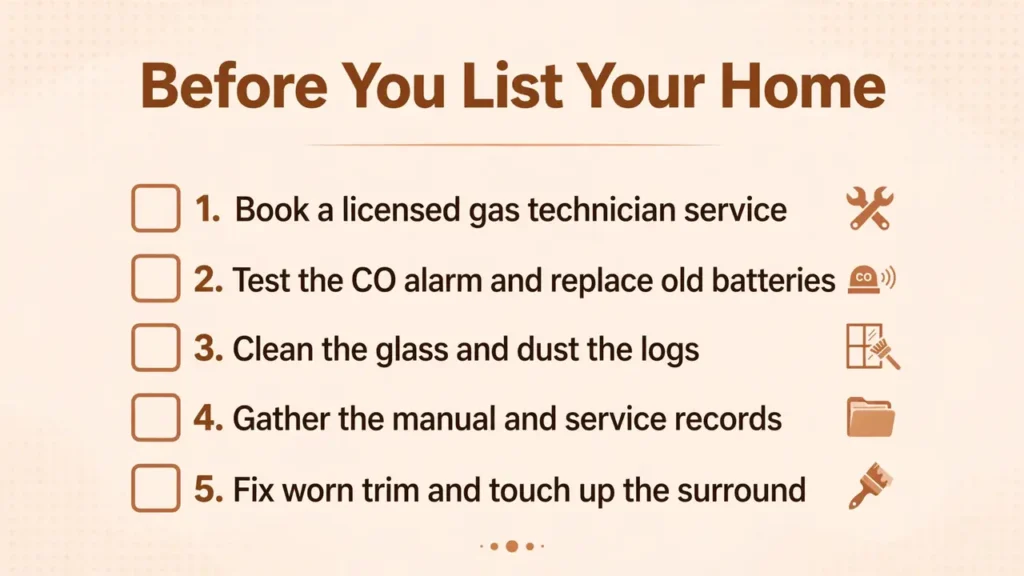
Work through the faults you listed in Step 2, smallest first. Clean the glass with a cleaner made for fireplace glass. Dust the logs and the ember bed with a soft brush.
Replace remote batteries and the batteries in the CO alarm. Touch up scuffed paint on the surround and tighten any loose trim.
Book the licensed gas technician for anything beyond cleaning and user controls. A pilot that will not stay lit, a burner that soots, a smell of gas, or a cracked log set all need a pro. Never open a gas line or bypass a safety device to get the unit running before a showing. A buyer inspection will find the shortcut, and the risk is not worth it.
Test the CO alarm on the day of each showing. Press the test button and listen for the alarm. Check the date on the back of the unit and replace it when the maker says to. Our guide on whether gas fireplaces need a carbon monoxide detector explains placement and testing in full.
Step 7: Decide Whether an Upgrade Pays Off Before You Sell
An upgrade pays off when it fixes a clear buyer objection. A new direct vent insert that replaces a tired open log set can change how the whole room feels. A fresh surround in a style that matches the home can lift a dated room. A new remote and thermostat can make an old unit feel current.
An upgrade rarely pays off when the current unit already works well. Replacing a clean, serviced, five year old fireplace with a slightly newer model adds little that a buyer can see. In that case, spend the money on the service visit, the cleaning, and the small cosmetic fixes instead.
Check the age of your unit before you decide. Most gas fireplaces last for many years with regular service, and the remaining life matters more to a buyer than the brand name. Our guide on how long gas fireplaces last shows what to expect at each age.
If you do plan a change, start with our guide on how to choose a gas fireplace. For homes with an old wood firebox, our guide on converting a wood fireplace to gas covers the route many sellers take. Gas line and venting work always goes to a licensed professional.
Common Mistakes That Cost Sellers Value
- Quoting a made up value figure. No national number exists for what a gas fireplace adds. Sellers who quote one lose trust fast. Show the condition, the service record, and the real running cost instead.
- Hiding a ventless unit. Buyers and inspectors will find out. Say it is ventless, show the CO alarm, and share the local code position up front.
- Skipping the service visit. A fireplace with no service record looks like a risk, even when it runs well. A dated service sticker costs little and calms buyers.
- Leaving a dead remote or a dirty glass front. Small faults make buyers picture big repair bills. Fix the small things before the first showing.
- Doing gas work without a license. DIY gas line or venting work can void cover, fail inspection, and put people at risk. Leave gas work to a licensed professional.
Frequently Asked Questions
Does a gas fireplace increase home value?
In many cases, yes. A clean, working, direct vent gas fireplace in a main living room can help a home appeal to buyers and may support a stronger offer. The gain depends on the local market, the climate, the type of unit, and its condition. No single published figure applies to every home.
Do buyers prefer vented or ventless gas fireplaces?
Most buyers and home inspectors prefer vented units because exhaust leaves the home through a sealed vent. Ventless units release combustion byproducts into the room, are restricted or banned in some places, and raise more questions at inspection. A vented unit is the safer bet for resale value.
Should I replace my gas fireplace before selling?
Replace it only when it fixes a clear buyer objection, such as a broken unit, an open log set in a main room, or a badly dated surround. When the current unit works well and has a service record, spend on cleaning, a service visit, and small cosmetic fixes instead.
Do gas fireplaces need a carbon monoxide detector?
Yes. Put CO alarms on every level of the home and near sleeping areas, test them monthly, and replace them when the maker says to.
Does a gas fireplace help a home sell faster?
It can help in cold climates and in homes where the fireplace anchors the main living room. The effect is smaller in warm climates and when the unit is dated or poorly kept. Ask a local agent, since buyer demand for fireplaces changes from one area to the next.
Quick Reference Card: Gas Fireplace Value Check
What you need: manual and service records, phone camera, tape measure, flashlight, fresh batteries, licensed gas technician number, local agent contact.
Value builders: direct vent unit, clean glass and logs, working remote, dated service record, CO alarm tested, surround that matches the home.
Value drags: ventless unit, no service history, dirty glass, dead remote, dated brass trim, DIY gas work, missing CO alarm.
Steps: 1. Identify the type. 2. Inspect the condition. 3. Compare fireplace types. 4. Weigh running costs. 5. Ask a local agent. 6. Fix small faults. 7. Decide on an upgrade.
Safety first: CO alarms on every level and near sleeping areas. If you smell gas, leave at once and call the gas utility or 911 from outside. Gas work goes to a licensed professional.
Final Thoughts
Do Gas Fireplaces Add Value to Your Home? When the unit is vented, serviced, and in good shape, the answer is often yes. The fireplace gives buyers real heat with little daily effort, and that mix is hard to match.
Your next step is the one hour check in this guide. Identify your type, note the faults, book the service visit, and ask your agent what buyers want. A little care before listing can turn a plain fireplace into a real selling point.