Spruce Firewood: Burning Guide, Seasoning, Safety, and Smart Ways to Use It
Spruce firewood lights fast, smells fresh, and splits with little effort. It also burns fast, pops, throws sparks, and leaves you feeding the stove far more often than you planned. If you have a pile of spruce and wonder whether it is worth burning, this guide gives you a straight answer: spruce works well as kindling, for quick heat, and mixed with hardwood, but it is a poor choice as your only winter fuel.
By the end of this guide you will know how to test spruce for dryness, how long to season it, how to stack it so air reaches every piece, and how to build a hot fire that keeps smoke and creosote down. You will also see real heat numbers for spruce next to pine, fir, and oak, so you can judge for yourself how much wood you need. The whole process takes one afternoon of work plus months of drying time, and most of the effort is in the stacking.
Safety note: only burn spruce that is fully seasoned, with moisture at 20% or below. Have your chimney inspected and swept once a year by a certified sweep. Fit working carbon monoxide detectors in your home, and never burn treated, painted, or stained wood. Check local burn rules and air quality alerts before you light a fire.
What You Need
At a Glance
- Check the moisture of your spruce
- Split spruce logs into small pieces
- Stack spruce where air can reach it
- Wait for the wood to season fully
- Build a small hot fire with kindling
- Add spruce in small loads
- Mix spruce with hardwood for longer heat
- Watch the fire and clean up ash safely
How Much Heat Does Spruce Firewood Give?
Spruce is a softwood, and softwoods hold less heat per cord than hardwoods. Published figures differ a little by source and by species, so treat the numbers below as a range rather than a single exact value. The pattern is steady across every source: spruce sits near the bottom of the heat table, close to pine and fir, and well below oak.
The U.S. Forest Products Laboratory lists spruce at about 14.5 million BTU per cord, and black spruce at about 15.9 million BTU per cord, based on seasoned wood at 20% moisture. A Rutgers Cooperative Extension guide lists spruce at 15.5 million BTU per cord. Other firewood references put the full spruce range at 14 to 17 million BTU per cord, with Engelmann spruce at the low end and black, red, white, and Sitka spruce at the high end.
| Wood | Heat per cord | Seasoned cord weight | Best use |
|---|---|---|---|
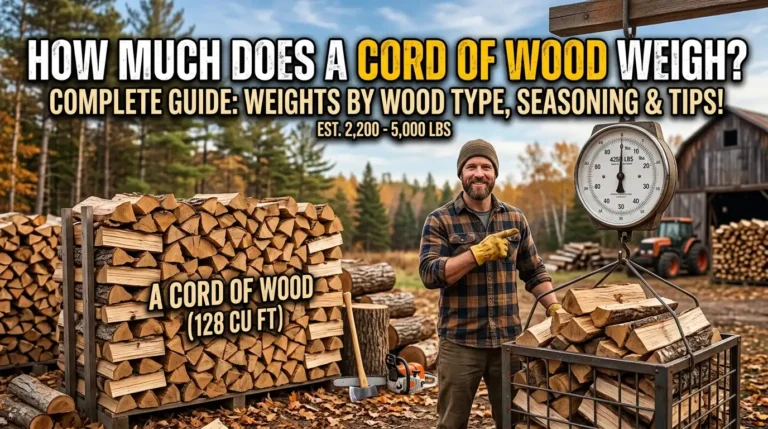
| Spruce | 14 to 17 million BTU | about 2,100 lb | Kindling, quick heat, mixed loads |
| Pine | about 15 million BTU | about 2,000 to 2,500 lb | Kindling, shoulder season fires |
| Fir | 14 to 18 million BTU | about 2,100 to 2,500 lb | Quick fires, mixed loads |
| Oak | about 24 million BTU | about 3,500 to 3,800 lb | Long overnight heat |
Heat figures are approximate and vary by species, moisture, and source. Figures shown are for seasoned wood at about 20% moisture. Sources: U.S. Forest Products Laboratory firewood data, Rutgers Cooperative Extension, and the Northern Institute of Applied Climate Science wood heat guide.

One cord of oak gives roughly the heat of 1.5 cords of spruce. That gap matters if you heat a home all winter. For a weekend fire or a spring evening, the gap matters far less, and spruce earns its place by lighting fast and catching from a single match.
Spruce
Lights in seconds. Burns hot and fast. Pops and throws sparks. High resin. Needs a screen or a closed stove door.
Pine
Very close to spruce on heat and burn speed. Also resinous. Our pine firewood burning guide covers its quirks in full.
Fir
Slightly cleaner burning than spruce, with less popping. Still a softwood, still fast, still best mixed with hardwood. See our fir firewood burning guide for the details.
Check the Moisture of Your Spruce
Push the pins of a moisture meter into the center of a freshly split face, not the bark or the end grain. The center face gives the true reading. Green spruce often reads 40% to 60% moisture, and it will hiss, smoke, and coat your flue if you burn it that wet. Aim for 20% or below before a single piece goes in the stove.
Test three or four pieces from different parts of the pile. A meter costs little and removes the guesswork. Our guide on how to tell if firewood is seasoned shows each check in detail.
Split Spruce Logs Into Small Pieces
Cut logs to 16 inches or shorter so they fit your firebox with room to spare. Measure the firebox first, then subtract two inches. Spruce splits with little force because the grain runs straight, so a maul usually beats a wedge and sledge for this wood.
Split each round into pieces about 3 to 4 inches across at the wide end. Small splits dry faster and catch faster, which matters twice over with a resinous softwood. Wear gloves and eye protection, and keep your feet clear of the splitting block.
Stack Spruce Where Air Can Reach It
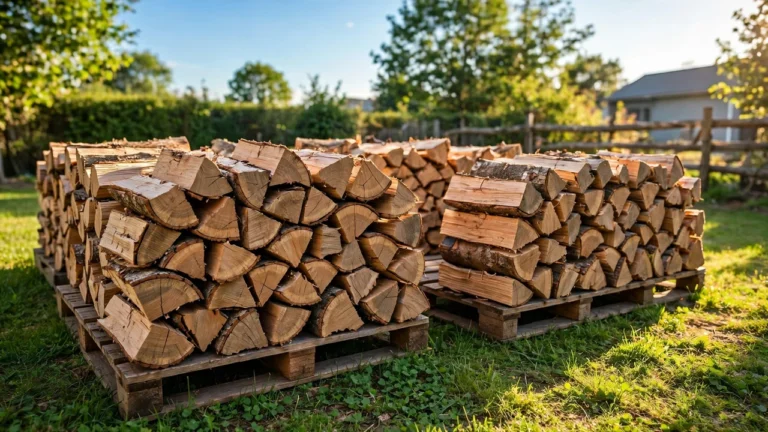
Raise the stack off the ground on pallets or a rack, at least 4 inches up, so ground damp stays out of the bottom row. Lay the bark side up on the top row to shed rain, and leave gaps between rows so wind can pass through.
Cover only the top of the stack with a tarp or a sheet of metal, and leave the sides open. A tarp wrapped down the sides traps damp air and slows drying. For full stacking detail, read our guide on how to stack firewood.
Moisture: Where Spruce Starts and Where It Needs to Land
Green wood moisture and the 20% target come from the Northern Institute of Applied Climate Science wood heat guide and Rutgers Cooperative Extension.
Wait for the Wood to Season Fully
Plan on 6 to 12 months of drying for spruce. Light softwood often dries in about six months, but spruce holds resin that takes longer to drop, so a full year is the safer figure. Split in spring and burn the following winter.
Check the pile each month with the meter. A reading that stalls above 20% means the stack needs more sun, more wind, or wider gaps. Our full how to season firewood guide covers the timeline for other woods too.

Build a Small Hot Fire With Kindling
Start with dry spruce kindling, thin splits no wider than 2 inches, laid in a crisscross stack with air gaps between each piece. Place one fire starter in the center and light it.
A hot start matters more with spruce than with hardwood. A cool, smoky start lets resin vapors rise into a cold flue, where they condense as creosote. A fast, hot start sends them out while the flue is warm. If the fire smolders and the glass turns black, open the air control and add thin kindling until the flames run bright and steady.
Heads Up: Popping Embers and Creosote
Spruce holds pockets of resin that can pop and throw hot embers when heated. Keep the fireplace screen in place or the stove door shut once the fire is going, and keep rugs, paper, and kindling well back from the opening. Burn spruce hot and dry, and book a chimney sweep every year, because creosote buildup is a leading cause of chimney fires according to the National Fire Protection Association. If you smell smoke inside the house or the fire will not draw, stop and call a certified sweep before you burn again.
Add Spruce in Small Loads
Feed the fire two or three splits at a time, laid parallel with a gap between them. Small loads burn hot and clean, while a full box of spruce flares up, then dies down fast and leaves little heat behind. Expect to add wood every 30 to 45 minutes when you burn spruce alone.
Watch the flame color. Bright yellow flames with little smoke mean the wood is dry and the air supply is right. Dark orange flames and gray smoke mean the wood is damp or the air is choked down too far.
Mix Spruce With Hardwood for Longer Heat
Use spruce to start the fire and hardwood to carry it. Once the kindling burns down to coals, add one hardwood split, then one spruce split on top. The hardwood burns slow and steady while the spruce flares and keeps the fire lively.
Keep spruce to about one-third of each load by volume, with hardwood making up the rest. This mix gives you the fast light of spruce and the long heat of hardwood, and it cuts down on smoke and creosote. For a full ranking of woods, see our guide to the best firewood to burn.
Pro Tip: The One-Third Mix
Load the stove in layers: hardwood on the bottom, spruce in the middle, hardwood on top. The top hardwood holds the spruce down, slows the flare, and stretches each load by a good stretch. Try it once and you will feel the difference in how often you reload.
Watch the Fire and Clean Up Ash Safely
Stay in the room while a spruce fire burns, and check the flue and stove pipe for soot each month during the burning season. Spruce leaves more soot than hardwood, so monthly checks catch buildup early.
Let ash cool for at least 48 hours in a metal bucket with a tight lid, stored outside on concrete or bare ground, away from the house and from wood piles. Embers can hide in ash for days, so never tip warm ash into a paper bag or a plastic bin.
| If This Happens | Try This |
|---|---|
| Fire hisses and steams | Wood is still wet. Pull it out, test with a meter, and season it longer. Burn only wood at 20% moisture or below. |
| Lots of smoke, little flame | Open the air control, add thin dry kindling, and let the flue warm up before adding bigger splits. |
| Fire burns out in minutes | That is normal for spruce alone. Mix in hardwood splits and keep spruce to about one-third of the load. |
| Popping throws embers | Shut the stove door or set the fireplace screen in place. Keep the floor clear for at least 3 feet around the opening. |
| Stove glass turns black fast | Burn hotter with dry wood and full air for 15 minutes, then check the chimney. Book a sweep if the black film returns quickly. |
Spruce Firewood Questions, Answered
Is spruce firewood good for burning?
Spruce is fair firewood, not great firewood. It lights fast, splits well, and gives quick heat, but it burns fast, pops, and gives about 14 to 17 million BTU per cord, far less than oak. Use it for kindling, short fires, and mixed loads with hardwood.
How long does spruce firewood take to season?
Plan on 6 to 12 months. Light softwood often dries in about six months in a sunny, windy stack, but spruce resin takes longer to drop, so a full year is the safer figure. Burn only when a meter reads 20% moisture or below.
Does spruce firewood cause creosote?
Yes, spruce can add to creosote buildup, mainly when it is green or burned in a cool, smoky fire. Seasoned spruce burned hot gives far less buildup. Have the chimney inspected and swept once a year by a certified sweep.
Can you burn spruce in a wood stove?
Yes, if the wood is seasoned to 20% moisture or below. Keep the stove door shut once the fire is going, keep spruce to about one-third of each load, and mix in hardwood for longer heat.
Can spruce firewood be too dry?
Very dry spruce burns even faster than normal, so it can flare and die down in minutes. Mix it with hardwood and feed the stove in small loads. Our guide on can firewood be too dry explains the signs to watch for.
Quick Reference Card: Spruce Firewood
What you need: moisture meter, maul, pallets or rack, top cover, kindling, hardwood logs, metal ash bucket.
Key numbers: heat 14 to 17 million BTU per cord, season 6 to 12 months, burn at 20% moisture or below, cut to 16 inches, spruce at one-third of each load.
- Check moisture with a meter
- Split logs to 3 to 4 inches across
- Stack off the ground with air gaps
- Wait 6 to 12 months until dry
- Build a small hot fire with kindling
- Add spruce in small loads
- Mix with hardwood for longer heat
- Watch the fire, cool ash 48 hours
Burn Your Spruce With Confidence
You now know the honest truth about spruce firewood: it lights in seconds, burns hot and fast, and works best as kindling and as one part of a mixed load. Test it, split it small, stack it in sun and wind, and wait until the meter reads 20% or below. Then build hot fires, feed them in small loads, and sweep the chimney once a year.
Your next step is a quick one. Walk out to your pile with a moisture meter and test three pieces. That single reading tells you whether your spruce is ready to burn or needs another season in the stack. If it is ready, light a small test fire and feel how fast it catches. You will know in one burn why spruce earns its place beside the stove, and why hardwood still does the heavy lifting.
Sources
Heat and weight figures for spruce, pine, fir, and oak come from the U.S. Forest Products Laboratory firewood data and the Rutgers Cooperative Extension guide “Firewood: Which Species Produces the Most Heat?” by Mark C. Vodak and Charles J. Newlon. Seasoning times and moisture targets come from the Northern Institute of Applied Climate Science wood heat guide and Rutgers Cooperative Extension. Creosote and chimney fire guidance follows the National Fire Protection Association. If a figure could not be verified from one of these sources, it was left out of this guide.