Do Electric Fireplaces Give Off Heat? Explained with Facts
Do Electric Fireplaces give off heat? Here’s the clear and simple answer. Yes The majority of electric fireplace products emit actual and quantifiable heat – not just a glowing fire effect. A typical plug-in model operates similarly to a space heater in a costume of a fireplace, generally producing about 5,000 BTUs (approximately 1,500 watts) and heating a room of 400 to 500 square feet.
Other models are heat-free display models; hence it is worth checking the spec sheet prior to making a purchase.
The brief version is that. The actual figures, factors that influence the actual warmth of a room, and the most popular error one makes when buying one will be listed below.
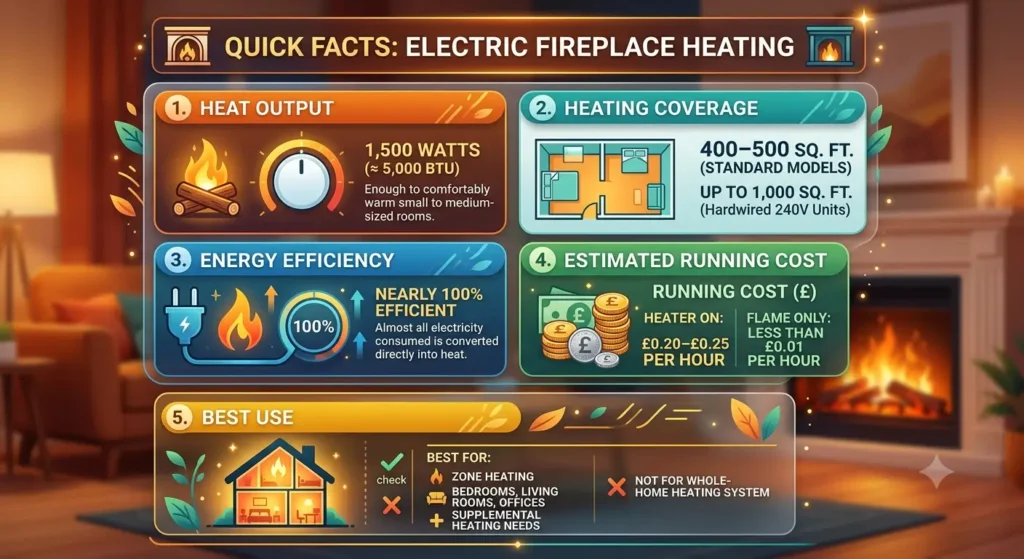
Electric Fireplace Heating: Quick Facts
| Feature | Details |
|---|---|
| Heat Output | 1,500 watts (≈ 5,000 BTU) – Enough to comfortably warm most small to medium-sized rooms. |
| Heating Coverage | 400–500 sq. ft. on standard models; up to 1,000 sq. ft. with hardwired 240V units. |
| Energy Efficiency | Nearly 100% efficient – Almost all electricity consumed is converted directly into heat. |
| Estimated Running Cost | £0.20–£0.25 per hour with the heater on; less than £0.01 per hour when only the flame effect is running. |
| Best Use | Ideal for zone heating, bedrooms, living rooms, offices, and other supplemental heating needs—not as a whole-home heating system. |
Key Takeaways
Most of the electric fireplaces warm like a portable space heater, rather than a decorative candle.
Normal units are approximately 1,500 watts and 5,000 BTUs, which is sufficient to cover about 400-500 square feet.
- Hardwired 240 Vs have the capability of 8,000-10,000+ BTUs and can be used in larger and open areas.
- Fire place heater: almost all electricity consumed by the heater is converted to heat.
- The cost of operating one during an evening is around a dollar based on the local electricity prices.
- The flame effect and the heater are two distinct functions – one can operate without the other.
Do Electric Fireplaces Produce Heat?
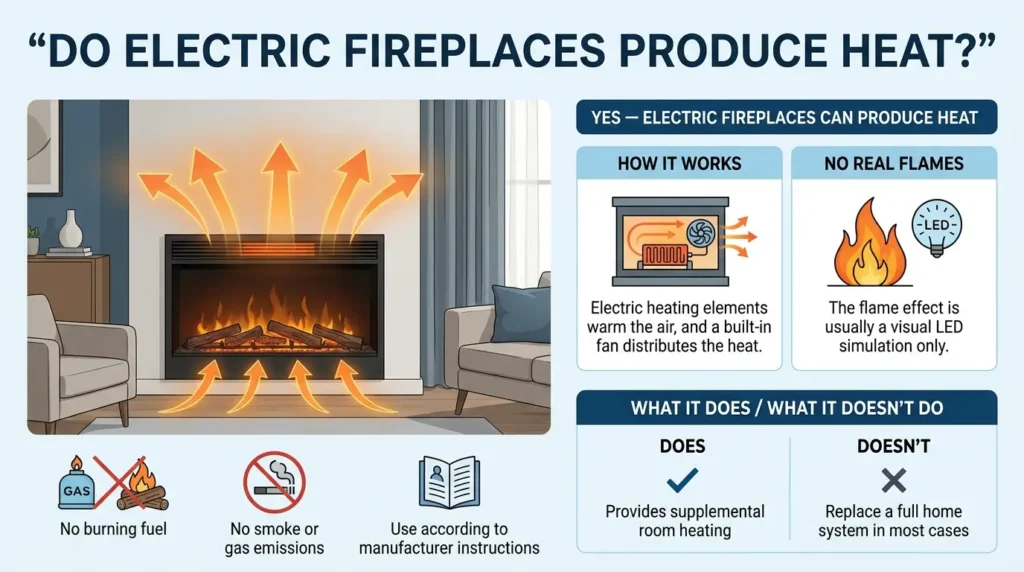
Yes electric fireplace is a clean and modern source of producing heat, With electric fireplaces, nothing is burned, thus no actual flame and no combustion. They instead employ an electrical heating device, the same primitive technology as a toaster or a space heater, to heat the air or the room itself.
How electric Fireplace Produce Heat?
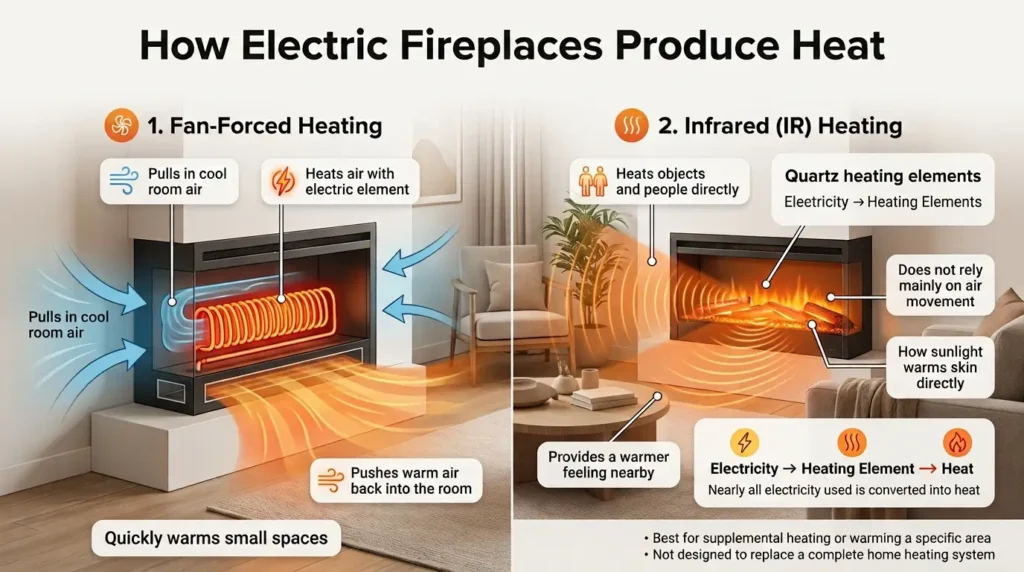
There are two main ways this happens:
- Fan-forced heaters draw room air over a hot coil and force the warm air out of the unit through a vent, typically around the bottom of the unit. These warm quickly and they are effective in heating a small space in a short time.
- IR heaters work by heating objects and people directly with quartz heating elements, just like the sun heats your skin even on a cold day. IR heat does not depend on air flow, thus it feels warmer when close and retains heat slightly after the unit has been turned off.
Both of them transform practically all the electricity they consume into heat, therefore, there is hardly any wasted energy. That is what makes electric fireplaces one of the more effective point-source heaters plug-in heaters, but they are not meant to heat a home completely.
How Much Heat Does an Electric Fireplace Really Put Out?
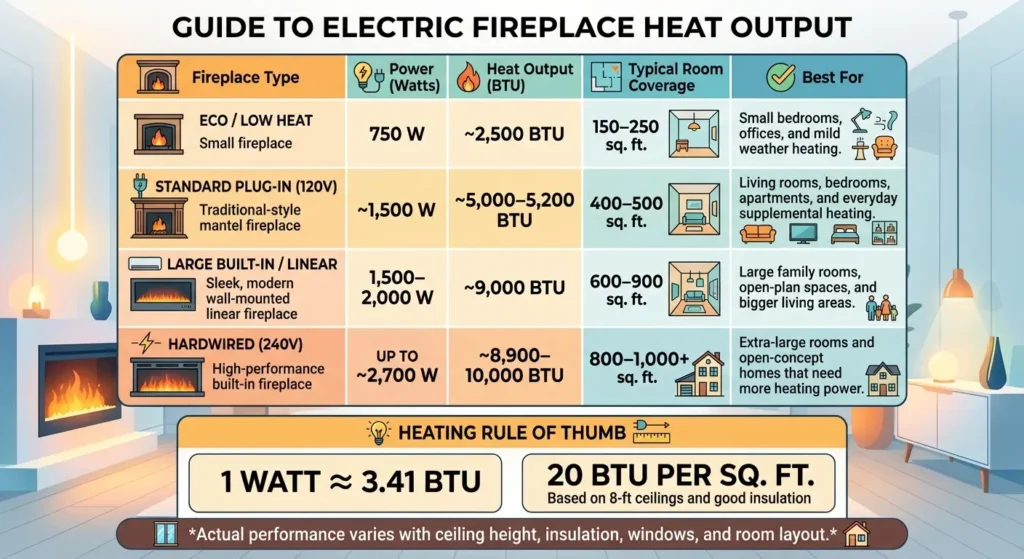
Most electric fireplaces are designed to provide enough warmth for a small to medium-sized room, making them an excellent choice for supplemental or zone heating.
Here’s a single, comprehensive, reader-friendly table that combines all the important information into one place. It’s ideal for an SEO article because readers can quickly scan it.
| Fireplace Type | Power (Watts) | Heat Output (BTU) | Typical Room Coverage | Best For |
|---|---|---|---|---|
| Eco / Low Heat | ~750 W | ~2,500 BTU | 150–250 sq. ft. | Small bedrooms, offices, and mild weather heating. |
| Standard Plug-In (120V) | ~1,500 W | ~5,000–5,200 BTU | 400–500 sq. ft. | Living rooms, bedrooms, apartments, and everyday supplemental heating. |
| Large Built-In / Linear | 1,500–2,000 W | ~9,000 BTU | 600–900 sq. ft. | Large family rooms, open-plan spaces, and bigger living areas. |
| Hardwired (240V) | Up to ~2,700 W | ~8,900–10,000 BTU | 800–1,000+ sq. ft. | Extra-large rooms and open-concept homes that need more heating power. |
| Heating Rule of Thumb | 1 Watt ≈ 3.41 BTU | 20 BTU per sq. ft. | Based on 8-ft ceilings and good insulation | Actual performance varies with ceiling height, insulation, windows, and room layout. |
Electric Fireplace vs. Space Heater vs. Gas Fireplace.
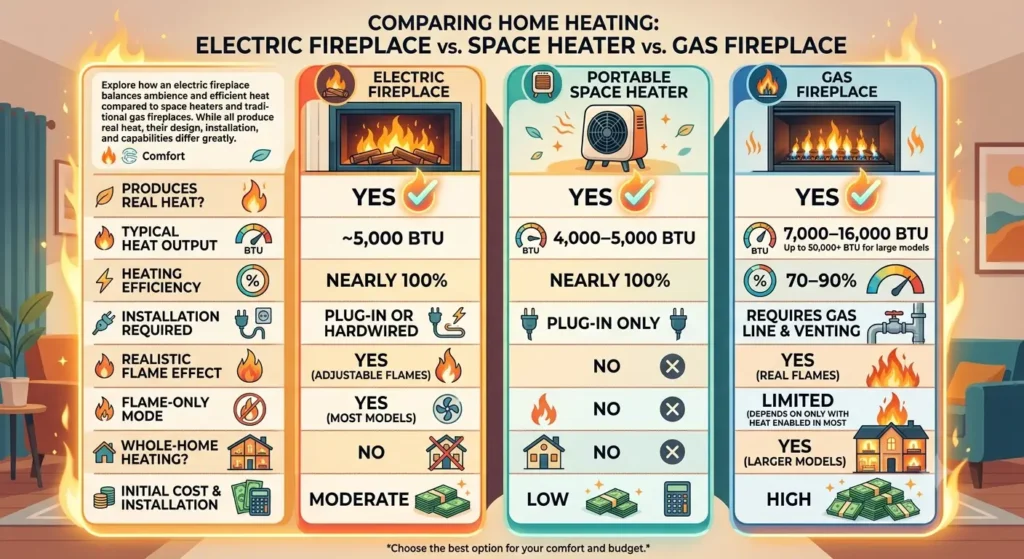
An electric fireplace produces about the same amount of heat as a standard portable space heater—around 5,000 BTUs. What makes it different is the realistic flame effect, furniture-style design, quieter operation, and the ability to enjoy the flames without turning on the heat. If your goal is both comfort and ambience, an electric fireplace offers much more than a basic space heater, while costing less and requiring far less installation than a gas fireplace.
| Feature | Electric Fireplace | Portable Space Heater | Gas Fireplace |
|---|---|---|---|
| Produces Real Heat? | Yes | Yes | Yes |
| Typical Heat Output | ~5,000 BTU | 4,000–5,000 BTU | 7,000–16,000 BTU (up to 50,000+ BTU for large linear models) |
| Heating Efficiency | Nearly 100% | Nearly 100% | 70–90% |
| Installation Required | Plug-in or hardwired | Plug-in only | Requires a gas line and, in most cases, venting |
| Realistic Flame Effect | Yes (adjustable flames) | No | Yes (real flames) |
| Flame-Only Mode | Yes (most models) | No | Limited (depends on the model) |
| Suitable for Whole-Home Heating? | No | No | Yes (larger models can help heat larger areas) |
| Initial Cost & Installation | Moderate | Low | High |
What It Costs to Run an Electric Fireplace
Electric Fireplace Running Cost Calculator
Estimate your electric fireplace energy cost based on power usage, electricity rate, and operating time.
Watts are converted into kilowatts, then multiplied by your electricity rate and usage time to estimate running costs.
Your Fireplace Cost Estimate
Electric heaters use electricity to produce warmth almost directly, therefore, running costs can be easily estimated.
A 1,500-watt fireplace on high operation at an average rate of 0.15 kWh/h would cost approximately 0.22/h, or 1.10 to run five hours in the evening. Operating the flame effect, with the heater off, burns only a fraction of a cent per hour – some models will burn less than a penny per hour in flame-only mode.
This is why many owners keep the flame on most nights as decoration and only turn on the heater when the room really requires it.
Fast fact: This math will be different with your exact electricity rate. To have a specific figure of your home, look up a recent utility bill to see what you are charged per kWh.
Installation Cost: Electric vs. Gas vs. Wood-Burning
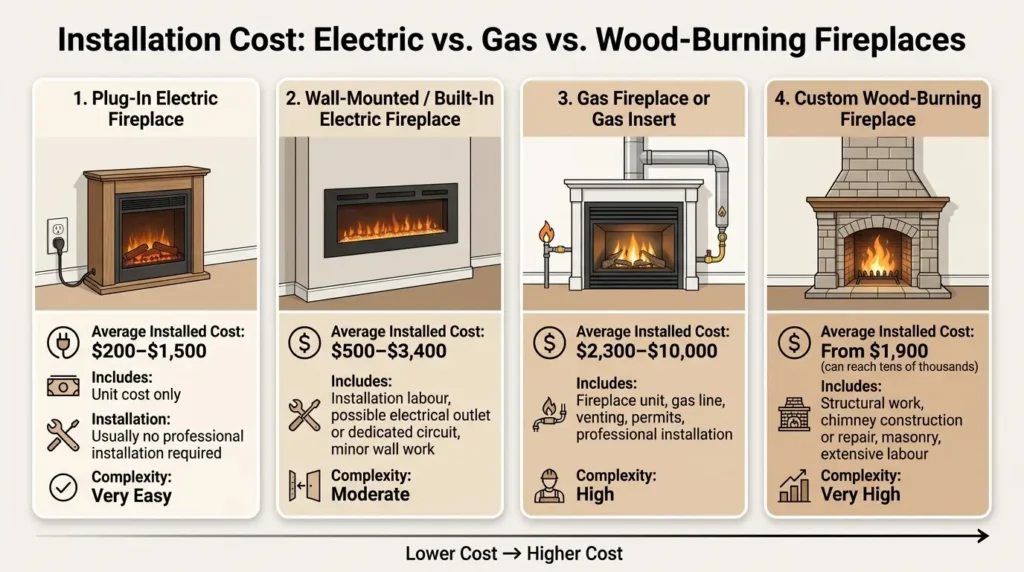
| Fireplace Type | Average Installed Cost | What’s Included in the Price? | Installation Complexity |
|---|---|---|---|
| Electric Fireplace (Plug-In) | $200–$1,500 | Unit cost only. Most freestanding models simply plug into a standard outlet, so professional installation is usually not required. | Very Easy |
| Electric Fireplace (Wall-Mounted/Built-In) | $500–$3,400 | Includes installation labour, a new electrical outlet or dedicated circuit ($150–$900), and possible drywall or framing work. | Moderate |
| Gas Fireplace or Gas Insert | $2,300–$10,000 | Includes the fireplace, gas line installation, venting, permits, and professional installation. | High |
| Custom Wood-Burning Fireplace | From $1,900 (can reach tens of thousands of dollars) | Includes structural work, chimney construction or repair, masonry, and extensive installation labour. | Very High |
Energy Efficiency and Environmental Impact
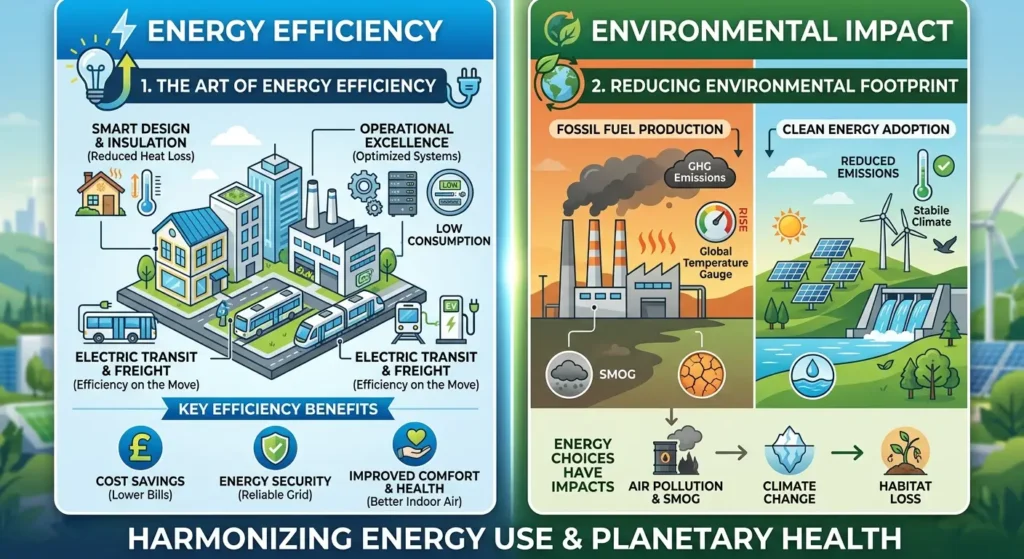
Electric fireplaces are nearly 100 percent efficient in transforming the amount of electricity used into heat, as there is no flue or chimney where the warm air can escape. Gas fireplaces are also efficient, but not as efficient as that, the majority of them operate at an approximate of 70 to 90 percent efficiency due to the lost heat through venting.
There is a difference in emissions, too. No on-site byproducts of combustion are created by electric fireplaces, thus, there is no fire burning in your living room. Even new, cleaner-burning models, gas fireplaces utilize natural gas or propane as a combustion fuel emitting carbon dioxide and other combustion gases. The environmental footprint of an electric unit remains the same as how your local electricity is produced, but once you get to the point of usage, it is cleaner.
To provide a frame of reference on the average cost of operating a gas fireplace: The average cost of operating a 7,000-16,000 BTU gas unit is approximately 60 a year to operate under average conditions, depending on the local gas prices and the frequency of use of that unit — a good point of reference when comparing gas to electric heating in a room used every day.
Safety Features at a Glance:
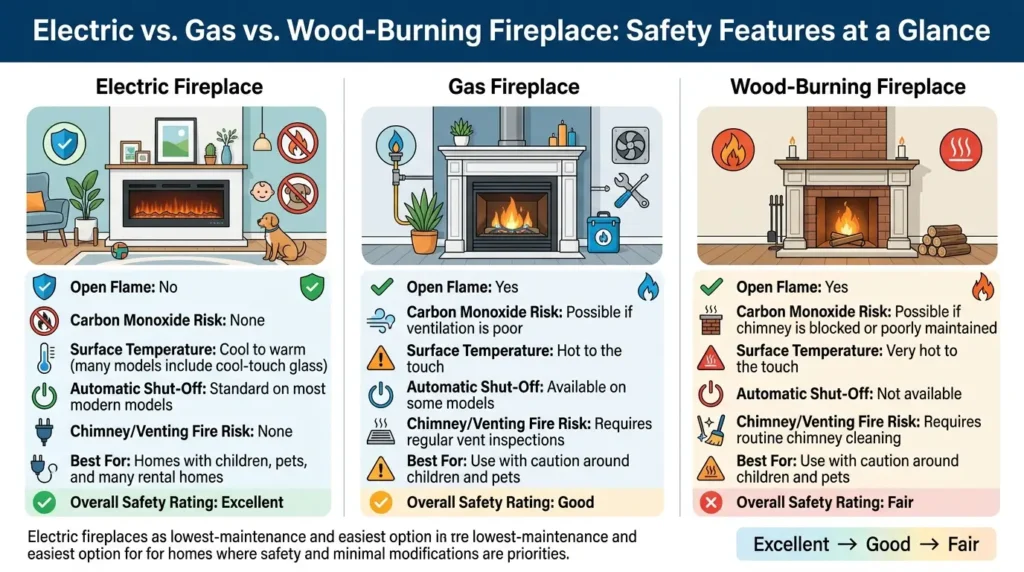
One of the most popular causes of preferences to electric over gas or wood is the safety, particularly, in the homes where children or pets can reside or renting the house where the space cannot be altered.
| Safety Factor | Electric Fireplace | Gas Fireplace | Wood-Burning Fireplace |
|---|---|---|---|
| Open Flame | No | Yes | Yes |
| Carbon Monoxide Risk | None | Possible if ventilation is poor | Possible if the chimney is blocked or poorly maintained |
| Surface Temperature | Cool to warm (many models feature cool-touch glass) | Hot to the touch | Very hot to the touch |
| Automatic Shut-Off | Standard on most modern models | Available on some models | Not available |
| Chimney or Venting Fire Risk | None | Requires regular vent inspections | Requires routine chimney cleaning |
| Safe for Homes with Children & Pets | Excellent choice | Use with caution | Use with caution |
| Best for Rental Homes | Yes – no permanent modifications required for most plug-in models | Usually requires a gas line and venting | Requires a chimney and permanent installation |
| Overall Safety Rating | Excellent | Good | Fair |
Which Type of Fireplace Is Right for You?
This is a quick checklist to help you reduce your options:
- Renting, no interest in installing anything, or want no hassle at all? → Electric (plug-in)
- Need a fireplace that can be used all year round, with or without heat? → Electric (flame-only mode)
- Heating one room up to about 500 sq ft? → Electric (standard 120V)
- An open space of more size (500 1000 sq ft? → Electric hardwired 240 V, or gas may be an option).
- Have to significantly warm a large room or subsidize central heating expenses? → Gas fire or pellet stove.
- Need the cheapest initial and installation price? → Electric (plug-in)
- Wish to have the highest amount of heat, regardless of the cost of installation? → Gas fireplace.
Why Your Electric Fireplace may not have a warm feeling.
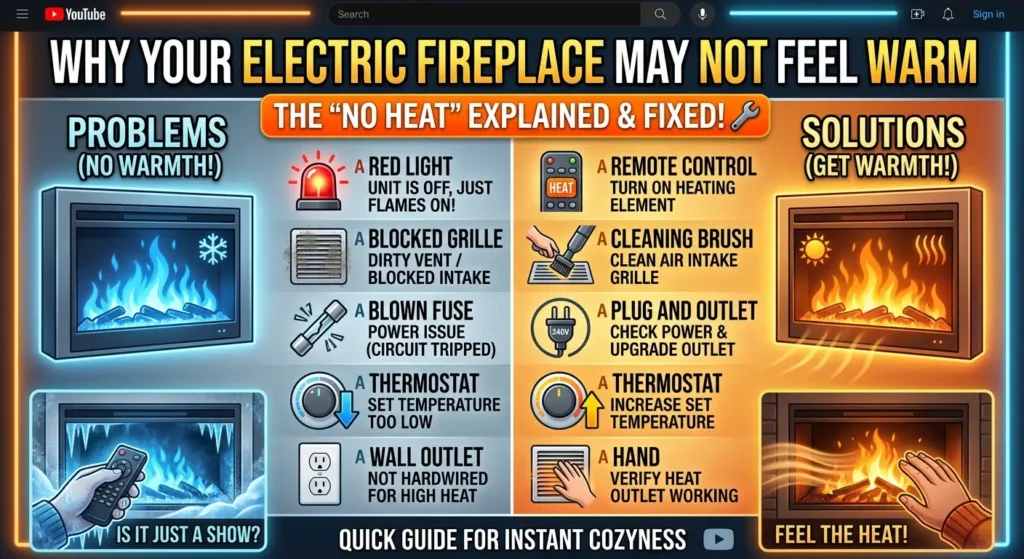
When one you have purchased has failed to work, then it is not the fireplace that is defective, it is one of these typical problems:
- The unit is too small to fit in the room. An 800-square-foot open area with a 5,000-BTU heater is never going to work.
- It is hidden in a corner or behind something. Obstructed airflow (fan-forced) or obstructed line of view (infrared) reduced the delivery of heat in the real world.
- High ceilings or leaky windows. These rooms have a higher rate of heat build up and loss and therefore the same BTU rating will cover less area.
- It’s set to “flame only.” This is the most frequent confusion – most units switch to flame effect when the heater is off unless you change a setting to heat status.
- It’s meant as supplemental heat. Electric fireplaces are designed to be used to heat a specific zone and not to supplant your furnace or central heat in an entire house.
How to Get Maximum Heat Output from an Electric Fireplace While Using Less Electricity
It should be located on a wall inside the house that does not lose the warm air instantly to the window or outside wall.
- Always maintain a minimum of a foot of uncirculated space before the heat vent to allow free circulation of air.
- Couple it with your primary heating, not as its alternative, reduce the setting of the thermostat in the room you are in by a couple of degrees rather than heating the entire house.
- Test the wattage and BTU rating against your real square footage and not only on the marketing photos when purchasing.
- To make sure you have the comfort of the entire room, and are in a bigger space, make sure you specifically seek a hardwired 240 V model and not a typical plug-in appliance.
Myth vs. Fact
| Common Myth | The Reality (Fact) |
|---|---|
| Myth: Electric fireplaces do not produce real heat and are only decorative. | Fact: Most electric fireplaces with a heating function produce real, measurable heat. Standard models generate heat similar to a portable space heater, while some display-only models provide flames without heat. |
| Myth: A higher BTU rating always means better heating. | Fact: BTU output matters, but room size, insulation, ceiling height, windows, and placement also greatly affect how warm a room feels. A properly sized fireplace often performs better than an oversized unit in a poorly insulated space. |
| Myth: An electric fireplace can heat an entire house. | Fact: Electric fireplaces are designed for zone heating—warming a single room or specific area. They are usually not a replacement for a home’s central heating system. |
- Standard units: about 1,500 watts, 5,000 BTUs, 400–500 square feet of coverage.
- Hardwired 240 V units are used to heat larger areas, usually as large as 1,000 square feet.
- A couple of hours of the heat run at typical electricity prices cost about a dollar; the flame itself only costs pennies.
- They are zone heaters, not entire home heaters – use them in addition to your primary heating unit, and not in place of it.
You May Also Like To Read:
Do Electric Fireplaces Use a Lot of Electricity?
FAQs
Do electric fireplaces produce heat, or are they only a flame effect?
Most electric fireplaces do both. The flame effect and heating system work independently, so you can usually enjoy the flames with or without heat.
How much heat does an electric fireplace produce?
A standard plug-in electric fireplace produces around 5,000 BTUs of heat, which is similar to a 1,500-watt portable space heater.
How large an area can an electric fireplace heat?
Most standard models can warm around 400–500 sq. ft. Larger 240V hardwired models can heat areas of up to approximately 1,000 sq. ft.
Can an electric fireplace heat an entire house?
No. Electric fireplaces are designed for zone heating, meaning they warm one room or a specific area. They are not usually a replacement for central heating systems.
Are electric fireplaces expensive to run?
No. Running the heater typically costs around £1 for several hours of use, depending on electricity rates. Using only the flame effect costs just a fraction of a penny per hour.
What is the difference between a 120V and 240V electric fireplace?
120V models plug into a standard outlet and usually produce around 5,000 BTUs. 240V models require professional hardwiring and can provide significantly more heating power.
My Final Thoughts
Do Electric Fireplaces Give Off Heat? Electric fireplaces provide real heat, are affordable to install, easy to operate, and safer for many homes because they produce no flames, smoke, or emissions. However, they are best used for heating individual rooms or zones rather than replacing a whole-house heating system.